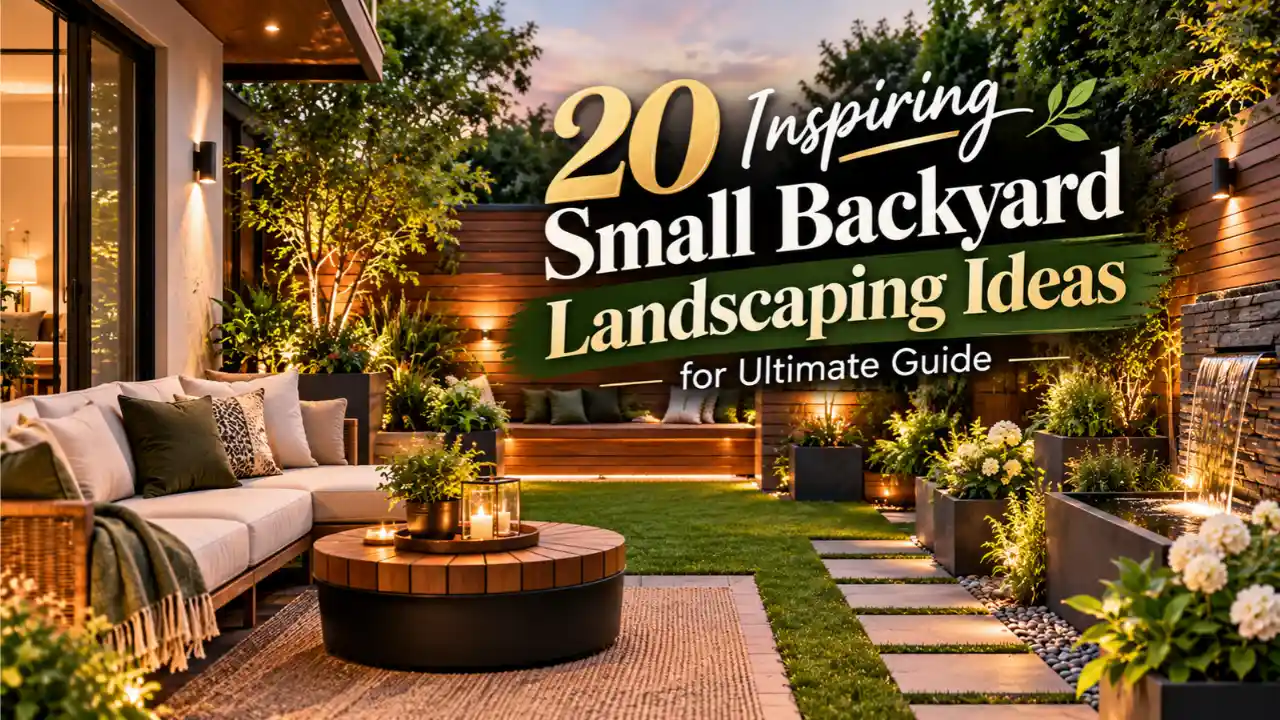
20 Inspiring Small Backyard Landscaping Ideas for Ultimate Guide
A small backyard does not have to feel cramped or difficult to decorate. With thoughtful landscaping, even a limited outdoor area can become comfortable, attractive, and surprisingly spacious. The key is to use every section intentionally while avoiding unnecessary visual clutter.
These 20 Small Backyard Landscaping Ideas by The Home Vista focuses on proportion, functionality, and flow. Instead of filling the entire yard with plants and furniture, carefully chosen pathways, raised beds, vertical greenery, compact seating, and layered planting can make the space feel more open.
Materials also have a major impact on how a tiny backyard looks. Light-colored paving, natural gravel, timber, stone, and simple greenery can create a calm foundation, while strategic changes in height and texture add depth without taking up much floor space.
Whether you have a narrow urban yard, a compact patio garden, or a tiny backyard behind a small home, these clever landscaping ideas can help you create an outdoor space that feels bigger, more useful, and beautifully connected.
1. Layered Planting Along the Boundary
- Creates visual depth
- Uses perimeter space efficiently
- Makes the yard feel longer
- Adds multiple layers of greenery
- Keeps the center visually open
- Works well for narrow backyards
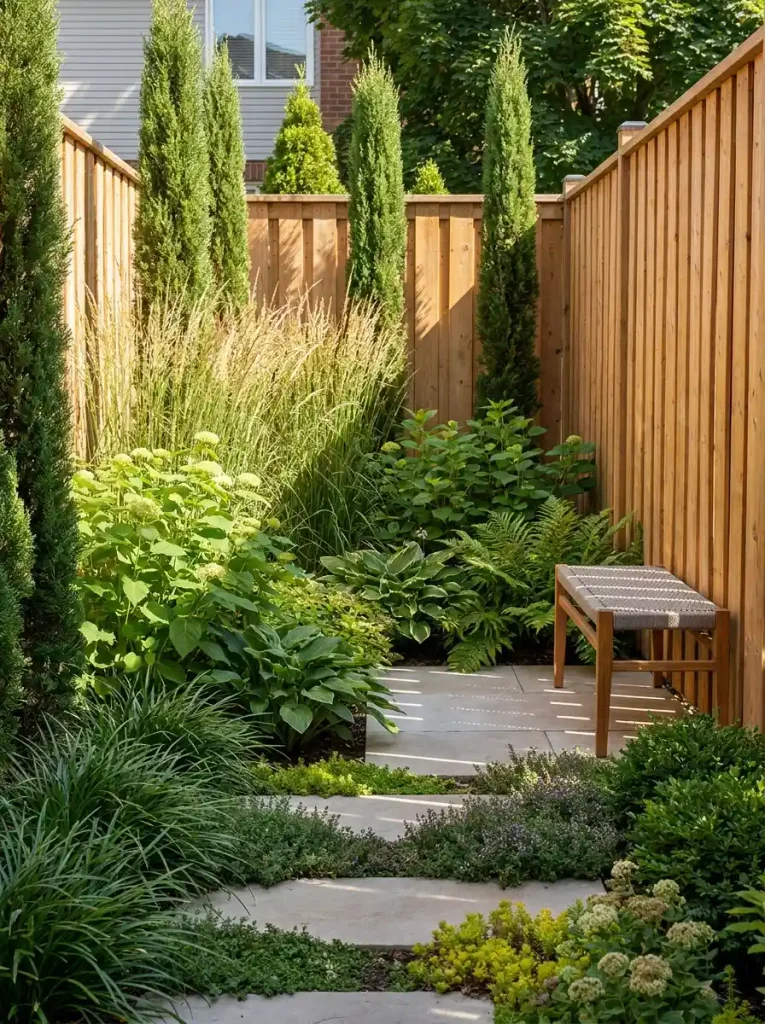
Layered planting is one of the simplest ways to give a small backyard more depth. Instead of placing large plants randomly throughout the center, use the boundaries for taller greenery and gradually reduce plant height toward the open area.
This arrangement naturally draws the eye through the garden rather than stopping it at one dense planting bed. Combining different foliage shapes and heights can also create a richer landscape without requiring a large footprint.
2. Vertical Garden on a Privacy Wall
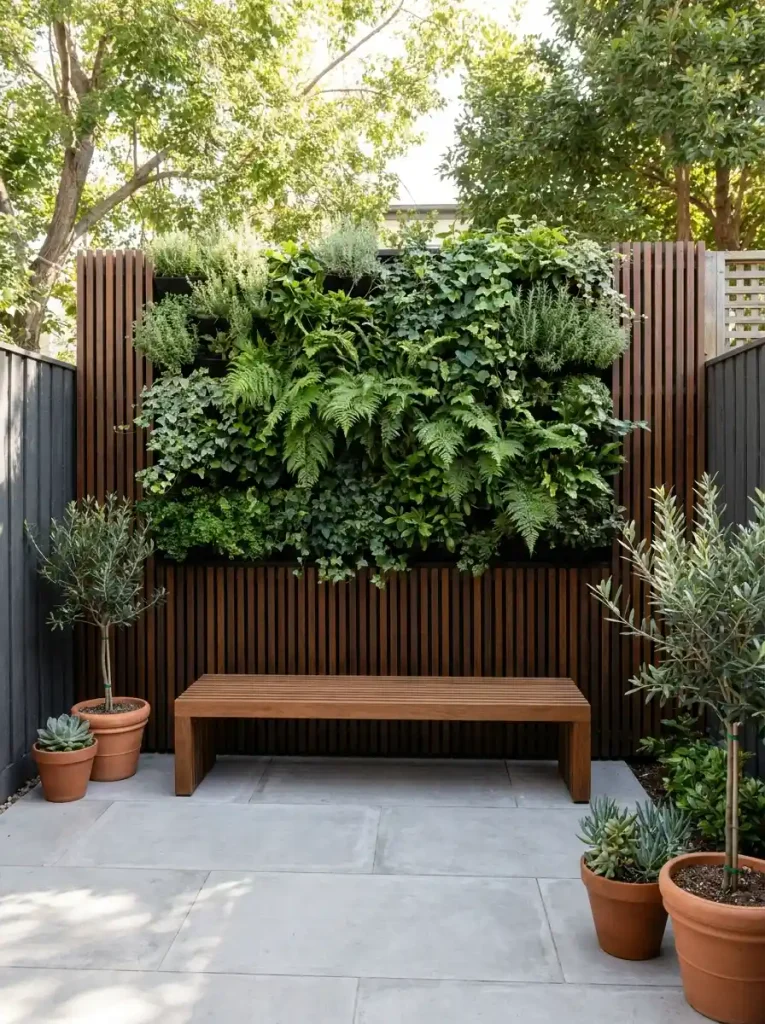
- Saves valuable floor space
- Adds abundant greenery
- Creates a strong focal wall
- Improves privacy
- Works in very small yards
- Keeps the ground uncluttered
Vertical gardening allows a tiny backyard to gain substantial greenery without sacrificing walking or seating space. Walls, fences, and screens can all become useful planting surfaces instead of remaining unused vertical areas.
Choose plants according to the available sunlight and keep the arrangement organized. A well-maintained vertical garden can make a small yard feel more lush while keeping the actual footprint of the landscaping surprisingly small.
3. Large Pavers With Gravel Joints
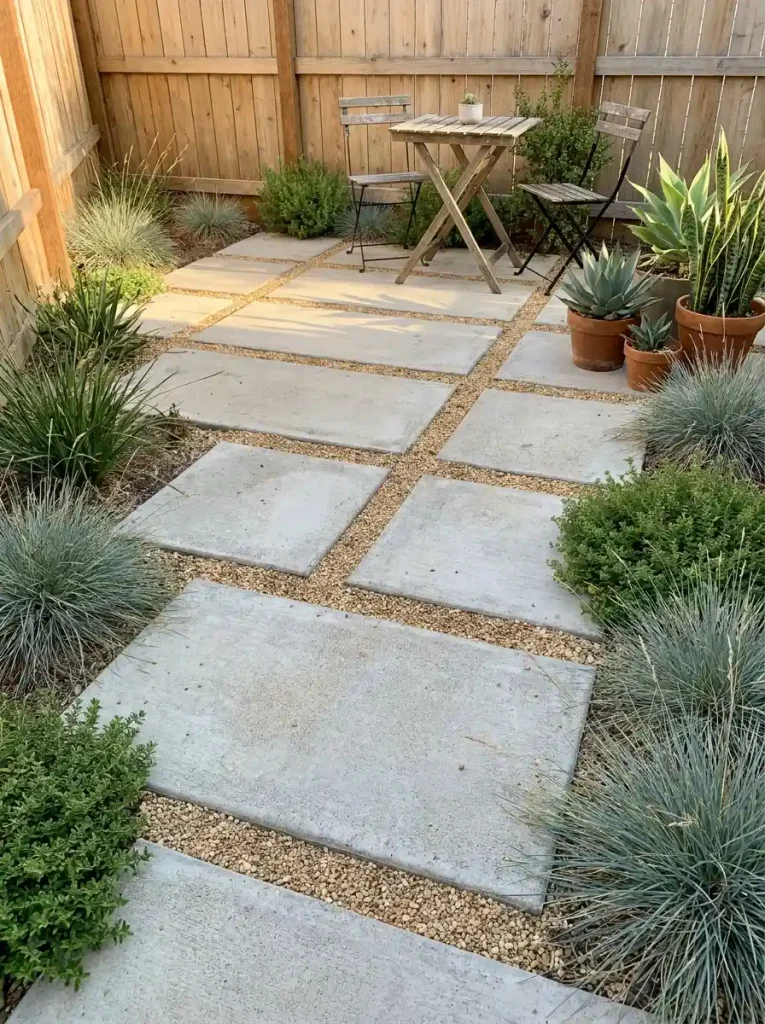
- Creates visual continuity
- Makes the floor feel larger
- Defines movement through the yard
- Requires minimal planting space
- Adds modern character
- Keeps the layout organized
Large pavers can visually expand a small backyard because fewer joints create a cleaner and more continuous surface. When the slabs are arranged with consistent spacing, the eye naturally follows the pattern across the yard.
Gravel between the pavers adds texture without creating a busy appearance. Keep the surrounding planting low and restrained so the paving remains visually dominant and the backyard retains an open feeling.
4. Narrow Raised Garden Beds
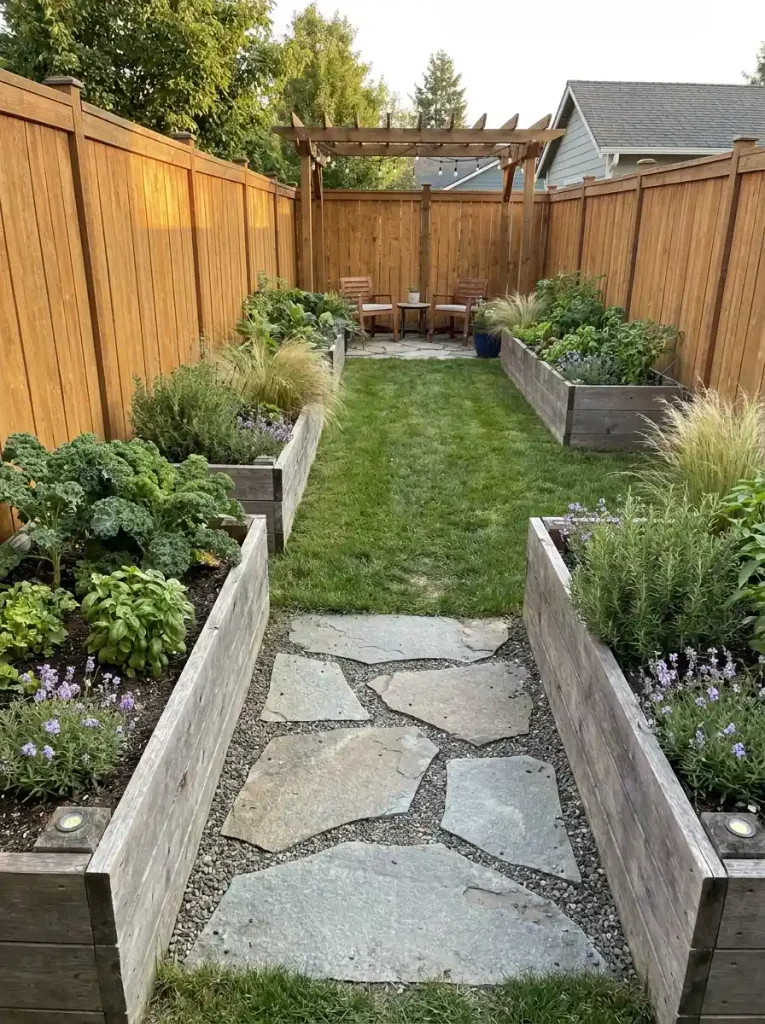
- Maximizes planting capacity
- Keeps the center open
- Adds structure to the yard
- Creates organized planting zones
- Works for edible gardens
- Adds visual height
Raised beds are particularly useful when a small backyard needs both greenery and functionality. Narrow beds can run along fences or walls while leaving a clear central area for movement and seating.
Using different plant heights inside the beds adds dimension without taking more floor space. Herbs, vegetables, flowers, and ornamental foliage can all be combined when their growing requirements are compatible.
5. Compact Corner Seating Garden
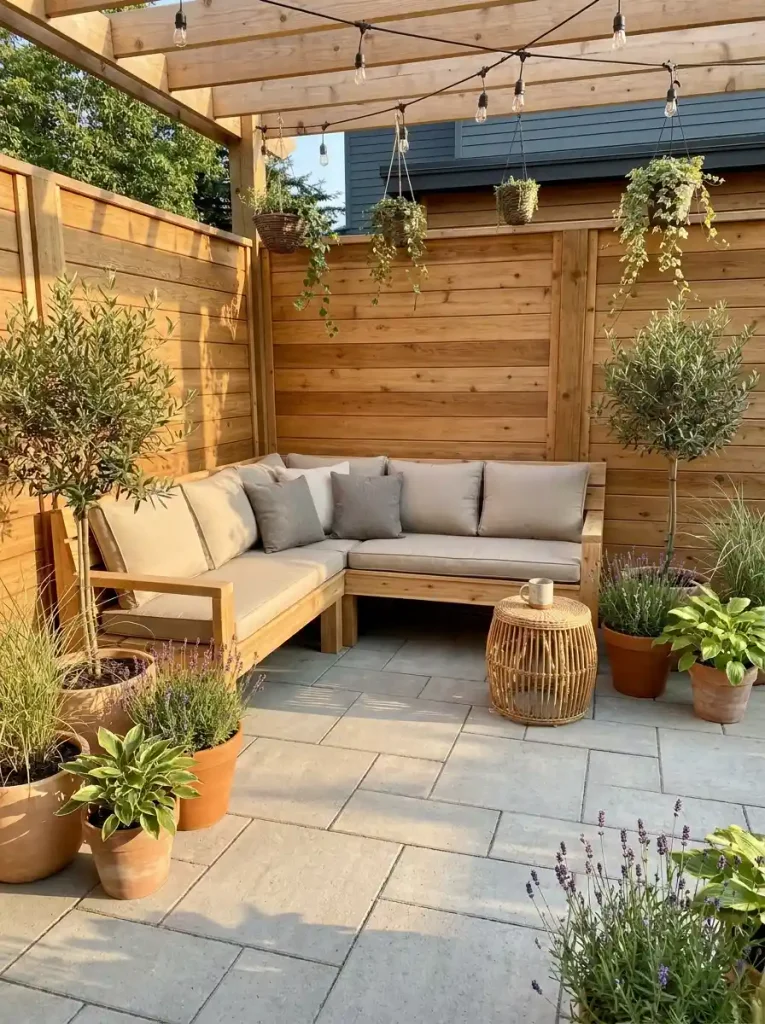
- Uses an otherwise unused corner
- Creates comfortable seating
- Preserves central floor space
- Adds a social area
- Works for narrow yards
- Combines furniture with planting
Corners are often wasted in small outdoor spaces, making them ideal locations for built-in or compact seating. A simple L-shaped bench can provide several seats while occupying much less space than separate chairs.
Surrounding the seating with greenery can make the corner feel like a destination within the garden. Keep the middle of the yard open so the seating area feels integrated without making the entire backyard look crowded.
6. Slim Planting Border
- Preserves valuable floor area
- Adds continuous greenery
- Creates a soft boundary
- Works in narrow gardens
- Keeps circulation clear
- Adds natural texture
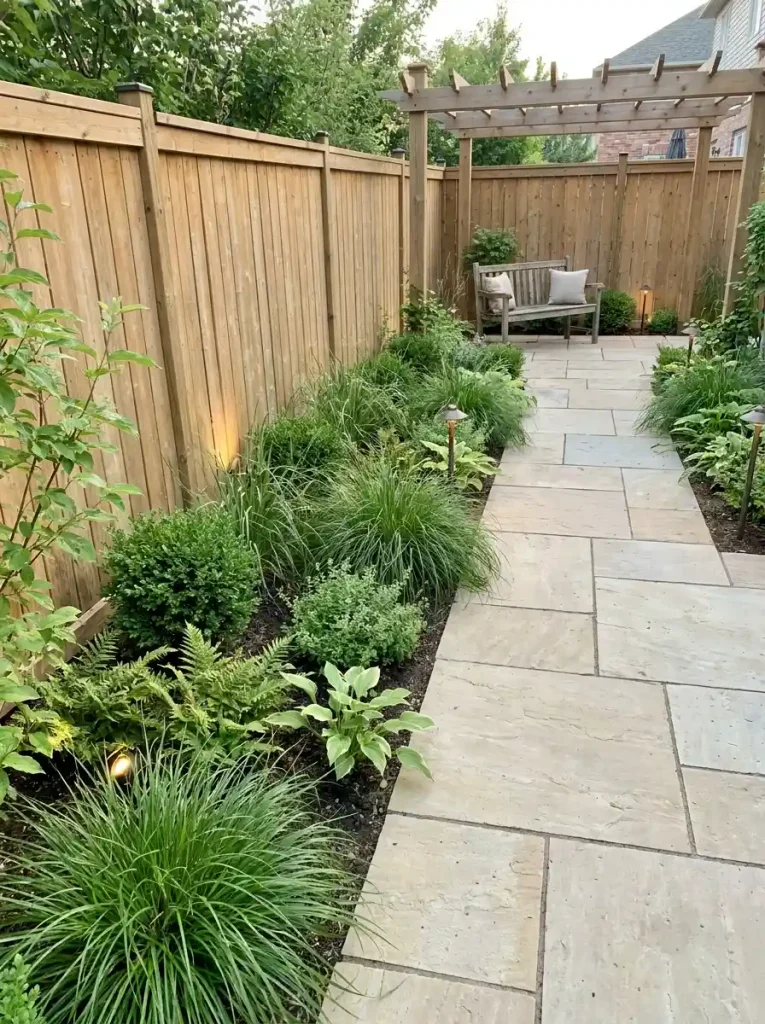
A slim planting border can provide the benefits of a garden bed without taking over the usable part of a tiny backyard. Even a narrow strip can hold a surprising combination of foliage when plants are selected according to mature size.
Keeping the border continuous also makes the yard feel more organized. Rather than scattering small pots throughout the space, one defined green edge can provide a stronger visual effect with less clutter.
7. Multi-Level Small Backyard
- Adds depth to flat yards
- Creates separate functional zones
- Uses vertical space
- Makes the garden more dynamic
- Adds architectural interest
- Works with sloped properties
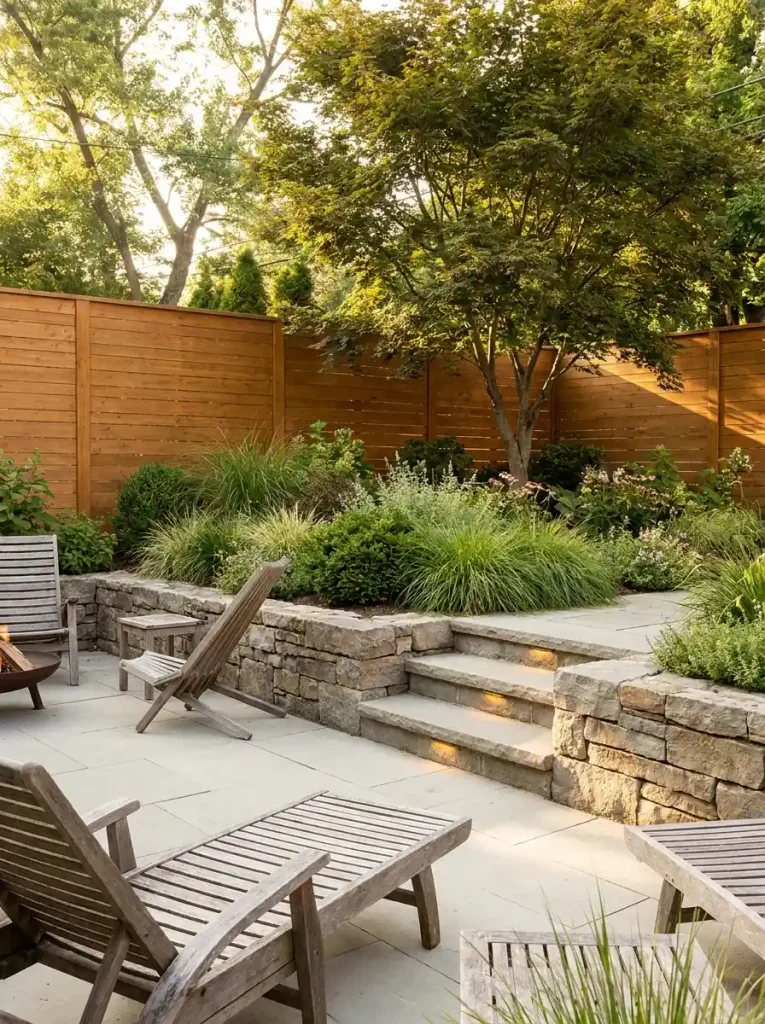
Changing levels can make a small backyard feel more dimensional because the eye has several areas to explore. Even a modest height difference can visually separate seating, planting, and circulation zones.
Keep retaining structures low and proportional to the available space. A compact raised planting section paired with a lower seating area can create the impression of a larger garden without requiring additional land.
8. Slim Water Feature Wall
- Uses vertical space
- Adds a calming feature
- Creates a focal point
- Requires little floor area
- Enhances courtyard atmosphere
- Adds reflective texture
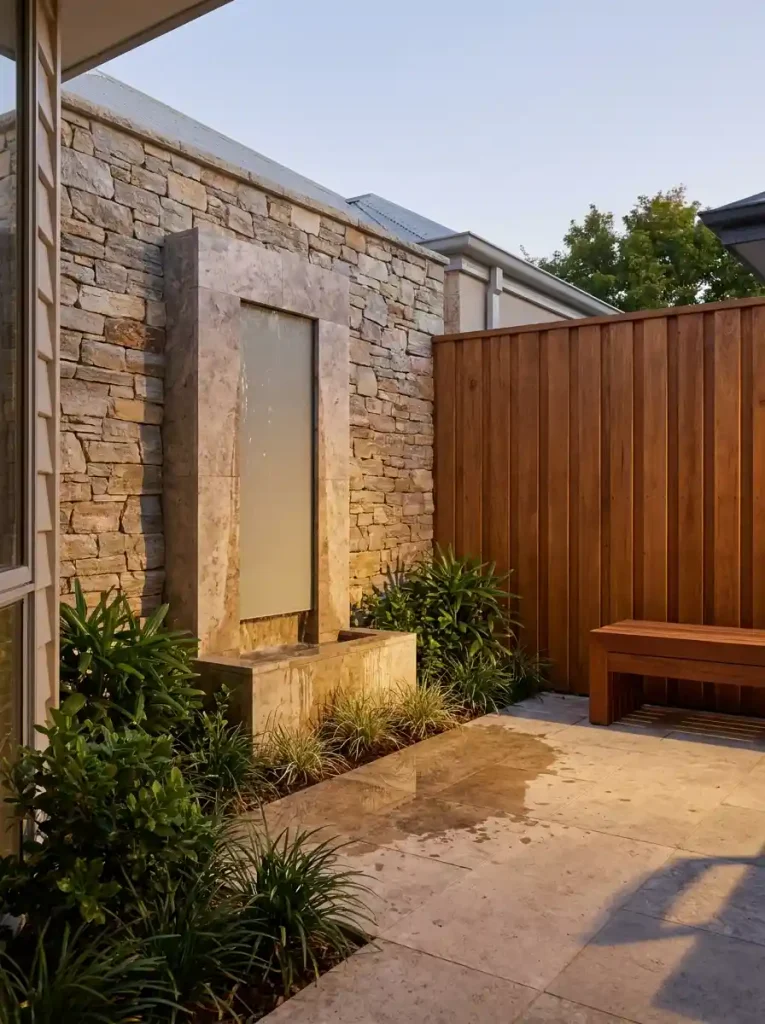
A water feature does not have to consume a large portion of the garden. A narrow wall-mounted design can introduce sound, movement, and visual interest while using very little floor space.
Vertical placement is particularly useful in tiny yards because it turns an otherwise blank wall into a focal element. Surround it with a few carefully selected plants rather than a crowded collection of decorations.
9. Circular Patio Layout
- Creates a defined outdoor room
- Makes seating feel intentional
- Softens rectangular layouts
- Uses space efficiently
- Adds visual movement
- Works well in compact yards
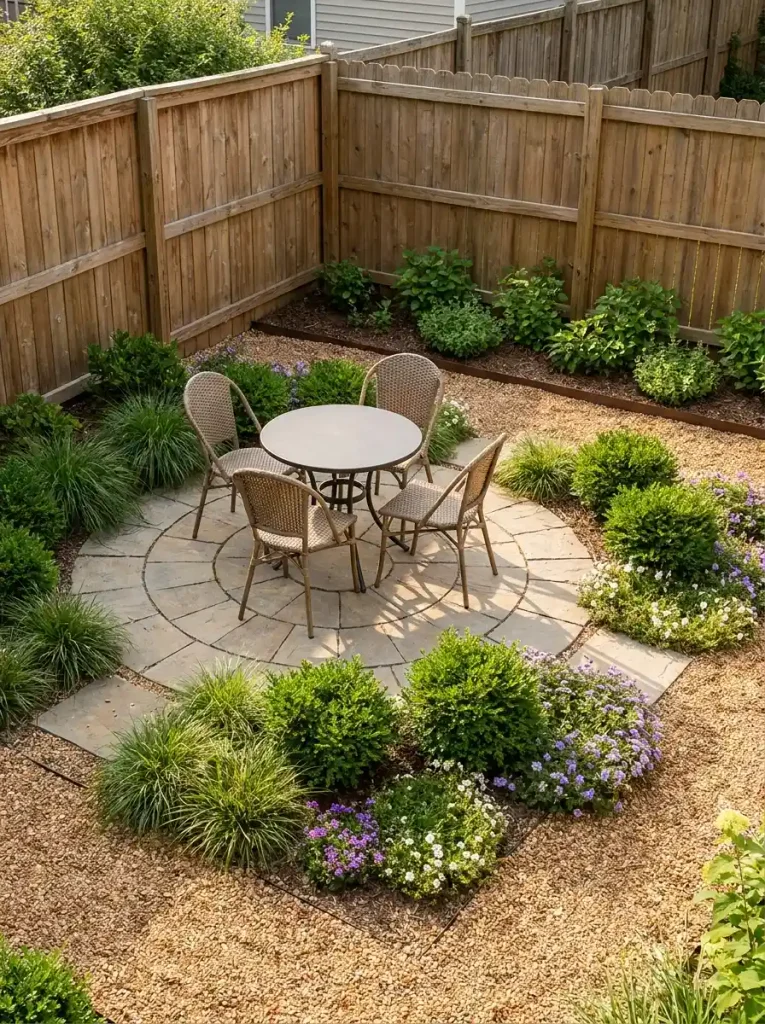
A circular patio can make a small backyard feel more relaxed and visually interesting. The curved shape breaks up the rigid lines that often dominate narrow gardens without requiring a large amount of additional space.
Choose compact furniture with slim profiles so the seating area remains comfortable but not crowded. Surrounding the circle with gravel or low planting can clearly define the space while keeping the rest of the garden open.
10. Built-In Bench Along the Fence
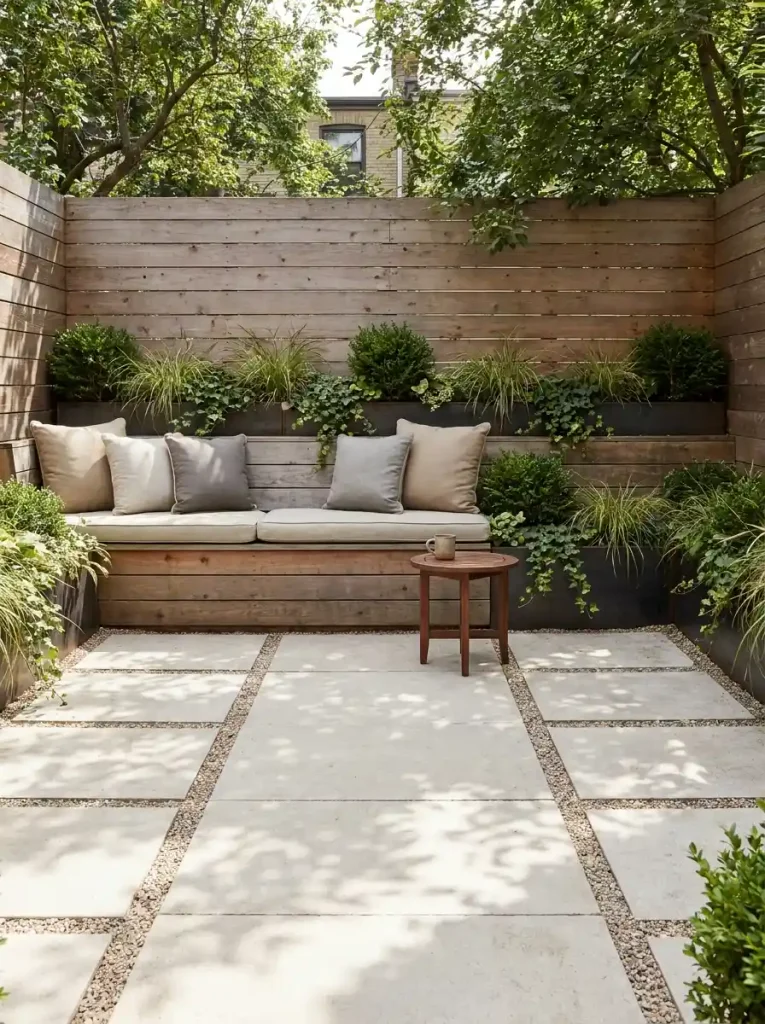
- Turns the fence into seating
- Saves floor space
- Provides multiple seats
- Adds built-in functionality
- Creates a clean visual line
- Works especially well in narrow yards
A built-in bench is an efficient solution when seating is essential but floor space is limited. By attaching the bench to the boundary, the middle of the backyard remains available for walking, planting, or other activities.
The bench can also become part of the landscaping. Add narrow planters, climbing greenery, or simple cushions to make the seating area comfortable without introducing bulky outdoor furniture.
11. Hanging Garden Collection
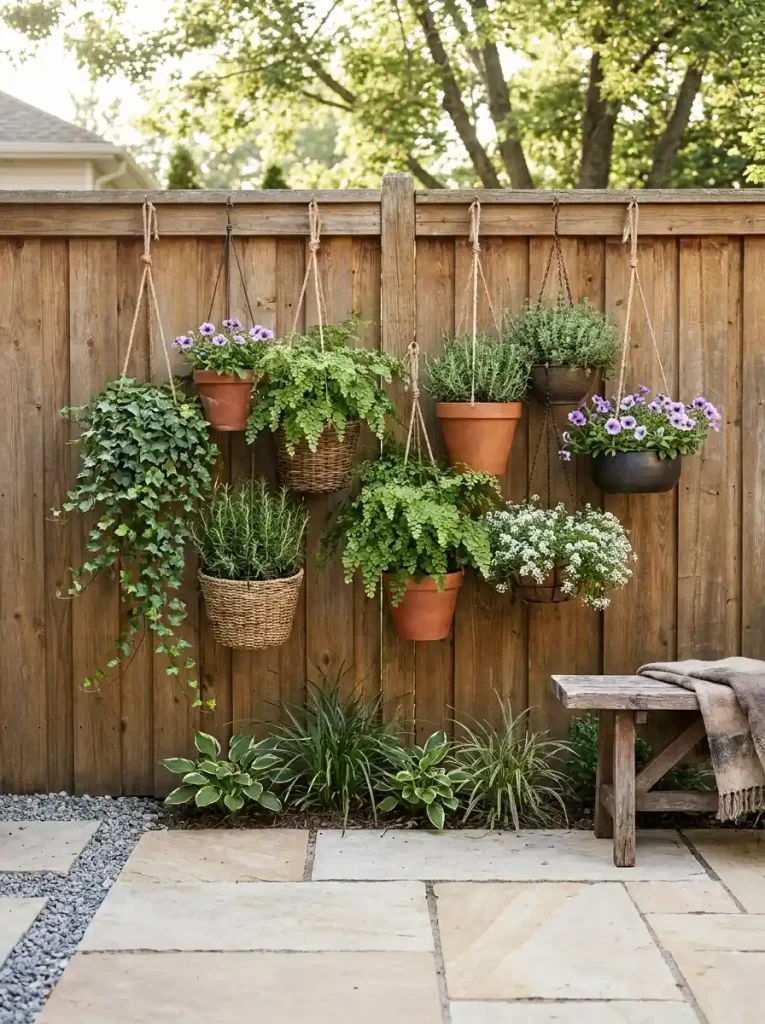
- Frees ground space
- Adds greenery vertically
- Creates a decorative wall
- Works for herbs and flowers
- Adds visual height
- Keeps the floor open
Hanging planters are another practical way to introduce greenery when a backyard has limited ground area. Fences and walls can support a collection of plants while the floor remains available for seating and movement.
Keep the arrangement coordinated rather than hanging pots randomly. Similar planter materials or a repeated layout can make the garden feel designed and cohesive.
12. Long Narrow Backyard Path
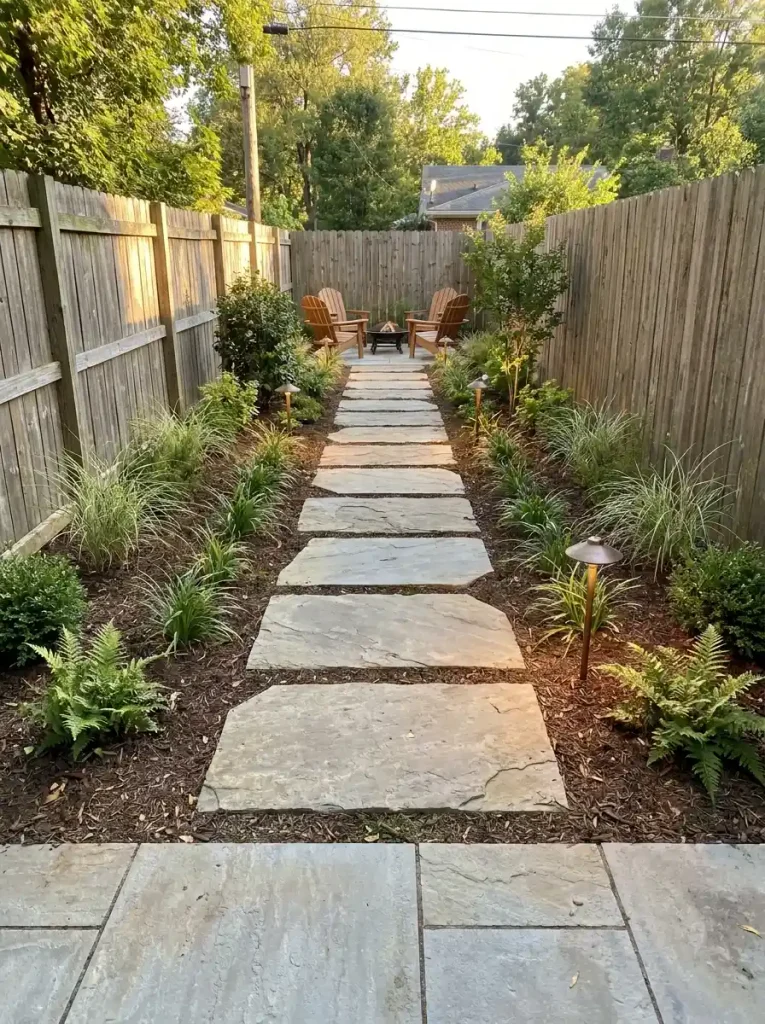
- Emphasizes the garden’s length
- Creates strong perspective
- Guides movement naturally
- Keeps planting organized
- Makes narrow yards feel deeper
- Provides a clear destination
A strong central path can make a narrow backyard feel longer by creating a clear visual line from one end to the other. The destination at the far end gives the eye a reason to continue through the space.
Avoid placing large objects directly across the path. Keeping the route visually uninterrupted creates depth and prevents the garden from feeling divided into several cramped sections.
13. Compact Pergola With Climbers
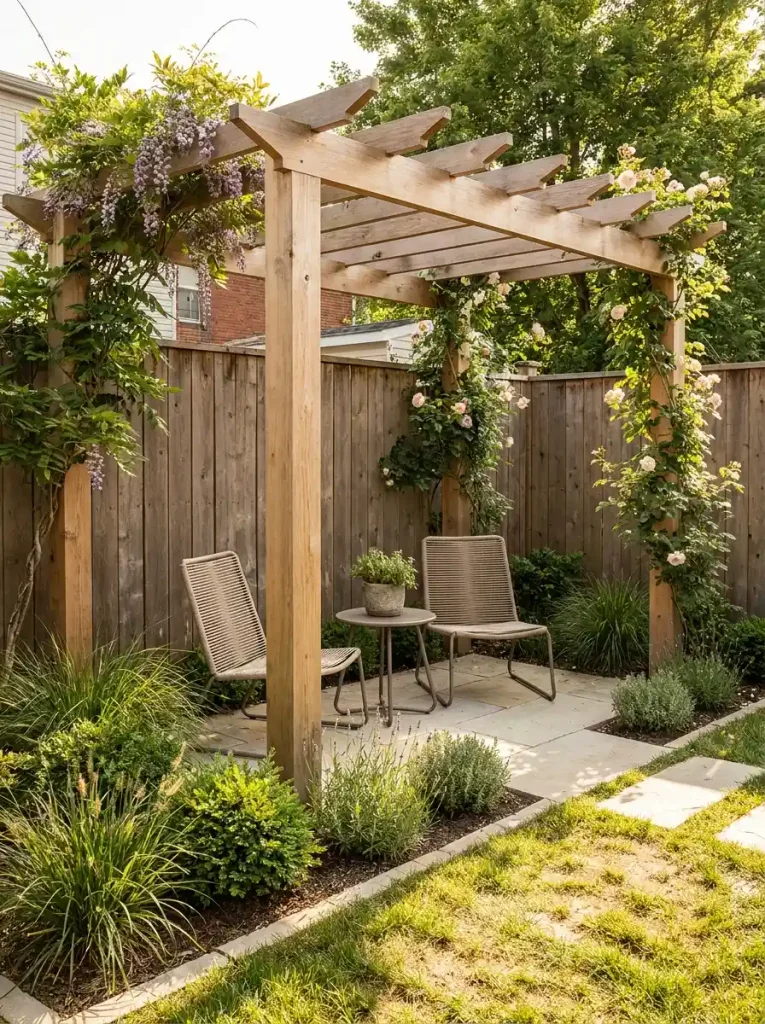
- Adds vertical structure
- Creates a shaded seating area
- Supports climbing plants
- Defines a destination
- Uses overhead space
- Adds architectural character
A small pergola can provide shade, privacy, and visual structure without requiring a large garden. The important part is choosing a compact design that does not dominate the available space.
Climbing plants can gradually soften the structure and introduce greenery overhead. Keep the planting controlled so the pergola remains airy and does not make the backyard feel enclosed.
14. Mirror Accent for a Spacious Feel
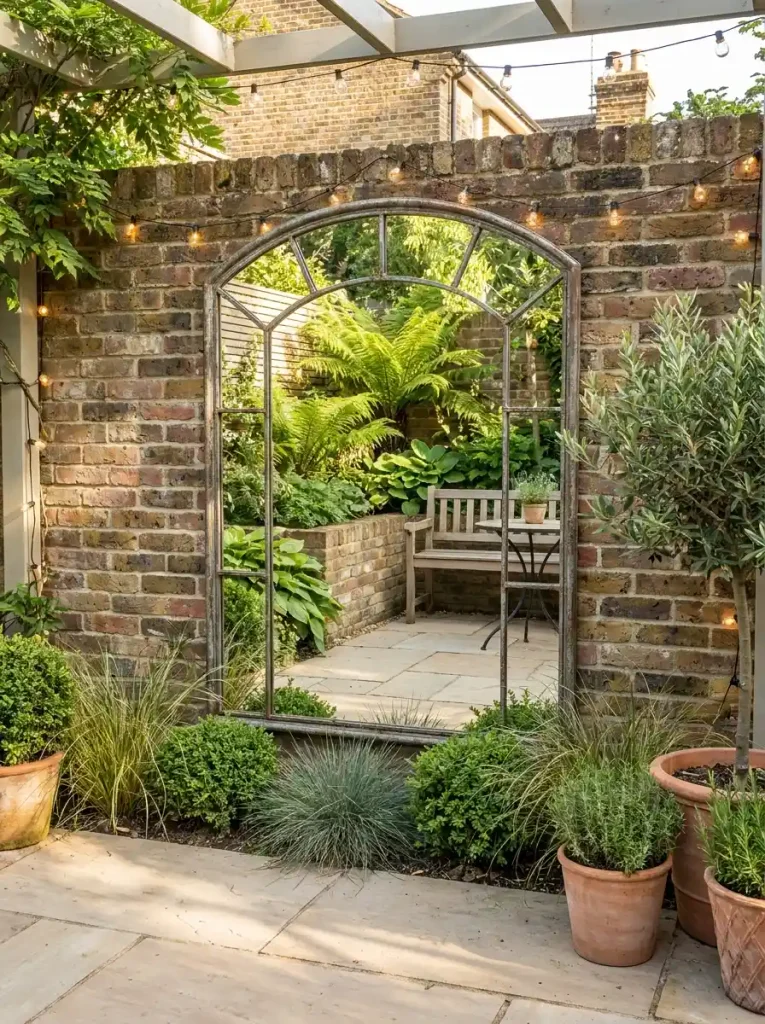
- Creates an illusion of depth
- Reflects surrounding greenery
- Enhances blank walls
- Adds decorative interest
- Works in courtyard gardens
- Makes compact spaces feel brighter
A properly placed outdoor mirror can visually extend a small garden by reflecting plants, paving, and light. It works especially well against a plain boundary wall that would otherwise make the yard feel enclosed.
Choose an outdoor-rated mirror and position it carefully so the reflection adds something attractive. The best result comes from reflecting greenery or an open section rather than clutter or neighboring structures.
15. Small Tree as a Vertical Focal Point
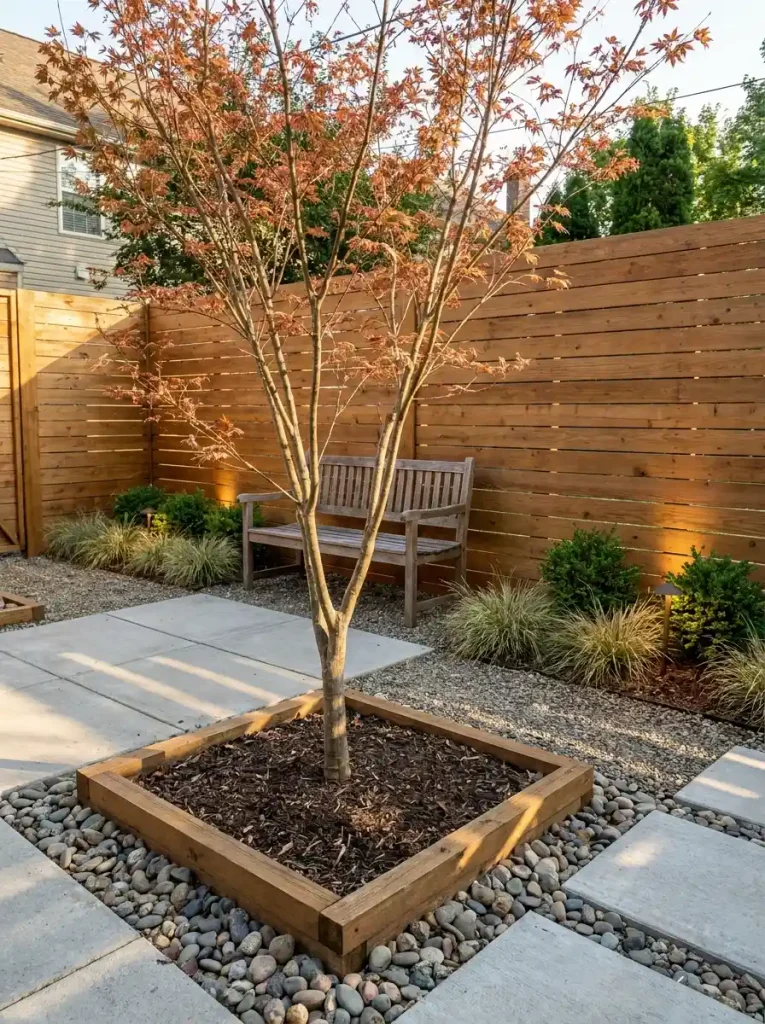
- Adds height without much footprint
- Creates a natural focal point
- Provides seasonal interest
- Balances low planting
- Works in compact yards
- Draws the eye upward
A small tree can make a major difference in a tiny backyard because it adds height without requiring much ground area. The vertical element helps balance low planting and makes the garden feel more layered.
Select a species that remains appropriate for the available space at maturity. Positioning the tree in a simple gravel or paved planting bed can also make it feel like a deliberate architectural feature.
16. Monochromatic Green Garden
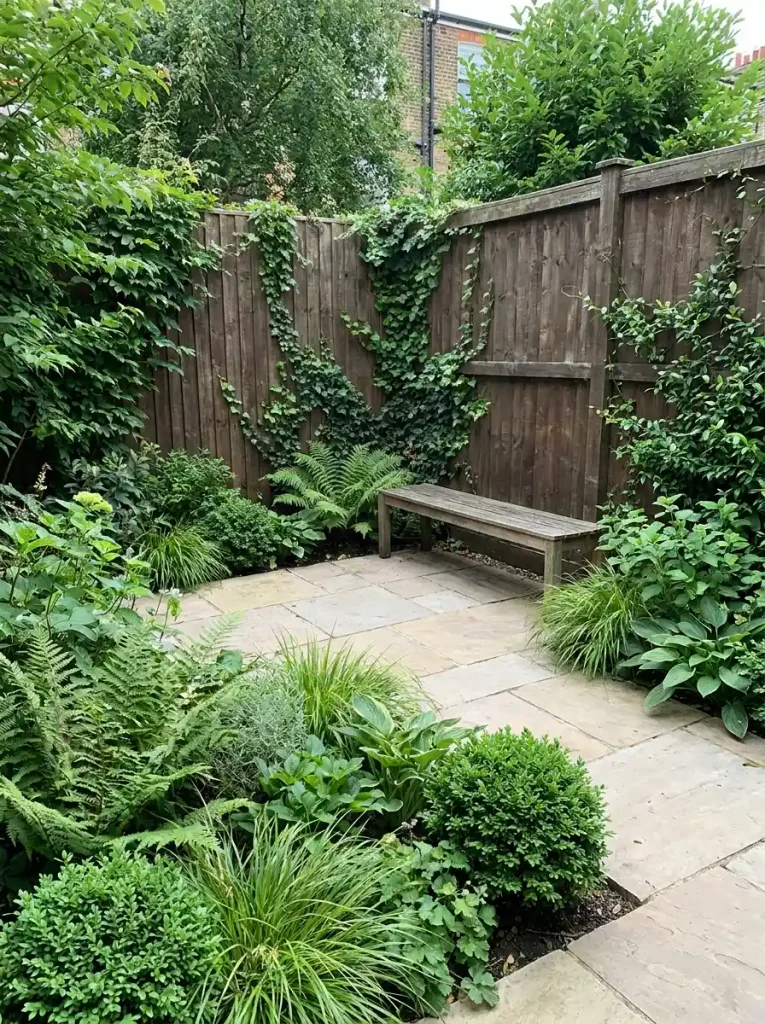
- Creates visual consistency
- Makes the garden feel calm
- Avoids color clutter
- Highlights foliage texture
- Works with different plant heights
- Gives the space a cohesive look
A monochromatic green palette can make a small backyard feel more unified because there are fewer competing visual elements. Instead of relying on many flower colors, the design focuses on differences in leaf shape, texture, and height.
This approach is particularly useful when the space already contains several materials such as timber, stone, or concrete. Keeping the planting color consistent helps those materials work together without making the backyard visually busy.
17. Folding Furniture Patio
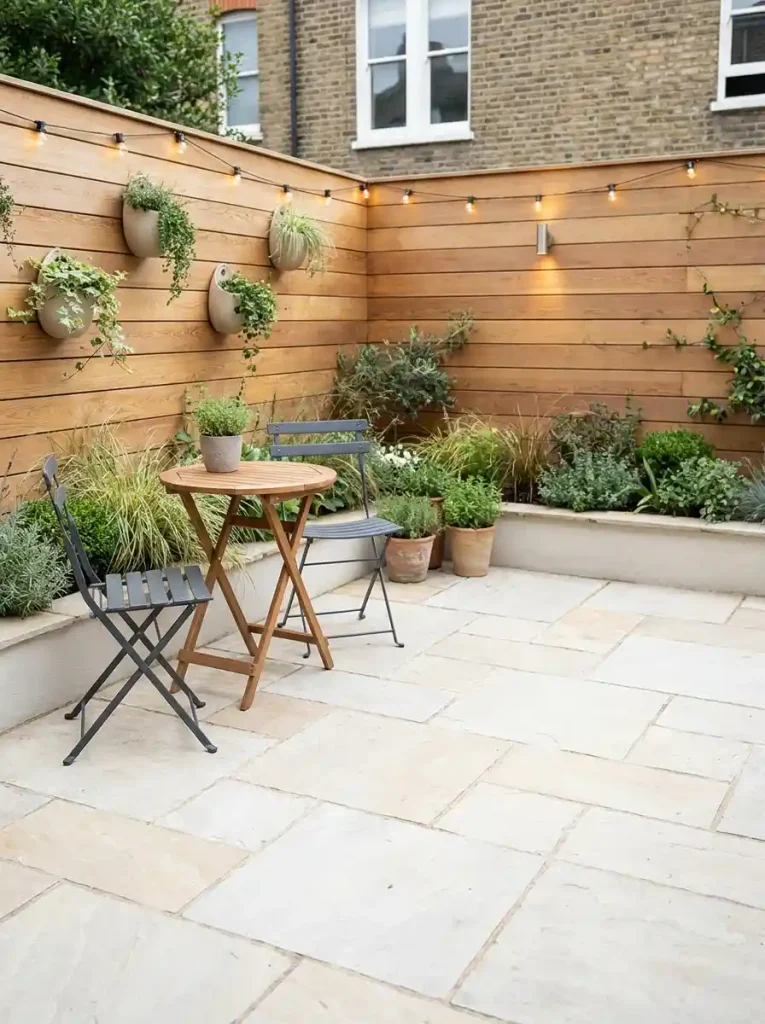
- Allows flexible use of space
- Keeps furniture compact
- Makes cleaning easier
- Works for entertaining
- Preserves walking space
- Suits very small patios
Furniture can easily make a small backyard feel crowded, so flexible pieces are especially valuable. Folding chairs and tables can provide a comfortable place to sit while allowing the floor to be cleared when the space needs another function.
Pairing flexible furniture with permanent landscaping is an effective strategy. Planting beds, paving, and fences remain fixed while the furniture can adapt to different activities throughout the day.
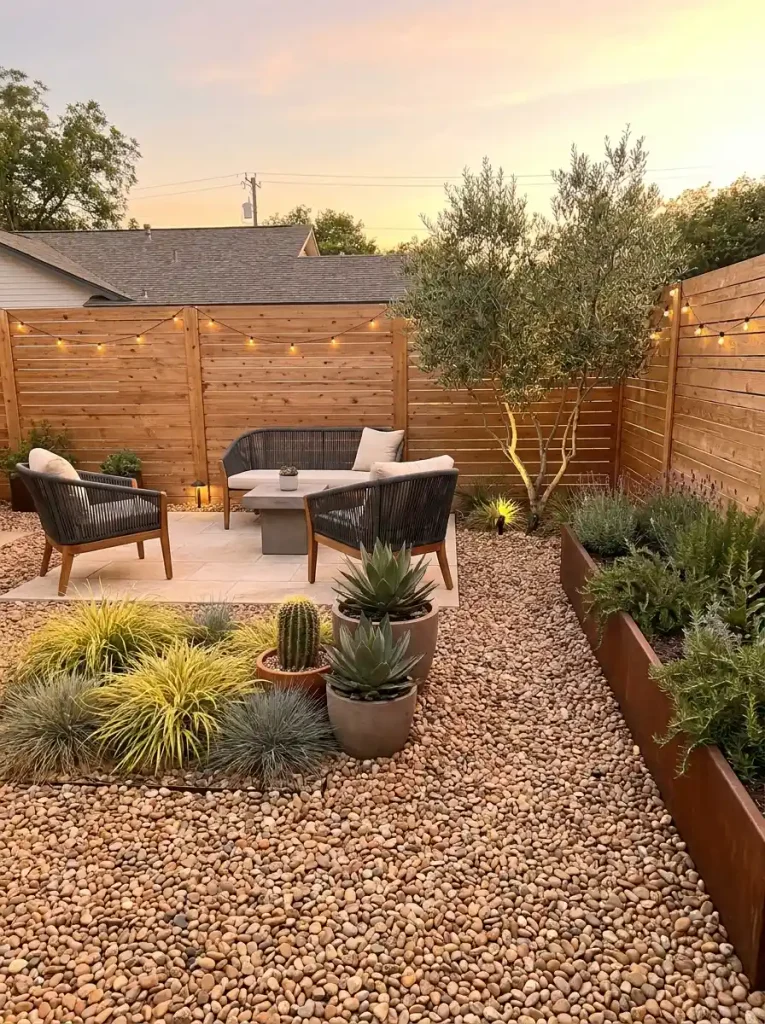
18. Gravel Lounge Garden
- Reduces hardscape cost
- Creates a relaxed atmosphere
- Requires limited planting
- Makes the floor visually continuous
- Works with compact furniture
- Adds natural texture
A gravel lounge garden can provide a comfortable outdoor room without covering the entire yard in expensive paving. The consistent ground material also helps create visual continuity across a small space.
Use a small paved section beneath the main seating area if desired, then allow gravel to continue around it. A few carefully placed plants can soften the hard edges while keeping the overall design open.
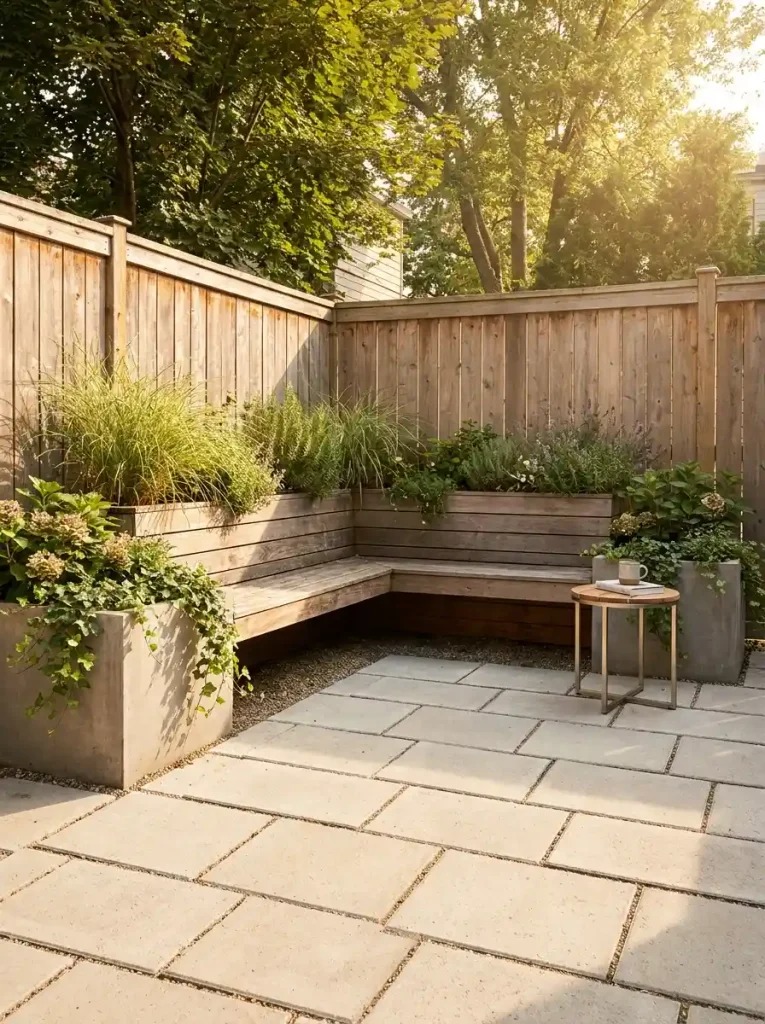
19. Built-In Planter and Seat Combination
- Combines two functions
- Saves valuable floor space
- Creates cohesive design
- Adds permanent seating
- Integrates greenery naturally
- Works in narrow backyards
Combining seating and planting into one structure is an efficient solution for tiny gardens. Instead of having separate benches and containers competing for floor space, the two functions become part of the same landscape feature.
Built-in designs can also make the backyard feel more intentional. Use consistent timber, stone, or concrete materials so the seating and planters visually connect with the rest of the garden.
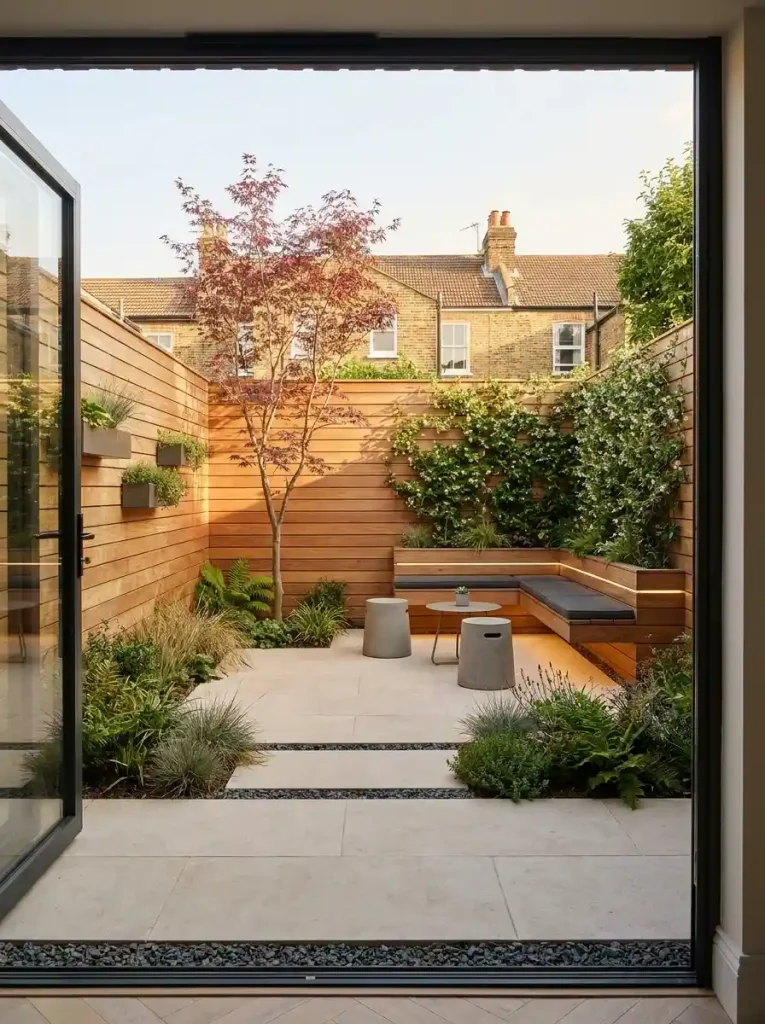
20. Open-Plan Tiny Backyard
- Maximizes usable floor area
- Creates uninterrupted sightlines
- Makes the yard feel larger
- Keeps planting around the edges
- Supports multiple activities
- Creates a clean final composition
An open-plan approach can be one of the most effective solutions when every square foot matters. Instead of dividing the backyard into many small zones, keep the center flexible and place most landscaping along the boundaries.An open plan tiny backyard can feel surprisingly spacious with smart planning.
Keep the layout simple with flexible seating, greenery, and clear walking space.
Light colors and multifunctional features create a stylish, airy outdoor retreat.
The result is a garden that feels connected from one end to the other. Perimeter planting, vertical greenery, compact seating, and a consistent floor material can provide plenty of character while preserving the visual openness that makes a tiny backyard feel surprisingly spacious.
Final Thoughts: Small Backyard Landscaping Ideas
Small Backyard Landscaping Ideas is less about having more space and more about using the available space intelligently. Vertical planting, narrow beds, built-in seating, compact trees, and perimeter greenery can create a full garden experience without filling every corner.
A consistent material palette can also make a major difference. Using the same paving, timber, gravel, or stone across different areas helps the backyard feel connected instead of visually fragmented.
When choosing furniture and plants, always consider their mature size and actual footprint. Compact pieces may look simple, but they can make the difference between a comfortable backyard and one that feels crowded.
Most importantly, leave some space empty. Open floor areas, clear pathways, and unobstructed sightlines allow the garden to breathe. With the right balance of greenery, structure, and functionality, even the smallest backyard can feel inviting, useful, and much more spacious.