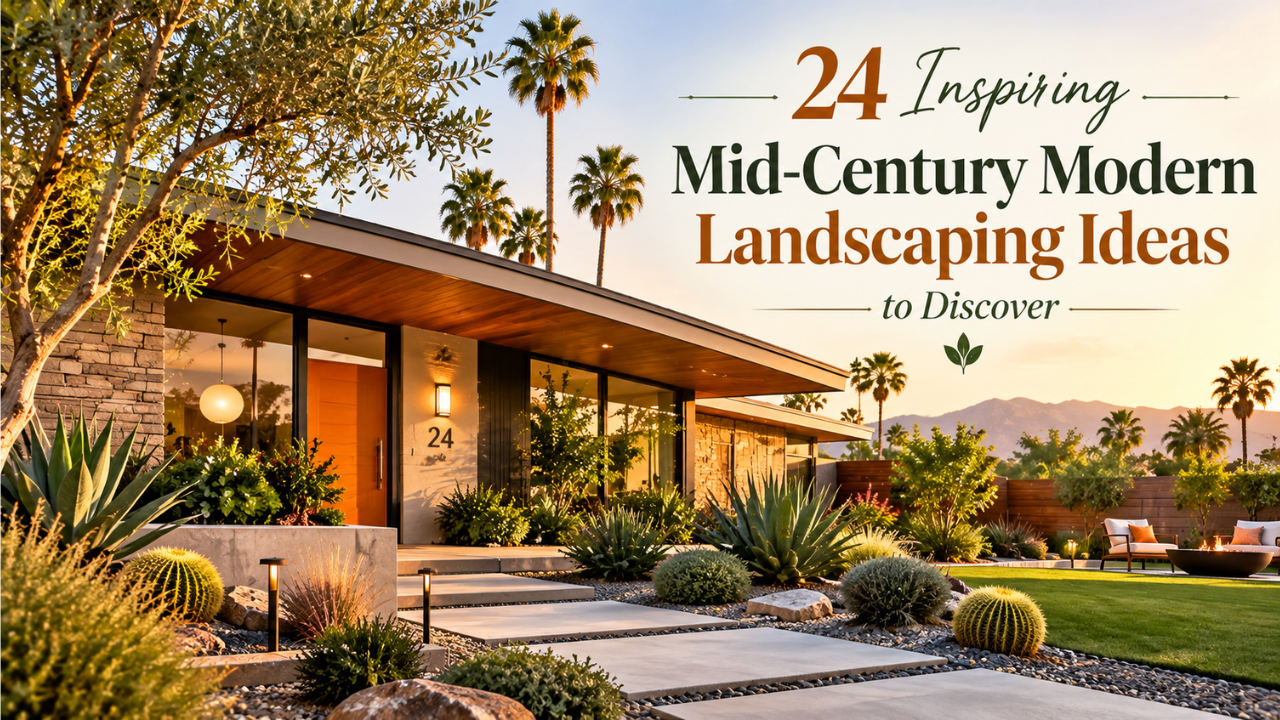
24 Inspiring Mid-Century Modern Landscaping Ideas to Discover
Mid-century modern landscaping is all about clean geometry, functional outdoor spaces, natural materials, and carefully controlled planting. Instead of crowded flower beds or overly decorative features, this style uses strong lines, simple shapes, and a thoughtful balance between architecture and nature.
The best Mid-Century Modern Landscaping Ideas by The Home Vista often feel effortlessly connected to the house. Concrete pathways, gravel beds, low planters, timber details, large stepping stones, and sculptural plants can create a cohesive exterior without making the yard feel overly designed.
Plant selection is equally important. Architectural plants such as agave, yucca, ornamental grasses, palms, and carefully shaped shrubs work especially well with the clean lines of mid-century architecture. Meanwhile, natural stone, warm wood, and muted gravel can add texture without overwhelming the design.
Whether you are updating a small front yard or completely redesigning the landscape around a mid-century home, these ideas can help create a polished exterior with lasting curb appeal.
1. Geometric Concrete Pathway
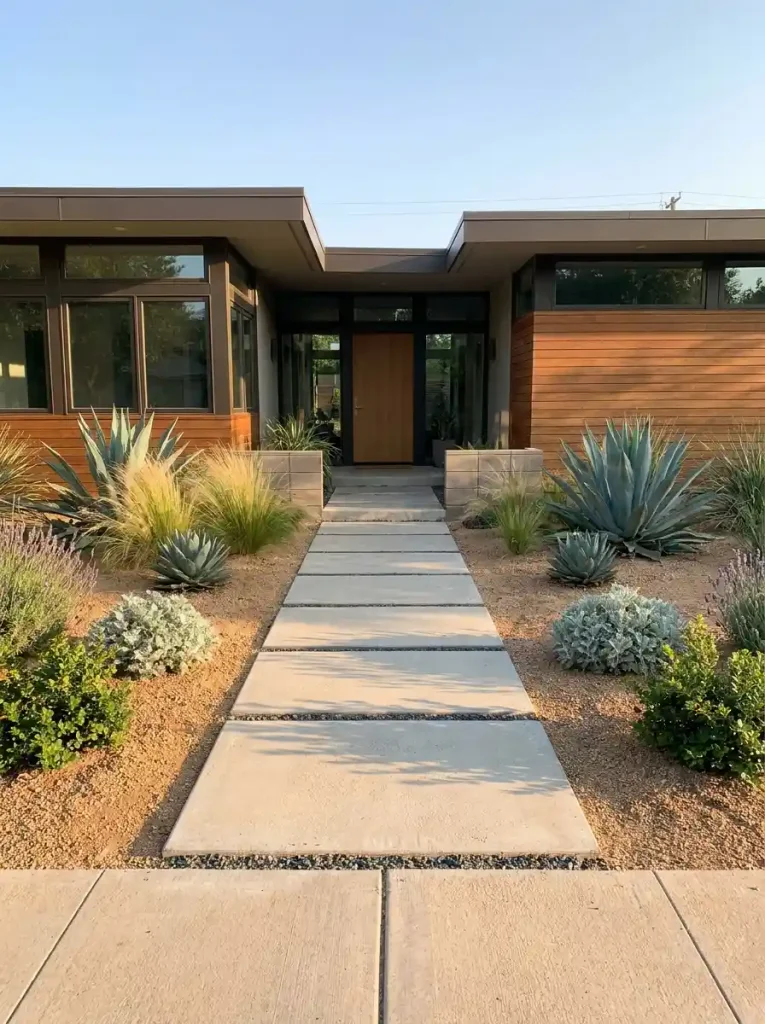
- Creates a strong visual entrance
- Reinforces clean geometric lines
- Works beautifully with low-profile homes
- Reduces visual clutter
- Pairs naturally with gravel landscaping
- Gives the yard a timeless appearance
A geometric concrete pathway immediately establishes the structured character associated with mid-century modern design. Large rectangular slabs create visual rhythm while the spaces between them can be filled with gravel or low-growing ground cover.
For a more authentic appearance, keep the surrounding planting restrained rather than filling every available space. The combination of concrete, gravel, and carefully positioned greenery allows the architecture to remain the main focal point while still giving the front yard plenty of personality.
2. Desert-Inspired Mid-Century Landscape
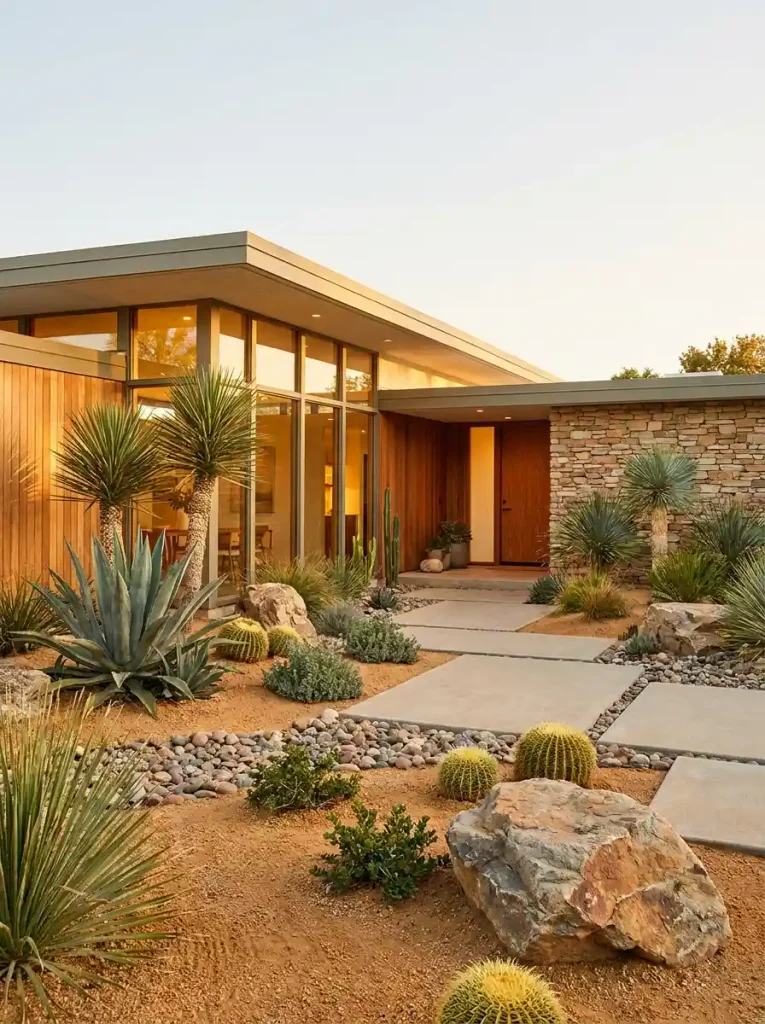
- Creates a strong architectural connection
- Works well in dry climates
- Highlights sculptural plants
- Requires relatively simple planting
- Adds natural texture
- Complements warm exterior materials
Desert-inspired landscaping works particularly well when the architecture already has strong horizontal lines and large windows. Sculptural plants can echo the bold forms of the building without requiring excessive decoration.
Warm gravel, natural stone, and drought-tolerant greenery also create a restrained color palette. This makes the landscape feel intentional while allowing the home’s materials and architectural proportions to remain visually prominent.
3. Mid-Century Gravel Garden
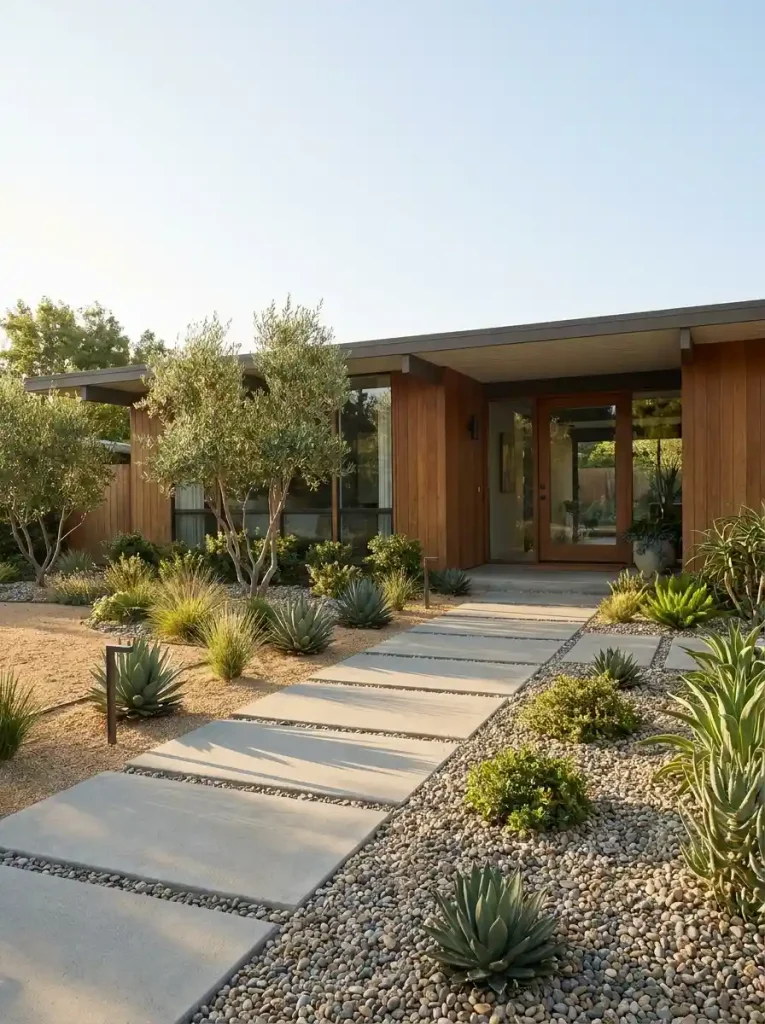
- Creates a low-maintenance appearance
- Emphasizes clean landscape structure
- Adds subtle natural texture
- Works with drought-tolerant plants
- Complements concrete and stone
- Keeps the front yard visually open
A gravel garden can give a mid-century front yard an understated and architectural quality. Rather than relying on extensive lawns or dense planting, gravel provides a consistent ground layer that makes individual plants stand out.
Use different gravel tones carefully so the landscape does not become visually busy. A few large stepping stones, sculptural plants, and low shrubs can provide enough variation while maintaining the simple visual language that defines the style.
4. Low Horizontal Planting
- Enhances horizontal architecture
- Keeps the home visually dominant
- Creates a clean front elevation
- Provides layered greenery
- Avoids overcrowded planting
- Feels authentic to the design era
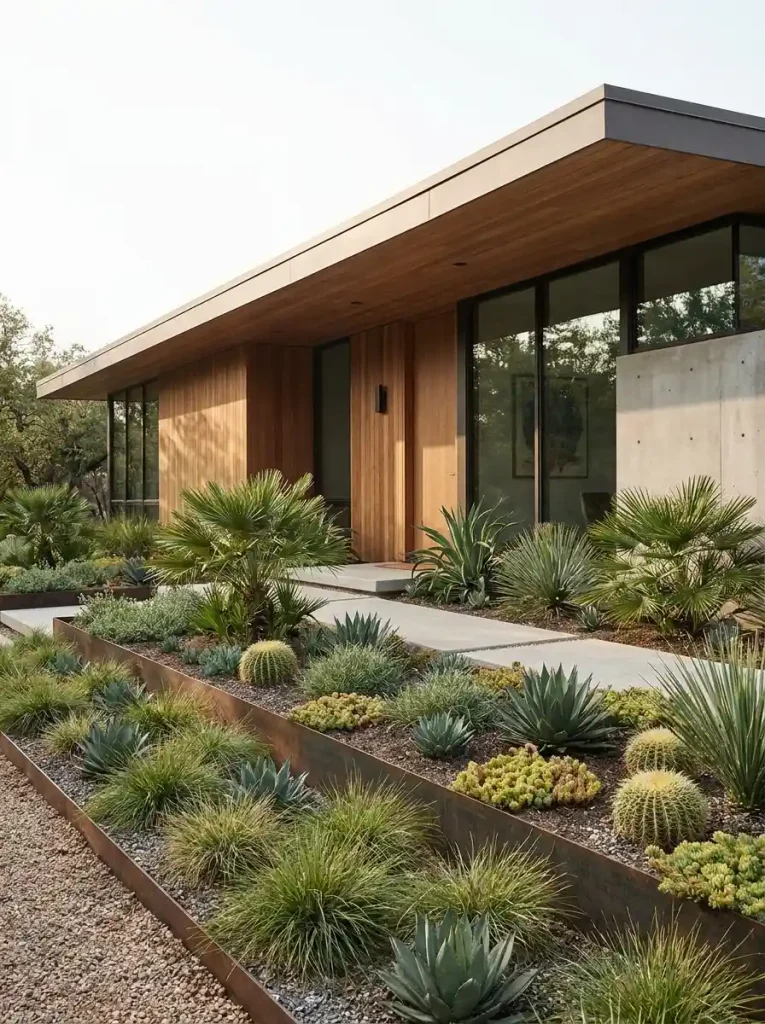
Mid-century homes often have strong horizontal proportions, so low planting can reinforce those lines instead of hiding them. Long planting beds can visually extend the width of the home and make the exterior feel more integrated with its surroundings.
Choose plants with varied textures but controlled heights. This creates visual interest without allowing greenery to overwhelm windows, entryways, or architectural details.
5. Sculptural Agave Border
- Adds sculptural plant forms
- Creates strong visual rhythm
- Requires limited decorative elements
- Complements concrete pathways
- Works with neutral materials
- Makes the entry visually memorable
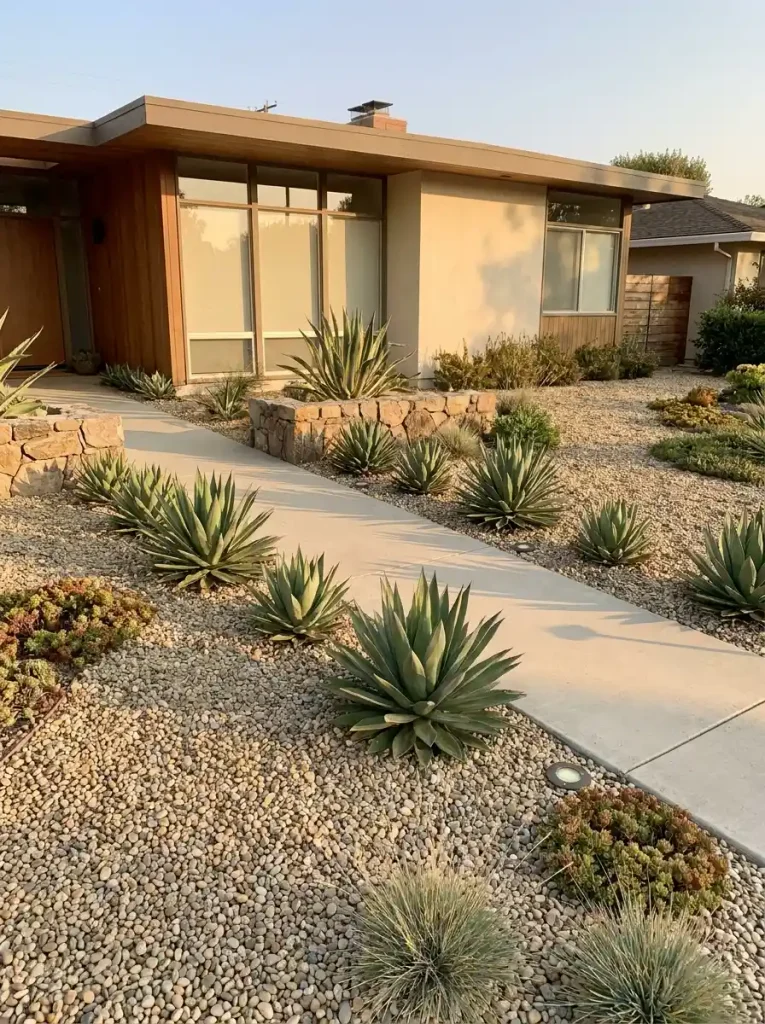
Agave plants can become a natural focal point in a mid-century landscape because of their structured, architectural shape. Their pointed leaves provide contrast against softer grasses and rounded shrubs.
Instead of planting them tightly together, give each specimen enough space to stand out. A gravel base and simple concrete pathway can further emphasize their shape and create a clean connection between the plants and the house.
6. Warm Wood Landscape Screens
- Adds privacy without heavy walls
- Introduces natural warmth
- Echoes mid-century wood detailing
- Screens practical areas
- Creates vertical contrast
- Adds architectural character
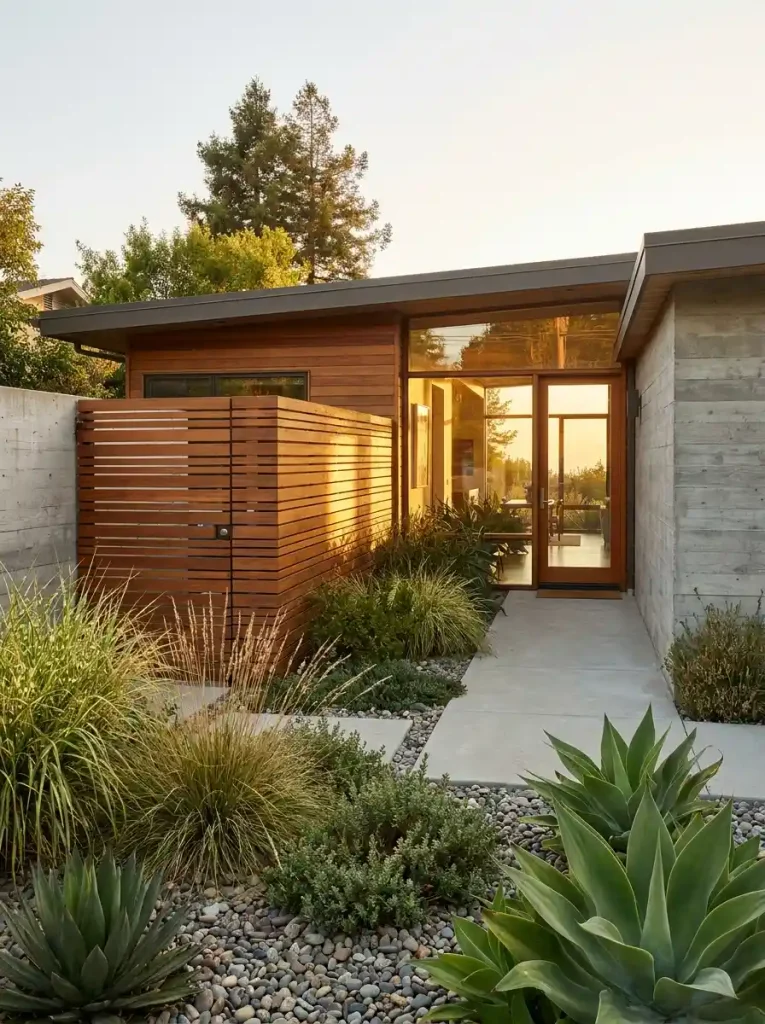
Wood screens are useful when a front yard needs privacy without introducing a bulky wall. Horizontal slats can visually connect with the lines of a mid-century home while bringing a warmer, more natural element into the landscape.
Use screens selectively rather than covering the entire property. A single wood feature can be enough to define an entry, hide equipment, or create a subtle transition between the front and side yard.
7. Concrete Planters With Architectural Plants
- Frames the entrance beautifully
- Adds strong geometric shapes
- Works with minimalist architecture
- Provides movable planting options
- Introduces concrete texture
- Creates an intentional focal point
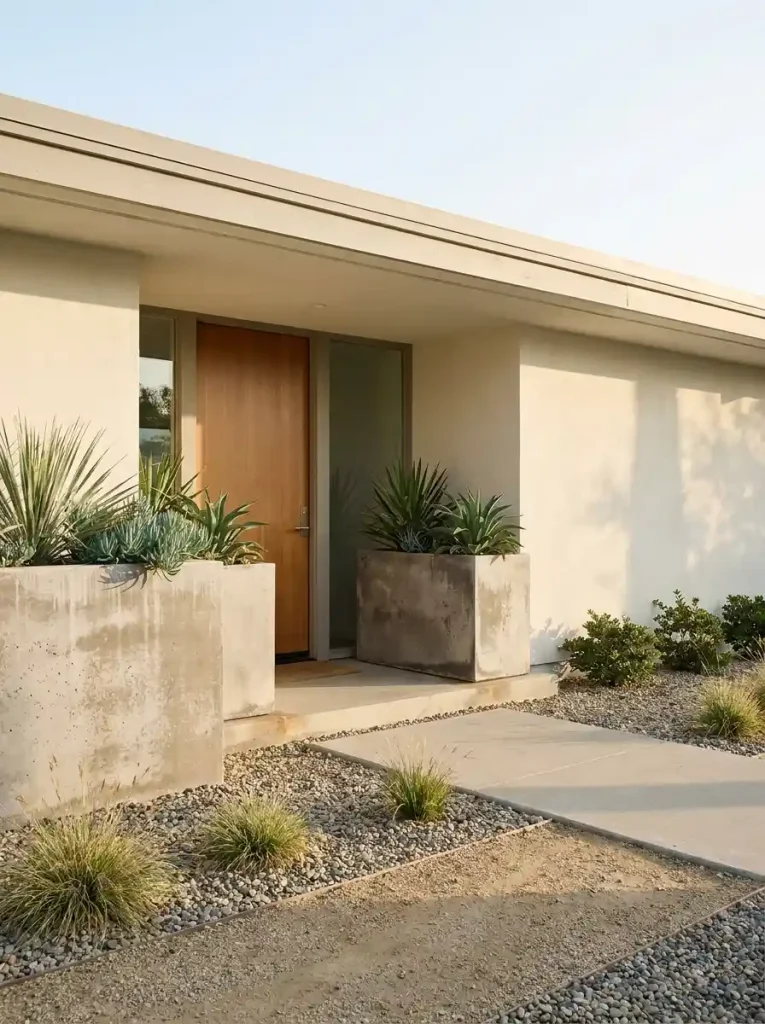
Large concrete planters can make a front entrance feel more deliberate without requiring a complicated garden design. Their geometric forms naturally complement mid-century architecture.
Fill them with plants that have strong silhouettes rather than overly colorful flowers. Agave, yucca, grasses, and compact palms can provide enough visual interest while maintaining the clean character of the landscape.
8. Native Planting With Mid-Century Lines
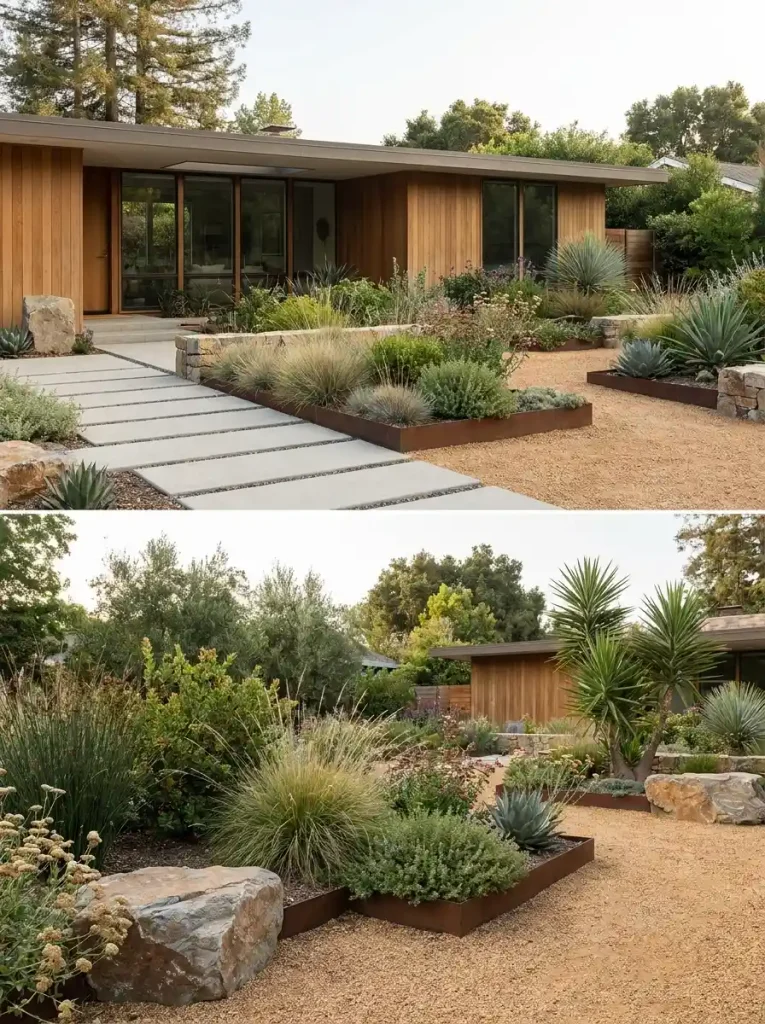
- Supports a more natural landscape
- Creates regional character
- Can reduce excessive lawn
- Adds varied plant textures
- Maintains a structured appearance
- Blends nature with architecture
Native plants can bring a softer and more natural feeling to the structured geometry of a mid-century landscape. The key is arranging them in intentional groups rather than allowing the garden to look completely unplanned.
Pair loose grasses and native shrubs with defined pathways, gravel areas, or concrete borders. This creates an attractive contrast between organic planting forms and the precise lines of the architecture.
9. Mid-Century Lawn With Structured Borders
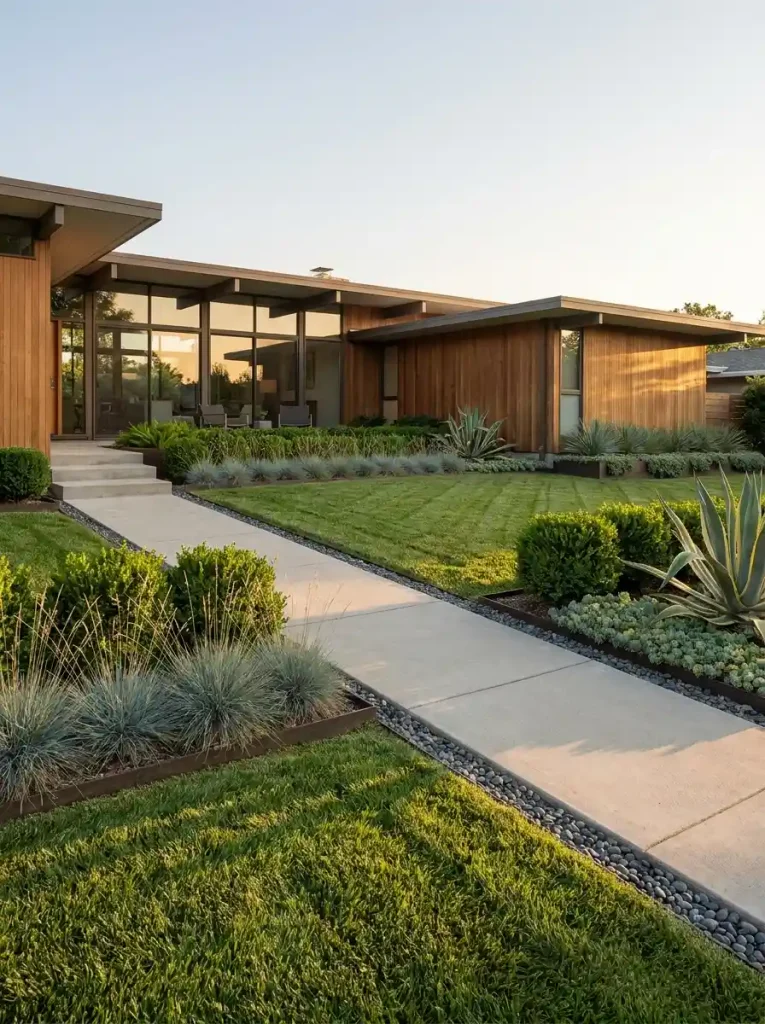
- Provides a soft green focal area
- Highlights geometric structure
- Creates visual openness
- Works well with low planting
- Adds a traditional lawn element
- Balances hardscape materials
A lawn can still work beautifully in a mid-century landscape when its shape is carefully controlled. Instead of curving the grass around multiple planting islands, use a simple rectangular or softly geometric area.
Defined borders can keep the lawn looking crisp while surrounding plants add texture. This approach creates a useful balance between the softness of grass and the hard geometry of concrete, gravel, and architecture.
10. Stepping-Stone Entry Walkway
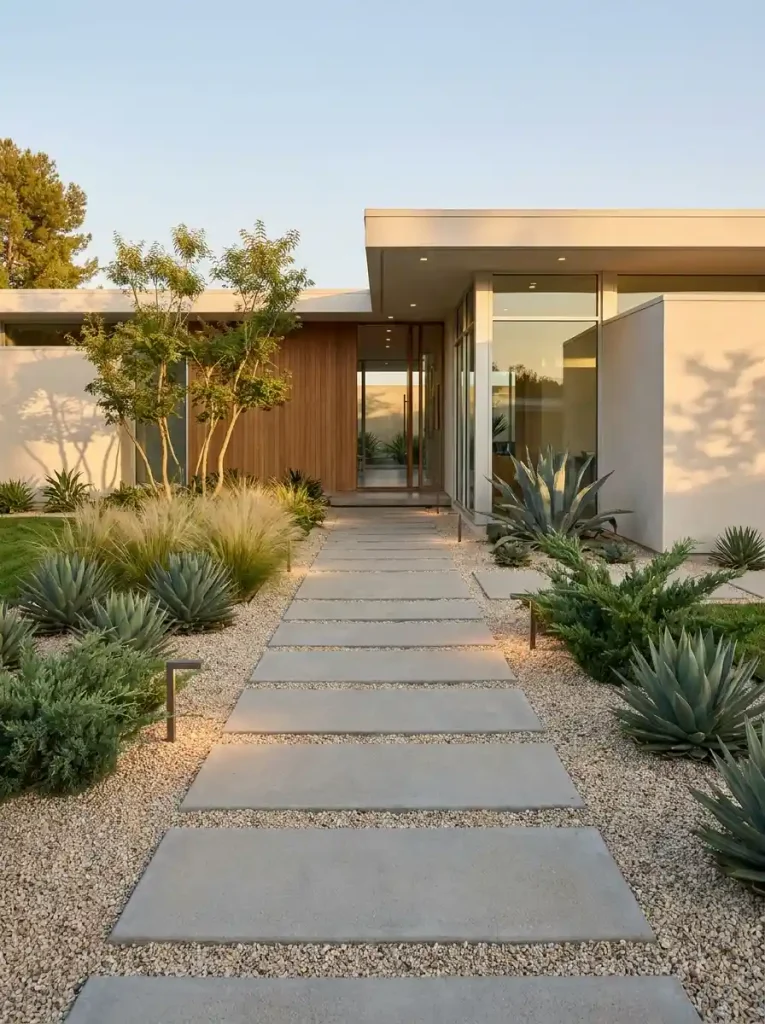
- Creates an inviting arrival
- Adds rhythm to the landscape
- Works beautifully with gravel
- Highlights geometric forms
- Guides visitors naturally
- Adds visual depth to the yard
Oversized stepping stones can make a simple front yard feel more architectural. Their repeated shape creates rhythm and draws attention toward the front door without needing decorative signs or excessive planting.
Keep the path comfortable and practical, with consistent spacing and enough surrounding area for the plants to remain visible. Gravel between the slabs can reinforce the clean, understated appearance.
11. Olive Tree and Gravel Landscape
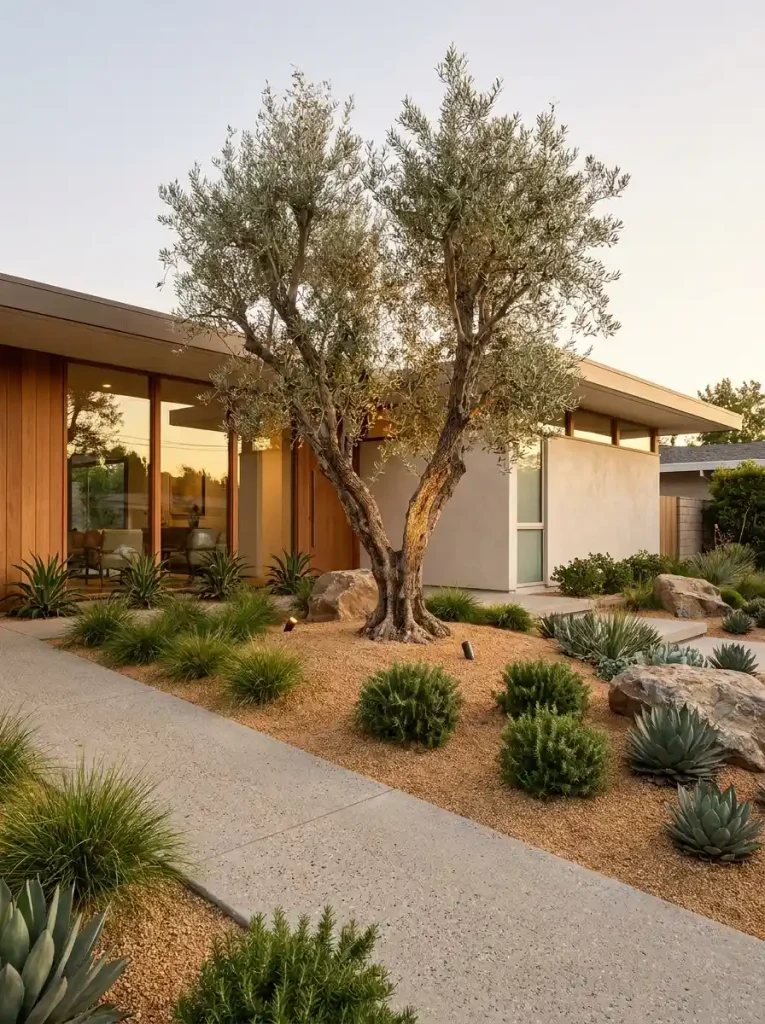
- Adds mature landscape character
- Provides natural height
- Works with gravel gardens
- Creates a strong focal point
- Complements warm materials
- Offers a timeless appearance
A sculptural tree can give a mid-century landscape a sense of maturity without requiring a dense garden. Olive trees, where suitable to the climate, can provide a strong trunk and airy canopy that contrasts beautifully with low planting.
Surround the tree with restrained ground materials so it remains visually important. Gravel, concrete, and small grasses create a sophisticated setting while preserving the open character of the front yard.
12. Mid-Century Rock Garden
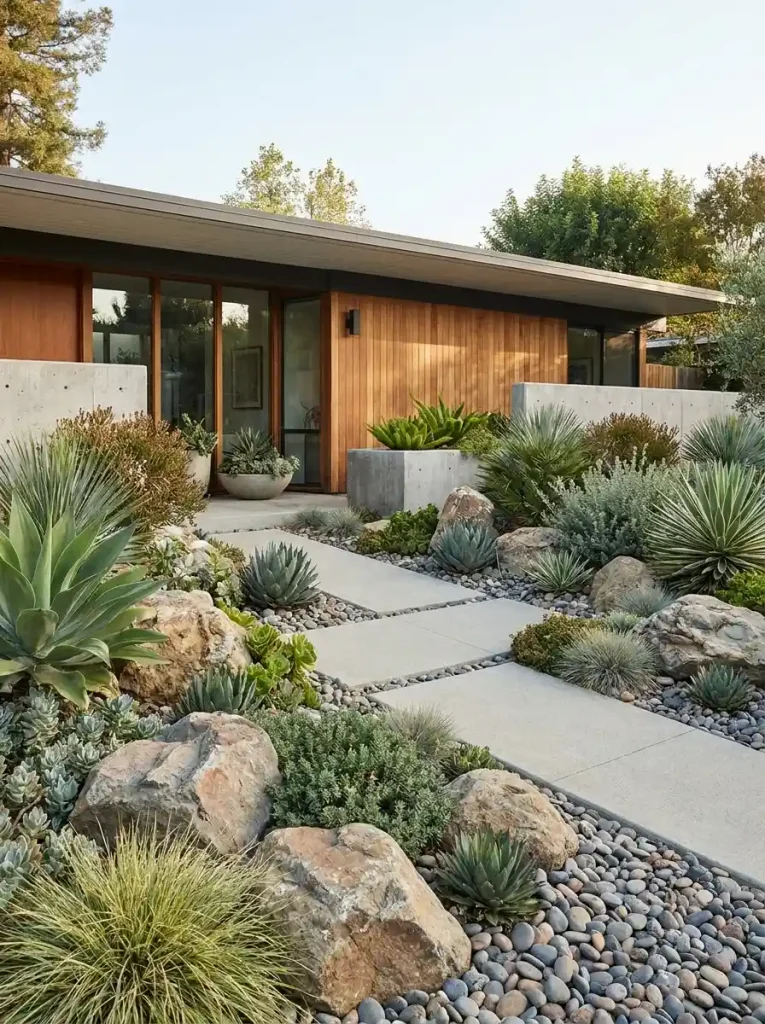
- Adds natural texture
- Works with drought-tolerant planting
- Creates visual depth
- Complements concrete architecture
- Reduces dependence on lawn
- Makes the landscape feel sculptural
A rock garden can give a mid-century property a strong connection to natural materials. Large boulders and smaller gravel create several levels of texture while architectural plants provide living contrast.
The goal is not to fill the yard with rocks. Instead, use a small number of carefully positioned stones and combine them with plants of different shapes to create a balanced composition.
13. Horizontal Hedge Design
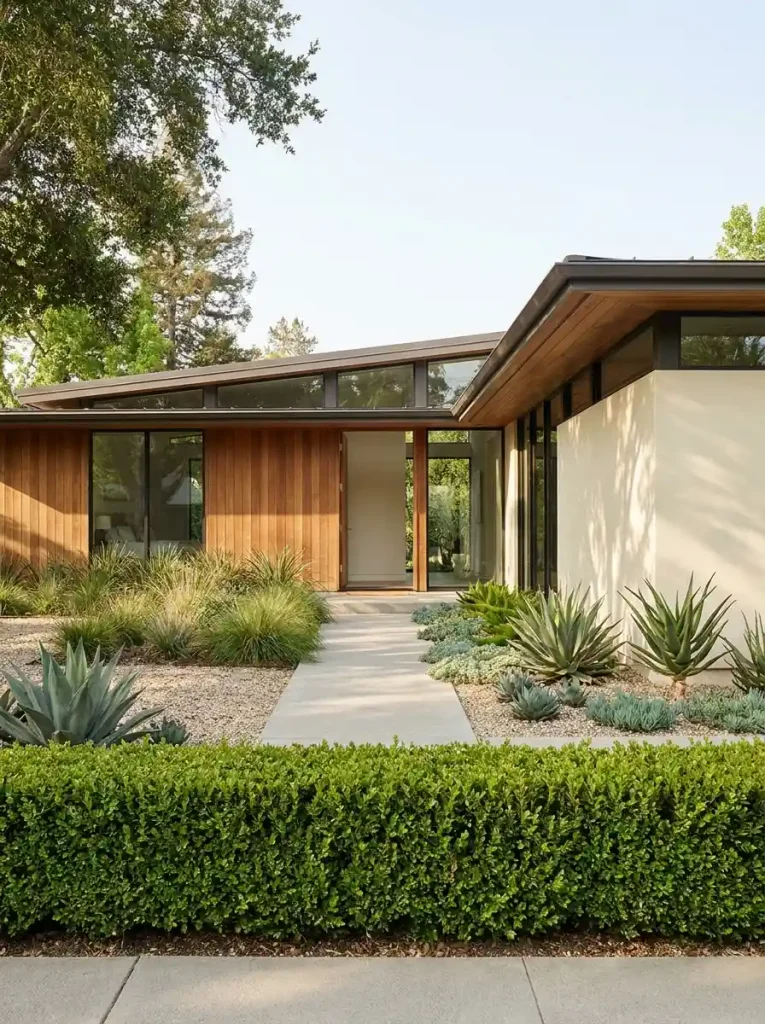
- Reinforces horizontal architecture
- Defines the property boundary
- Creates a tidy appearance
- Adds evergreen structure
- Provides subtle screening
- Keeps the design restrained
A low hedge can create a clear transition between the street and the property while reinforcing the horizontal proportions of a mid-century home. Keeping it low prevents the landscape from hiding the architecture.
Use simple, consistent shapes rather than heavily sculpted topiary. The goal is to create structure and continuity, not introduce a formal garden style that competes with the house.
14. Integrated Concrete and Gravel Beds
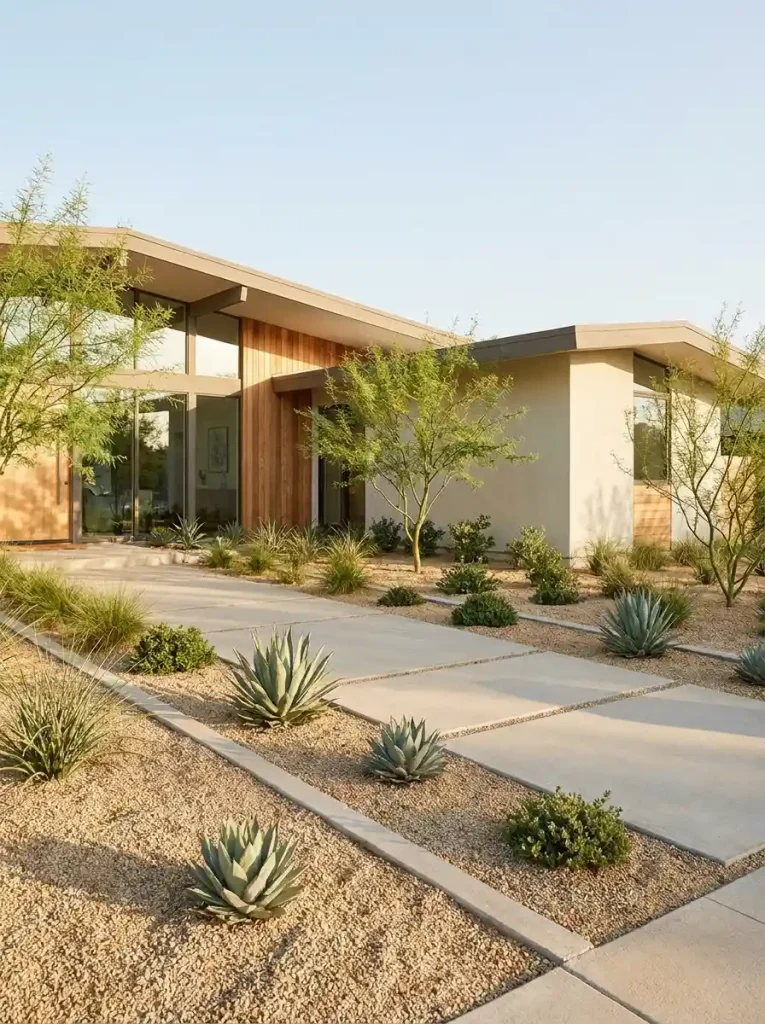
- Creates strong material contrast
- Establishes visual continuity
- Makes pathways feel intentional
- Works with restrained planting
- Adds texture without clutter
- Enhances architectural geometry
Combining concrete and gravel creates one of the easiest ways to achieve a distinctly mid-century landscape feeling. Concrete supplies structure while gravel introduces a softer natural texture.
Keep the relationship between these materials simple. Straight edges, rectangular forms, and carefully positioned plants can create a polished appearance without making the landscape feel overly formal.
15. Ornamental Grass Foundation Planting
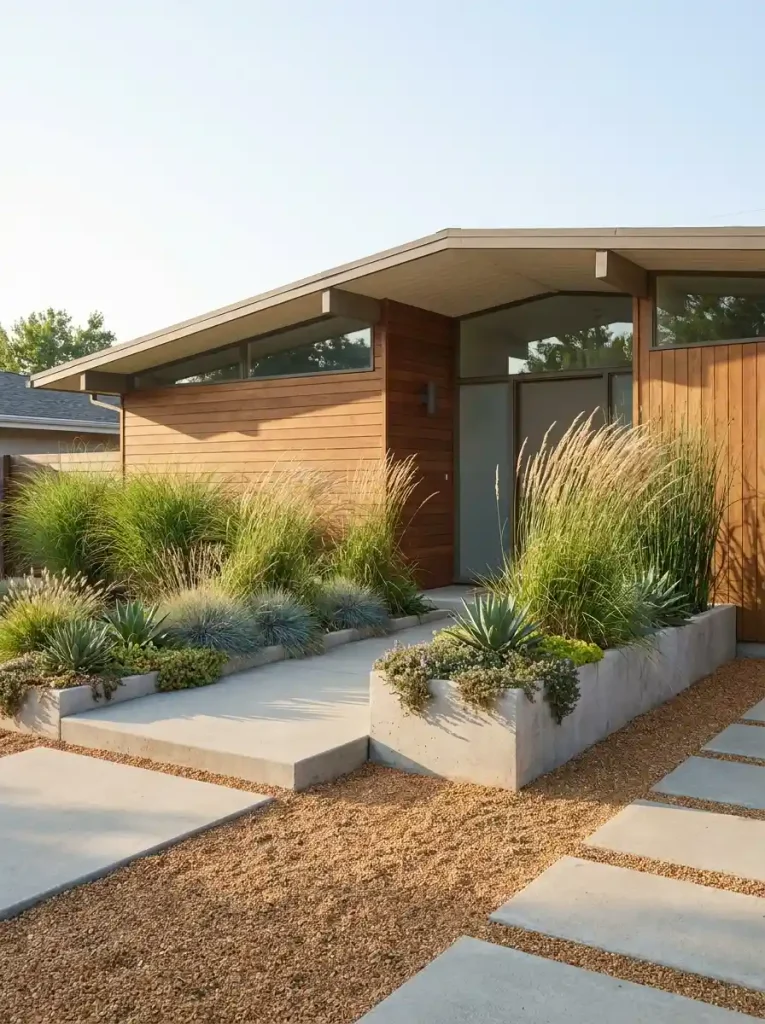
- Adds movement and softness
- Contrasts hard architecture
- Creates layered planting
- Works with neutral materials
- Provides seasonal texture
- Keeps the design contemporary
Ornamental grasses are excellent for softening the harder elements of mid-century architecture. Their movement creates a more relaxed appearance while their vertical blades contrast with horizontal rooflines and concrete surfaces.
Use grasses in repeated groups rather than scattering individual plants randomly. Repetition creates cohesion and gives the landscape a carefully designed appearance.
16. Palm-Focused Mid-Century Front Yard
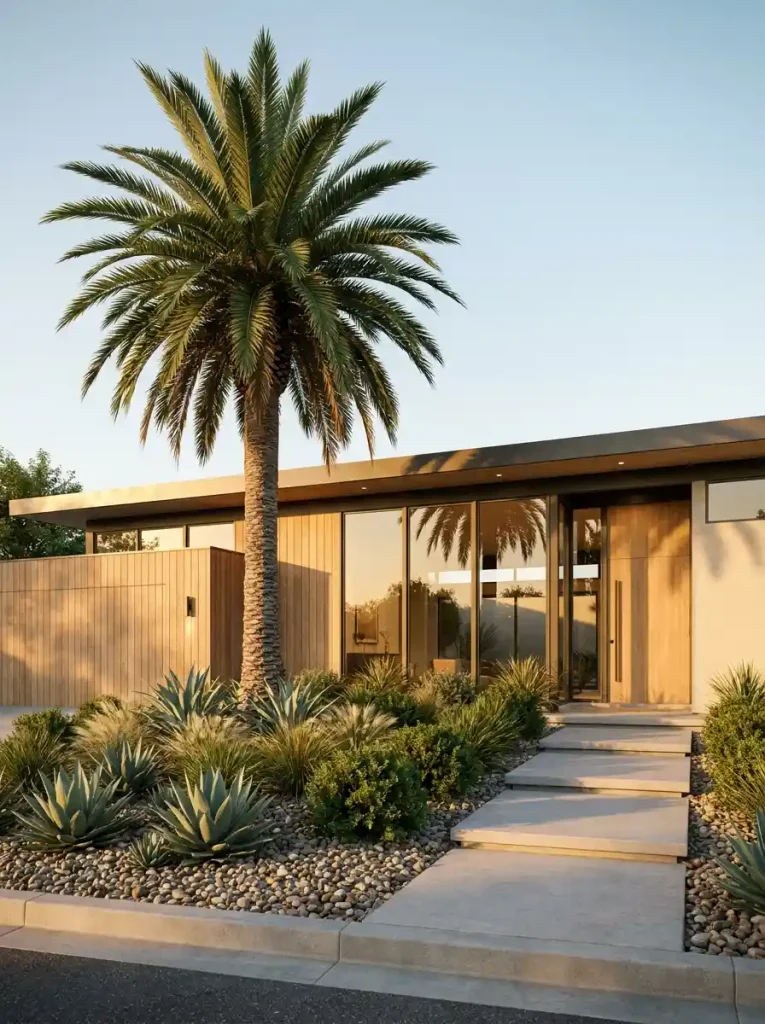
- Creates a recognizable focal point
- Adds architectural height
- Works with warm climates
- Complements low planting
- Enhances mid-century character
- Creates a resort-like feeling
A carefully placed palm can strengthen the classic mid-century atmosphere, especially when the surrounding planting remains low and structured. The tree adds height without requiring dense vegetation.
Rather than planting multiple palms everywhere, choose one or two strategic locations. This keeps the composition intentional and allows the distinctive silhouette to complement the home’s architecture.
17. Integrated Front Courtyard
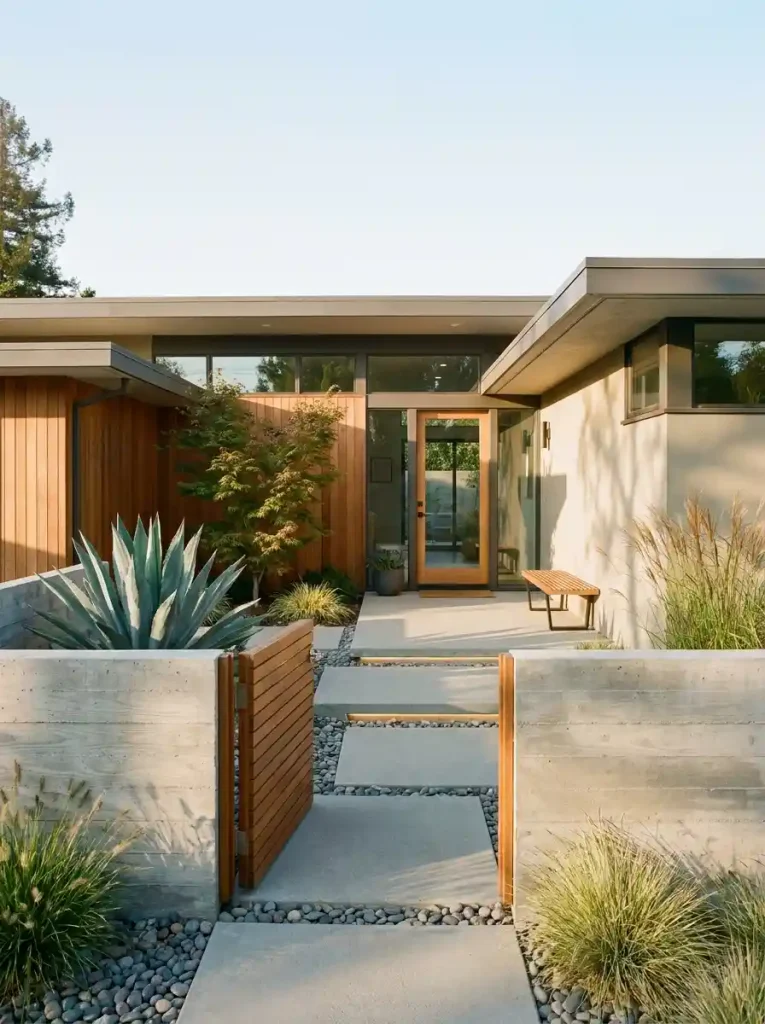
- Creates privacy near the entrance
- Adds an outdoor living element
- Defines the entry zone
- Connects landscape and architecture
- Provides space for seating
- Creates a sophisticated arrival
A front courtyard can transform an ordinary entry into a defined outdoor space. Low walls, wood gates, and carefully placed planting can provide privacy while maintaining the open character of mid-century design.
Keep furniture and decorative elements minimal. A simple bench, architectural planter, or integrated lighting can make the courtyard functional without turning it into a heavily decorated outdoor room.
18. Mid-Century Curbside Planters
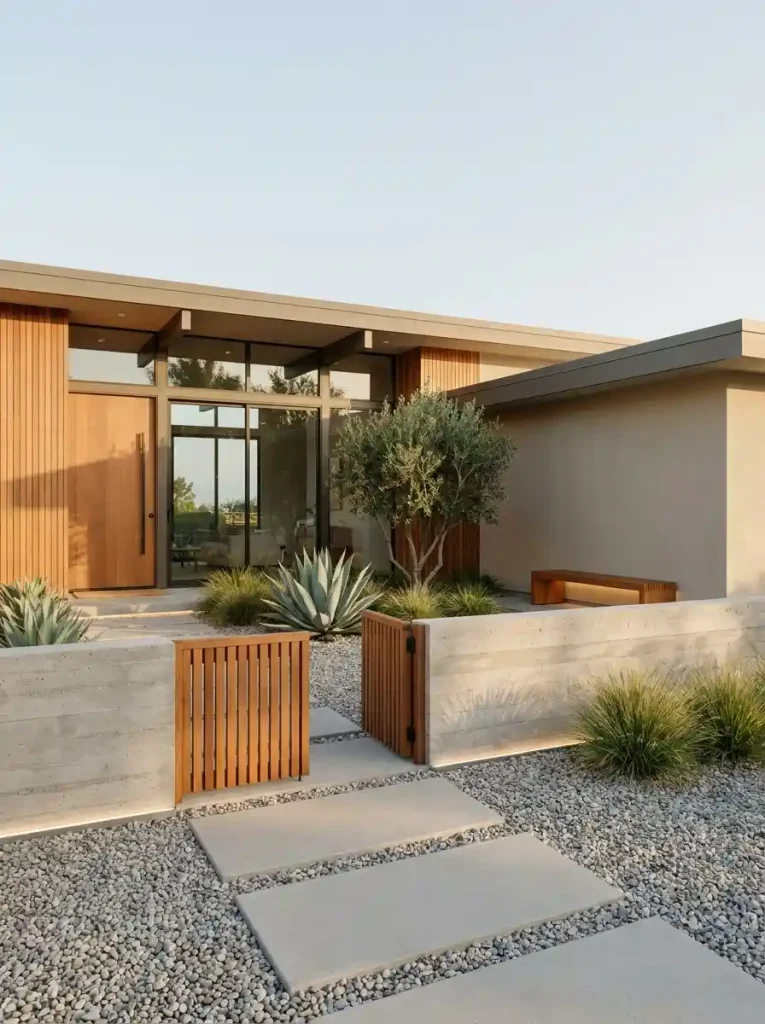
- Defines the curbside edge
- Adds strong geometry
- Creates repeated visual rhythm
- Makes planting easy to organize
- Complements concrete architecture
- Enhances street-facing appeal
Low curbside planters can create a strong visual transition between the public sidewalk and the home’s landscape. Their repeated rectangular forms are particularly compatible with mid-century geometry.
Keep the planters low enough that they do not block the house. A restrained palette of green plants, concrete, and gravel can make the entire frontage feel coordinated.
19. Drought-Tolerant Mid-Century Garden
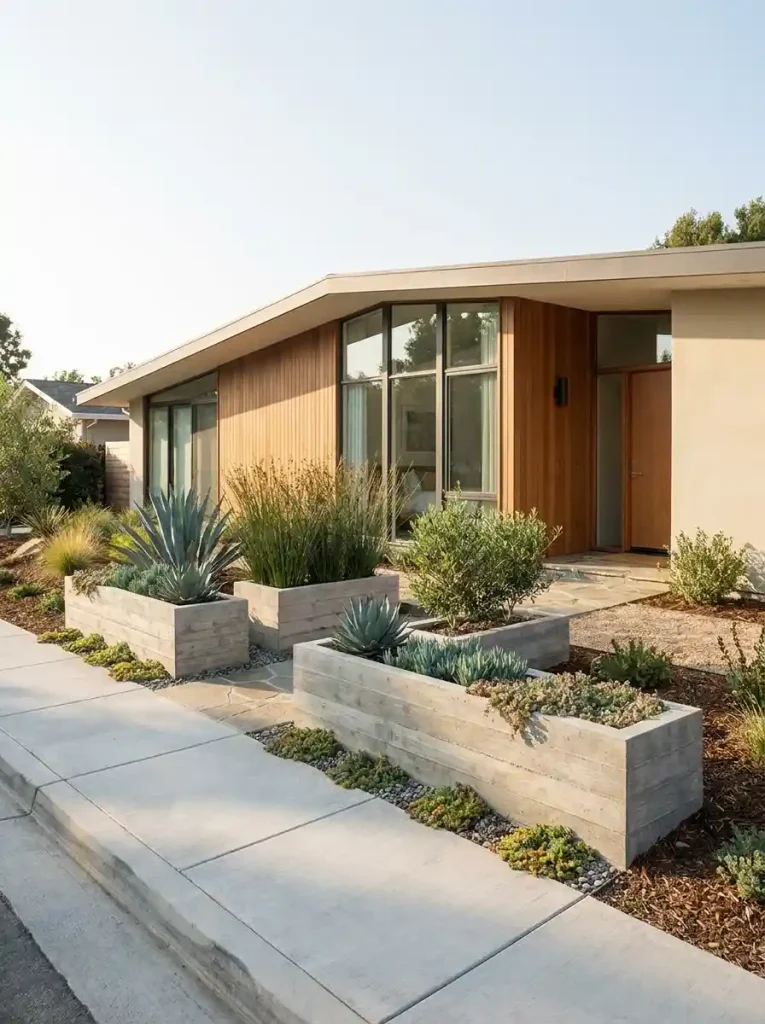
- Reduces lawn dependence
- Highlights sculptural planting
- Creates a low-maintenance look
- Works with gravel and stone
- Complements modern architecture
- Keeps the yard visually open
A drought-tolerant garden can be especially effective when the planting is selected for form as well as function. Succulents, grasses, yucca, and other suitable plants can create a rich landscape without relying on excessive decorative planting.
The most successful designs still need structure. Repeated plant groups, clear pathways, defined gravel areas, and a controlled color palette help the garden feel intentional rather than sparse.
20. Natural Stone Accent Wall
- Adds natural architectural texture
- Creates a strong visual anchor
- Complements warm wood
- Defines planting areas
- Adds subtle elevation
- Works with simple landscaping
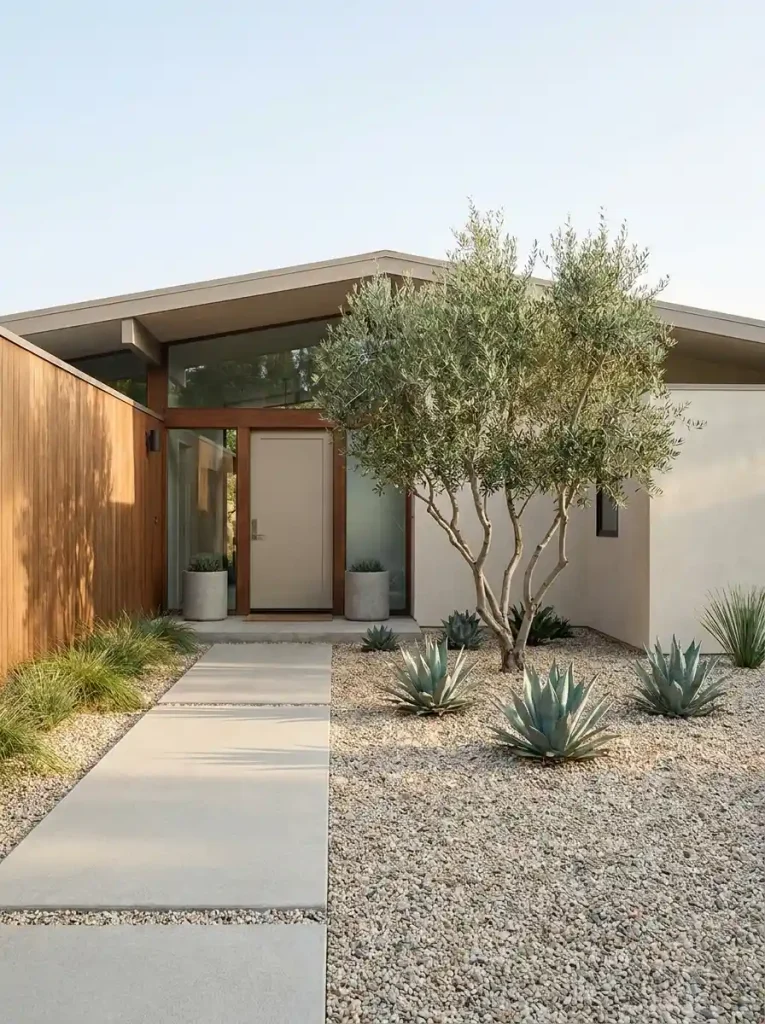
Natural stone can introduce warmth and texture without compromising the clean lines of a mid-century landscape. A low stone wall can separate planting beds, define a change in level, or simply act as a visual anchor.
Choose stone with colors that coordinate with the home’s exterior. Warm beige, gray, tan, or earthy tones can create a cohesive connection between the building and landscape.
21. Minimalist Entry Garden
- Keeps the entrance visually calm
- Highlights architectural details
- Uses fewer plants effectively
- Creates useful negative space
- Works well with small yards
- Feels refined and timeless
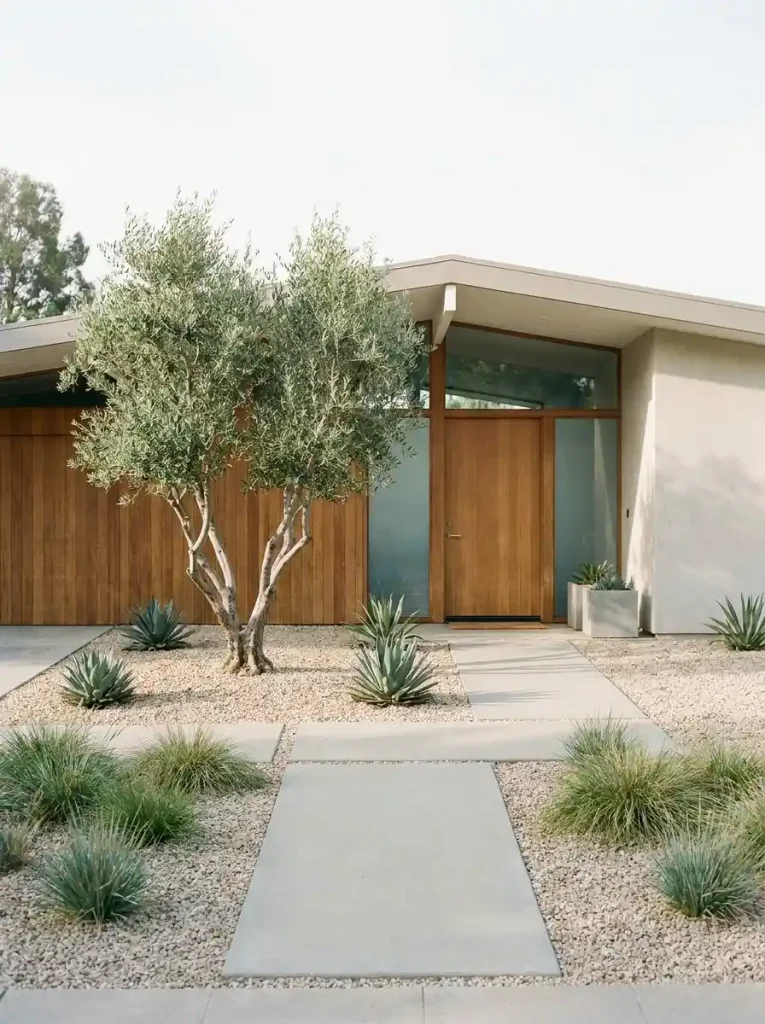
A minimalist entry garden proves that curb appeal does not require a large amount of landscaping. A small number of carefully chosen plants can create a stronger effect than dozens of unrelated varieties.
Use negative space as part of the design. Gravel, concrete, and open areas give each plant room to breathe while allowing the architecture to remain the dominant visual element.
22. Mid-Century Courtyard With Water Feature
- Adds a subtle sensory element
- Creates a reflective focal point
- Works with geometric layouts
- Enhances courtyard spaces
- Adds visual movement
- Complements minimalist architecture
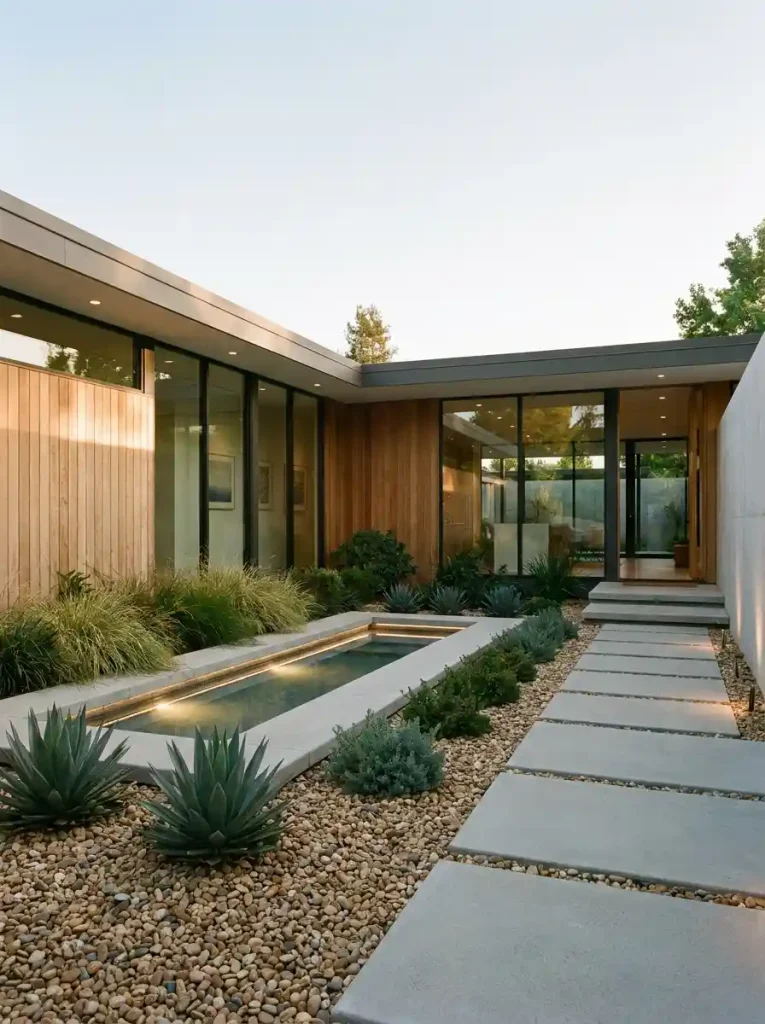
A small water feature can introduce a sense of calm without turning the landscape into a traditional ornamental garden. Rectangular forms work particularly well with mid-century geometry.
Keep the feature simple and proportional to the property. The surrounding gravel, concrete, and planting should remain visually restrained so the water becomes a quiet accent rather than the entire focus.
23. Modern Address Feature With Planting
- Adds useful curbside function
- Creates a recognizable entry point
- Complements minimalist architecture
- Works with natural materials
- Provides a small focal feature
- Improves visual organization
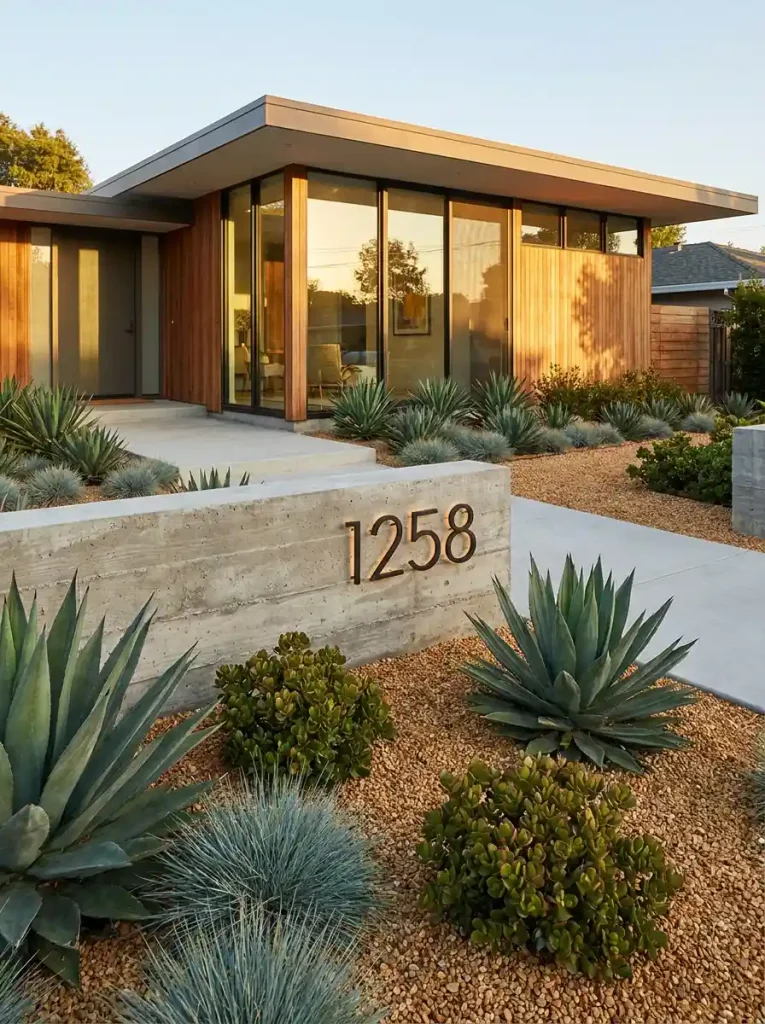
House numbers can become part of the landscape rather than feeling like an afterthought. A simple concrete, stone, or wood feature can provide a dedicated place for them while reinforcing the architectural language of the property.
Surround the feature with restrained planting rather than decorative clutter. A few architectural plants and a clean path can make the address area feel intentional and connected to the overall front yard.
24. Complete Mid-Century Curb Appeal Landscape
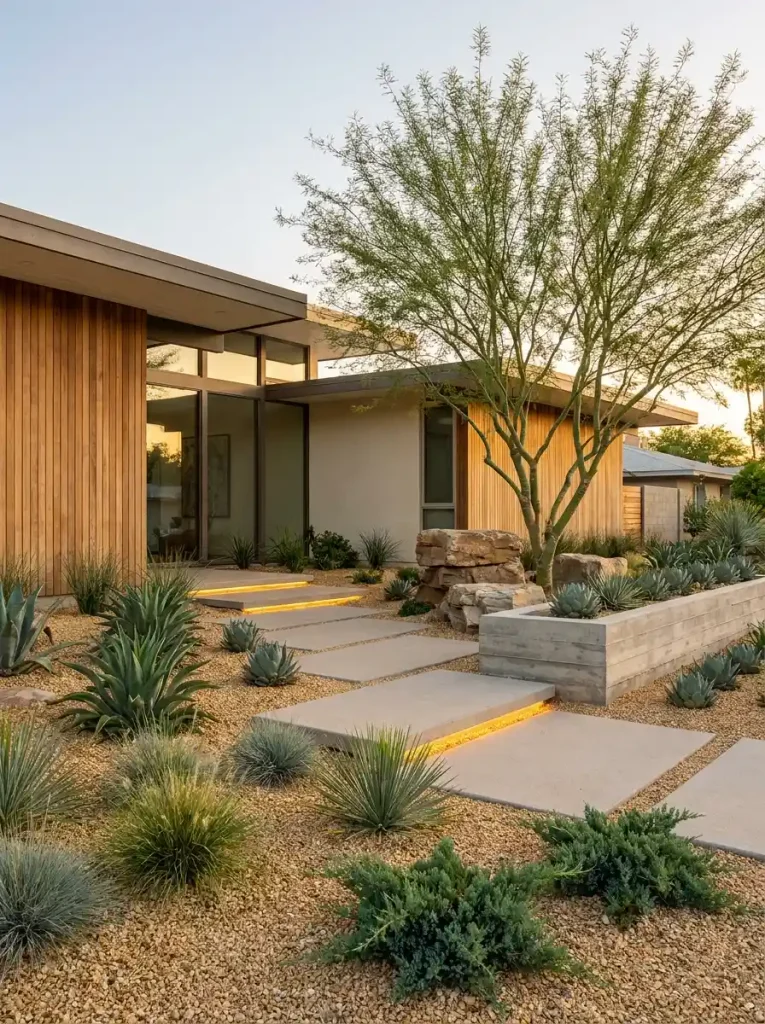
- Combines architecture and landscape
- Creates a cohesive front elevation
- Balances hardscape and greenery
- Uses repetition for visual harmony
- Builds strong curb appeal
- Feels timeless rather than overly trendy
A complete mid-century landscape works best when every major element feels connected. The walkway, planting beds, gravel, trees, planters, and architectural materials should support the same simple visual language instead of competing for attention.
Focus on proportion and repetition when combining several features. A few repeated materials and plant forms can make a large front yard feel cohesive, while generous open space keeps the final result clean and unmistakably mid-century modern.
Final Thoughts: Mid-Century Modern Landscaping Ideas
Mid-century modern landscaping works best when simplicity, structure, and natural materials are allowed to work together. Clean concrete paths, gravel, warm wood, natural stone, and architectural plants can create curb appeal without making the exterior feel overly decorated.
You do not need to completely redesign the property to achieve this look. Updating the entry path, adding a few sculptural plants, replacing crowded beds with gravel, or introducing a simple planter can make a noticeable difference.
Plant selection should also support the architecture. Low shrubs, ornamental grasses, agave, succulents, palms, and suitable native plants can add texture while keeping the clean sightlines that make mid-century homes so distinctive.
The most successful landscape will ultimately be the one that feels connected to the house rather than separate from it. Keep the shapes intentional, repeat a few key materials, leave enough negative space, and let the architecture remain part of the landscape design.