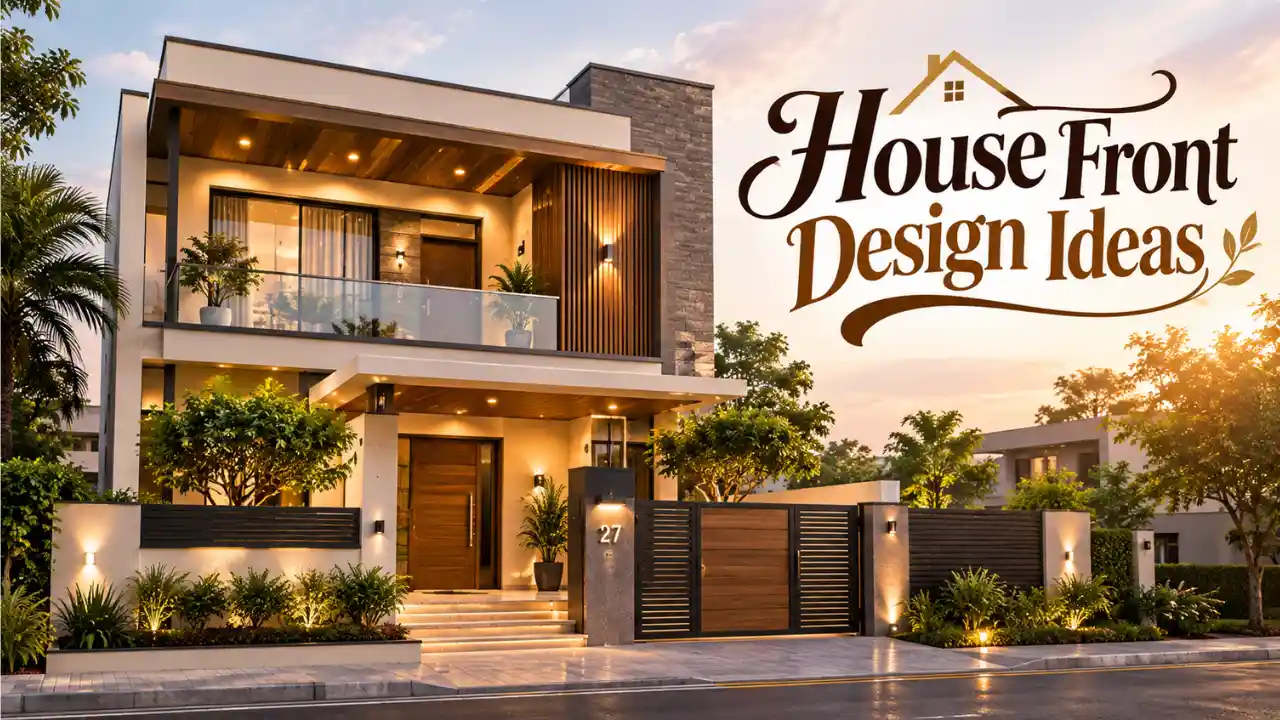
21 Stunning House Front Design Ideas for a Stylish Home
The front of a house is the first part of a home that catches attention, and its design can shape the entire impression of the property. From the entrance and windows to the exterior colors, pathways, lighting, and landscaping, every element contributes to how welcoming and well-designed a home feels. A thoughtful house front design does not always require expensive changes; even small architectural and decorative details can create a noticeable difference.
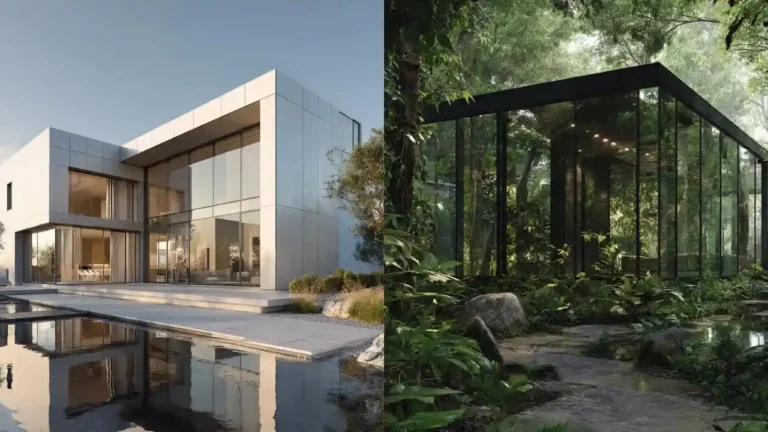
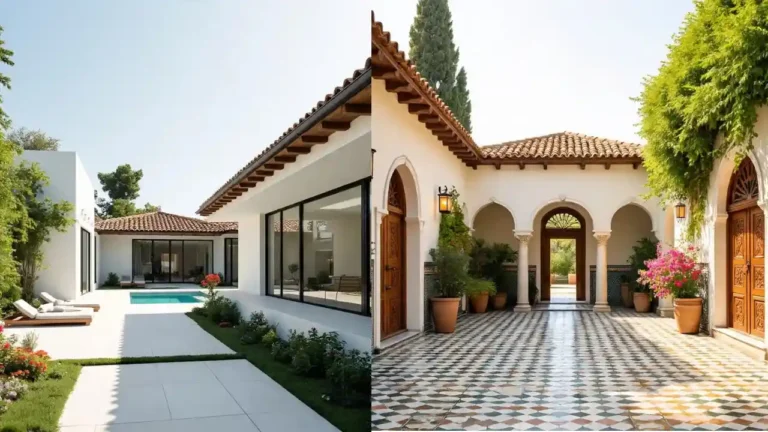
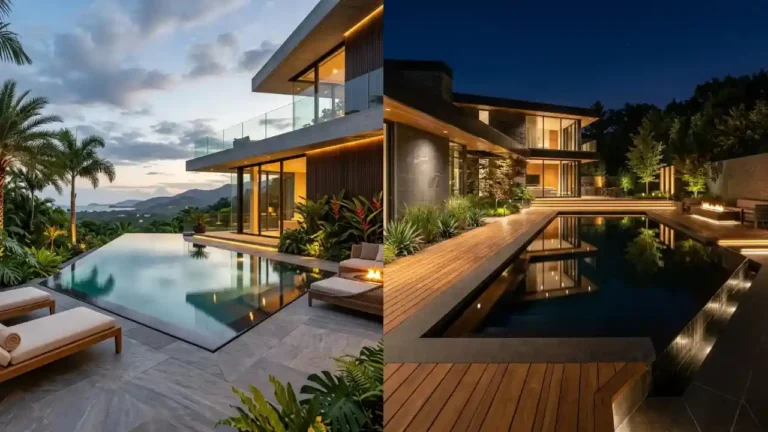
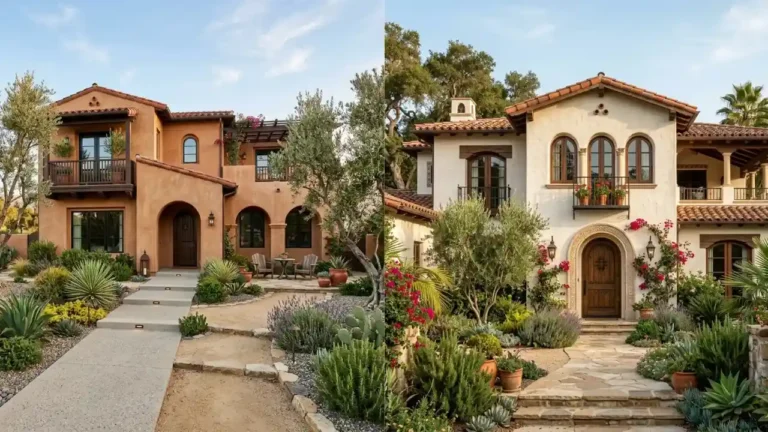
These House Front Design Ideas by The Home Vista have plenty of directions to explore when designing the front of their homes. Some prefer clean lines, neutral colors, and simple landscaping, while others are drawn to warm materials, dramatic doors, traditional details, or more expressive exterior combinations. The best designs usually create balance between the architecture of the house and the surrounding outdoor space.
A successful front elevation should also feel connected to the way the home is used. The entrance should be practical, pathways should feel natural, and outdoor lighting should make the property comfortable after sunset. At the same time, materials, textures, and colors can be layered carefully to give the exterior more depth and personality.
Whether you are planning a complete exterior update or simply looking for ideas to refresh your home’s curb appeal, these house front design ideas offer different ways to create a memorable entrance. Each concept focuses on details that can make the front of a house feel more inviting, balanced, and visually distinctive.
1. Warm Modern House Front With Natural Stone
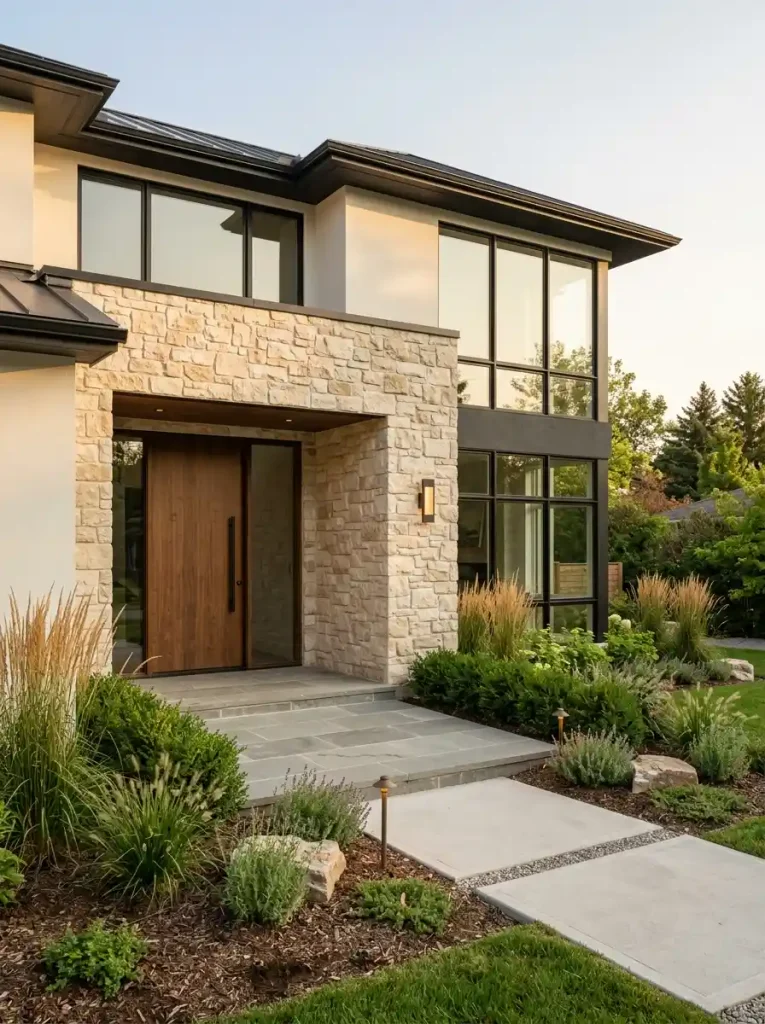
Natural stone can give a house front an immediate sense of warmth and permanence. When combined with clean architectural lines, large windows, and warm wood accents, it creates an exterior that feels contemporary without becoming cold. A stone-clad entrance wall can serve as the main focal point while neutral walls and simple landscaping keep the overall appearance balanced. This approach works particularly well when the materials are allowed to provide most of the visual interest.
- Natural stone adds depth and texture
- Warm wood softens contemporary architecture
- Black frames create subtle contrast
- Neutral walls keep the exterior balanced
- Landscaping adds organic softness
- Layered materials create visual interest
Natural stone works especially well on a front elevation because it gives the entrance a strong visual anchor. Instead of covering the entire house in stone, using it selectively around the doorway or a feature wall can create a more refined appearance. The natural variations in color and texture also make the exterior feel less flat.
The rest of the facade can remain relatively simple so the stone has room to stand out. Warm timber, understated lighting, and structured planting can reinforce its earthy character. This creates a house front that feels modern and sophisticated while still having a welcoming quality that suits everyday family living.
2. Minimalist White House Front With Dark Frames
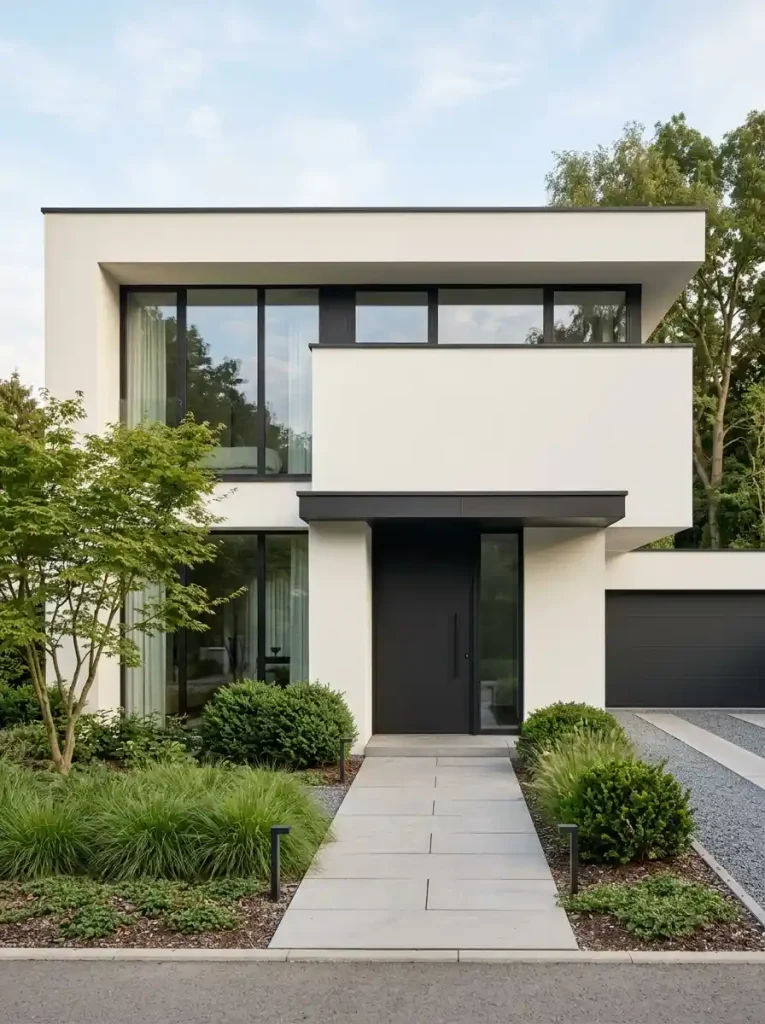
A crisp white exterior paired with dark window frames creates a clean and memorable house front. The contrast immediately defines the windows, doors, and architectural lines while keeping the overall facade bright. Simple landscaping and a restrained entrance allow the architecture to remain the main feature. This style is particularly effective for homeowners who prefer an uncluttered exterior with strong visual definition.
- White walls create a bright exterior
- Dark frames define architectural lines
- Minimal landscaping keeps the facade clean
- Charcoal accents add visual weight
- Simple geometry feels contemporary
- Soft greenery prevents a sterile appearance
The appeal of this design comes from its simplicity. A white facade reflects natural light beautifully and provides a neutral background for darker architectural details. Black or charcoal frames can then create a strong rhythm across the front elevation, especially when the windows are arranged in balanced proportions.
Minimalism does not mean the exterior has to feel empty. Small differences in texture, carefully chosen plants, and a well-designed entrance can add enough detail to make the property interesting. Keeping unnecessary decorative elements out of the composition helps the strongest architectural features remain visible.
3. House Front With a Statement Wooden Door
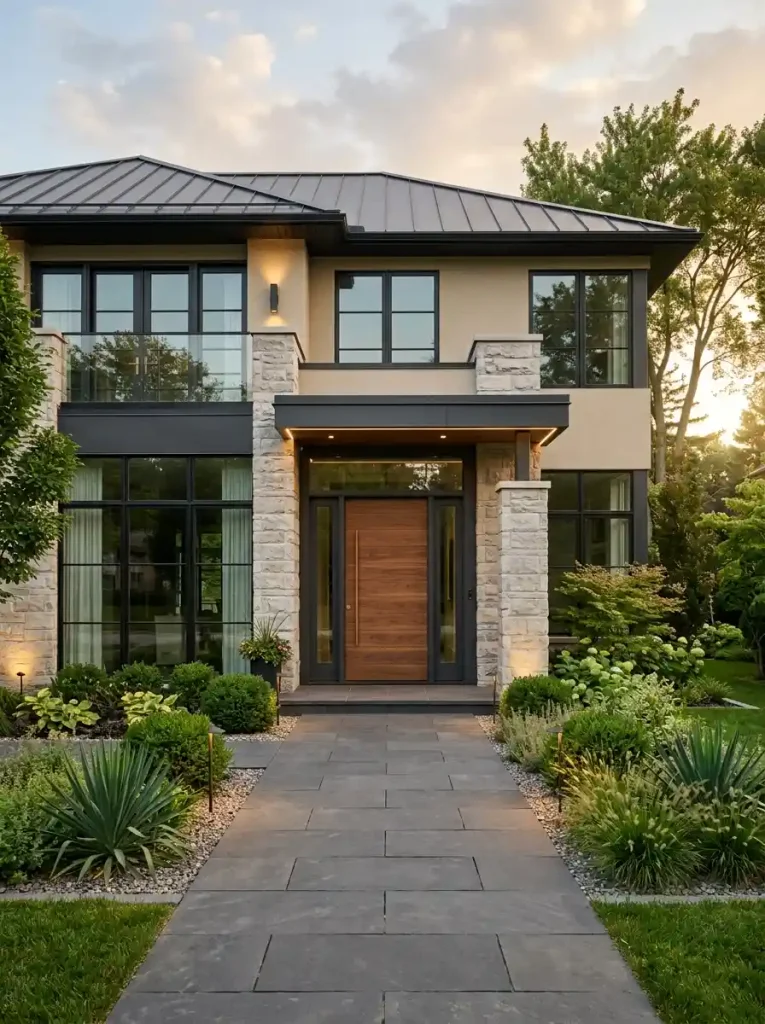
A statement wooden front door can completely change the character of an otherwise simple house front. Rich natural wood introduces warmth, while a tall or oversized entrance creates a stronger focal point. When paired with neutral walls, subtle lighting, and simple landscaping, the door can become the defining feature without making the exterior feel overly decorated.
- Natural wood creates a warm focal point
- Tall doors emphasize the entrance
- Neutral walls let the wood stand out
- Stone accents add texture
- Black details provide definition
- Soft lighting enhances the doorway
The front door is naturally one of the first things visitors notice, so giving it extra attention can have a surprisingly large effect. A beautiful wood finish can introduce warmth to contemporary architecture and make a simple facade feel more luxurious without requiring extensive structural changes.
The surrounding area should remain relatively calm so the entrance does not become visually crowded. A few planters, understated sconces, and a clean pathway can frame the door effectively. This creates a strong arrival point while maintaining a comfortable connection between the exterior architecture and the landscape.
4. Modern House Front With Vertical Wood Slats
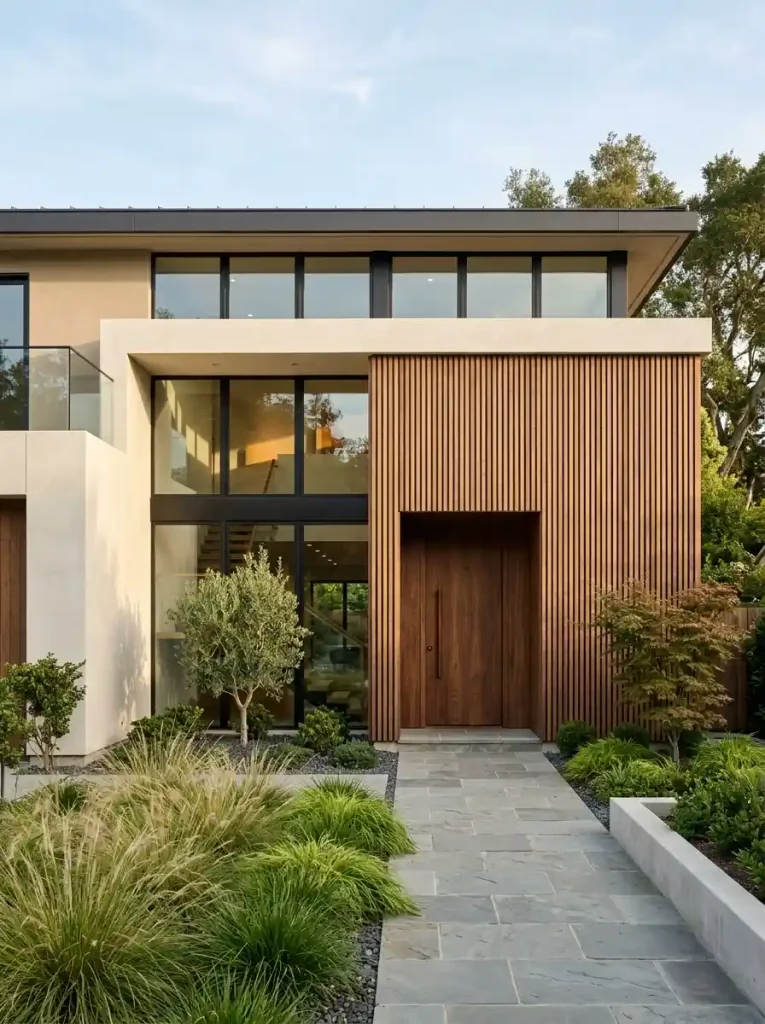
Vertical wood slats can introduce warmth, rhythm, and privacy to a modern house front. They work particularly well beside large windows or around a recessed entrance, where they can soften the harder appearance of concrete, glass, and metal. The repeated vertical lines also emphasize the height of the house, making the facade feel taller and more architectural.
- Vertical slats emphasize building height
- Wood adds warmth to modern forms
- Screening creates subtle privacy
- Repeated lines add architectural rhythm
- Large windows keep the facade open
- Minimal landscaping supports the design
Wood slats are especially useful when a modern facade contains large areas of glass or smooth plaster. Their texture prevents the exterior from looking too uniform and adds a more tactile material to the composition. The vertical orientation can also guide the eye upward and reinforce the proportions of a tall house.
The amount of wood should be carefully controlled. Covering every surface can make the design feel repetitive, while using it around one important section can create a much stronger focal point. Pairing the slats with neutral walls and darker metal details creates a balanced exterior with both warmth and structure.
5. Elegant House Front With Soft Neutral Colors
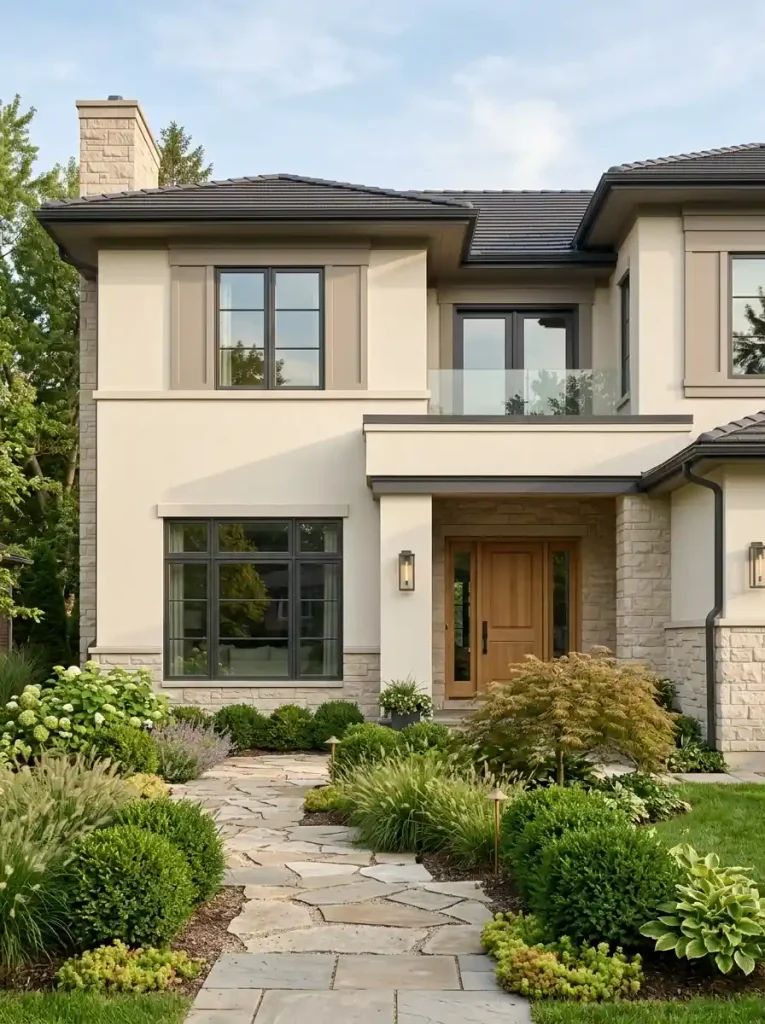
Soft beige, cream, taupe, and warm gray can create a house front that feels calm and timeless. These shades work well across different architectural styles because they provide a subtle background for wood, stone, greenery, and darker accents. A neutral facade can look sophisticated without relying on dramatic colors, especially when different textures are layered throughout the exterior.
- Neutral colors create timeless appeal
- Beige tones add warmth
- Taupe provides subtle contrast
- Natural wood introduces texture
- Greenery adds freshness
- Layered materials prevent flatness
Neutral exteriors are flexible because they can accommodate many different accent materials. A cream wall can work with warm wood, stone, charcoal, or even muted metal without creating visual conflict. This allows the homeowner to update smaller elements over time without having to change the main exterior color.
Texture becomes especially important when the palette is quiet. Stone, wood, smooth plaster, glass, and metal can all reflect light differently, giving the facade dimension. The result is a front elevation that feels sophisticated through material quality and proportion rather than bold decoration.
Read More: 30 Dreamy Backyard Ideas for a Luxury Summer Escape
6. House Front With a Dramatic Black Entry
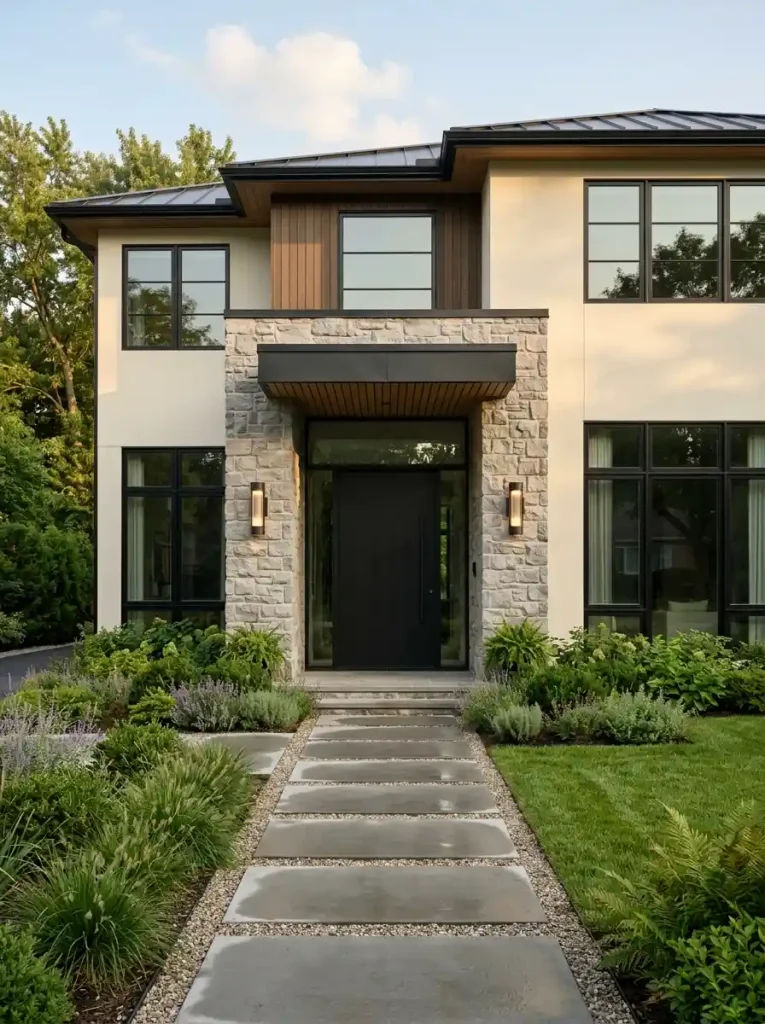
A black front door can instantly create a strong focal point against a lighter facade. The contrast is particularly effective when the entrance is framed by stone, wood, or warm neutral walls. Black can also be repeated in window frames, lighting fixtures, and railings to create a cohesive appearance rather than treating the door as an isolated feature.
- Black creates immediate visual focus
- Light walls strengthen the contrast
- Matching frames unify the facade
- Stone softens the darker entrance
- Warm lighting adds depth
- Greenery prevents the palette from feeling harsh
A dark entrance can give a simple house a much stronger visual identity. Matte black is especially effective because it absorbs light rather than producing a glossy or overly decorative effect. When combined with natural materials, it can feel architectural and refined instead of simply dramatic.
Repeating the black finish in smaller details helps the facade feel intentional. Window frames, sconces, railings, or even small planters can connect the entrance to the rest of the house. This creates a visual thread that makes the entire front elevation feel more cohesive.
7. Contemporary House Front With Large Glass Windows
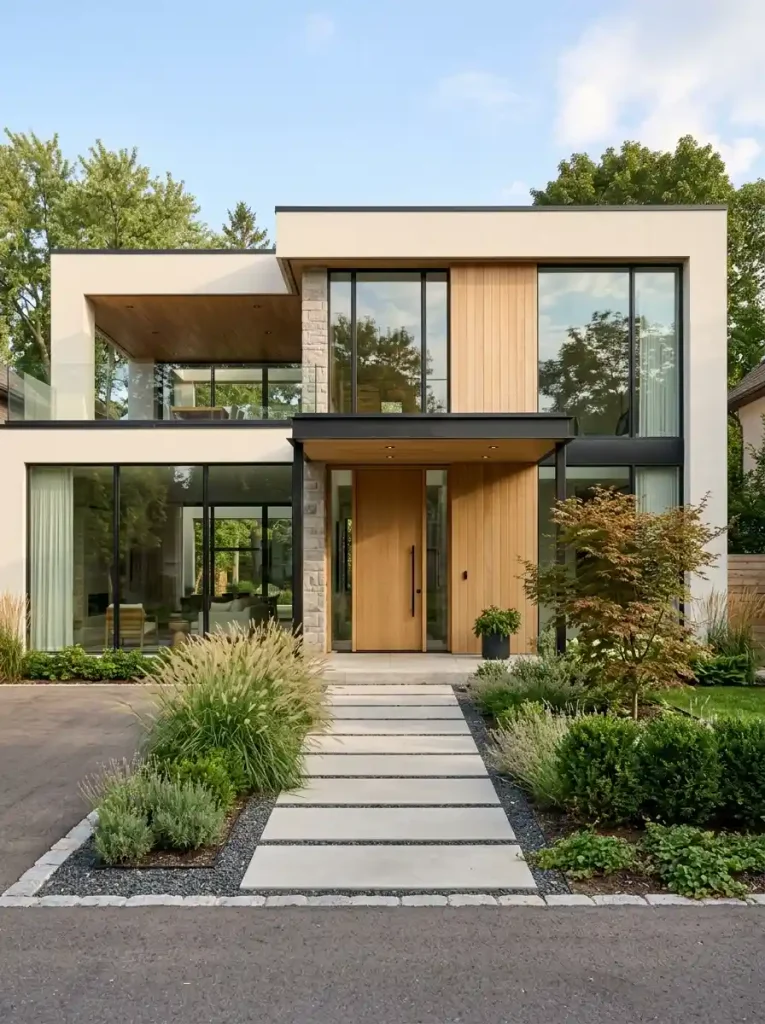
Large windows can make a house front feel open, bright, and connected to the outdoors. When paired with clean walls and carefully framed landscaping, expansive glass can become one of the most important features of the facade. Dark frames can provide structure while natural materials around the entrance prevent the design from feeling too industrial.
- Large glass brings visual openness
- Dark frames define the windows
- Natural wood warms the exterior
- Stone creates material contrast
- Landscaping connects home and garden
- Reflections add realistic depth
Large windows can completely change the perceived scale of a house front. They allow more daylight to enter and visually connect the interior with the landscape outside. From the street, the glass can also create a sense of openness that makes a contemporary home feel more spacious.
The key is to balance the glass with solid materials. Too much glazing without visual breaks can make a facade feel overly exposed or cold. Wood, stone, landscaping, and carefully positioned structural elements provide enough contrast to make the windows feel integrated into the overall design.
8. House Front With a Covered Entrance
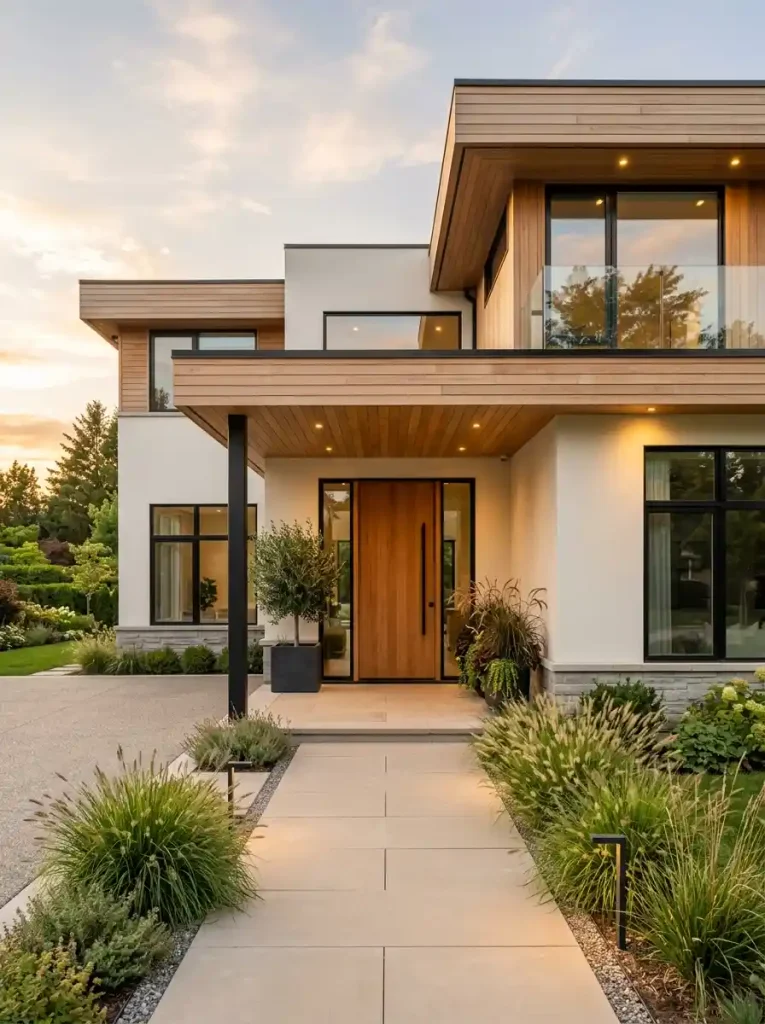
A covered entrance adds both architectural definition and practical shelter. It can create a clear transition between the outdoor pathway and the front door while giving the facade a stronger focal point. A simple flat roof, timber canopy, or extended architectural overhang can be enough to make the entrance feel more intentional.
- Covered entry creates architectural focus
- Overhang provides practical shelter
- Wood adds warmth overhead
- Recessed lighting enhances depth
- Planters frame the doorway
- Clean lines keep the entrance refined
A covered entrance can make the front of a home feel more substantial because it creates a distinct architectural zone. Instead of the door sitting directly against the facade, the canopy gives it depth and creates a small transition space between inside and outside.
The covered area can also be designed for everyday comfort. Recessed lighting provides visibility at night, while a durable ceiling material and weather-resistant finishes keep the area practical. When these functional elements are integrated into the architecture, the entrance feels polished without becoming overly decorative.
9. House Front With Natural Landscaping
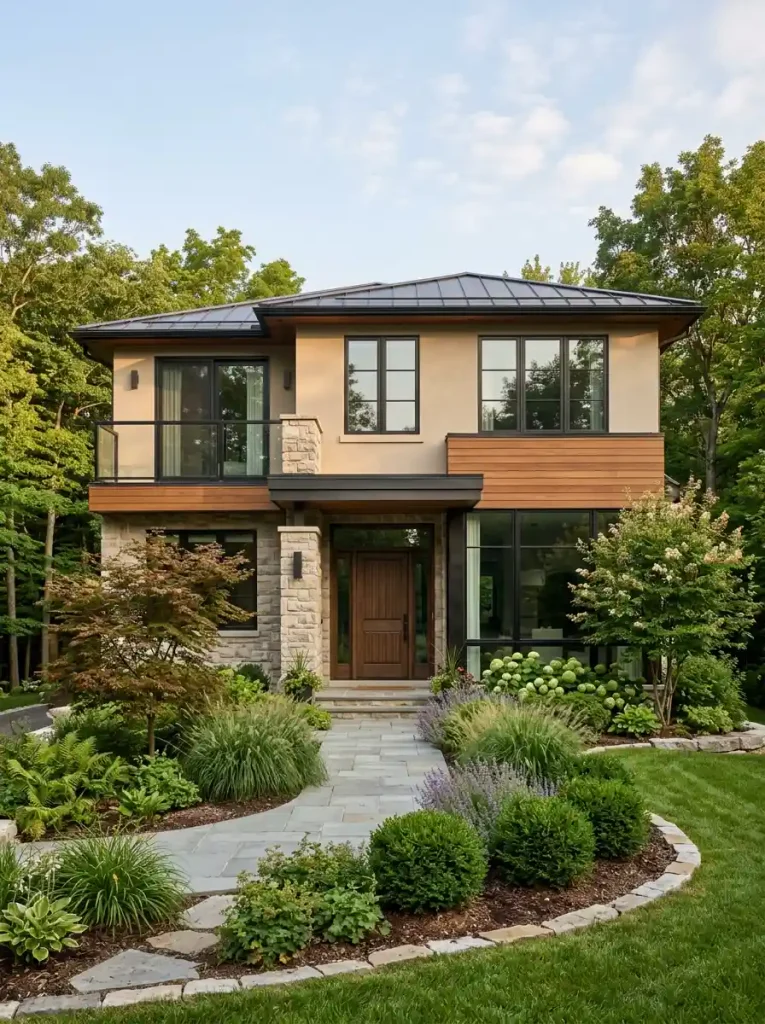
Natural landscaping can soften even the most structured house front. Trees, shrubs, grasses, and stone pathways create a connection between the building and its surroundings. Rather than filling every available space with plants, a carefully layered landscape can frame the architecture and guide attention toward the entrance.
- Layered planting adds visual depth
- Trees soften the building scale
- Grasses introduce movement
- Stone paths create direction
- Shrubs frame the entrance
- Natural greenery adds curb appeal
Landscaping is often what makes a house front feel complete. Architecture provides the structure, while plants introduce softer shapes and changing seasonal details. A combination of different heights can create depth without requiring excessive planting or complicated maintenance.
The pathway is equally important because it naturally directs the eye toward the entrance. Curved paths can create a relaxed feeling, while straight paths often complement modern architecture. Using the same stone or paving material around the house can also create a stronger connection between the building and the landscape.
10. Modern House Front With Concrete Features
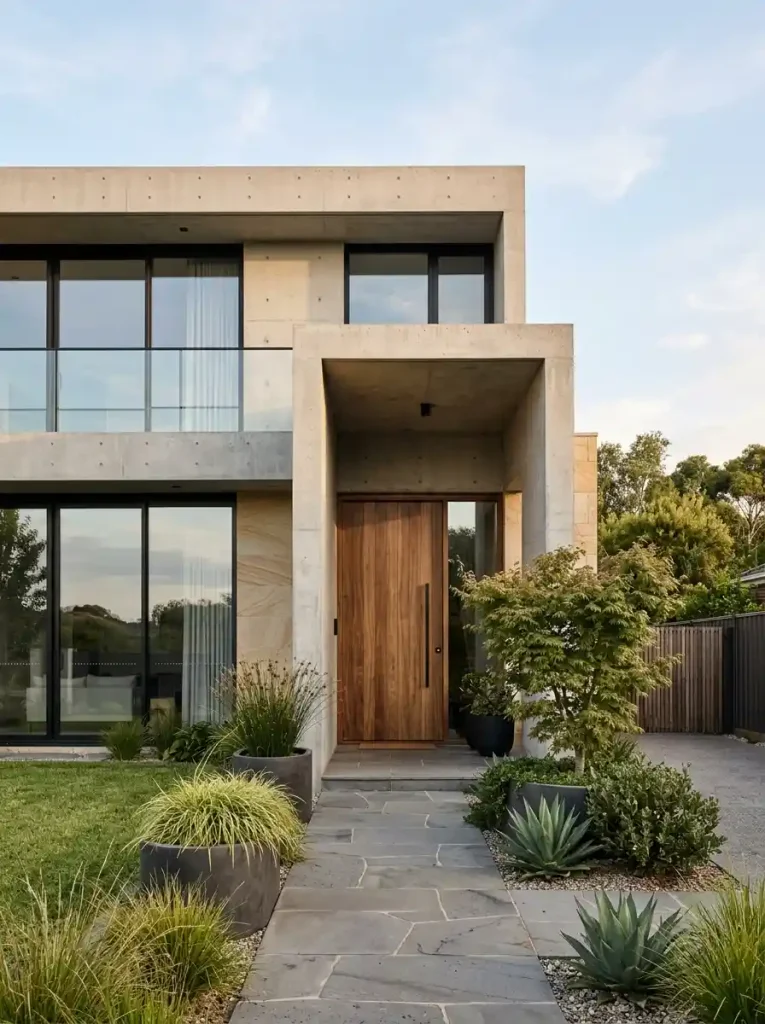
Concrete can give a house front a bold architectural foundation while still working beautifully with softer materials. Smooth concrete walls, steps, planters, or entrance frames can be paired with warm wood and greenery to prevent the exterior from feeling too severe. This combination creates a strong contemporary look with a balance of hard and organic textures.
- Concrete creates strong architectural lines
- Wood balances hard surfaces
- Large windows add openness
- Greenery softens geometric forms
- Warm stone adds texture
- Simple landscaping keeps the design focused
Concrete becomes much more inviting when it is balanced with warmer materials. Natural wood can soften its cool appearance, while greenery introduces movement and color. This combination allows the architecture to remain bold without making the house front feel overly industrial.
The finish of the concrete also matters. Slightly textured surfaces can provide visual depth and work beautifully with natural light. When combined with carefully controlled geometry, concrete can become a defining architectural feature rather than simply a structural material.
11. Traditional House Front With Brick Details
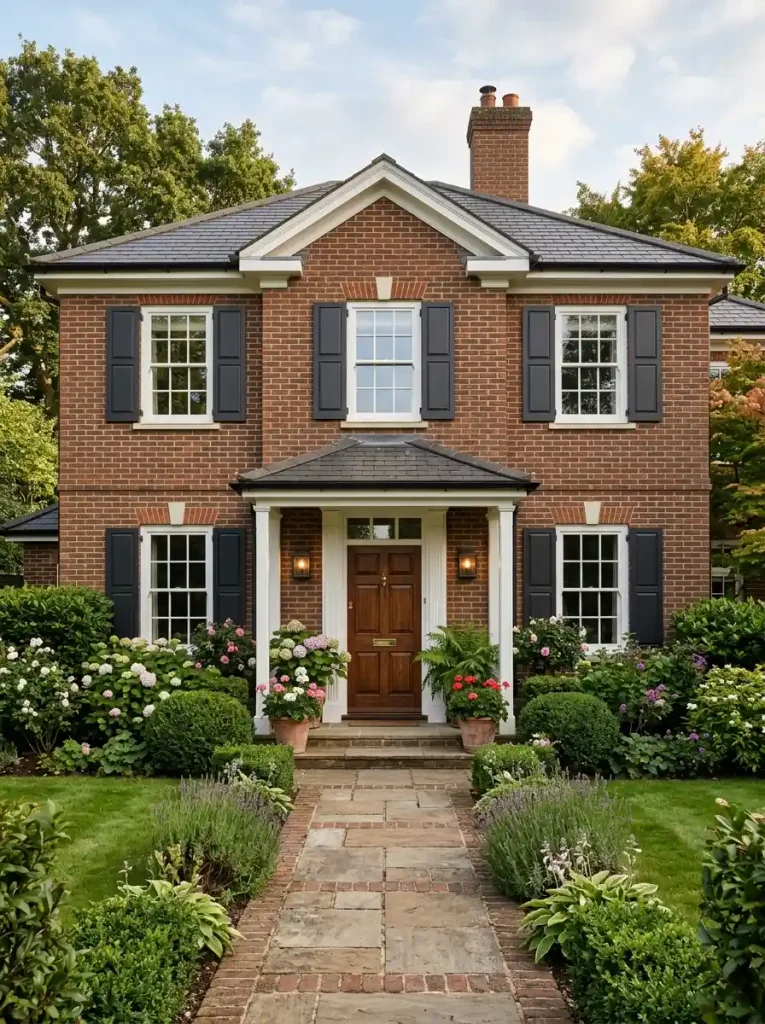
Brick brings warmth, texture, and a familiar residential quality to a house front. It can be used across the entire facade or concentrated around the entrance, windows, and lower sections. Traditional brick works especially well with white trim, dark doors, and greenery, creating an exterior that feels established and welcoming.
- Brick adds natural texture
- White trim creates contrast
- Dark doors provide a strong focal point
- Symmetrical windows add balance
- Traditional lighting enhances character
- Greenery softens the facade
Brick has a strong visual identity, so it can make a house front feel established even when the architecture itself is relatively simple. The variation between individual bricks creates texture that changes subtly with sunlight, giving the facade more depth throughout the day.
Because brick is already visually rich, the remaining elements can be kept relatively restrained. A dark front door, simple trim, and neatly maintained greenery are often enough. This creates a welcoming exterior that feels classic without becoming overly decorative.
12. House Front With a Double Door Entrance
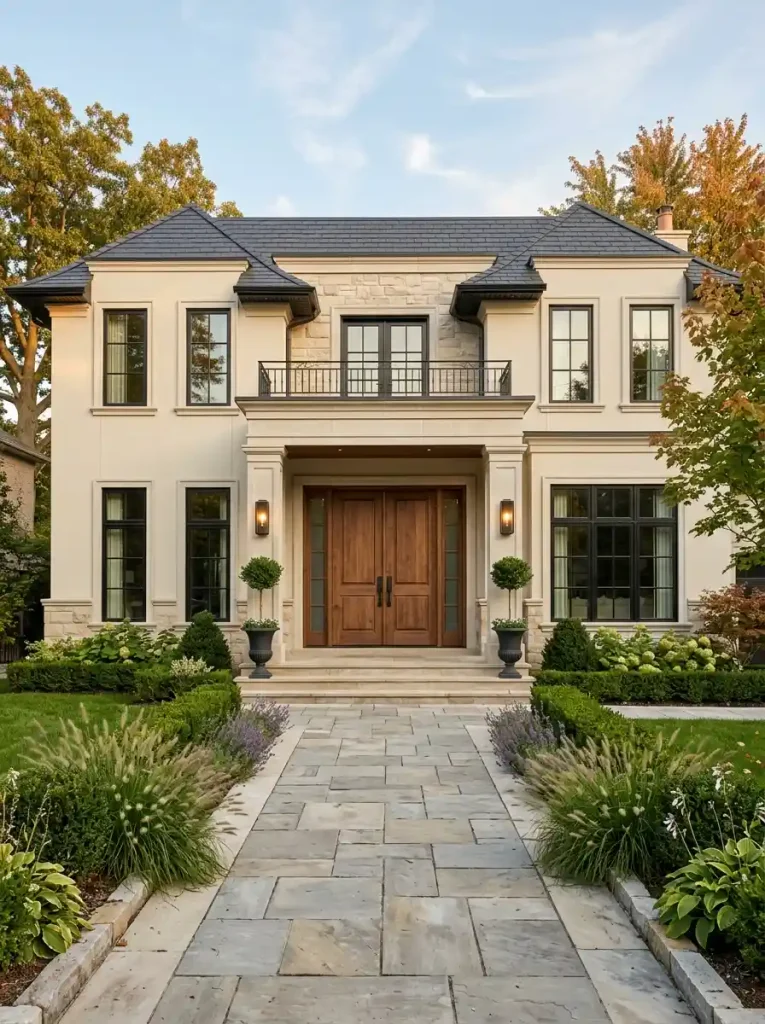
Double doors can make an entrance feel wider, grander, and more welcoming. They work particularly well on larger homes where a single door might look visually small against the facade. Natural wood, glass panels, or dark finishes can be used depending on the architectural style, while surrounding lighting and landscaping help frame the entry.
- Double doors create a grand entrance
- Wide proportions suit larger homes
- Natural wood adds warmth
- Symmetrical planting reinforces balance
- Stone frames strengthen the entry
- Warm lighting highlights the doorway
A double-door entrance can change the visual scale of the entire front elevation. It provides a wider focal point and can make the home feel more substantial from the street. When the doors are carefully proportioned to the facade, they become an architectural feature rather than simply an entry point.
Symmetry works particularly well with double doors. Matching sconces, planters, or architectural columns can frame the entrance and create a balanced composition. Keeping the surrounding materials simple allows the doorway to remain the strongest feature without making the facade feel crowded.
13. House Front With a Sloped Roof Design
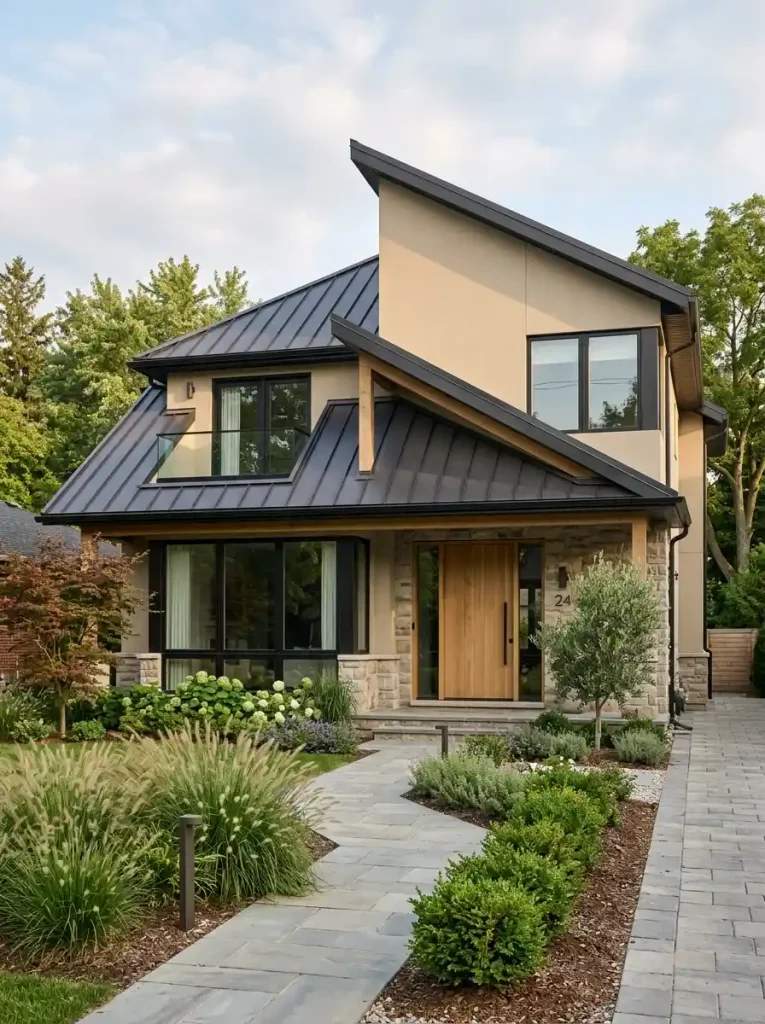
A sloped roof can give a house front a distinctive silhouette and make the overall architecture feel more dynamic. Depending on the design, a pitched roof can introduce traditional charm or a more contemporary geometric appearance. The roofline becomes especially effective when supported by simple walls, large windows, and carefully chosen natural materials.
- Sloped roof creates a distinctive silhouette
- Roof geometry adds architectural interest
- Large windows balance the structure
- Natural stone grounds the design
- Wood softens contemporary forms
- Landscaping complements the roofline
The roof is one of the largest visual elements on a house, so changing its shape can completely alter the character of the front elevation. A sloped roof can create a sense of movement and help the property stand apart from neighboring homes with simpler rooflines.
The rest of the exterior should generally remain controlled when the roof is expressive. Simple walls, restrained landscaping, and consistent window proportions allow the roof shape to remain noticeable without competing with too many other features.
14. House Front With Layered Lighting
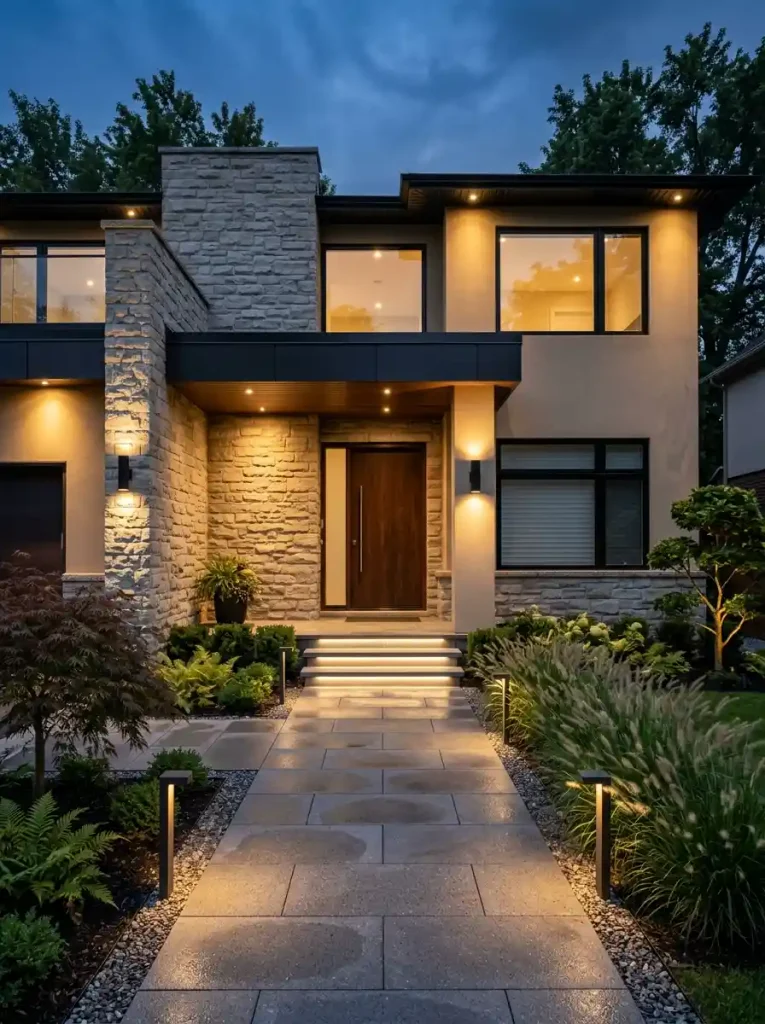
Layered outdoor lighting can make a house front look dramatically different after sunset. Instead of relying on one bright fixture, a combination of wall sconces, pathway lights, step lighting, and subtle landscape illumination can create depth. The different light levels help highlight architectural features while making the entrance feel safer and more welcoming.
- Wall sconces highlight the entrance
- Pathway lights guide visitors naturally
- Step lighting adds depth
- Landscape lights emphasize greenery
- Warm tones create an inviting mood
- Layered illumination prevents flatness
Good outdoor lighting should reveal the architecture rather than overwhelm it. A softly illuminated stone wall can become more textured at night, while a narrow beam around the doorway can naturally draw attention to the entrance. The result is more sophisticated than simply placing bright lights across the entire facade.
Lighting can also extend the visual impact of landscaping. Small trees and grasses can cast delicate shadows against walls, while pathway lights create a subtle rhythm leading toward the front door. This makes the exterior feel designed and comfortable even after the natural daylight has disappeared.
15. Modern House Front With a Floating Staircase Entry
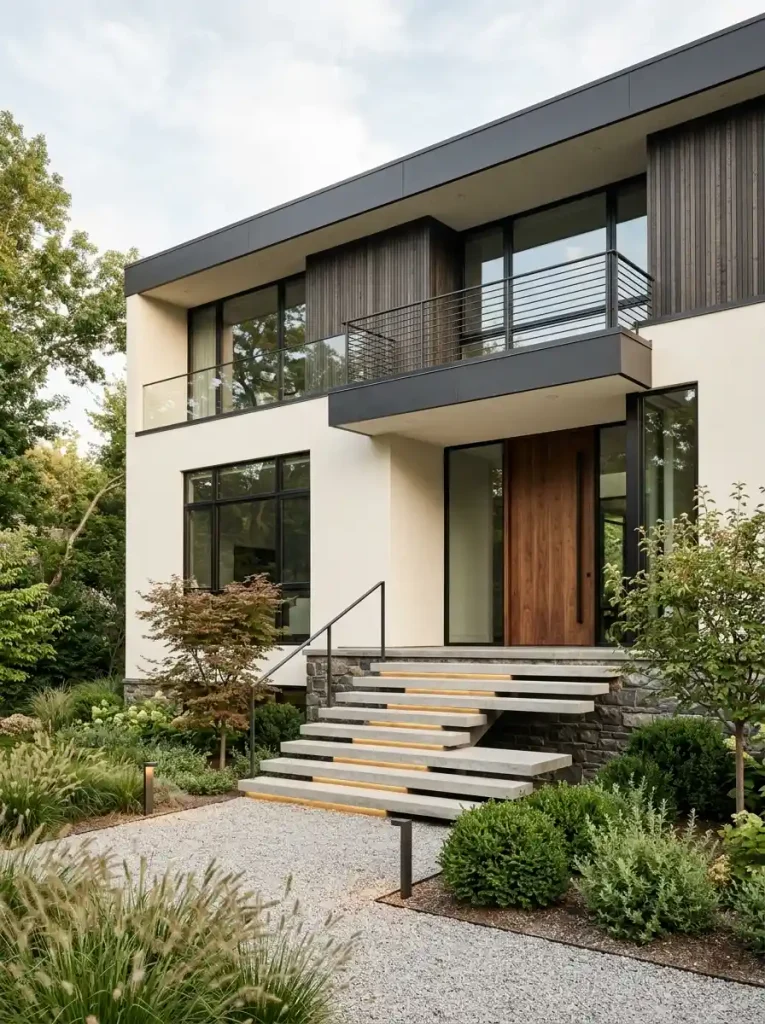
A floating or visually lightweight staircase can give a house front a striking architectural quality. Clean steps extending from the entrance, paired with glass or slim metal railings, create a sense of openness. Natural stone, concrete, or wood can be used for the steps depending on the overall style, while landscaping around them helps soften the geometric structure.
- Floating steps create visual lightness
- Clean geometry strengthens the entrance
- Slim railings reduce visual weight
- Wood adds warmth
- Stone and concrete provide contrast
- Minimal landscaping balances the structure
A floating staircase can make the entrance feel more architectural because the steps appear to extend naturally from the facade. The visual gaps beneath the stairs create openness and allow light and landscaping to remain visible rather than blocking the entire entry area.
Because the staircase is already a strong feature, other elements should be kept relatively simple. A restrained front door, clean wall surfaces, and a few plants can provide enough contrast. This approach creates a modern entrance that feels intentional rather than overly complicated.
16. House Front With a Textured Accent Wall
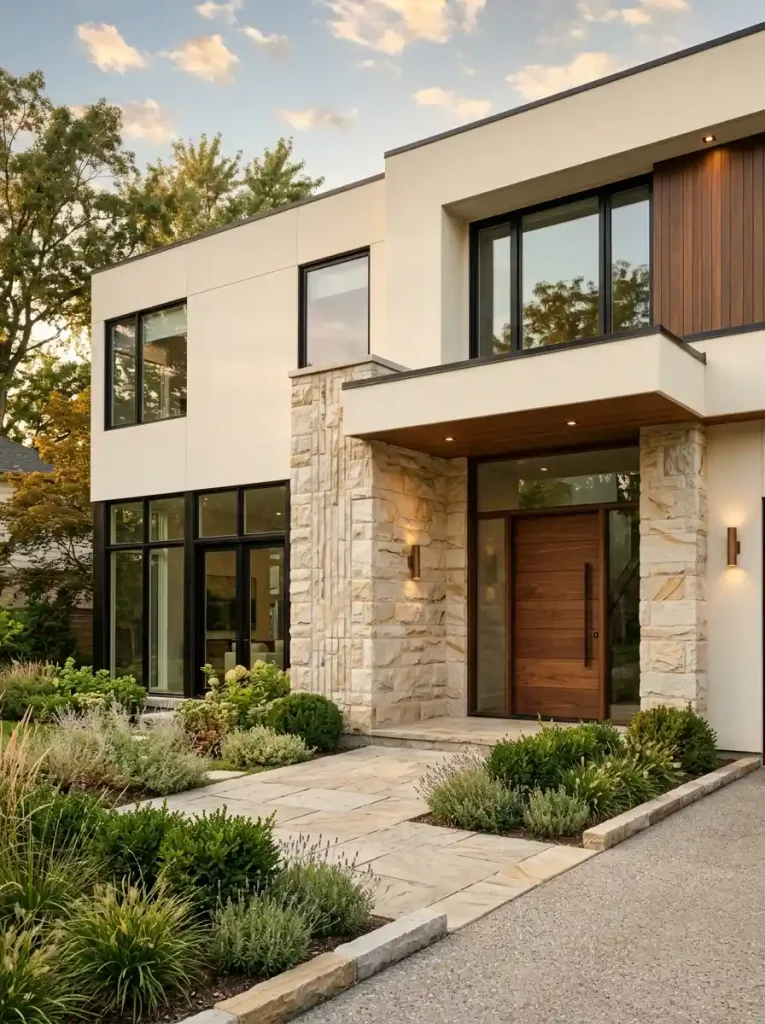
A textured accent wall can add personality to a house front without requiring an elaborate design. Materials such as stone, textured plaster, brick, or decorative concrete can create a distinct focal section around the entrance. When used selectively, the accent wall gives the facade depth and helps visually separate the doorway from the rest of the building.
- Textured walls create depth
- Accent areas define the entrance
- Stone adds natural character
- Wood introduces warmth
- Lighting emphasizes surface detail
- Simple surroundings prevent visual overload
Texture can be especially valuable on large flat facades because it prevents the exterior from appearing one-dimensional. A textured wall catches sunlight and shadow differently throughout the day, creating subtle changes that keep the architecture visually interesting.
The accent should remain focused on one area rather than spreading across the entire house. This gives the material a clear purpose and prevents the exterior from becoming too busy. When paired with a simple entrance and restrained landscaping, the textured wall can become a memorable but balanced feature.
17. House Front With a Wide Paved Walkway
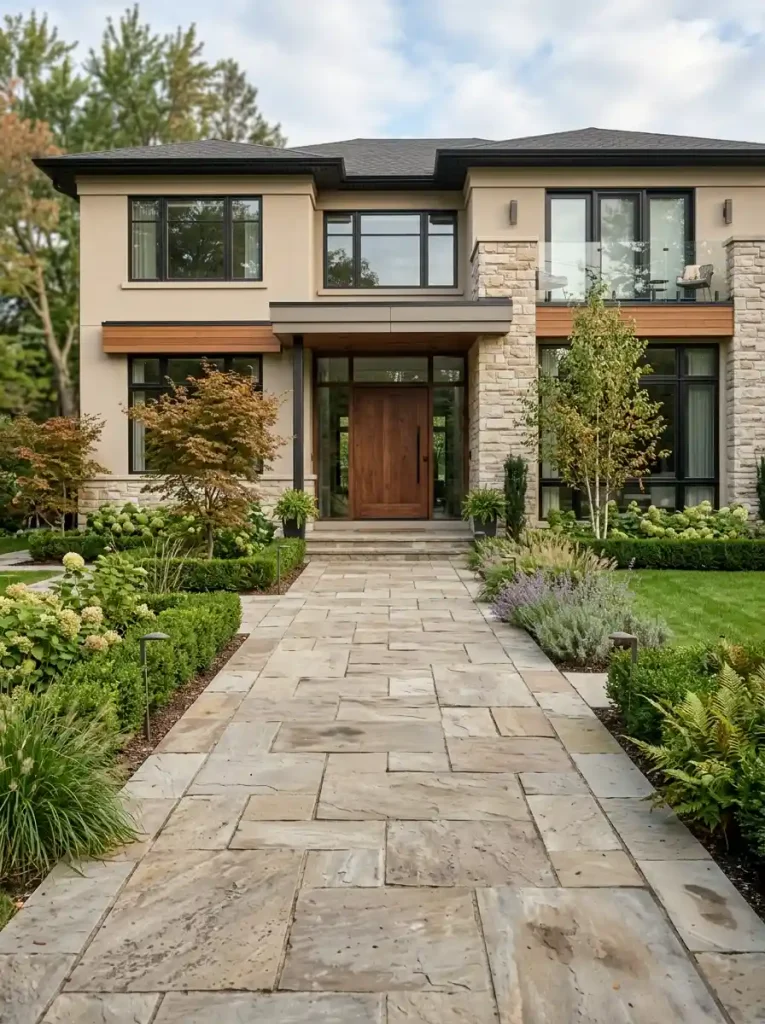
A wide walkway can improve both the appearance and functionality of a house front. Large-format stone, concrete pavers, or natural slabs can create a strong approach to the entrance while helping organize the landscaping on either side. The pathway becomes especially effective when its width and material complement the proportions of the house.
- Wide paths create a welcoming approach
- Large pavers feel sophisticated
- Landscaping frames the walkway
- Stone connects exterior elements
- Clear lines improve visual order
- Lighting adds evening functionality
The walkway is more than a practical route to the door; it can also control how the house is visually experienced. A strong pathway naturally directs attention toward the entrance and creates a sense of arrival. Large-format materials often make the space feel cleaner and more spacious.
The surrounding planting should support the direction of the path rather than obstruct it. Low shrubs and grasses can create soft edges, while small trees can add height farther from the entrance. This produces a layered front yard that feels organized without appearing overly formal.
18. House Front With a Compact Urban Garden
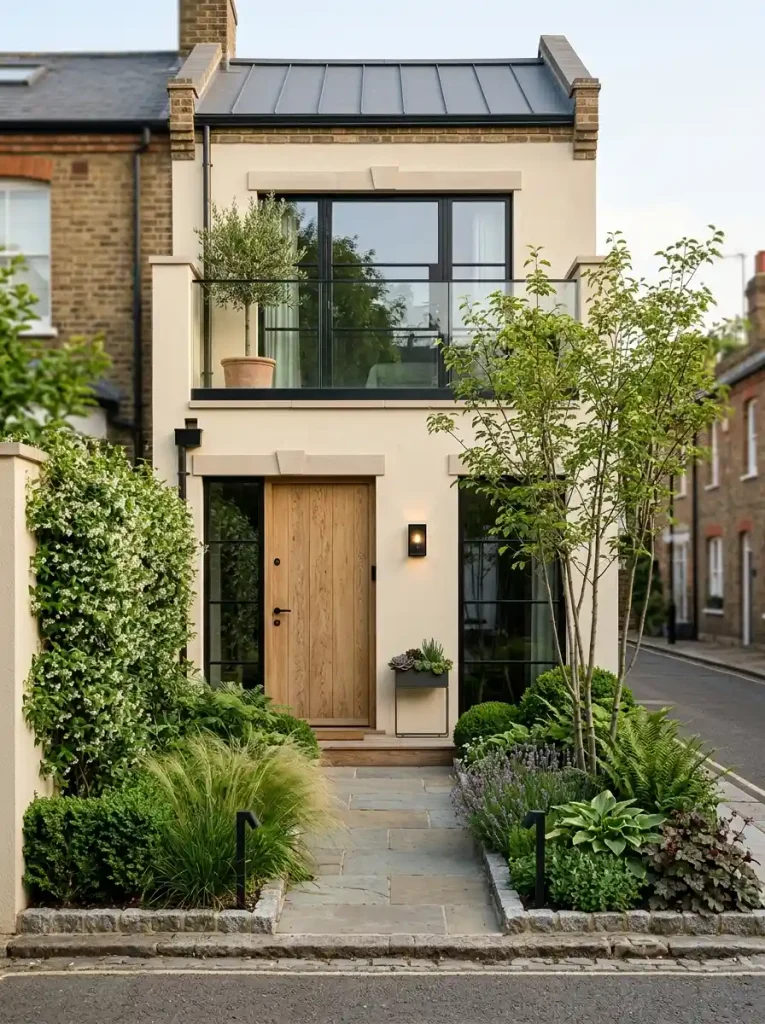
Even homes with limited front-yard space can benefit from thoughtful landscaping. A compact urban garden can combine planters, vertical greenery, small trees, and low shrubs to introduce nature without overwhelming the facade. This approach is ideal for narrower properties where every outdoor element needs to serve a visual or practical purpose.
- Compact planting maximizes limited space
- Vertical greenery adds height
- Small trees create structure
- Planters provide flexibility
- Narrow paths suit urban homes
- Greenery softens the architecture
A small front yard does not have to feel visually limited. Vertical planting and carefully selected compact species can create layers without taking up much ground space. Planters can also be moved or replaced as the homeowner’s preferences change, making them a practical option for evolving exterior designs.
The most successful compact gardens usually maintain a clear path and an uncluttered entrance. A few strong planting forms are more effective than filling every corner. This keeps the house visible while still creating the feeling of a green and welcoming outdoor space.
19. House Front With Warm Wood and Black Combination
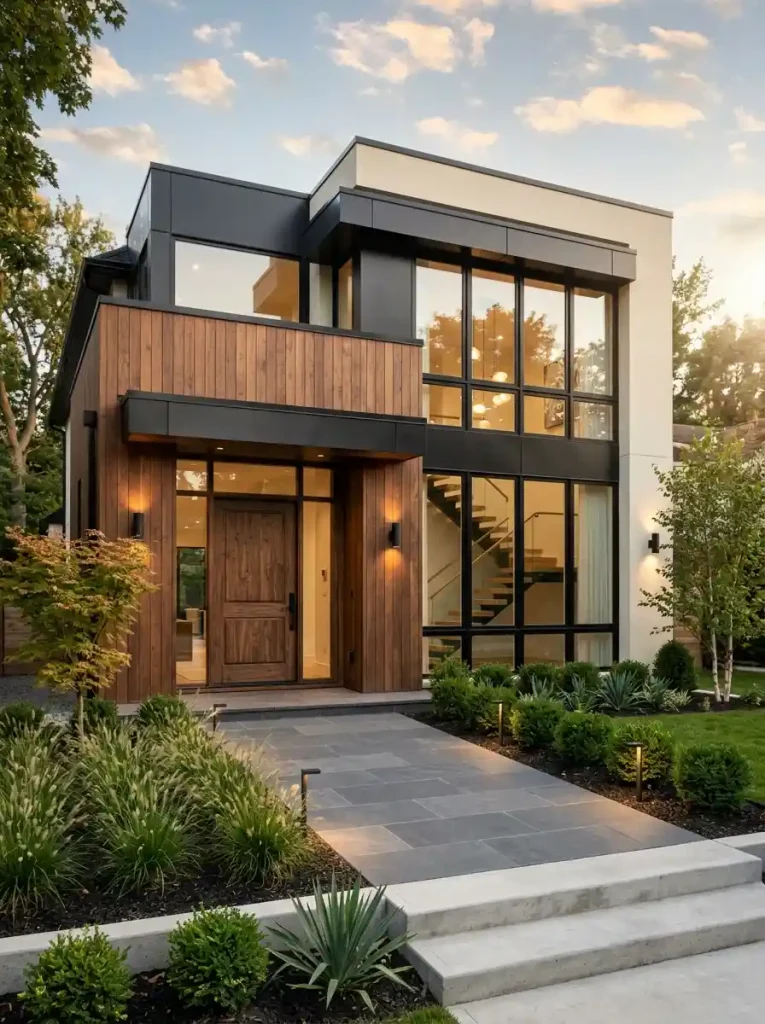
Warm wood and black form a strong combination for contemporary house fronts because the two materials provide both warmth and definition. Wood can be used around the entrance or as a vertical feature, while black can define windows, doors, railings, and lighting. A neutral wall color can bring everything together and prevent the palette from feeling too dark.
- Wood brings warmth to the palette
- Black adds strong definition
- Neutral walls create balance
- Large windows add openness
- Greenery softens the contrast
- Repeated materials create cohesion
The combination works because each material performs a different visual role. Wood provides warmth and texture, while black creates clear boundaries around windows and entrances. The neutral wall surfaces then act as a bridge between the two stronger materials.
Keeping the materials consistent across several parts of the facade can make the design feel more intentional. For example, repeating the same wood finish at the entrance and a smaller architectural section can create continuity. Likewise, matching black frames and lighting fixtures can visually connect the different levels of the home.
20. Elegant House Front With Symmetrical Landscaping
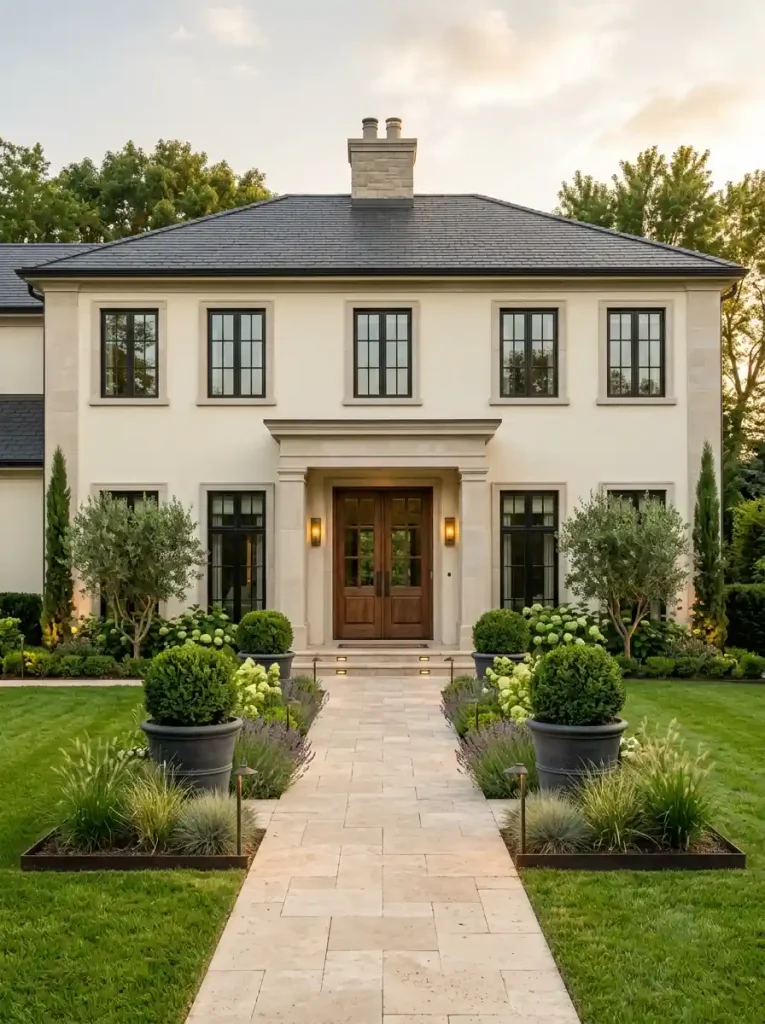
Symmetrical landscaping can make a house front feel orderly, polished, and welcoming. Matching planters, shrubs, trees, or pathway lighting on either side of the entrance can reinforce the architectural balance of the facade. This approach works particularly well on homes with a centered front door or traditional proportions.
- Symmetry creates visual order
- Matching planters frame the entrance
- Balanced greenery reinforces architecture
- Centered doors create a focal point
- Repeated lighting adds consistency
- Neutral materials keep the design timeless
Symmetry is one of the simplest ways to make an exterior feel organized. When planting and architectural elements mirror one another, the eye naturally moves toward the center of the facade. This can make the entrance feel more important and give the entire property a composed appearance.
The design does not have to be perfectly formal to benefit from balance. Similar plants or materials can be used on each side while allowing small natural differences. This keeps the landscaping from looking artificial and gives the front of the house a polished but welcoming quality.
21. House Front Design With Lasting Curb Appeal
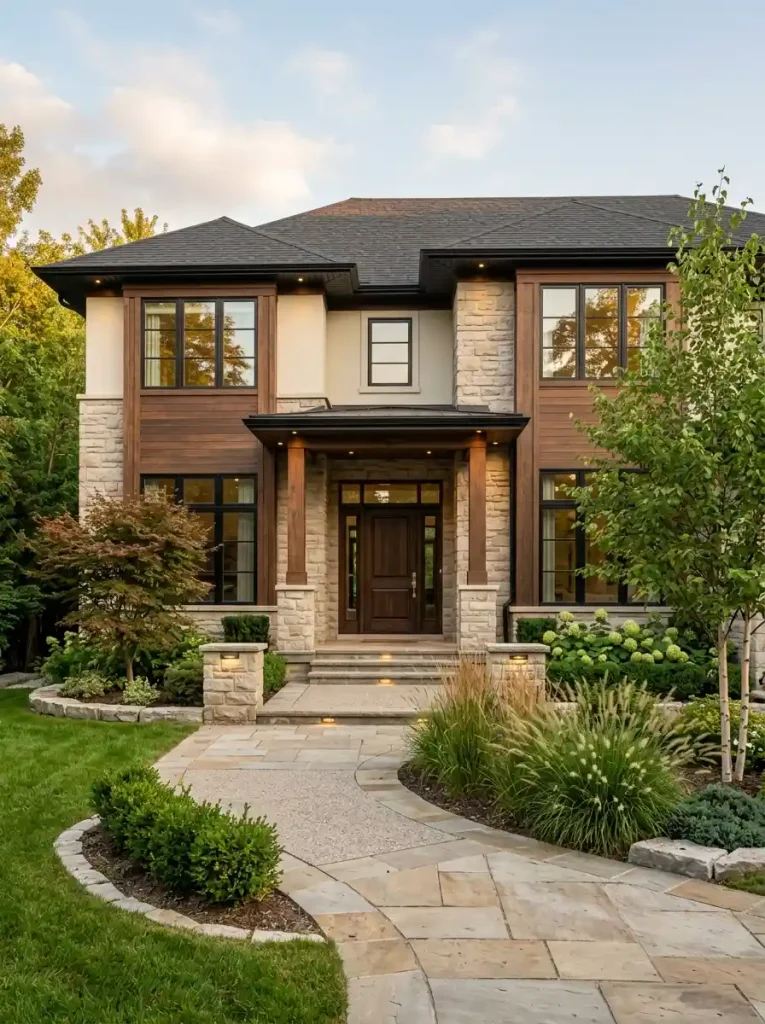
The most memorable house front designs usually succeed because several simple choices work together. A beautiful entrance, balanced windows, attractive materials, appropriate lighting, and thoughtful landscaping can create a cohesive exterior without relying on one dramatic feature. When every element supports the architecture, the house feels complete from the street and remains visually appealing over time.
Cohesive materials strengthen the facade
- A strong entrance creates identity
- Balanced windows improve proportions
- Landscaping completes the exterior
- Layered lighting extends curb appeal
- Timeless details support long-term style
Lasting curb appeal is rarely created by one trend or decorative feature. It usually comes from choosing materials and architectural details that complement one another. When the entrance, windows, landscaping, lighting, and color palette share a clear visual direction, the house feels more thoughtfully designed.
This does not mean every home needs to look expensive or elaborate. Some of the most effective front elevations use simple materials in well-proportioned ways. A beautiful door, clean pathway, healthy greenery, quality lighting, and a balanced exterior color palette can create an impression that remains attractive long after short-lived design trends have changed.
Final Thoughts: House Front Design Ideas
A successful House Front Design Ideas starts with understanding what the existing architecture already does well. The entrance, roofline, windows, materials, and proportions can guide the direction of the exterior rather than forcing the home into a style that does not suit it.
If you are planning a refresh, focus first on the elements that create the biggest visible difference. A new front door, improved pathway, updated lighting, fresh landscaping, or carefully selected exterior material can transform the appearance without requiring a complete rebuild.
Color and texture should then be used to create balance. Natural stone and wood can add warmth, darker accents can provide definition, and greenery can soften structured architectural lines. Combining these elements thoughtfully is often more effective than adding too many decorative features.
Most importantly, a front elevation should remain practical as well as attractive. Clear pathways, useful lighting, durable materials, and easy-to-maintain landscaping will help the design stay appealing over time. With the right balance of architecture, materials, and outdoor details, even a simple house front can make a lasting impression.