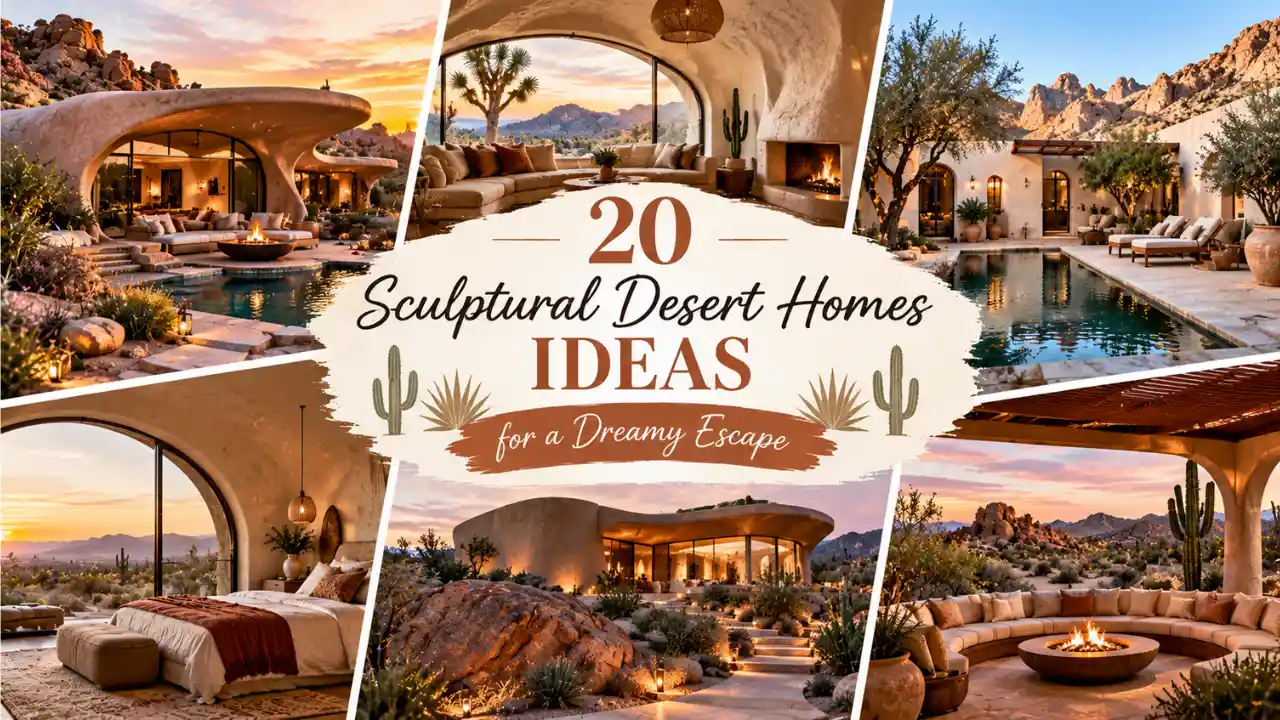
20 Sculptural Desert Home Ideas for a Dreamy Escape
The desert has a unique kind of beauty that makes architecture feel even more extraordinary. From dramatic mountain silhouettes and sun-washed landscapes to warm sandstone textures, this natural environment offers endless inspiration for creating homes that feel artistic, peaceful, and luxurious. Sculptural desert homes take this beauty a step further by transforming ordinary architectural elements into striking visual statements.
Unlike conventional houses, these homes embrace organic curves, unusual silhouettes, textured surfaces, and carefully considered proportions. Some feature rounded concrete walls that echo desert rock formations, while others combine expansive glass facades with natural stone, creating a seamless connection between indoor comfort and outdoor scenery. Every detail feels intentional, allowing the architecture to become part of the landscape rather than competing with it.
The best sculptural desert home ideas balance bold design with practical comfort. Natural materials, shaded outdoor areas, energy-conscious construction, and earthy color palettes help create spaces that look impressive while responding to the challenges of a desert climate. Whether you love minimalist architecture, contemporary luxury, or the timeless appeal of Mediterranean-inspired homes, there are countless ways to bring this aesthetic into your dream property.
In this collection, we explore 20 Sculptural Desert Home Ideas by The Home Vista that combine architectural creativity, natural beauty, and elevated living. From curved concrete villas and dramatic cantilevered roofs to serene courtyard homes and striking desert pools, these designs will inspire you to imagine a home that feels like a private architectural retreat.
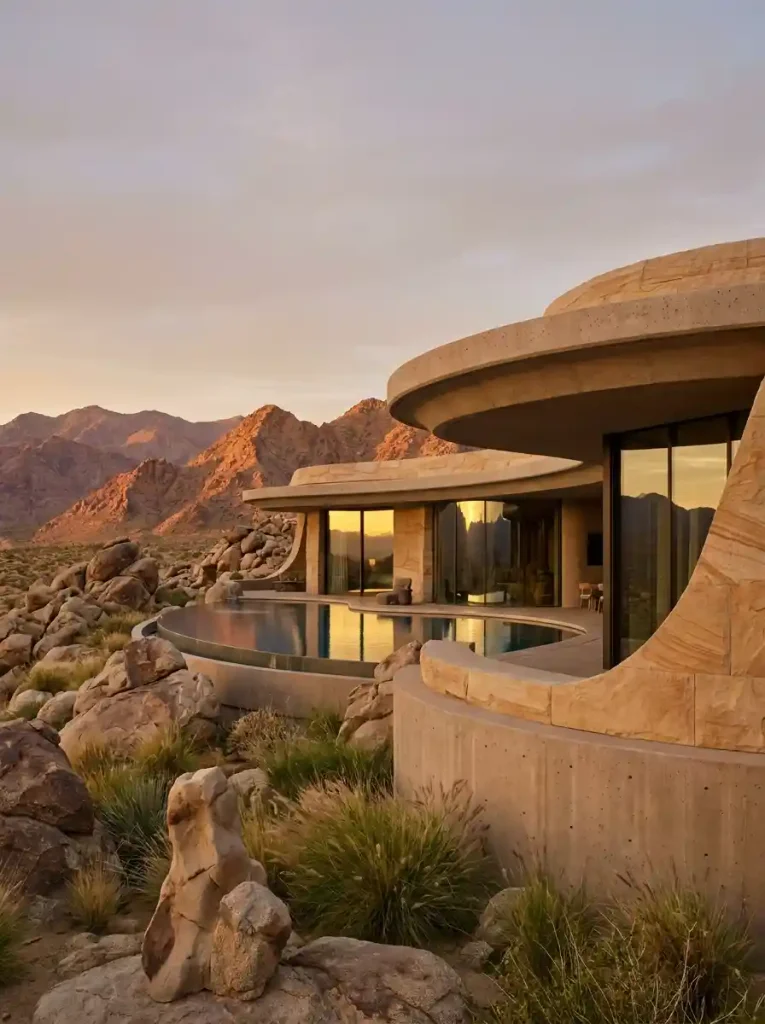
1. Organic Curved Desert Architecture
Styling Elements:
- Flowing architectural silhouettes
- Smooth sand-colored concrete
- Rounded glass openings
- Natural stone landscaping
- Minimal outdoor furniture
- Warm architectural lighting
Organic curves create a softer and more expressive alternative to traditional box-shaped houses. Instead of relying on sharp corners and repetitive lines, this architectural style uses flowing forms that echo the natural contours of desert hills and weathered rock formations. The result is a residence that feels artistic without becoming visually overwhelming.
For a sophisticated finish, keep the exterior palette restrained and allow the architecture to become the main attraction. Pair curved walls with expansive glazing, subtle landscape lighting, and a limited selection of native plants. The key is to maintain a balance between sculptural drama and simplicity, ensuring that the home feels naturally connected to its surroundings.
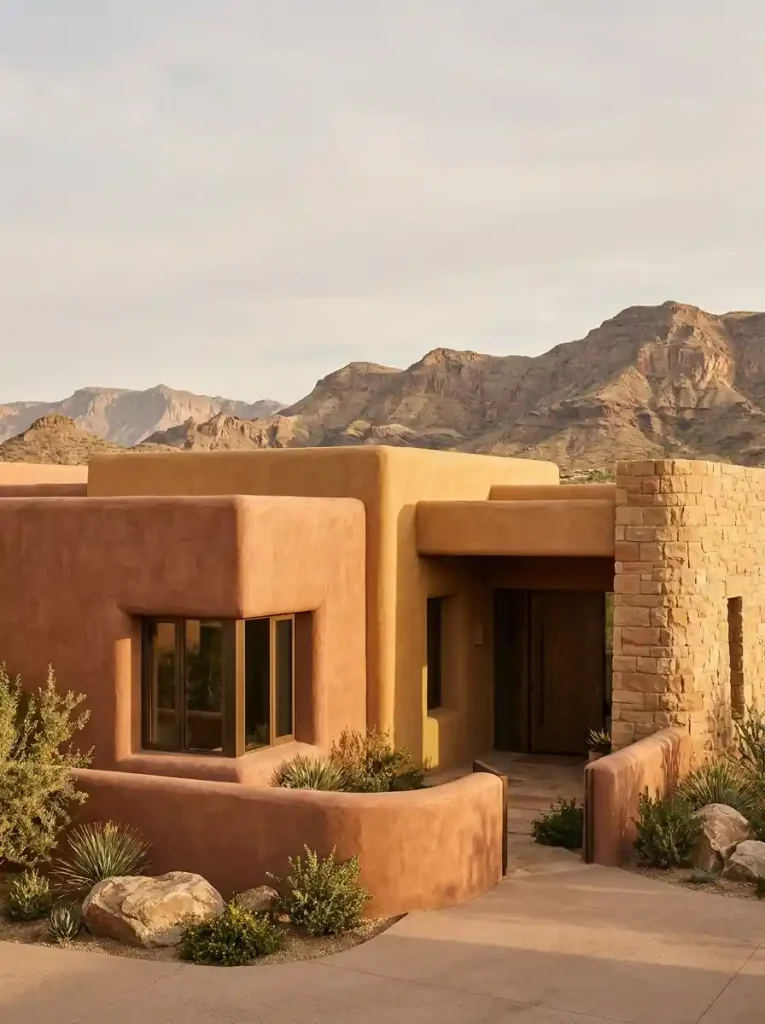
2. Earthy Terracotta Desert Villas
Styling Elements:
- Terracotta exterior finishes
- Clay-inspired color palette
- Recessed window frames
- Sandstone accent walls
- Drought-tolerant planting
- Bronze exterior fixtures
Terracotta tones bring warmth and personality to sculptural desert homes. Inspired by sunbaked earth and traditional adobe architecture, this palette works particularly well with rounded facades, recessed entrances, and textured plaster surfaces. Rather than making a house appear overly decorative, the earthy color gives its architecture a rich and grounded presence.
Combine terracotta walls with cream-colored stone, dark bronze details, and understated landscaping for a contemporary look. Native grasses and carefully positioned desert plants can soften the base of the structure while maintaining a clean visual composition. This approach is ideal for homeowners who want a distinctive luxury residence that feels warm, welcoming, and connected to the desert environment.
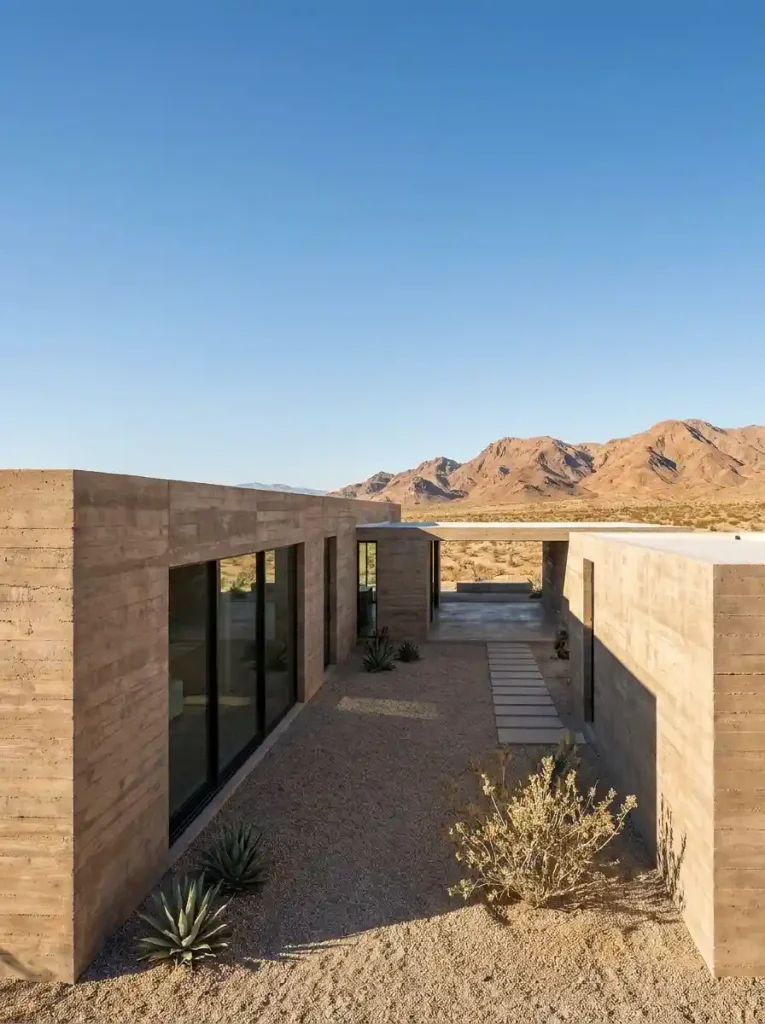
3. Minimalist Concrete Desert Retreats
Styling Elements:
- Board-formed concrete
- Monolithic wall structures
- Deep window recesses
- Minimal geometric landscaping
- Neutral stone pathways
- Concealed exterior lighting
Concrete can give a desert home a striking architectural identity, particularly when its surfaces and proportions are treated with care. Its understated color complements sandy terrain, while its sculptural potential allows designers to experiment with solid volumes, deep openings, and dramatic overhangs.
To prevent the property from feeling cold, introduce warmth through natural stone, timber soffits, and carefully selected outdoor furnishings. Deep window recesses can create strong shadows while helping reduce direct solar exposure when appropriately designed. The finished home should feel calm and purposeful, with every architectural element contributing to the overall composition.
4. Desert Homes With Dramatic Cantilevered Roofs
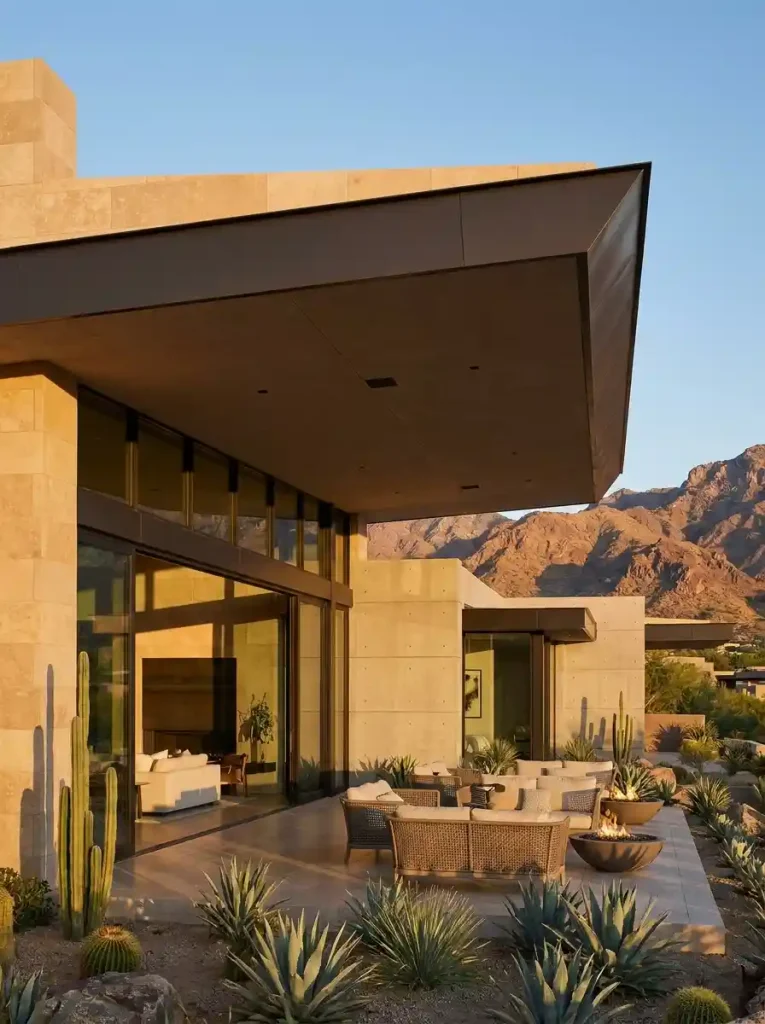
Styling Elements:
- Extended roof overhangs
- Slim structural supports
- Expansive glass walls
- Warm natural stone
- Covered outdoor seating
- Recessed soffit lighting
A cantilevered roof introduces a powerful horizontal element that makes a desert residence feel dramatic and contemporary. The extended form creates a sense of movement, allowing the building to reach outward toward the landscape while establishing a sheltered transition between the interior and exterior.
Beyond its architectural appeal, a properly engineered overhang can help protect windows and outdoor seating from intense sunlight. Pair it with understated materials, expansive glazing, and a carefully planned terrace to create a comfortable outdoor living environment. Structural engineering, wind conditions, and the local climate should guide the final design so that the striking silhouette remains both safe and functional.
5. Sculptural Desert Homes With Arched Windows
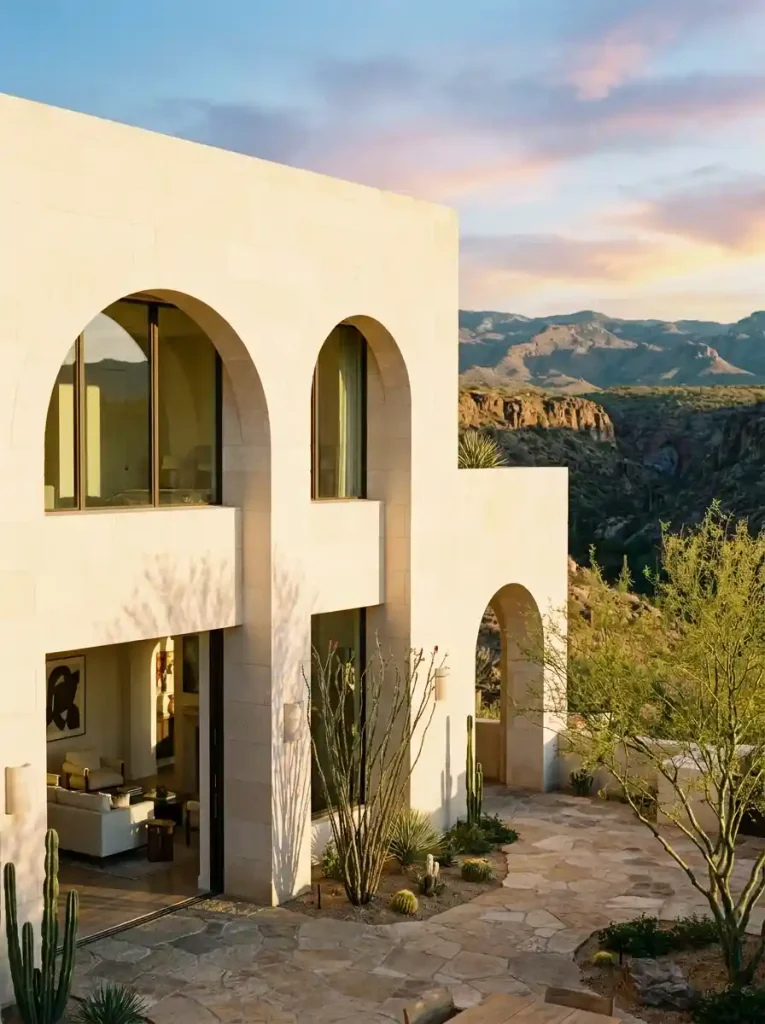
Styling Elements:
- Oversized arched openings
- Creamy limestone finishes
- Deep-set window frames
- Rounded entrance portals
- Natural stone paving
- Warm interior illumination
Arched windows bring a sense of softness and timeless character to contemporary desert architecture. Their curved outlines contrast beautifully with expansive walls and flat rooflines, creating a sculptural facade that feels both modern and rooted in traditional building forms.
Use large arches to frame mountain views, garden courtyards, or distant desert horizons. Limestone, warm plaster, and subtle bronze window frames help maintain a refined palette. Repeating the arch shape in a doorway or covered terrace can establish visual continuity, but leaving generous areas of simple wall space prevents the design from feeling overly elaborate.
6. Glass-Walled Desert Luxury Homes
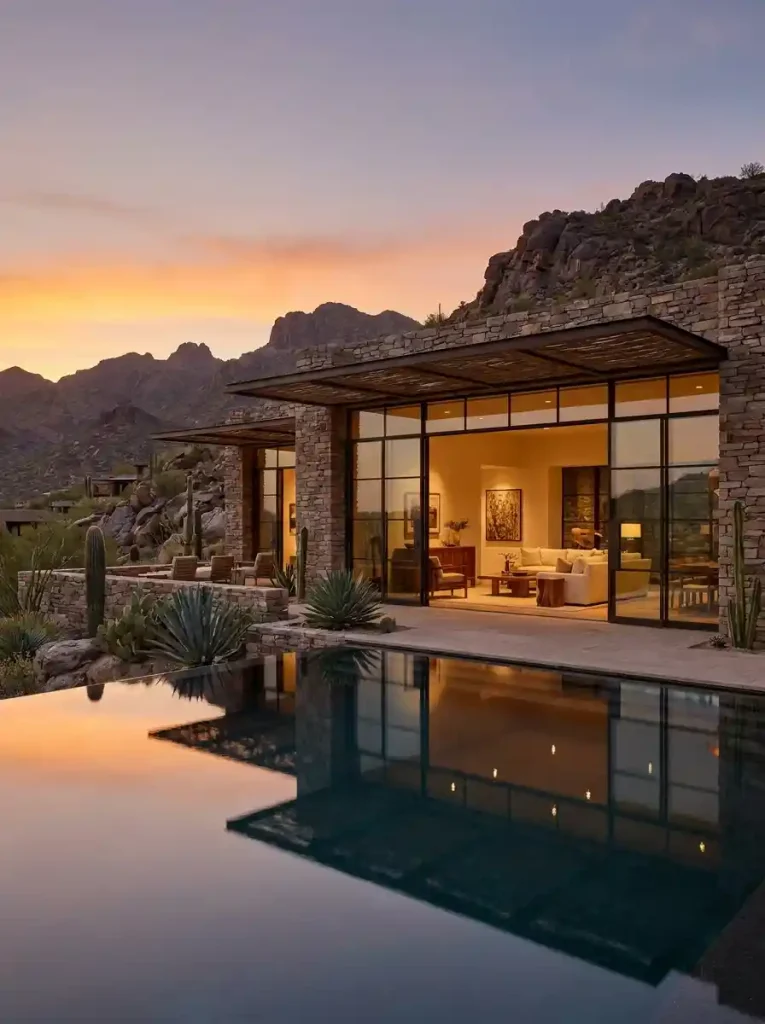
Styling Elements:
- Floor-to-ceiling glazing
- Slim architectural frames
- Stone-clad solid volumes
- Solar-control glass
- Layered neutral interiors
- Deep shaded terraces
Large glass walls make the surrounding landscape feel like an extension of the home. Mountain views, changing sunlight, and the colors of the desert become part of the interior experience, giving the architecture a sense of openness and visual depth.
However, successful glass architecture requires more than beautiful views. High-performance glazing, external shading, carefully oriented windows, and appropriate cooling systems are essential in hot climates. Combine transparent surfaces with solid stone or concrete sections to provide privacy and visual balance. The result is a dramatic home that celebrates its setting without sacrificing everyday comfort.
7. Sunken Courtyard Desert Homes
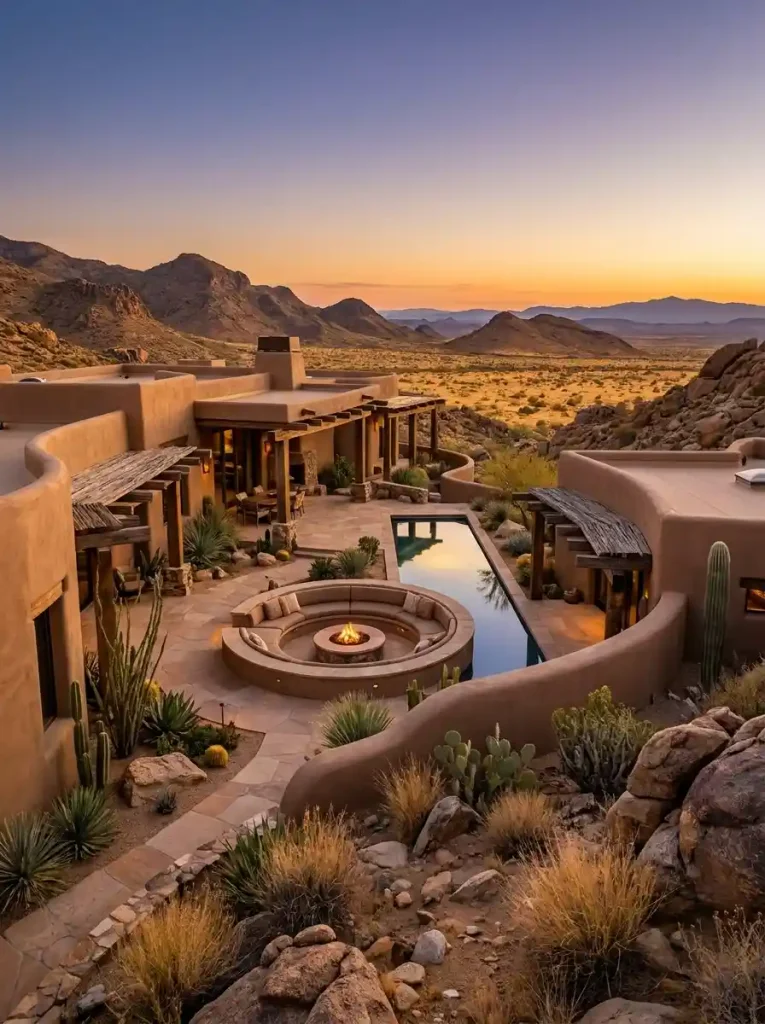
Styling Elements:
- Recessed courtyard layouts
- Built-in stone benches
- Sculptural perimeter walls
- Low-water native planting
- Subtle water features
- Concealed courtyard lighting
A sunken courtyard creates a private outdoor room within the architecture itself. By lowering the seating area and surrounding it with carefully designed walls, the home gains a sense of intimacy and shelter without losing its connection to the open sky.
Natural stone, built-in benches, and restrained planting make the space feel integrated rather than added on. In suitable climates, the layout can also offer protection from wind and create shaded areas depending on the courtyard’s orientation and proportions. Thoughtful drainage, waterproofing, and access are especially important when designing a recessed outdoor space.
8. Sculptural Desert Homes With Natural Stone
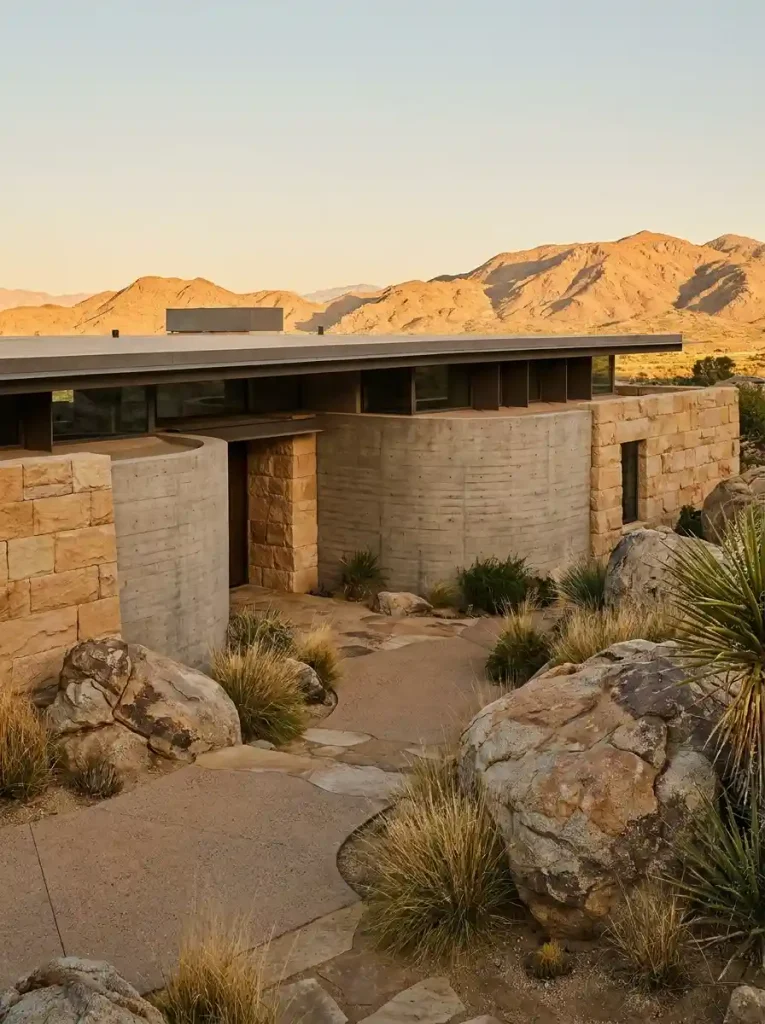
Styling Elements:
- Locally inspired stonework
- Irregular natural textures
- Smooth plaster contrasts
- Recessed entrances
- Desert boulder landscaping
- Warm low-level lighting
Natural stone gives sculptural desert homes a strong connection to their surroundings. Its varied colors and tactile surfaces introduce depth, while curved plaster walls and clean architectural openings keep the overall design contemporary. This contrast between rough and refined materials is particularly effective in luxury homes.
Choose stone that complements the local landscape rather than competing with it. Large-format stone surfaces can create a dramatic focal point, while smaller textured sections can add detail around entrances and courtyards. Professional detailing is essential around openings, drainage points, and exterior transitions to ensure that the materials perform as beautifully as they look.
9. Desert Villas With Reflective Infinity Pools
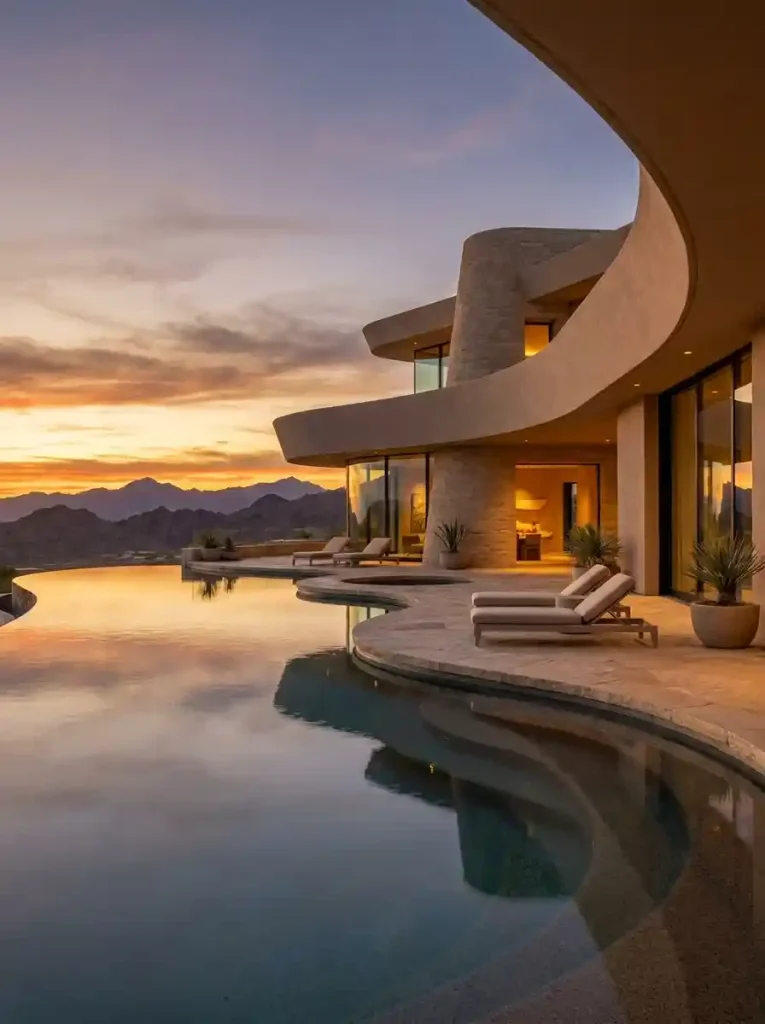
Styling Elements:
- Horizon-facing infinity pools
- Natural stone pool decks
- Curved architectural forms
- Minimalist pool loungers
- Warm underwater lighting
- Water-conscious pool planning
An infinity pool can turn an already striking desert residence into a dramatic architectural retreat. When the waterline aligns with the surrounding horizon, the landscape appears to continue beyond the property, creating a memorable visual connection between the built environment and nature.
Use understated pool edges, textured stone paving, and simple outdoor furniture to keep the architecture in focus. In desert regions where water is limited, consider pool size carefully and investigate evaporation-reduction measures, efficient circulation systems, and suitable covers. A smaller, beautifully designed water feature can deliver visual impact without requiring an oversized pool.
10. Sculptural Desert Homes With Private Roof Terraces
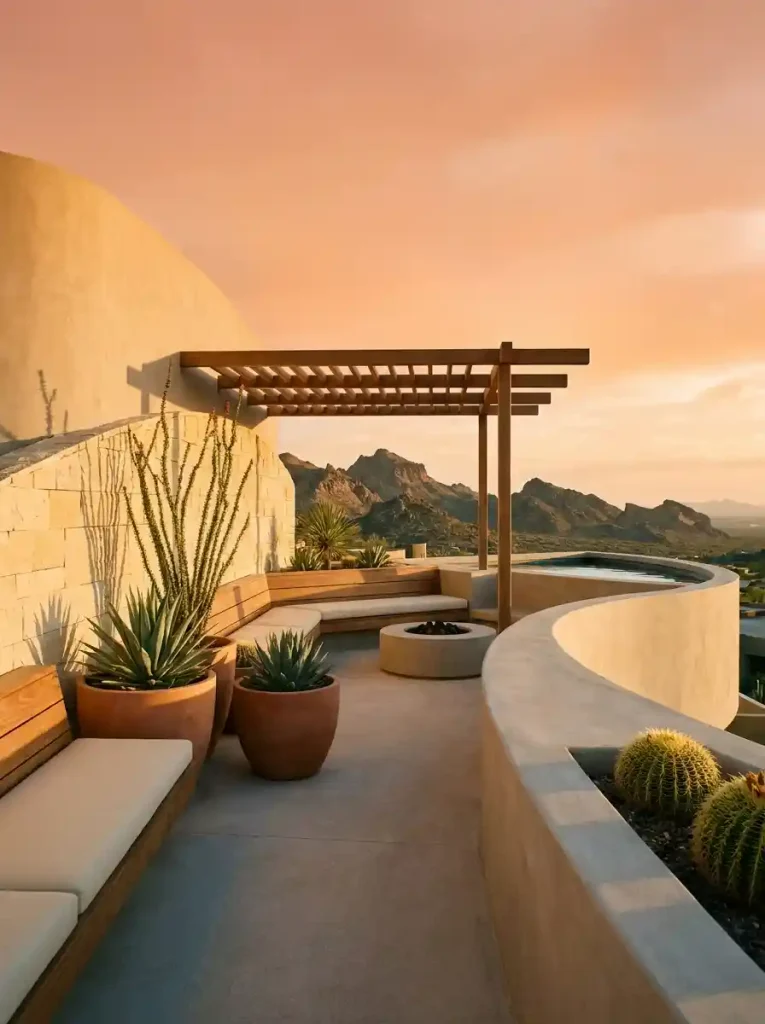
Styling Elements:
- Curved rooftop parapets
- Built-in lounge seating
- Lightweight pergola structures
- Weather-resistant furnishings
- Oversized plant containers
- Subtle ambient lighting
A private roof terrace makes excellent use of elevated views, allowing residents to enjoy sunsets and expansive desert scenery from a secluded outdoor setting. Sculptural parapet walls can soften the roofline, while built-in seating and a lightweight pergola create a more comfortable place to relax.
Keep the furniture arrangement simple and select finishes that can withstand strong sunlight and temperature changes. Shade is especially important, so pergolas, retractable canopies, or carefully designed covered sections can extend the terrace’s usefulness. Structural loading, waterproofing, wind exposure, and safe access should be addressed before the rooftop becomes an outdoor living area.
11. Desert Homes Inspired by Adobe Architecture
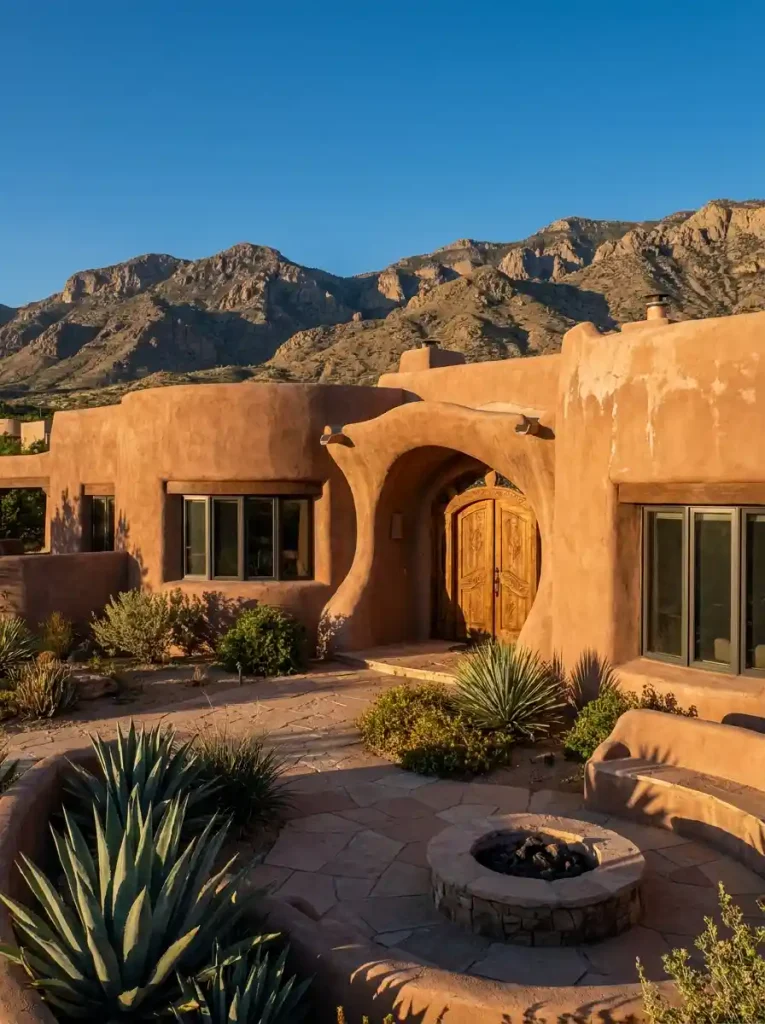
Styling Elements:
- Earth-toned plaster finishes
- Rounded wall corners
- Recessed wooden doors
- Deep window openings
- Native desert vegetation
- Traditional-inspired roof details
Adobe-inspired architecture offers a beautiful way to combine sculptural forms with regional character. Rounded walls, earthy finishes, and deep openings create a sense of permanence, while contemporary glazing and carefully edited details make the home feel fresh rather than historical.
For a modern interpretation, use clay, sand, and warm cream tones alongside natural timber and simple metal fixtures. The actual wall construction should be selected for the local climate, structural requirements, and building regulations; a decorative adobe-inspired finish is not the same as a traditional earthen wall system. When thoughtfully executed, this style creates a home that feels grounded, authentic, and welcoming.
12. Monolithic Desert Homes With Hidden Entrances
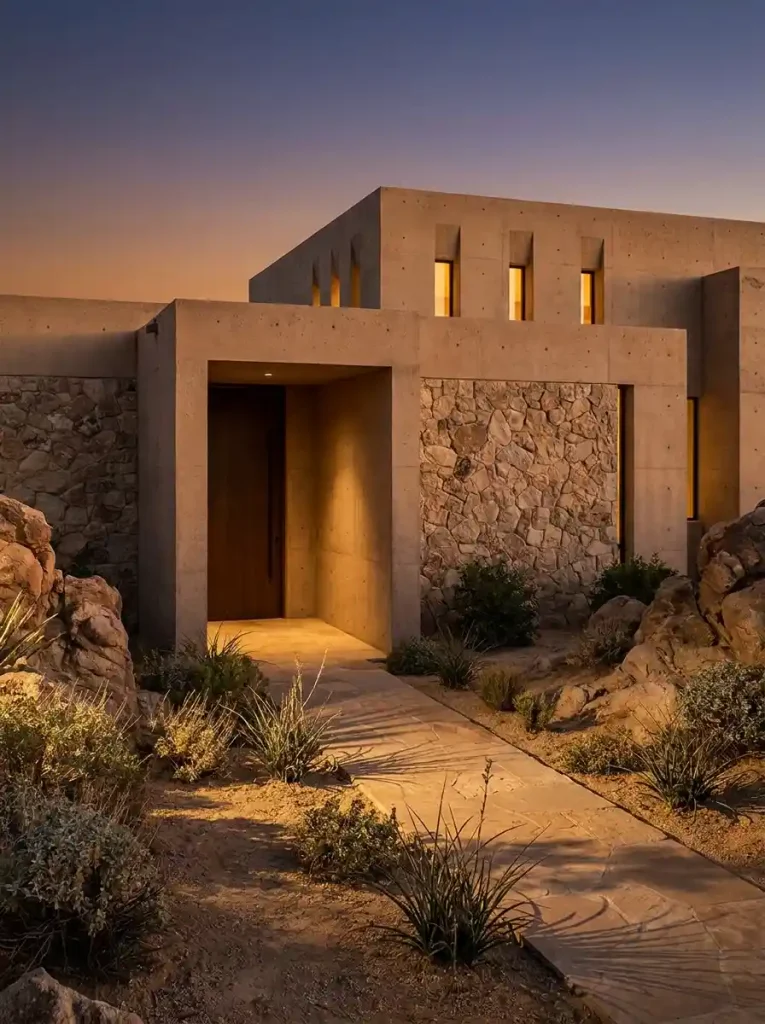
Styling Elements:
- Solid sculptural wall volumes
- Recessed entryways
- Flush entrance doors
- Concealed exterior hardware
- Minimal pathway materials
- Integrated wall lighting
A monolithic design makes the house feel like a single architectural sculpture placed within the landscape. Large solid volumes, restrained openings, and a concealed entrance create a dramatic first impression without relying on decorative details.
The entrance can be revealed through a change in texture, a narrow passage, or a warm line of lighting that guides visitors toward the door. Inside, the layout should remain intuitive and welcoming, even if the exterior feels mysterious. Thoughtful wayfinding, weather protection, and secure access ensure that the visual drama does not come at the expense of practicality.
13. Desert Homes With Sculptural Pergolas
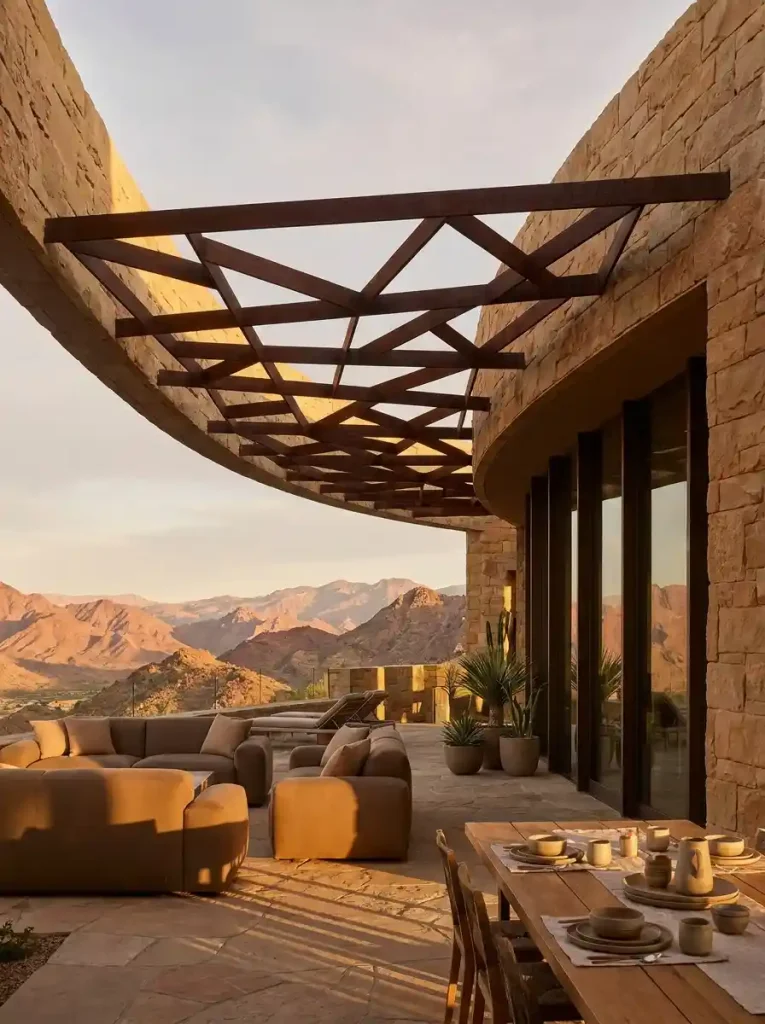
Styling Elements:
- Sculptural pergola beams
- Warm timber or metal finishes
- Natural stone flooring
- Outdoor dining furniture
- Climbing plants where suitable
- Integrated evening lighting
Pergolas introduce rhythm and dimension to a desert home’s exterior. Their repeated beams create beautiful patterns of light and shadow, while their open structure defines an outdoor room without completely closing it off from the surrounding scenery.
Choose materials based on sun exposure, maintenance requirements, and the desired architectural character. Timber brings warmth, while powder-coated metal can create a sharper contemporary appearance. For effective shade, consider beam spacing, orientation, and the position of the afternoon sun. Pair the pergola with comfortable seating and restrained accessories so that the architecture remains the main attraction.
14. Sculptural Desert Homes With Dramatic Interior Atriums
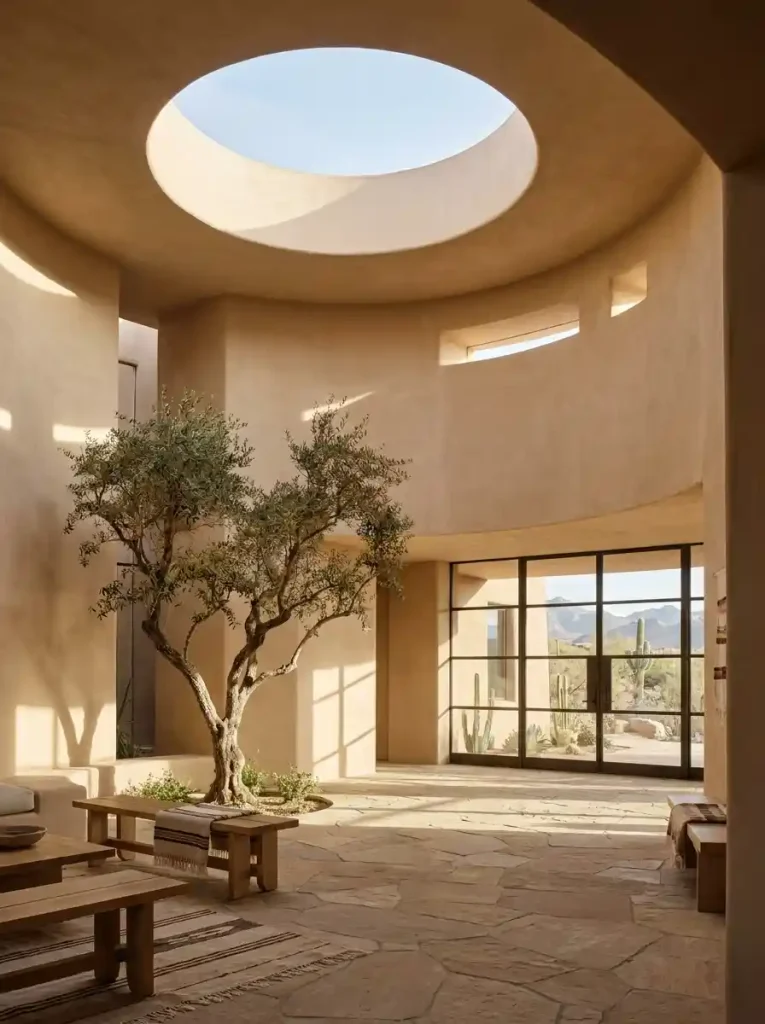
Styling Elements:
- Central architectural atrium
- Sculptural plaster walls
- Carefully positioned skylights
- Natural stone flooring
- A climate-suitable feature plant
- Indirect architectural lighting
An atrium can bring natural light and visual drama into the heart of a desert home. Rather than treating the interior as a collection of separate rooms, this approach creates a central architectural moment that connects different areas of the property.
Curved walls, textured finishes, and carefully placed glazing make the atrium feel like a natural extension of the home’s sculptural exterior. Skylights should be designed to manage heat gain and glare, while any indoor planting needs appropriate light, irrigation, and drainage. With these practical considerations addressed, an atrium can become the defining feature of the entire residence.
15. Desert Villas With Warm Minimalist Interiors
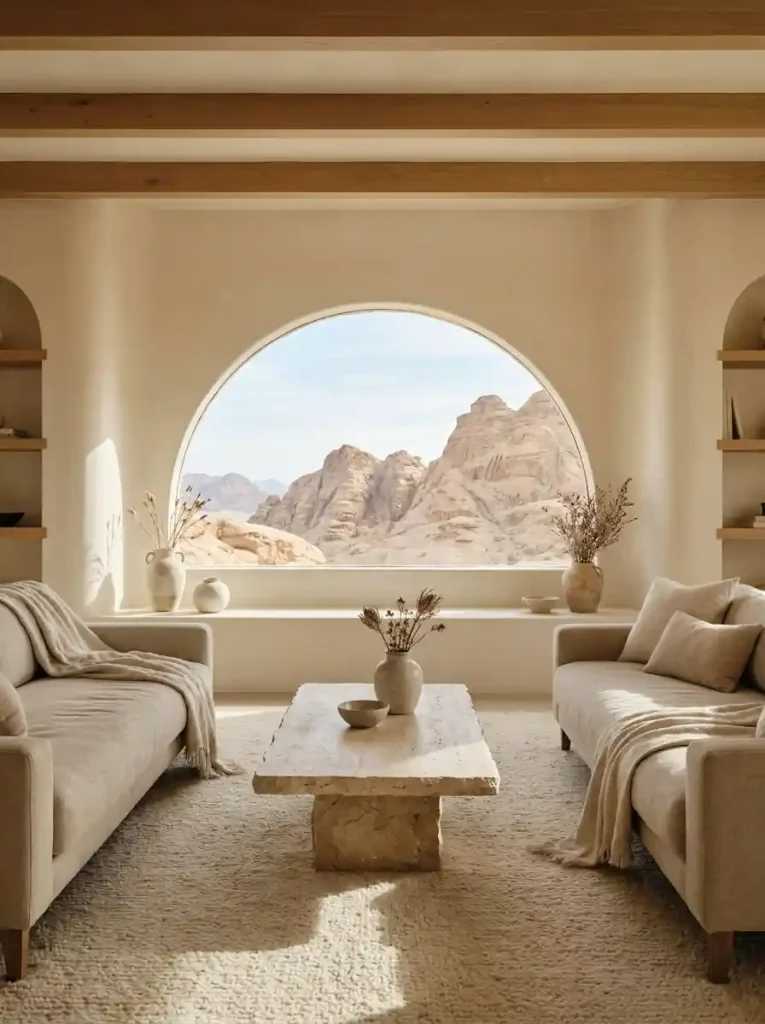
Styling Elements:
- Warm white and sand tones
- Low-profile furniture
- Sculptural stone tables
- Natural linen upholstery
- Handcrafted ceramic accents
- Soft indirect lighting
Warm minimalism is an ideal interior direction for sculptural desert homes because it allows the architecture and landscape to remain visually important. Instead of filling rooms with decorative objects, this style focuses on a few carefully selected furnishings, tactile materials, and harmonious colors.
Choose a comfortable sofa in a natural fabric, a stone coffee table with an expressive shape, and handcrafted accessories that add character without creating clutter. Repeating the exterior palette indoors helps the home feel cohesive. Soft curtains, layered lighting, and textured rugs can introduce comfort while preserving the clean architectural lines.
16. Sculptural Desert Homes With Oversized Pivot Doors
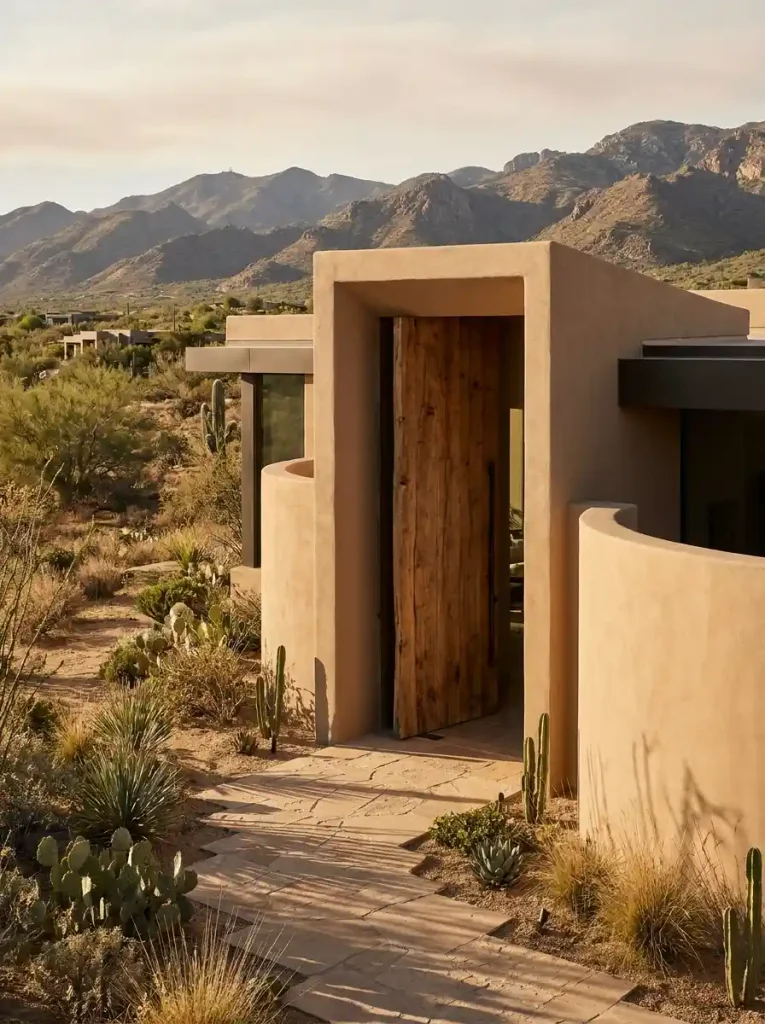
Styling Elements:
- Oversized pivot doors
- Natural timber surfaces
- Sculptural entrance portals
- Minimal metal hardware
- Textured stone pathways
- Recessed entrance lighting
An oversized pivot door creates a strong focal point and gives the entrance a sense of occasion. Its scale contrasts beautifully with a restrained desert facade, while timber introduces warmth against stone, concrete, or smooth plaster.
For a luxurious result, choose a finish that complements the home’s palette and keep surrounding details simple. The door’s weight, pivot hardware, weather seals, and resistance to heat and direct sunlight require careful specification. A deep entrance recess can provide shade and frame the door, creating an inviting transition from the open desert to the private interior.
17. Desert Homes With Sculptural Outdoor Fireplaces
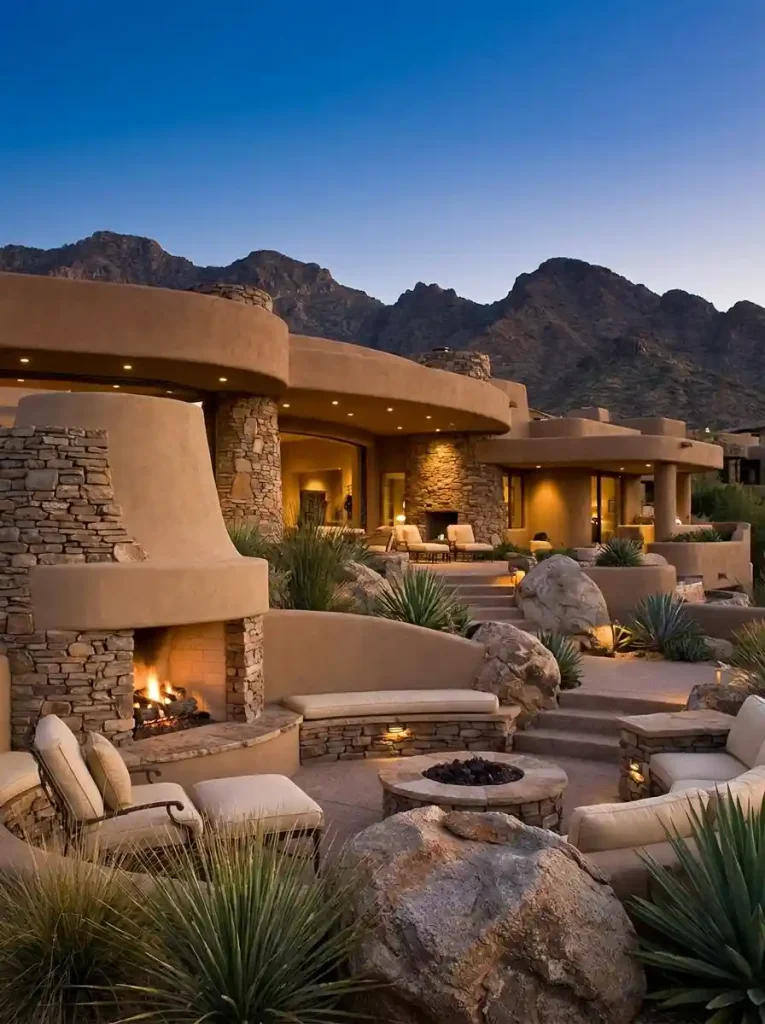
Styling Elements:
- Curved outdoor fireplace walls
- Natural stone hearth finishes
- Low-profile lounge furniture
- Heat-resistant paving
- Weather-resistant cushions
- Warm landscape lighting
An outdoor fireplace adds an intimate gathering point to a desert residence, especially when evening temperatures become cooler. A sculptural surround can make the fireplace feel like a permanent architectural feature rather than a standalone accessory.
Arrange the seating in a relaxed semicircle and use materials that complement the exterior walls. Keep pathways clear and provide enough space between the fire, furniture, and nearby planting. The fireplace must be designed for local fire regulations, ventilation, and safe fuel use. Where open flames are unsuitable, a code-compliant alternative or a sculptural non-combustion feature can preserve the visual concept.
18. Sculptural Desert Homes With Natural Timber Ceilings
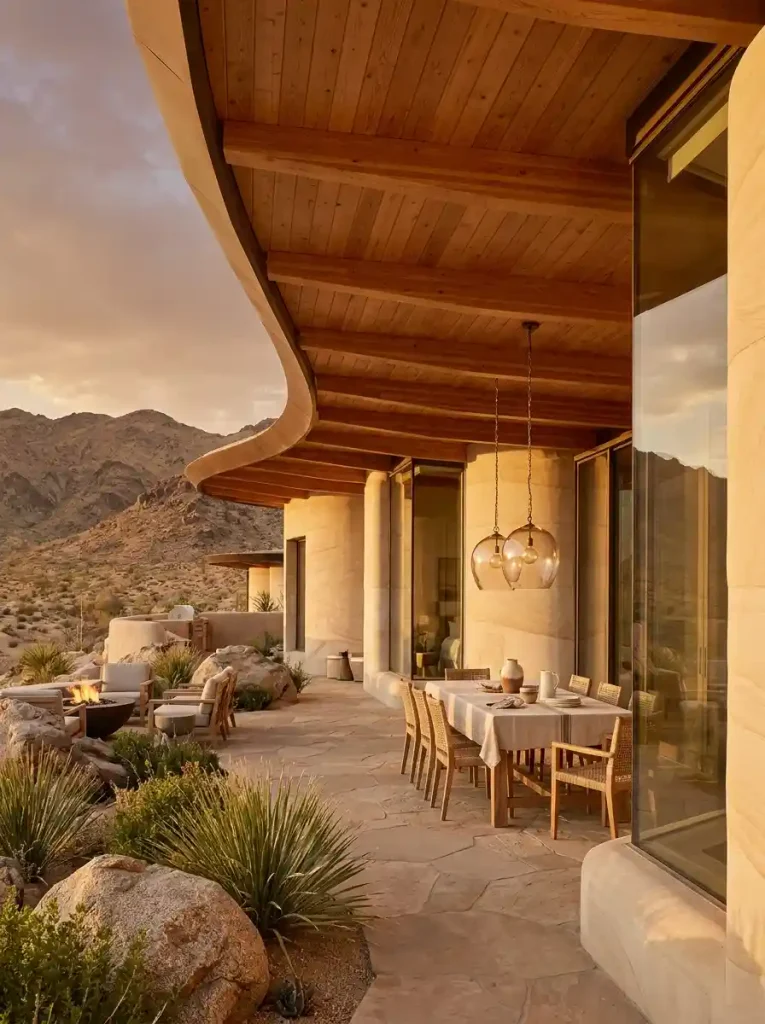
Styling Elements:
- Natural timber ceiling panels
- Curved plaster walls
- Pale limestone flooring
- Warm neutral outdoor furniture
- Minimal bronze accents
- Concealed ceiling lighting
Natural timber ceilings introduce warmth and visual depth to the clean geometry of a sculptural desert home. When used beneath a covered terrace or within a sheltered living area, wood softens hard surfaces and creates an inviting contrast with concrete, stone, and glass.
Choose a timber finish that suits the home’s architectural character, from pale oak-inspired tones to deeper walnut shades. Exterior timber requires appropriate protection from intense sunlight, dryness, and temperature changes. Repeating the same wood tone in doors, ceiling details, or selected interior furnishings can help connect the different areas of the property.
19. Desert Homes With Sculptural Night Lighting
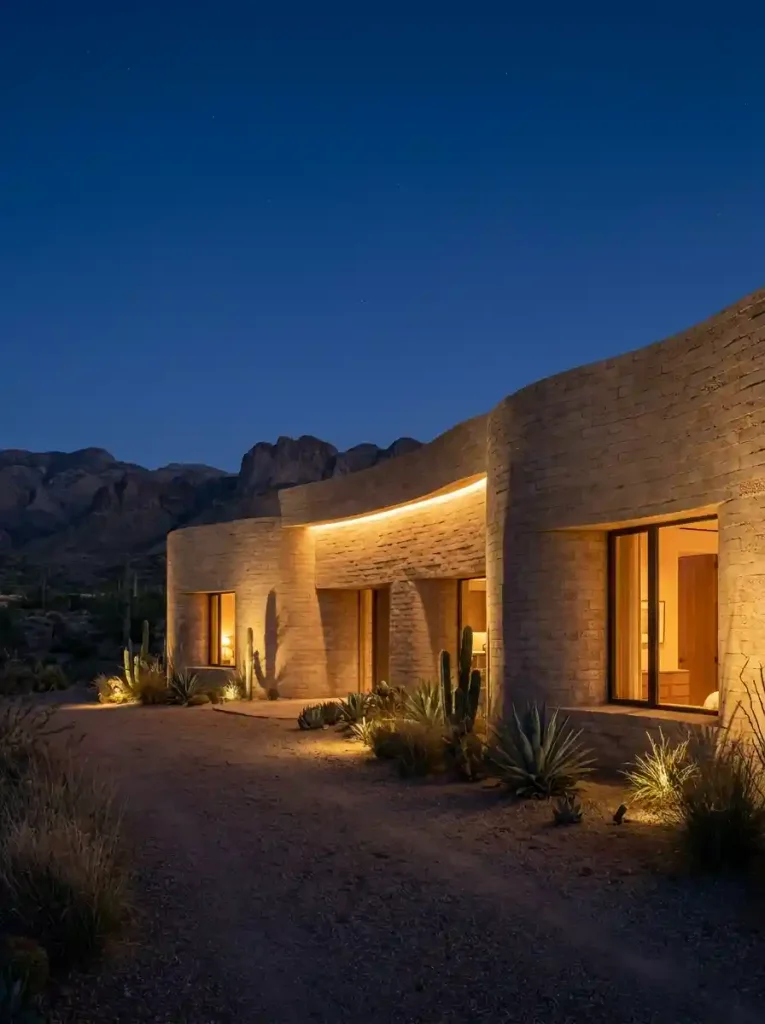
Styling Elements:
- Concealed linear LED lighting
- Wall-grazing architectural fixtures
- Warm color-temperature lighting
- Discreet pathway illumination
- Carefully aimed landscape lights
- Dark-sky-conscious exterior design
Lighting transforms sculptural desert architecture after sunset by revealing the contours and textures that may appear subtle during daylight. A concealed fixture can emphasize a curved wall, while a carefully positioned uplight can highlight the natural form of a feature tree or stone surface.
Avoid illuminating every part of the property equally. Select a few architectural details to emphasize and leave other areas in gentle shadow, creating a more sophisticated atmosphere. Warm, shielded fixtures can reduce glare and light spill, while motion sensors and efficient lighting controls help conserve energy. The goal is to reveal the architecture rather than overpower the desert night.
20. A Sculptural Desert Estate With Seamless Indoor-Outdoor Living
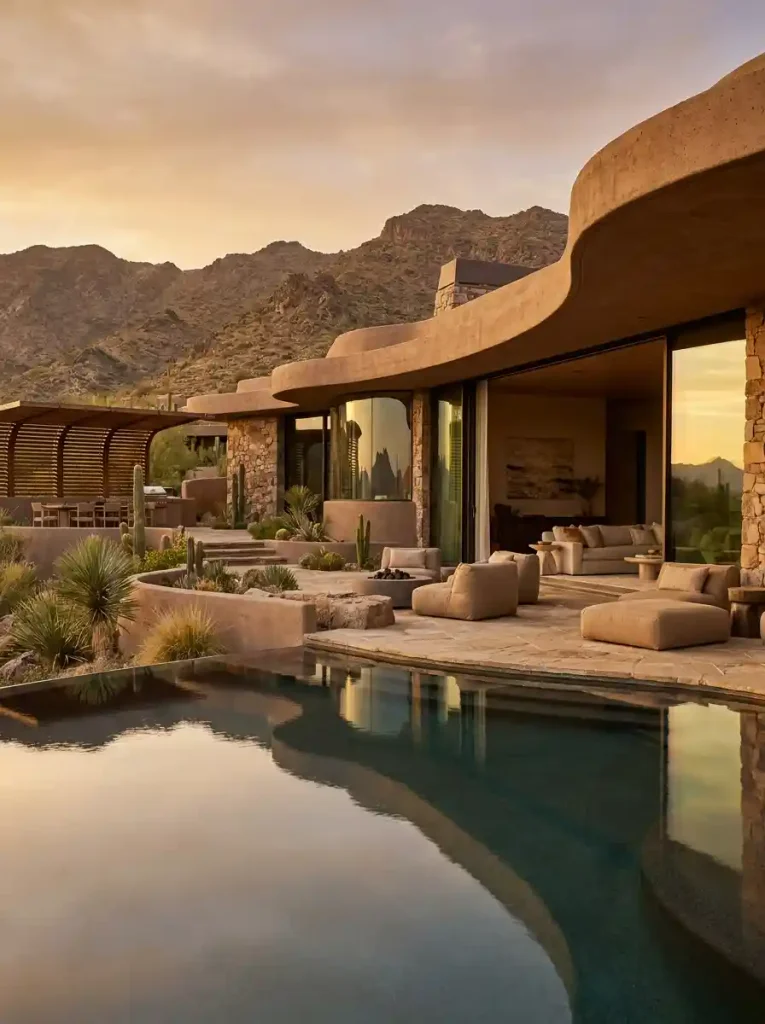
Styling Elements:
- Wide sliding glass doors
- Continuous indoor-outdoor flooring
- Covered outdoor living areas
- Coordinated interior furnishings
- Natural stone terraces
- Climate-responsive shading
Seamless indoor-outdoor living brings together many of the defining qualities of sculptural desert architecture. Large sliding doors connect the living room to a shaded terrace, while consistent materials and a coordinated color palette make both spaces feel like parts of a single design.
Create a comfortable interior seating area that continues naturally into an outdoor lounge or dining space. Use durable materials, appropriate shading, and carefully planned circulation to support daily life in a demanding climate. When the architecture, furnishings, and landscape work together, the home becomes more than an impressive structure: it becomes a private retreat designed around its natural surroundings.
Final Thoughts: Sculptural Desert Home Ideas
Sculptural desert homes prove that luxury does not have to depend on excessive decoration. Organic architecture, earthy materials, expressive shapes, and a thoughtful relationship with the landscape can create residences that feel distinctive, peaceful, and timeless.
Whether you prefer a minimalist concrete retreat, a terracotta villa, an arched stone residence, or a dramatic glass-walled estate, the most successful designs combine visual creativity with everyday comfort. Consider the local climate, natural light, privacy, and landscape before choosing the architectural features that best suit your vision.
Ultimately, the beauty of a sculptural desert home lies in its ability to feel bold without being overwhelming and luxurious without losing its connection to nature. With the right balance of form, material, and setting, your dream desert retreat can become an extraordinary expression of modern living.