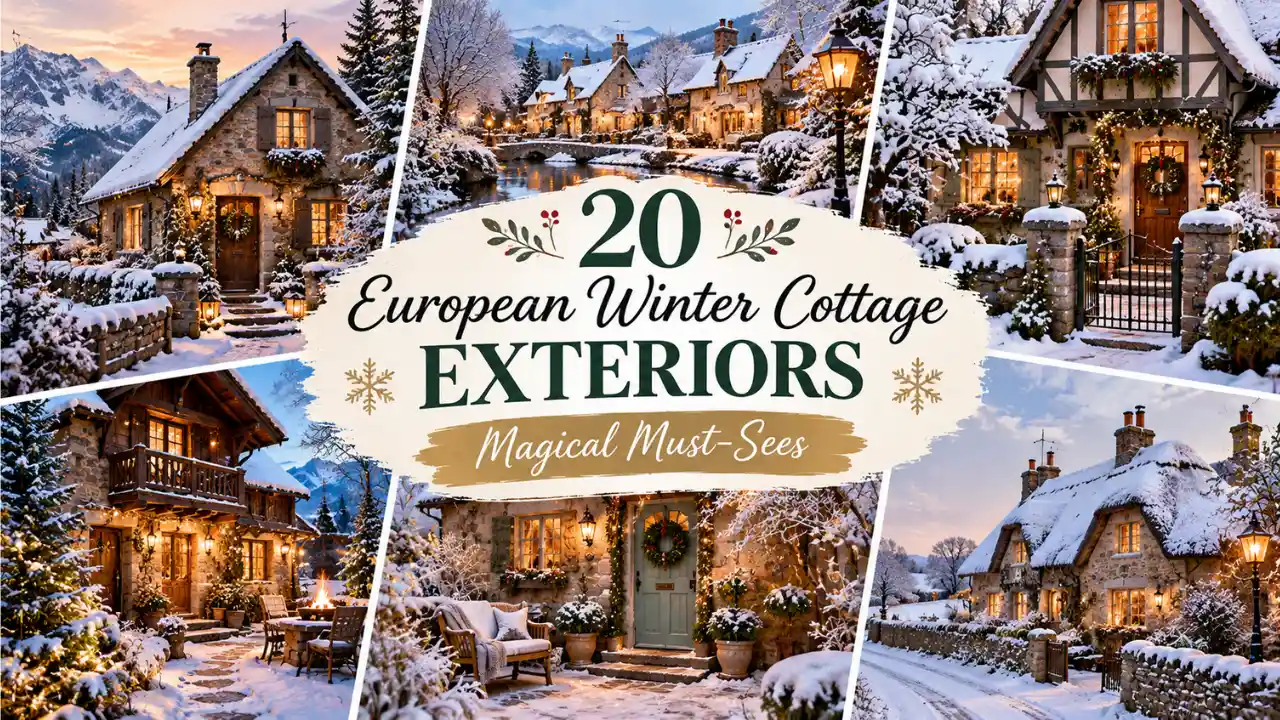
20 European Winter Cottage Exteriors: Magical Must-Sees
European winter cottages have a special kind of charm that makes a home feel peaceful, welcoming, and almost storybook-like. From old stone cottages tucked into snowy villages to elegant countryside homes surrounded by evergreen trees, these exteriors combine traditional architecture with the natural beauty of winter. Their character comes from thoughtful details such as pitched roofs, textured walls, wooden doors, delicate window frames, and warm lighting that glows against the cold landscape.
One of the most appealing things about European Winter Cottage Exteriors by The Home Vista is its variety. French countryside homes often feature pale stone, muted shutters, and understated elegance, while English cottages are known for their quaint proportions, climbing greenery, and inviting entrances. Alpine cottages introduce timber, steep roofs, and rustic materials, whereas Scandinavian-inspired homes embrace simplicity, natural finishes, and clean architectural lines.
Winter provides the perfect opportunity to appreciate these architectural details. A light covering of snow, frost-touched gardens, bare branches, and evergreen landscaping can make even a modest cottage look remarkably atmospheric. Warm exterior lighting, layered textures, and carefully chosen seasonal decorations add character without overwhelming the original design.
Whether you are planning a cottage renovation, collecting exterior inspiration, or simply dreaming of a beautiful countryside retreat, these European winter cottage exteriors offer ideas for different architectural styles and budgets. Each design explores a distinct combination of materials, colors, landscaping, and seasonal details to help you imagine a home that feels timeless, inviting, and wonderfully suited to winter.
1. Classic French Stone Cottage
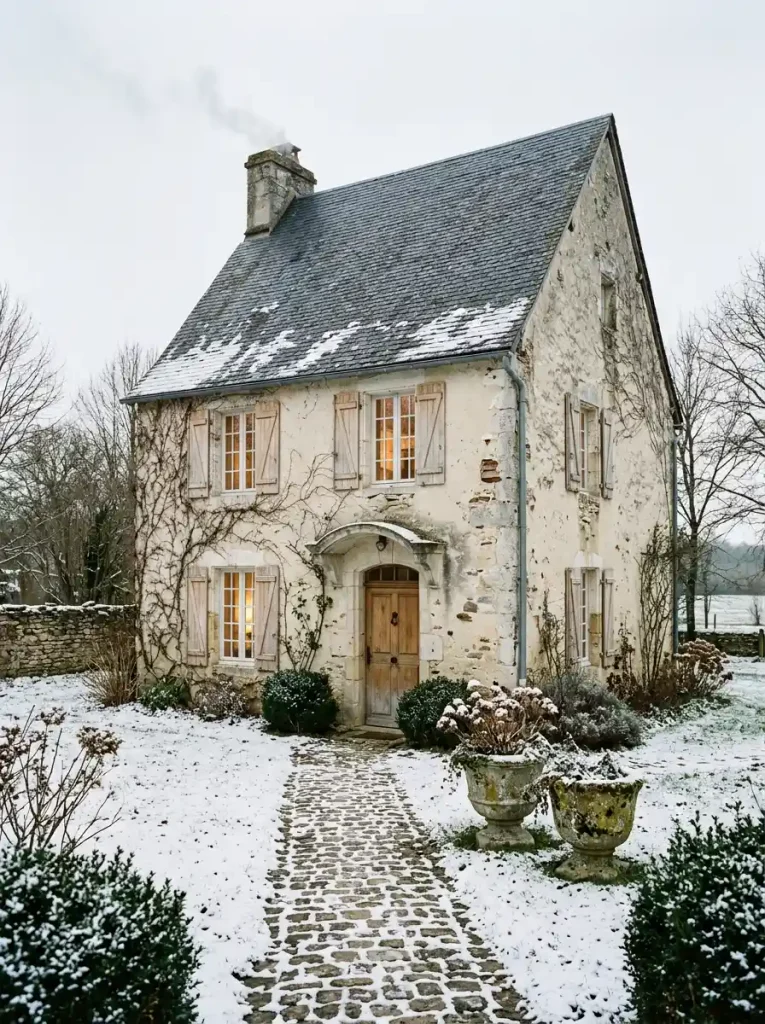
Key Features:
- Weathered limestone exterior
- Traditional slate roof
- Pale wooden shutters
- Arched stone doorway
- Snow-dusted cobblestone path
- Warm window illumination
A French stone cottage creates an enduring impression through its materials rather than elaborate decoration. Limestone naturally develops subtle variations in color and texture, giving the walls a sense of age and authenticity. Slate roofing, understated shutters, and a simple wooden entrance complement the stone without competing for attention. For a winter setting, these traditional details look particularly appealing against pale skies and lightly frosted landscaping.
To recreate this look, focus on a restrained color palette of warm cream, soft gray, muted brown, and evergreen. If a complete stone exterior is beyond your budget, consider stone around the entrance or a carefully selected textured masonry finish. Traditional lanterns and a natural stone pathway can complete the atmosphere while keeping the cottage elegant throughout the year.
2. Snowy English Country Cottage
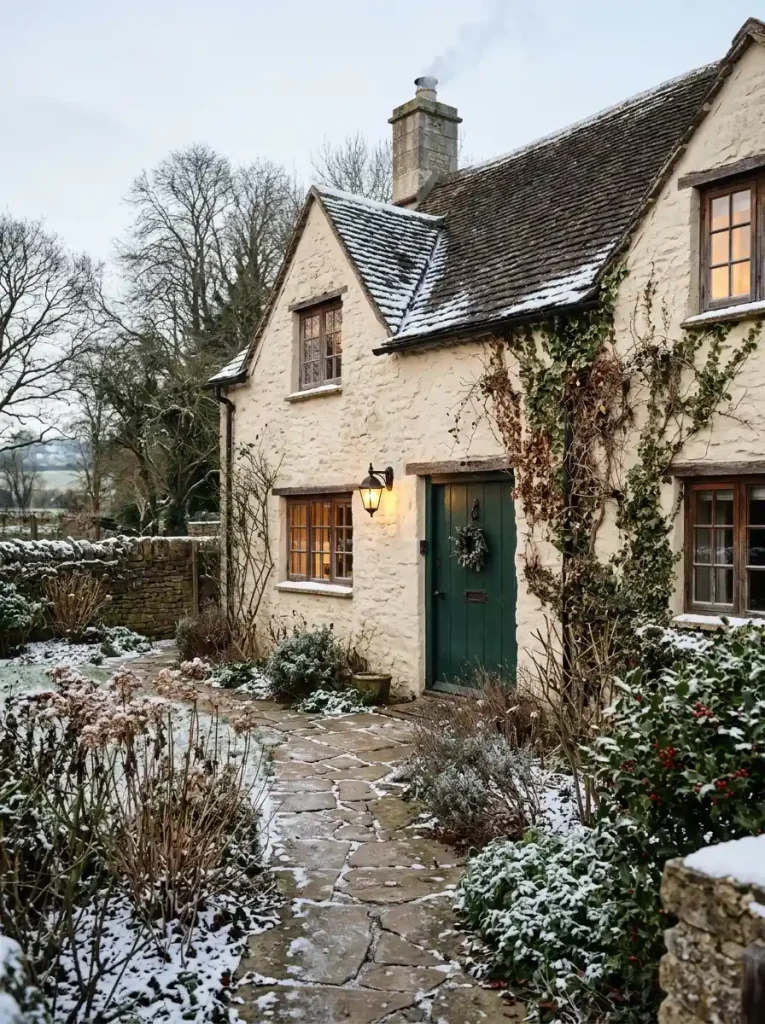
Key Features:
- Ivory limewashed walls
- Deep green entrance door
- Divided-pane windows
- Traditional tiled roof
- Frosted cottage garden
- Classic exterior lantern
English country cottages often feel inviting because their architecture appears closely connected to the surrounding garden. Small windows, textured walls, traditional roofing, and a modest entrance give the facade a relaxed, established character. Ivy can add softness, although it should be managed carefully around masonry and gutters. During winter, the contrast between evergreen foliage and pale walls keeps the exterior visually interesting even when flowering plants are dormant.
For a practical interpretation, start with a traditional door color such as forest green, deep burgundy, or muted blue. Add a curved path, compact evergreen planting, and warm exterior lighting to strengthen the cottage atmosphere. The aim is not to make the home look artificially old, but to create a welcoming facade with natural textures and a thoughtful relationship between architecture and landscape.
3. Alpine Timber Winter Cottage
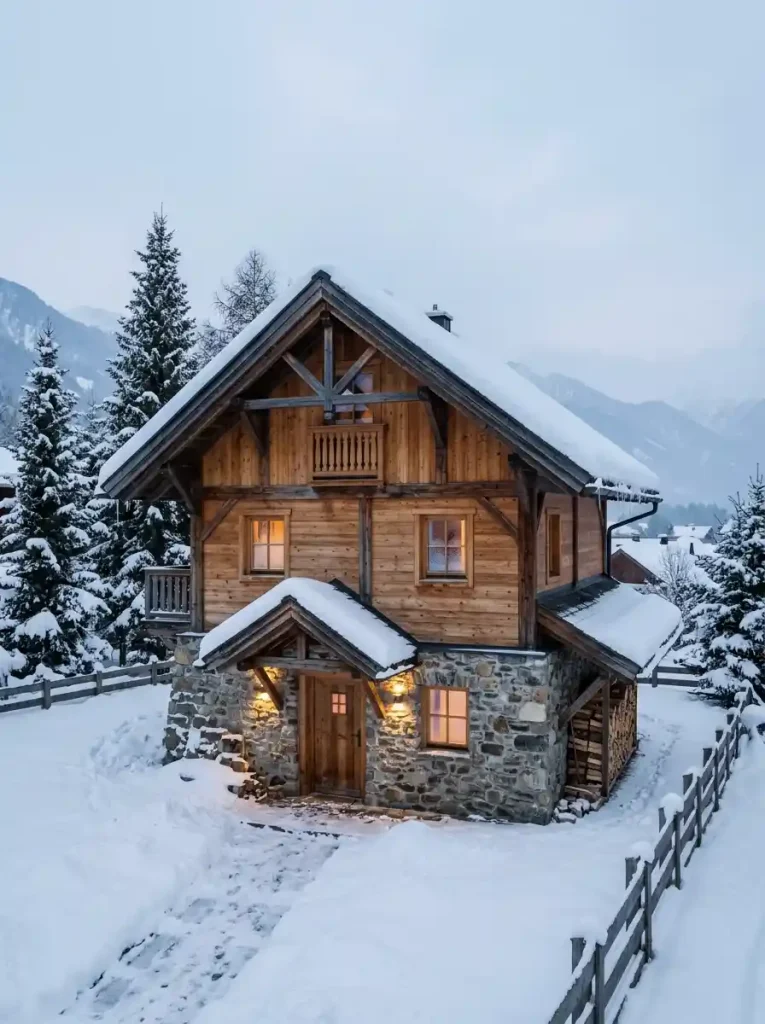
Key Features:
- Exposed timber construction
- Warm wood cladding
- Steep snow-ready roof
- Natural stone foundation
- Covered front entrance
- Evergreen mountain setting
Alpine cottages are particularly suited to winter because their traditional forms respond to cold, snowy environments. Steep roofs, sheltered entrances, substantial foundations, and timber details give these homes their recognizable character. Wood introduces warmth against the cool colors of snow and mountain scenery, while stone adds visual weight at ground level. Together, the materials create an exterior that feels rustic without needing excessive decorative elements.
When adapting this style to a modern property, use timber accents strategically rather than covering every surface. A wooden entrance, balcony railing, or upper-level facade can establish the Alpine influence. Pair these details with durable roofing, appropriate insulation, and well-designed drainage suited to local weather. The result can feel like a winter retreat while remaining practical for everyday living.
4. Minimalist Scandinavian Winter Cottage
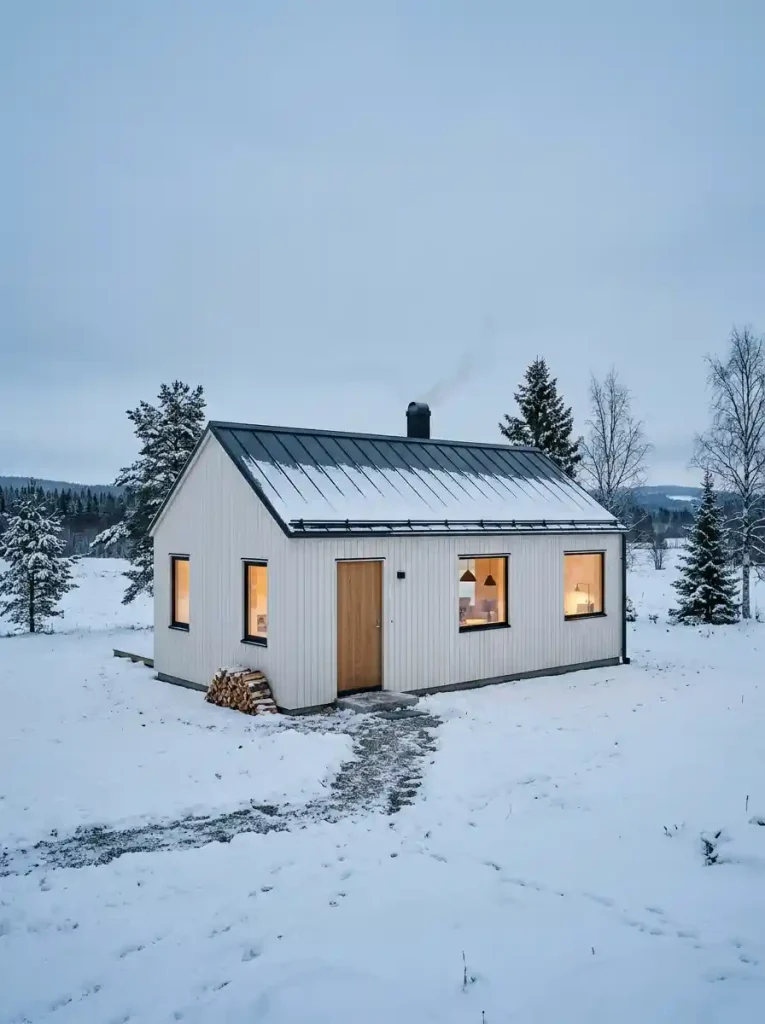
Key Features:
- Warm-white timber siding
- Charcoal metal roofing
- Black-framed windows
- Natural oak entrance
- Minimal evergreen landscaping
- Clean architectural geometry
Scandinavian-inspired cottages offer a quieter interpretation of winter architecture. Rather than relying on elaborate trim or decorative stonework, they use proportion, natural materials, and controlled contrasts to create visual interest. White siding reflects the limited winter daylight, while dark window frames define the facade. Timber at the entrance prevents the design from feeling too stark and introduces a natural warmth that works beautifully in cold surroundings.
This style is especially useful for homeowners who prefer a modern exterior but still want a cozy cottage atmosphere. Keep the landscaping simple, choose a limited palette, and prioritize quality finishes over unnecessary ornamentation. In regions without heavy snowfall, the same aesthetic can be adapted with a roof pitch and drainage system appropriate for local conditions.
5. Rustic German Countryside Cottage
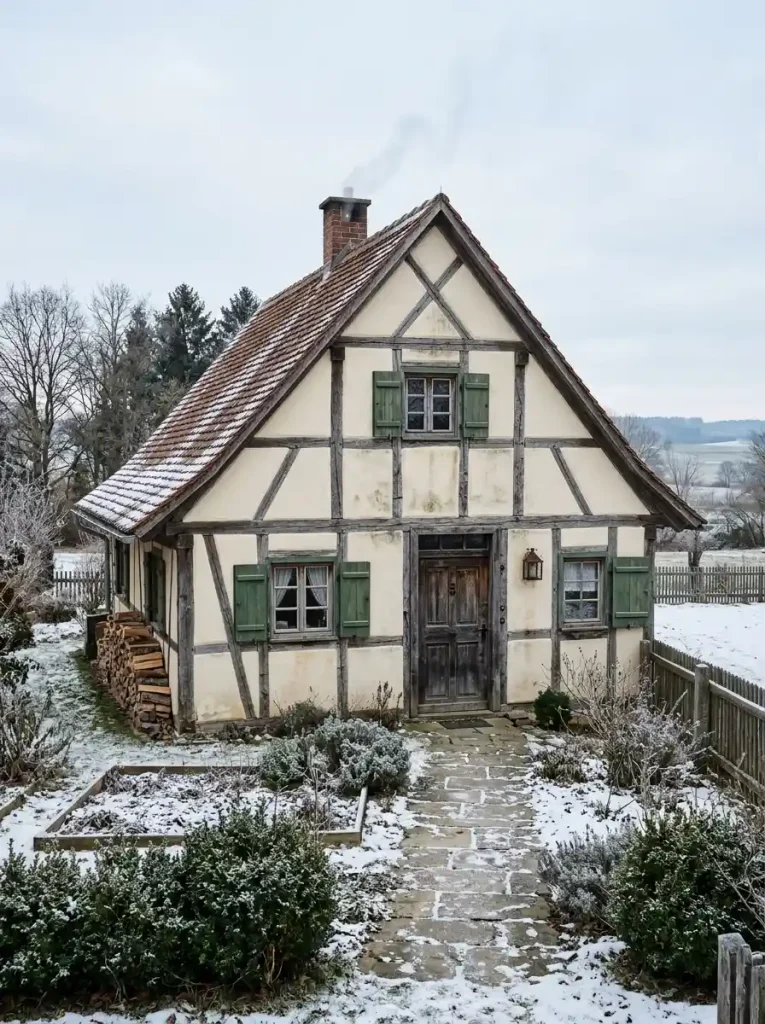
Key Features:
- Traditional timber framing
- Cream plaster walls
- Earth-toned roof tiles
- Muted green shutters
- Natural stone walkway
- Rustic wooden entrance
German countryside cottages can offer a distinctive combination of pale plaster, dark timber, and traditional tiled roofing. The contrast between the structural-looking timber and light wall surfaces creates a recognizable facade without requiring bright colors. These homes often look especially appealing in winter because their warm architectural tones stand out against frost and pale skies. Natural imperfections in wood and masonry can also give a renovation more depth than overly uniform finishes.
To bring this influence into a contemporary home, consider decorative timber elements only when they suit the building’s design and construction. Cream walls, dark brown accents, and traditional roof colors can create a related aesthetic without pretending to reproduce a historic structure. Keep the entrance simple, use authentic-looking materials, and avoid adding decorative framing that feels disconnected from the home’s architecture.
6. Belgian Cottage With Dark Brick
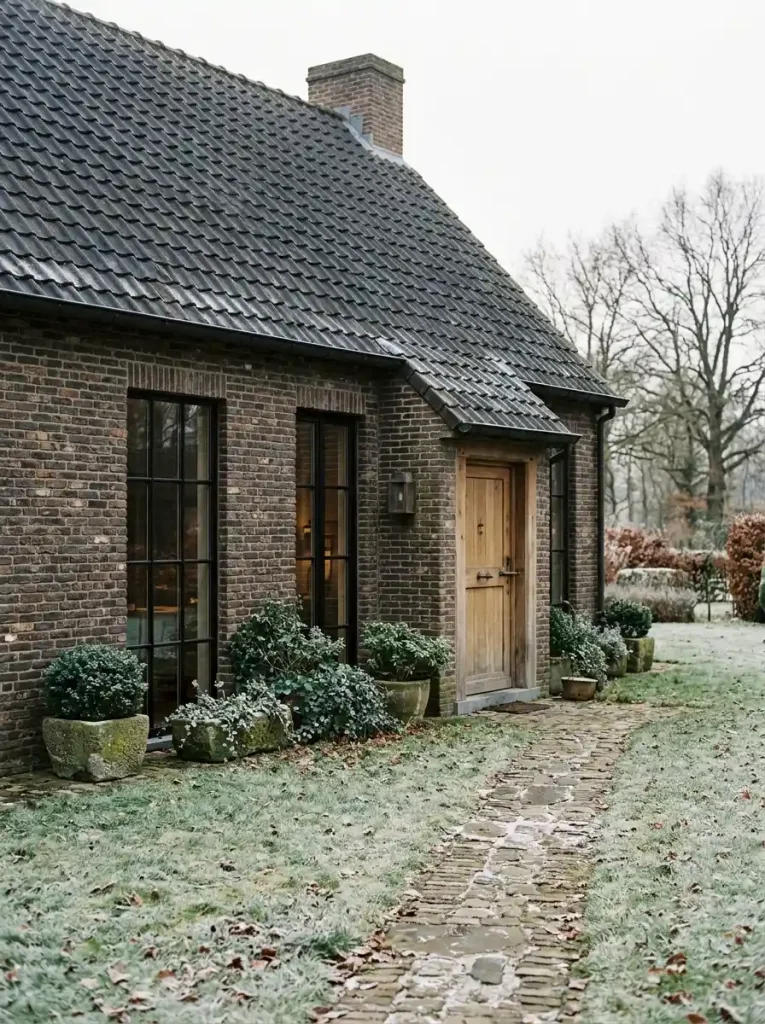
Key Features:
- Deep-toned brick facade
- Dark traditional roof
- Slim black window frames
- Natural oak front door
- Recessed entrance
- Restrained evergreen planting
Dark brick gives a European cottage a more grounded and contemporary appearance while preserving the visual richness of traditional masonry. Its natural variation creates texture across the facade, and darker window frames can reinforce the architectural lines. In winter, these deep tones contrast beautifully with frost, pale skies, and warm light from inside the house. A wooden door introduces a softer element that prevents the overall design from appearing too severe.
For a similar look, choose brick with subtle color variation rather than a completely uniform black finish. Balance darker walls with warm timber, restrained lighting, and a simple landscape. On smaller properties, use dark brick on the entrance or lower portion of the facade instead of the entire building. This creates depth while helping the exterior retain a welcoming character.
7. French Cottage With Blue Shutters
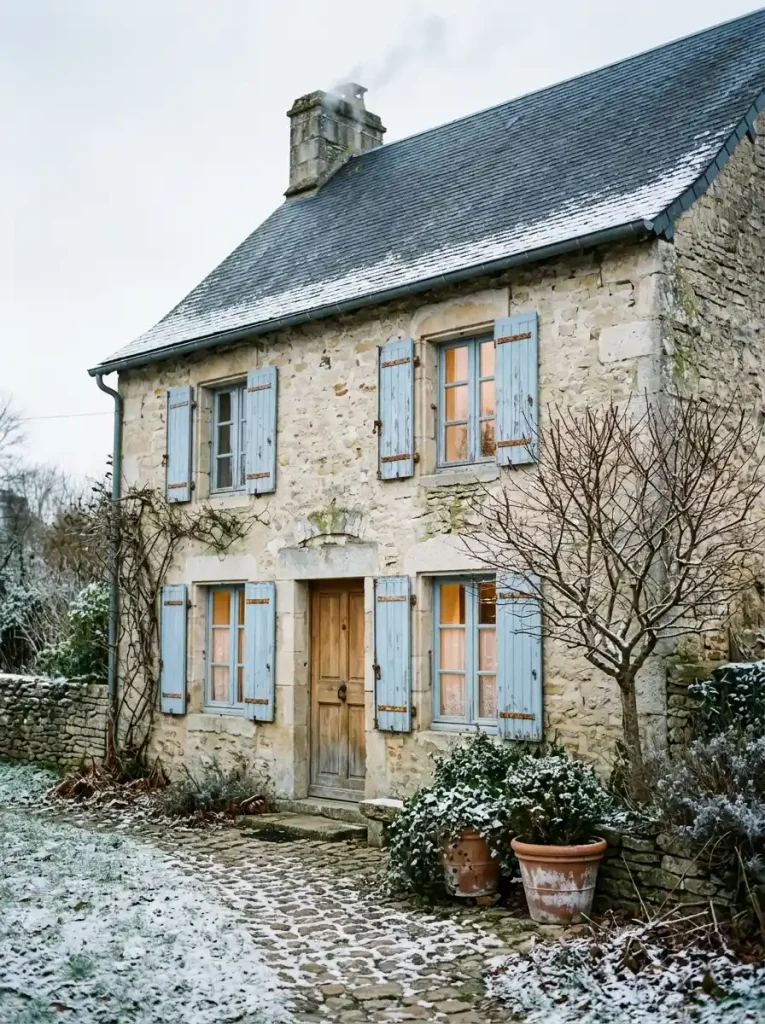
Key Features:
- Pale limestone walls
- Powder-blue shutters
- Dark slate roof
- Natural wood entrance
- Terracotta garden planters
- Cobblestone approach
Blue shutters add personality to a traditional French cottage without changing its fundamental architectural character. Muted shades work particularly well with pale masonry because they provide contrast while maintaining a soft, understated appearance. In winter, the blue can echo the cool tones of the sky and snow, while the wooden door and terracotta planters introduce warmer colors. The combination feels distinctive without relying on elaborate seasonal decoration.
When choosing shutter colors, look at the undertones of the exterior walls and roof. Powder blue, dusty blue-gray, and muted slate blue generally pair well with cream stone and warm plaster. For homes without traditional shutter openings, similar color can be introduced through the front door or selected exterior details. Keep the remaining palette simple so the blue remains a defining feature rather than one of many competing accents.
8. English Cottage With a Dramatic Thatched Roof
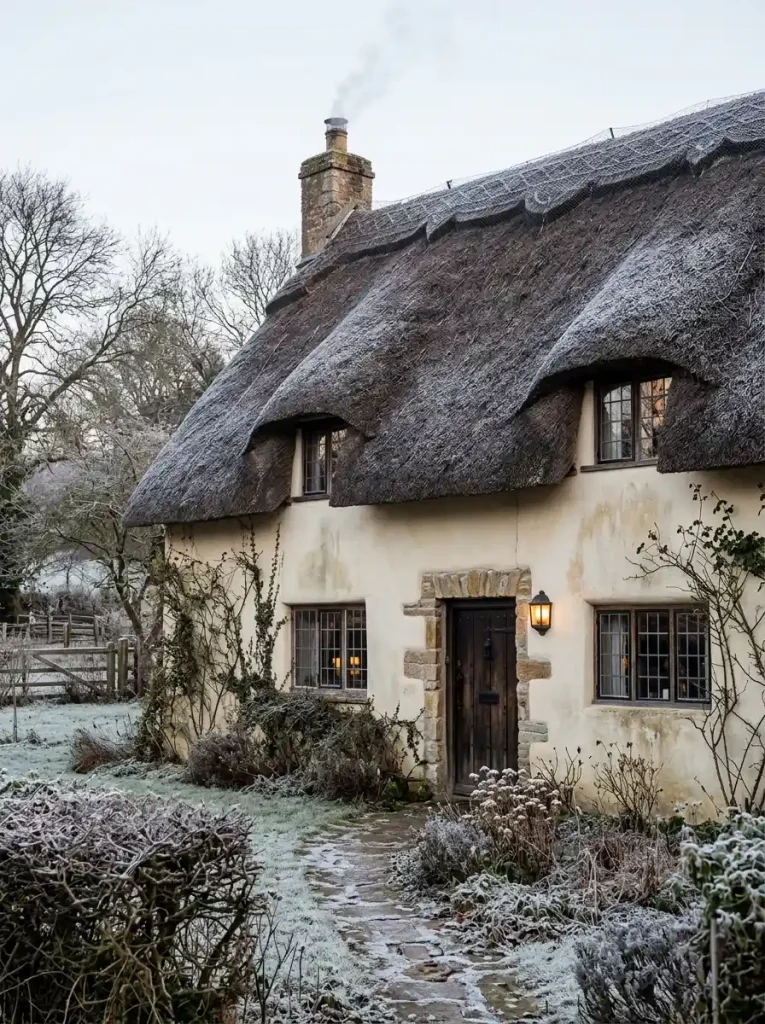
Key Features:
- Traditional thatched roofing
- Soft cream exterior walls
- Small casement windows
- Dark timber entrance
- Frosted cottage garden
- Warm traditional lantern
A thatched roof gives a cottage an immediately recognizable English countryside identity. Its natural texture and gently irregular outline create a softer silhouette than conventional roofing materials. Cream walls and modest windows keep the facade visually balanced, while a simple garden reinforces the rural setting. In winter, the contrast between the textured roof, pale walls, and frosty planting can create a memorable scene without extensive decoration.
Thatched roofing is a specialized building feature, so this style is best treated as architectural inspiration unless the property is suitable for an authentic thatch installation. Homeowners can borrow the softer roofline, natural materials, and traditional garden arrangement while using roofing systems that meet local requirements. If working with an actual thatched building, maintenance, fire precautions, and appropriate specialist advice are essential.
9. Swiss Cottage With a Deep Wooden Balcony
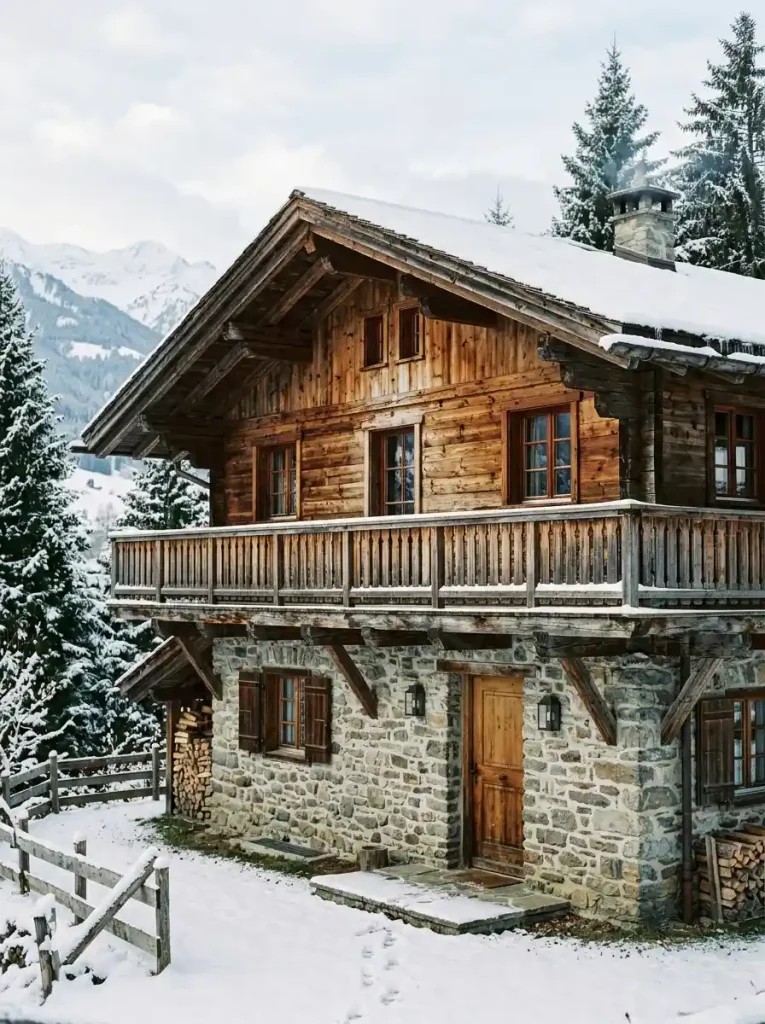
Key Features:
- Broad timber balcony
- Natural stone lower level
- Warm wood cladding
- Steep traditional roof
- Divided-pane windows
- Mountain-inspired landscaping
A wooden balcony can become the defining feature of a Swiss-inspired cottage exterior. It adds depth to the upper facade and provides a strong horizontal line against the steep roof. Timber railings, small windows, and a stone base create a layered appearance that feels grounded in Alpine building traditions. In winter, the natural wood contrasts with the surrounding snow and evergreen trees, helping the cottage feel warm even in a cold landscape.
If you want this look for a modern home, consider a smaller balcony or a sheltered timber terrace that complements the existing structure. Use weather-resistant materials and ensure that railings, connections, and drainage are designed appropriately. A stone-clad lower level and carefully selected wood tones can evoke the Swiss cottage aesthetic without making the exterior feel overly rustic.
10. Cream Cottage With Burgundy Details
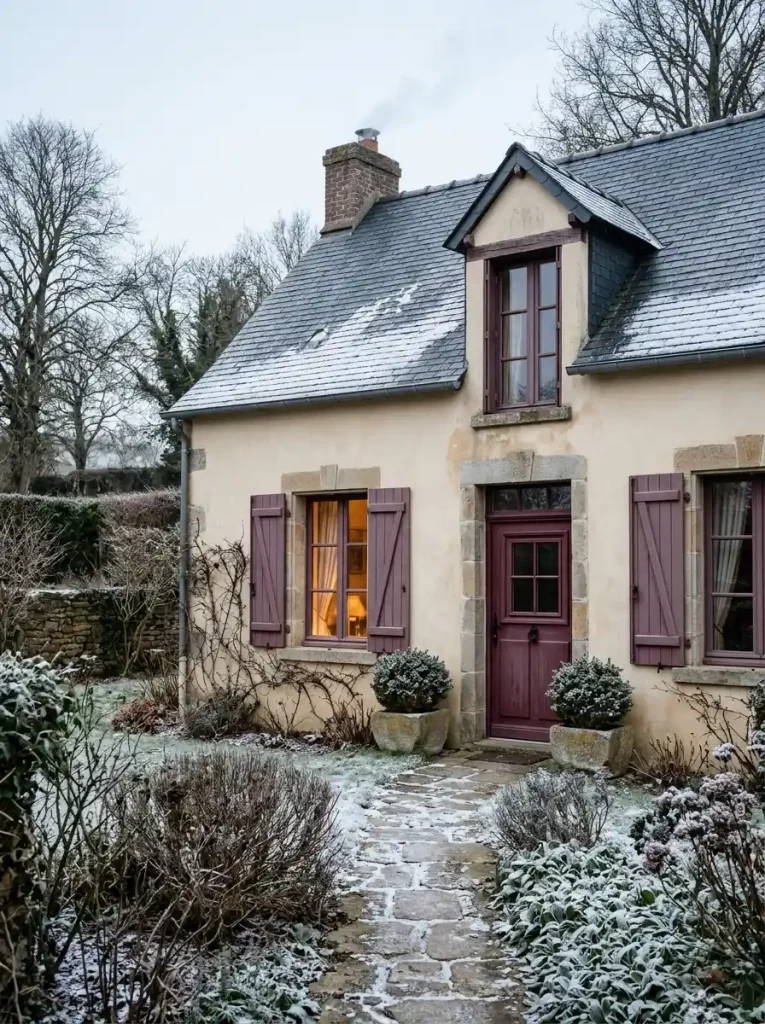
Key Features:
- Warm cream plaster
- Burgundy entrance door
- Coordinated colored shutters
- Dark gray roof
- Frosted planting borders
- Warm interior illumination
Burgundy brings a richer seasonal character to a cottage than many conventional exterior accent colors. Against cream plaster, it creates a noticeable contrast that feels warm and traditional rather than overly bright. A matching door and shutters can make the facade appear thoughtfully coordinated, while a dark roof grounds the overall palette. The look works particularly well in winter, when the surrounding landscape tends toward neutral and cool colors.
For a balanced result, use burgundy on a limited number of architectural details instead of distributing it across every surface. Deep wine, muted oxblood, and brownish burgundy can each create a slightly different effect. Test paint samples in natural daylight before committing, and coordinate the chosen shade with the roof, window frames, and any existing stonework.
11. Rustic Cottage With a Stone Archway
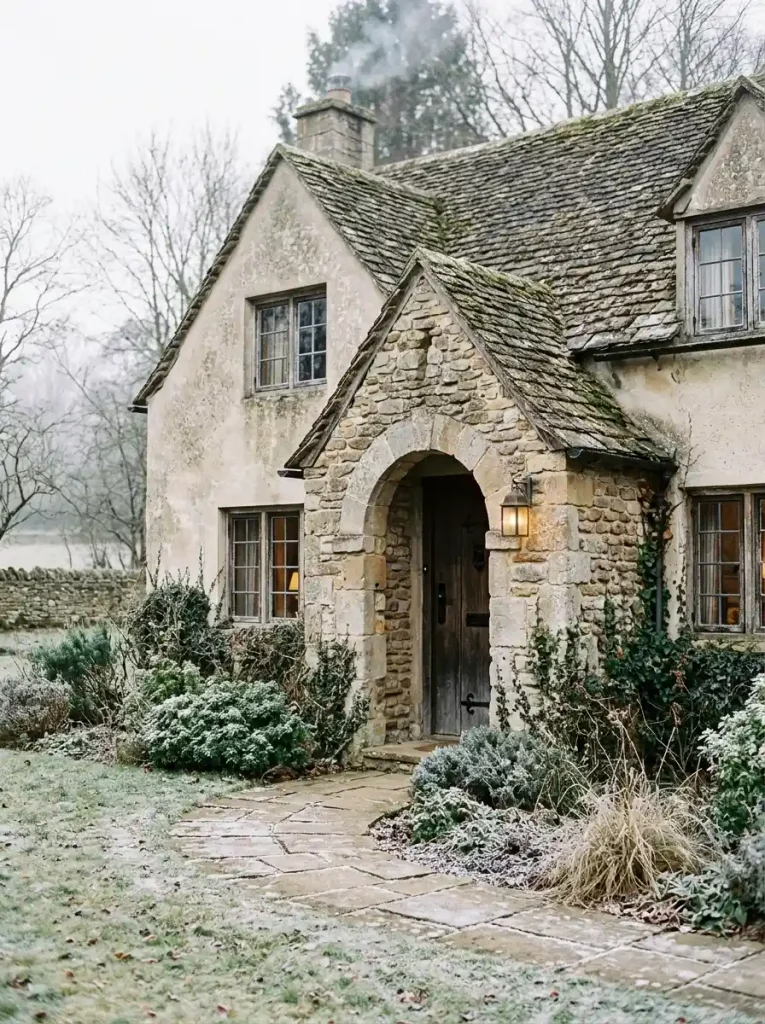
Key Features:
- Arched natural stone entrance
- Textured plaster walls
- Dark timber door
- Traditional roof tiles
- Curved stone pathway
- Iron exterior lantern
A stone archway gives a cottage entrance a strong architectural focal point. The curved form introduces softness against the straight lines of windows and roof edges, while natural stone provides depth and texture. When paired with a plain timber door, the entrance feels substantial without needing elaborate ornamentation. Frosted planting and a warm lantern can emphasize the arch during winter, making the doorway the most memorable part of the exterior.
This feature can be adapted to different budgets by using stone only around the entrance rather than across the entire facade. If a true structural arch is not appropriate, a professionally designed decorative stone surround can create a related visual effect. Choose materials that coordinate with the existing walls, and ensure exterior lighting is positioned to reveal the texture without producing harsh glare.
12. Scandinavian Red Cottage in a Snowy Landscape
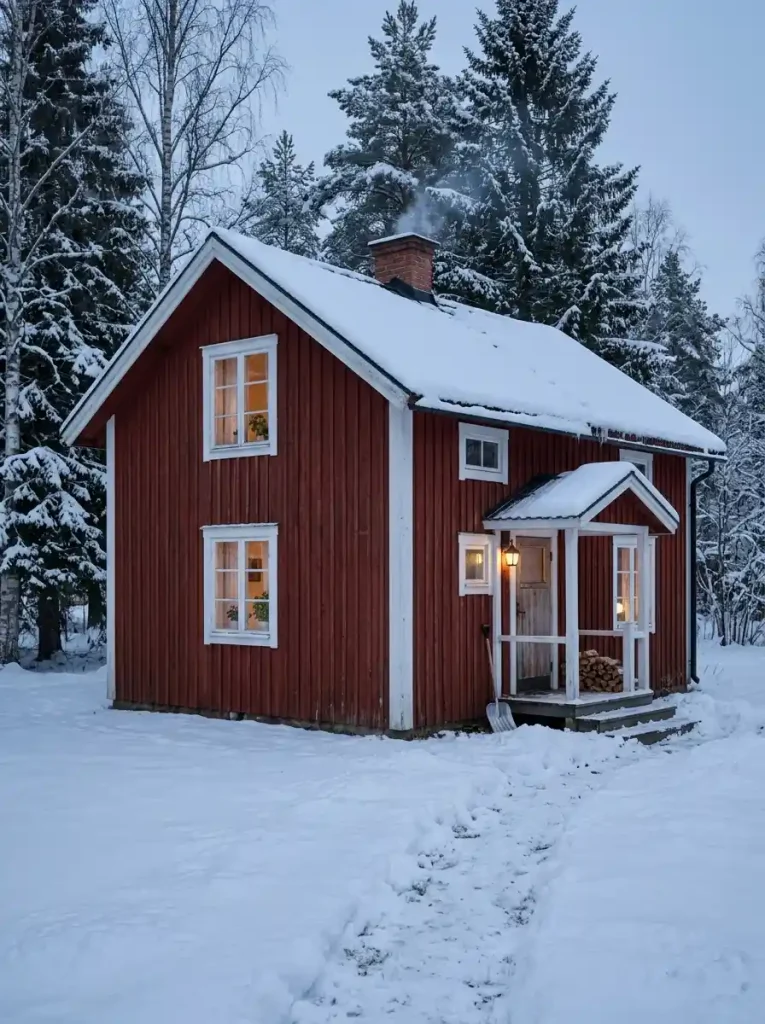
Key Features:
- Muted red timber siding
- Crisp white window trim
- Simple dark roof
- Compact entrance porch
- Snow-covered landscape
- Warm glowing windows
A traditional red cottage creates a strong visual impression because its exterior color stands apart from winter’s neutral landscape. White window trim defines the facade, while the simple roof and compact proportions keep the home looking balanced. This combination is closely associated with Scandinavian rural architecture, although specific traditions vary across regions. In a snowy setting, the red walls and warm interior light create a particularly inviting contrast.
For a contemporary interpretation, choose a muted red rather than a highly saturated shade. Combine it with white trim, dark roofing, and uncomplicated landscaping to avoid making the exterior feel overly decorative. If snow is uncommon where you live, the same color scheme can work against evergreen planting, gravel paths, and pale stone, preserving the cottage character throughout the year.
13. French Cottage With Weathered Wooden Doors
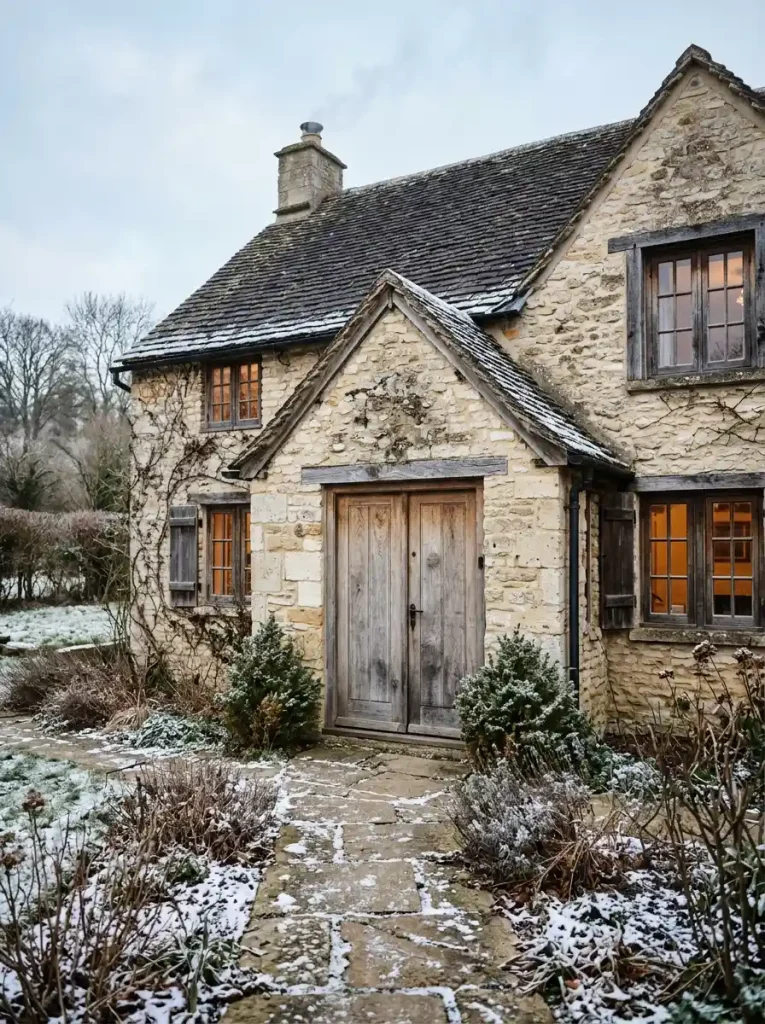
Key Features:
- Weathered oak entrance doors
- Pale beige stone walls
- Traditional dark roof
- Simple iron door hardware
- Frosted garden borders
- Warm window lighting
Natural wooden doors add warmth and individuality to a cottage facade. Their grain and subtle variations provide a tactile contrast to stone or plaster walls, while simple iron hardware reinforces the traditional appearance. A weathered finish can suggest age and character, but the door should still look well-maintained and functional. Against a winter landscape, the wood introduces a warm natural color that complements stone, slate, and evergreen planting.
To achieve this look, choose a durable exterior door with a finish suited to your climate. A natural oak stain, medium brown, or muted walnut tone can work well with pale masonry. If replacing the door is not practical, consider refinishing an existing wooden entrance and updating the hardware. Keep the surrounding decoration simple so the door remains the main architectural feature.
14. English Cottage With Black-Framed Windows
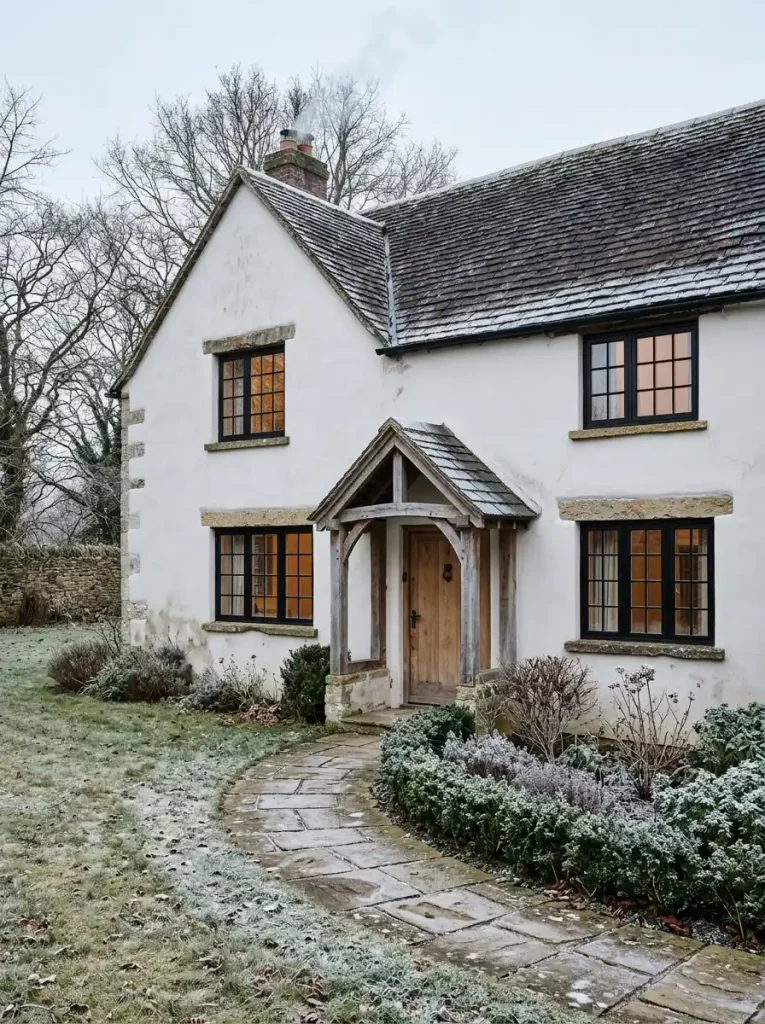
Key Features:
- White limewashed facade
- Black divided-pane windows
- Natural oak front door
- Dark tiled roof
- Compact sheltered porch
- Frosted cottage landscaping
Black-framed windows offer a simple way to give a traditional cottage a more defined appearance. Their dark outlines contrast with pale walls and make the window proportions more noticeable. When paired with a dark roof, they create a coordinated exterior palette, while a wooden entrance prevents the design from becoming too monochromatic. This combination can bridge traditional countryside architecture and contemporary detailing without sacrificing the cottage’s familiar character.
For a successful result, consider the scale and number of windows before selecting frames. Slim black frames can look elegant on a compact facade, but overly heavy frames may overwhelm small openings. If changing the windows is not possible, dark exterior trim or carefully selected shutters can create a similar contrast. Coordinate the finishes with the roof and entrance for a cohesive look.
15. Alpine Cottage With Natural Stone and Timber
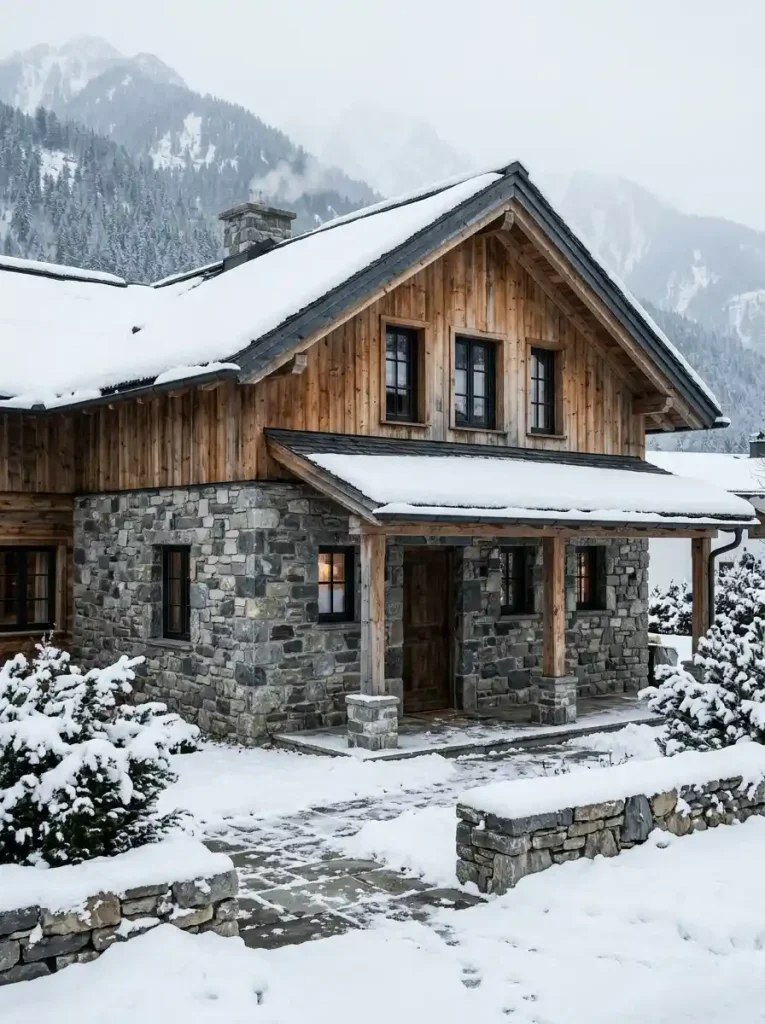
Key Features:
- Natural stone lower facade
- Warm timber upper walls
- Steep dark roof
- Recessed entrance
- Timber porch supports
- Evergreen winter planting
Combining stone and timber creates a layered exterior with a natural balance between solidity and warmth. Stone grounds the building visually, while timber introduces a lighter texture above. The contrast can be especially effective on a cottage with a sloping roof and sheltered entrance, as each material reinforces a different part of the architecture. In winter, the earthy materials stand out against snow and muted vegetation.
When planning a similar facade, limit the number of competing finishes. One primary stone type and one complementary timber tone are usually enough to establish the character. Consider how moisture, freeze-thaw cycles, and local exposure affect the materials before selecting them. On a smaller property, stone around the entrance or base can create the same layered effect without the cost of full exterior cladding.
16. French Cottage With Sage-Green Shutters
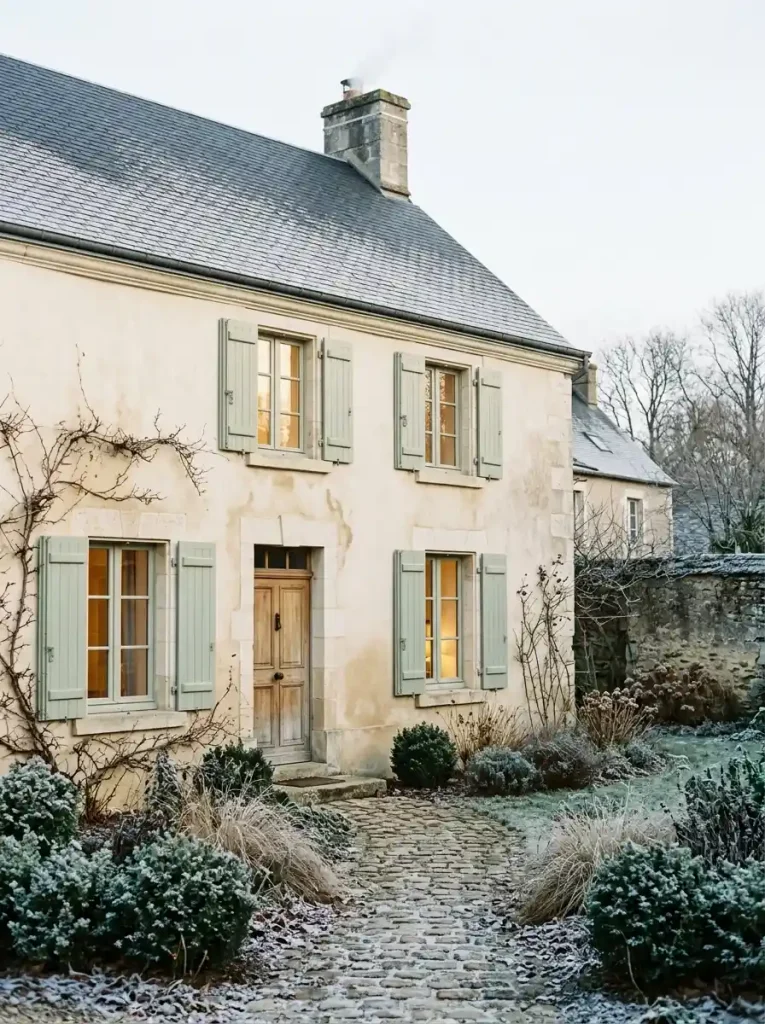
Key Features:
- Warm ivory plaster
- Sage-green shutters
- Charcoal slate roofing
- Pale stone window trim
- Natural oak entrance
- Frost-touched garden
Sage green provides a softer alternative to the deep green or blue shutters often associated with traditional cottages. Its muted character pairs well with ivory walls, gray roofing, and natural timber. The shade also connects the architecture to the garden, allowing evergreen planting and dormant vegetation to feel like part of the same palette. In winter, it creates subtle color without making the facade look overly seasonal.
For a coordinated exterior, test sage-green paint against the wall color in both bright and overcast conditions. Some shades can appear gray in low light or more yellow in direct sunshine. Use the chosen color consistently on shutters or a limited number of details, and leave larger wall surfaces neutral. This approach keeps the cottage feeling calm and allows the materials to remain the focus.
17. Cozy Cottage With a Covered Stone Porch
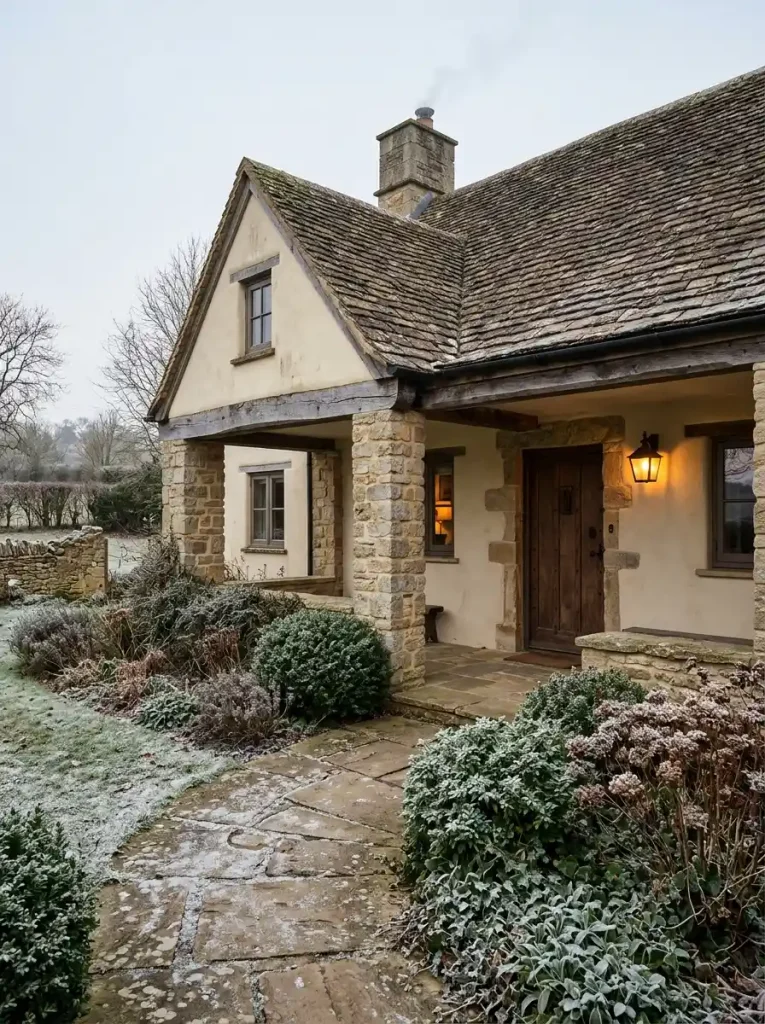
Key Features:
- Deep sheltered porch
- Natural stone supports
- Cream masonry walls
- Traditional tiled roof
- Solid wooden front door
- Warm porch lighting
A covered porch adds both visual depth and everyday practicality to a winter cottage. It creates a sheltered transition between the outdoors and the interior, while the roof and supporting materials give the entrance a stronger architectural presence. Stone supports can make the porch feel substantial, and warm lighting improves visibility during darker afternoons. The surrounding facade can remain simple so the entrance becomes the main focal point.
The size and structure of the porch should suit the house rather than overwhelm it. A modest covered entrance may be more appropriate for a compact cottage than a deep veranda. If adding a porch to an existing property, consider roof drainage, structural support, local building requirements, and the available space along the pathway. Natural stone, timber, and restrained lighting can create the desired character without excessive ornamentation.
18. Storybook Cottage With a Curved Garden Path
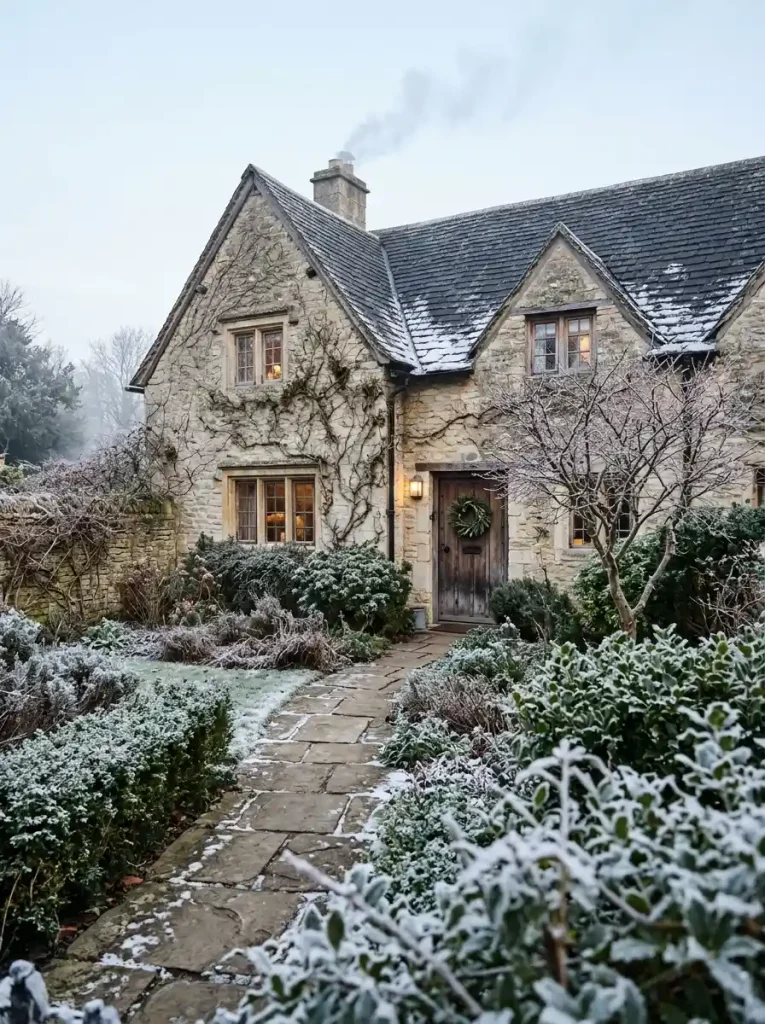
Key Features:
- Curved natural stone path
- Pale textured masonry
- Steep traditional roof
- Rustic wooden entrance
- Layered evergreen planting
- Soft exterior illumination
A curved garden path can make a cottage entrance feel more relaxed and inviting than a completely straight approach. It introduces a gentle sense of movement and allows the landscaping to reveal the building gradually. Low evergreen shrubs, frosted borders, and a small tree create layers around the path, helping the exterior remain visually interesting during winter when many garden plants have lost their leaves.
This design can work particularly well in a small front garden because it creates visual depth without requiring a large landscape. Choose paving that suits the architecture, and ensure the route remains stable, well-drained, and safe during wet or icy conditions. Keep planting away from the walking surface where possible, and use discreet path lighting if the entrance is frequently used after dark.
19. Modern European Cottage With Natural Plaster
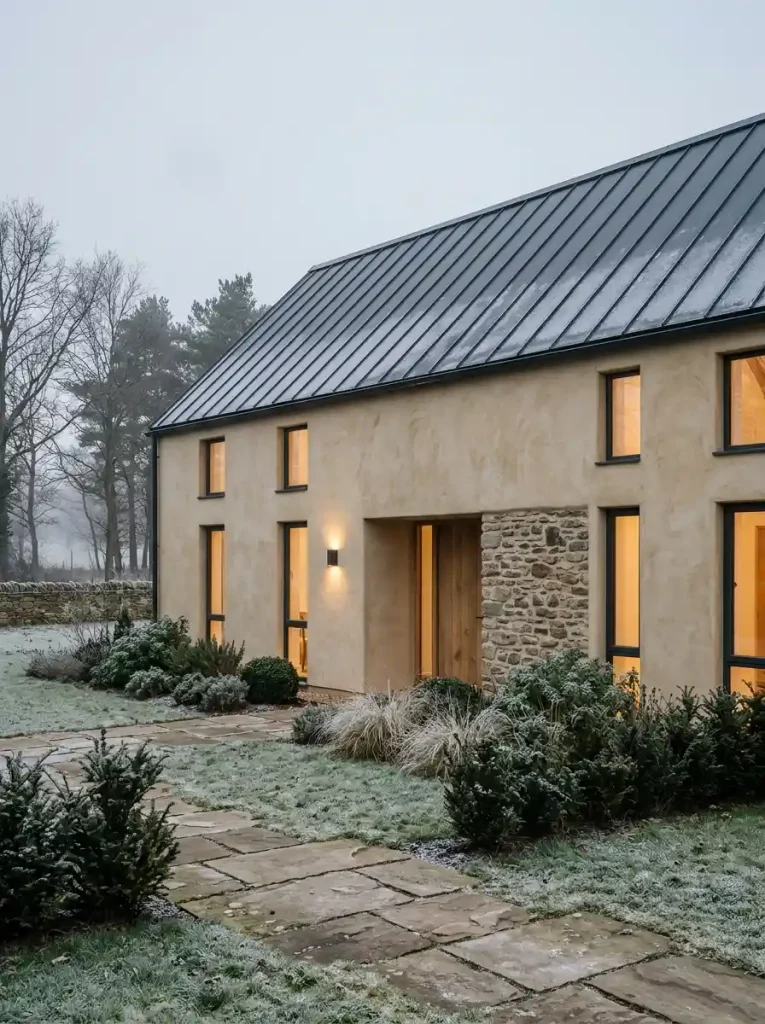
Key Features:
- Warm natural plaster
- Simple asymmetrical roofline
- Slim dark window frames
- Recessed oak entrance
- Selective natural stone
- Minimal evergreen landscaping
A modern European cottage can combine the intimate scale of traditional country homes with cleaner architectural detailing. Natural plaster provides a soft, tactile exterior, while dark window frames and a simple roof establish definition. A small section of stone adds texture without making the design feel heavy. The result feels contemporary but remains connected to traditional cottage materials and the surrounding landscape.
This approach suits homeowners who prefer understated architecture rather than ornate trim or elaborate decorative features. Select plaster colors with warm undertones, use timber sparingly, and keep the landscaping controlled. Good exterior detailing, durable finishes, and carefully planned lighting matter more than adding many decorative elements. The same palette can also adapt to milder winter climates where snow is rare.
20. Timeless European Cottage With Evergreen Landscaping
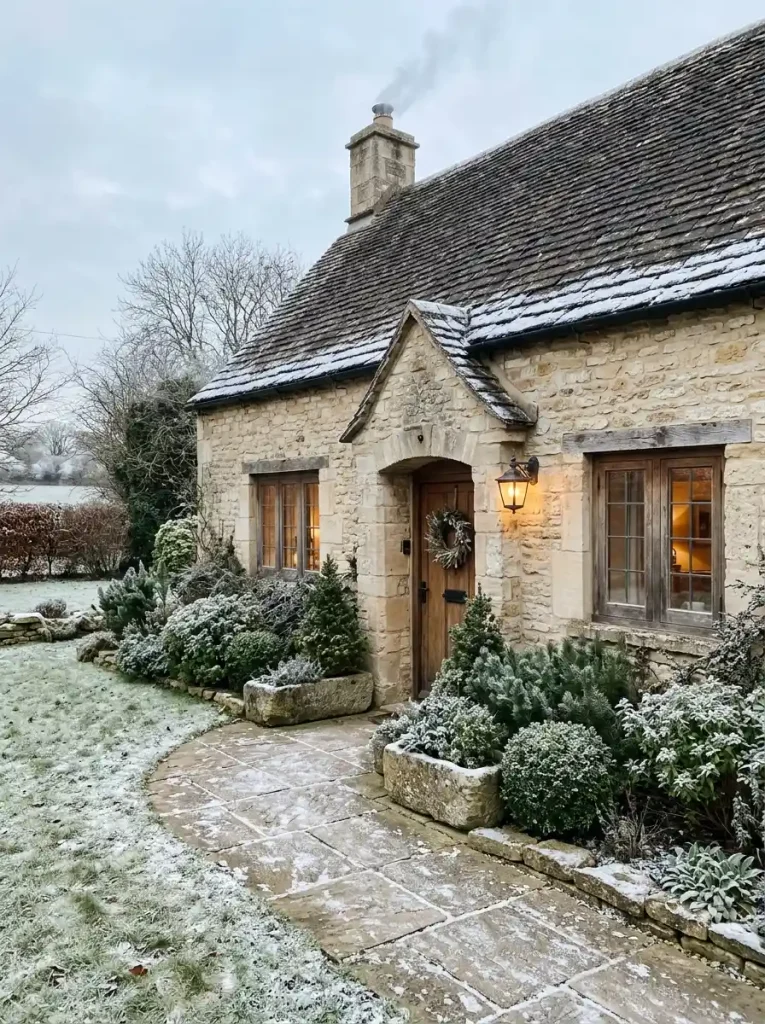
Key Features:
- Pale beige stone exterior
- Traditional tiled roof
- Natural timber details
- Layered evergreen landscaping
- Stone planters and pathway
- Warm exterior lanterns
Evergreen landscaping is one of the most reliable ways to give a cottage a finished appearance throughout winter. While deciduous plants become bare, compact conifers and carefully shaped evergreen shrubs retain their structure and provide contrast against stone, plaster, and roofing. A simple pathway and a few substantial planters help organize the entrance, allowing the architecture to remain the main focus rather than competing with a crowded garden.
For a timeless result, combine a small number of evergreen varieties with different heights and textures. Leave enough space around windows, doorways, and pathways to prevent the garden from feeling cramped. Choose plants suited to your climate and soil, and consider their mature size before planting. With thoughtful placement and warm exterior lighting, even a modest cottage can feel welcoming and visually complete during the coldest months.
Final Thoughts: European Winter Cottage Exteriors
European winter cottage exteriors show how much character can come from the right combination of architecture, materials, and landscaping. Whether you prefer French limestone, English cottage charm, Alpine timber, or Scandinavian simplicity, the strongest designs have a clear identity rather than relying on too many competing details.
Start by choosing the architectural style that best suits your property. A traditional cottage may benefit from natural stone and muted shutters, while a contemporary home could use warm plaster, dark window frames, and restrained timber accents. Focus on a few defining features and allow the materials to create the visual interest.
Winter styling should also work with the climate instead of simply copying a snowy photograph. Select appropriate roofing, durable finishes, safe pathways, suitable planting, and exterior lighting designed for local conditions. If snow is uncommon in your area, evergreen landscaping and warm natural materials can still create the same welcoming atmosphere.
Ultimately, the most memorable cottage exterior is one that feels inviting in every season. Thoughtful proportions, natural textures, and a carefully designed entrance can make a home feel special without requiring an elaborate renovation. Use these ideas as inspiration to create a cottage exterior that feels timeless, comfortable, and uniquely yours.