20 Creative Interior Styling Ideas for a Dreamy Luxe Home
A luxurious home is not always about expensive furniture, designer labels, or extravagant decorations. Sometimes, the most beautiful interiors come from thoughtful details, carefully balanced colors, beautiful textures, and furniture that feels perfectly suited to the space. The right interior styling ideas can transform an ordinary room into a sophisticated retreat without making it feel overly formal or difficult to live in.
Modern luxury is all about creating a home that feels personal, comfortable, and visually captivating. From sculptural furniture and layered lighting to artful accessories and rich natural materials, small styling decisions can make a remarkable difference. The secret is to combine different elements in a way that feels intentional rather than filling every corner with decorative objects.
Whether you are refreshing a living room, updating a bedroom, or bringing more character to an open-plan interior, there are plenty of ways to introduce a high-end look. Neutral palettes, statement artwork, textured fabrics, and carefully arranged accessories can add depth and personality while maintaining a cohesive design. Even a simple room can feel elevated when its furnishings and finishing touches work together beautifully.
In this guide, you will discover 20 Interior Styling Ideas By The Home Vista for a luxe home, featuring inspiring combinations of materials, furniture, colors, lighting, and decorative details. Each idea offers practical styling directions to help you create a refined interior that feels inviting, timeless, and uniquely yours.
1. Create a Sophisticated Neutral Living Room
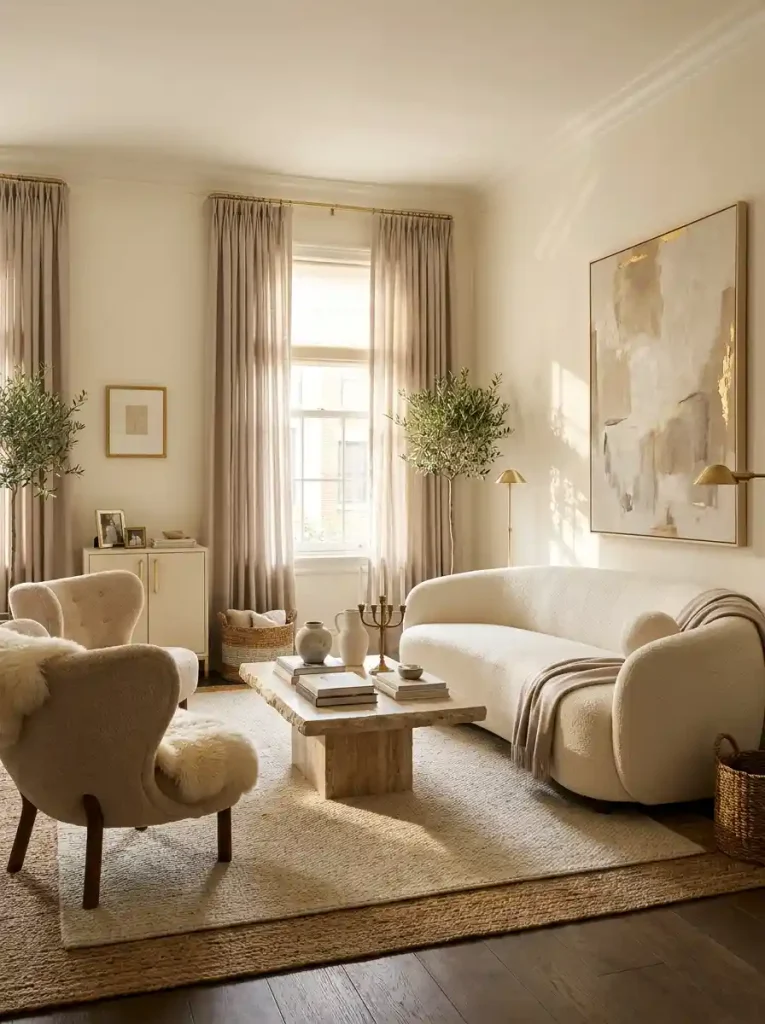
- Choose cream, ivory, and warm taupe as the foundation.
- Add a curved sofa for a softer silhouette.
- Introduce a travertine or marble coffee table.
- Layer linen cushions with textured throws.
- Hang one oversized piece of abstract artwork.
- Use warm lighting to create a welcoming atmosphere.
A neutral living room can feel luxurious when its materials and proportions are thoughtfully chosen. Instead of relying on multiple colors, combine different shades of cream, beige, and taupe to create subtle visual depth. A curved sofa softens the room, while a stone coffee table introduces natural character and a sophisticated focal point.
Keep accessories selective rather than overcrowding the surfaces. A ceramic vase, a stack of design books, and a textured bowl can provide enough personality without distracting from the overall design. The result is a living space that feels calm, elegant, and comfortable for everyday living.
2. Style Your Home with Sculptural Furniture
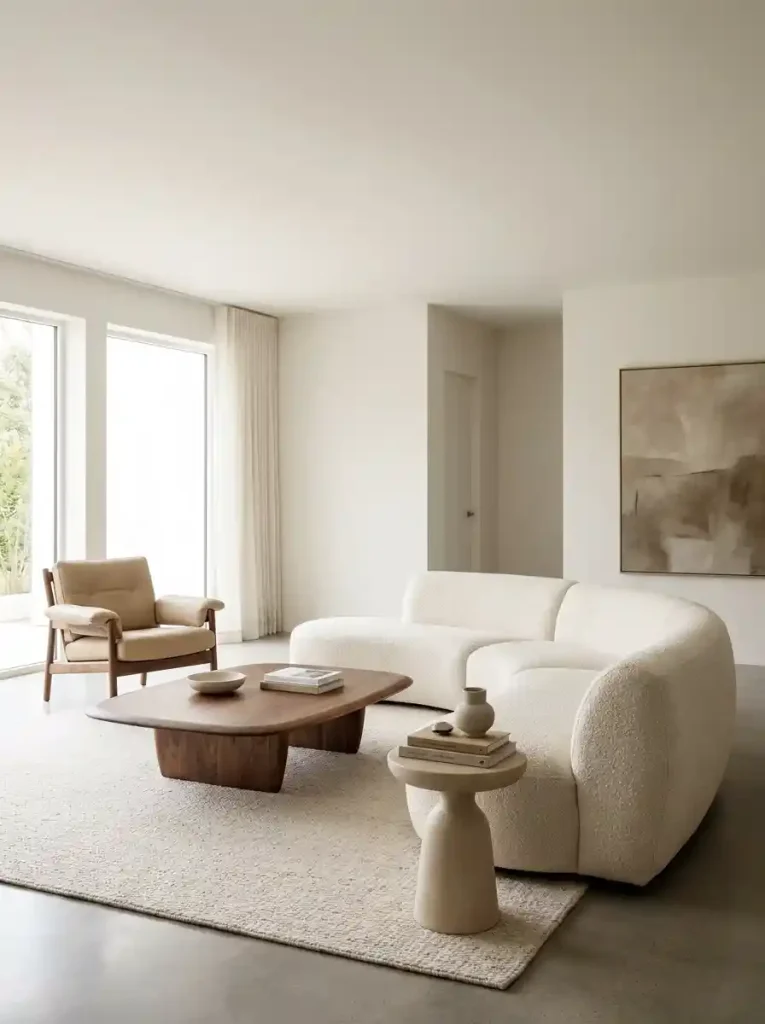
- Select furniture with distinctive organic silhouettes.
- Pair curved seating with a geometric side table.
- Choose one sculptural accent chair.
- Keep surrounding decorations minimal.
- Use natural wood or stone finishes.
- Leave enough open space around statement pieces.
Sculptural furniture can make an interior feel thoughtfully designed even when the rest of the decor is simple. Curved sofas, pedestal tables, and unusual chair silhouettes introduce visual interest without requiring excessive decoration. These pieces function as practical furnishings while also contributing an artistic quality to the room.
For the best result, choose one or two standout forms and allow them to lead the design. Too many competing shapes can make the space feel visually busy. Pair expressive furniture with understated walls, natural materials, and simple accessories to create an interior that feels contemporary and carefully curated.
3. Layer Lighting for a Warm, High-End Atmosphere
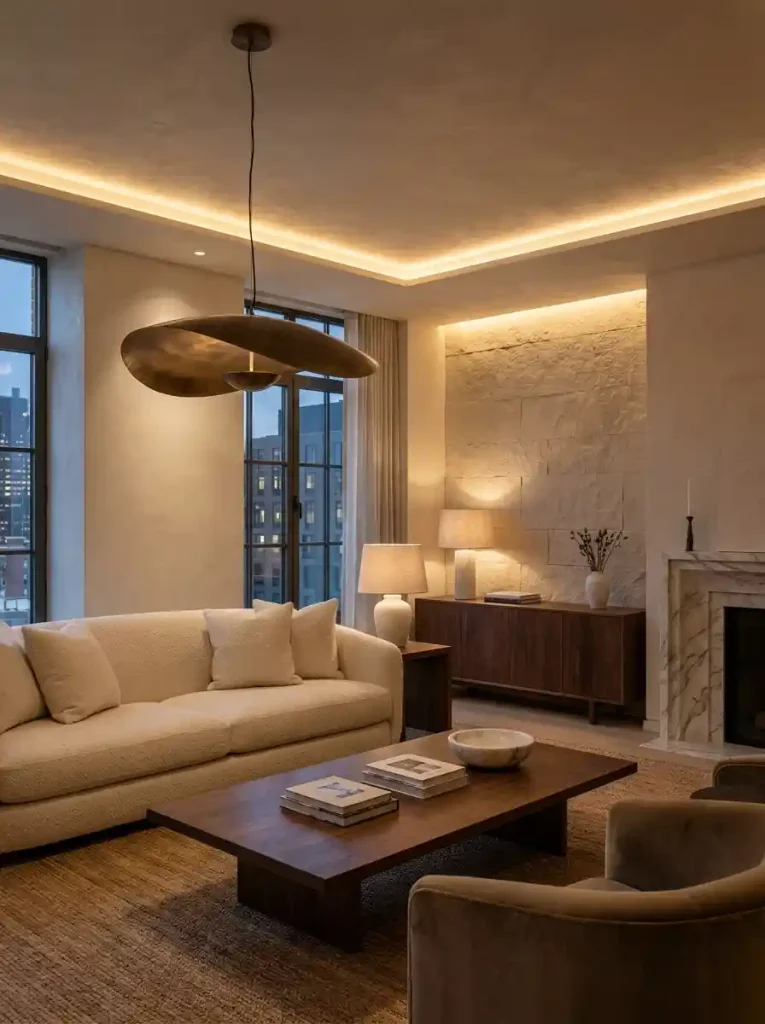
- Combine ambient, task, and accent lighting.
- Choose a sculptural pendant as a focal point.
- Place table lamps beside seating areas.
- Add discreet lighting to shelves or niches.
- Use warm-toned bulbs for a cozy glow.
- Install dimmers where practical.
Lighting influences how colors, textures, and furnishings appear throughout a home. A single ceiling light often creates a flat atmosphere, whereas several light sources add depth and make a room feel more inviting. A statement pendant can define the main seating area, while table lamps provide softer illumination for evenings.
Consider how lighting interacts with the room’s finishes. Warm light can enhance timber, brass, and creamy fabrics, while concealed lighting can highlight artwork or architectural details. The goal is to create layers that feel natural and functional rather than overly dramatic.
4. Introduce Natural Stone for Timeless Elegance
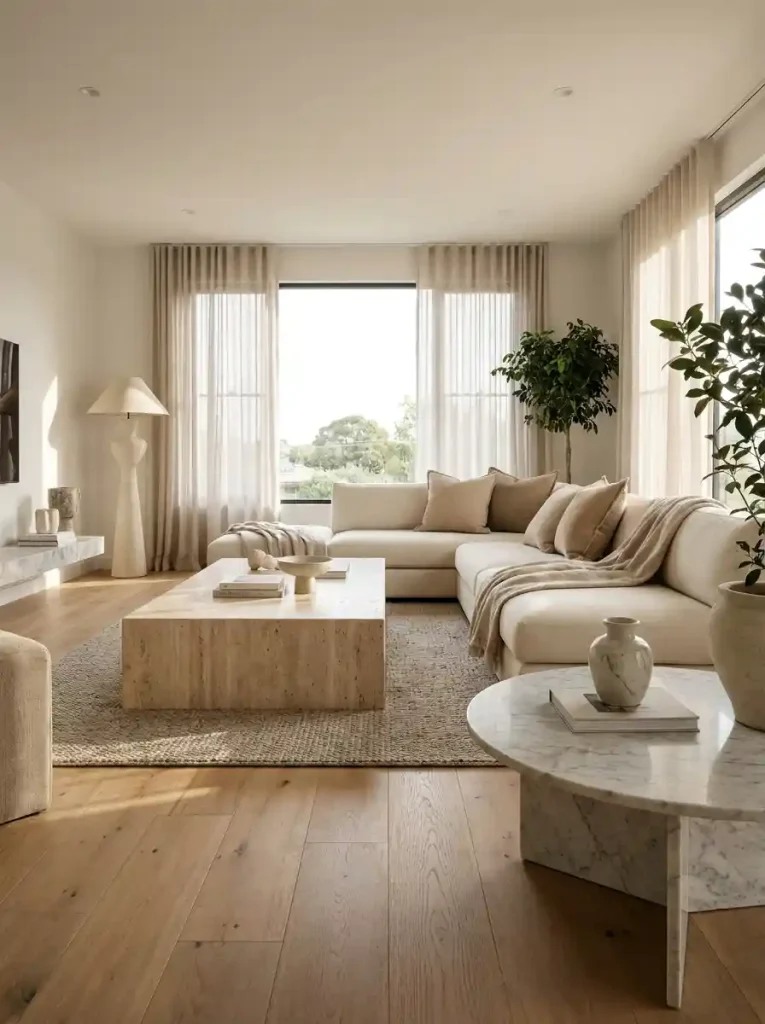
- Add a travertine coffee table.
- Use marble for a side table or console.
- Pair stone with warm wood finishes.
- Keep surrounding colors soft and coordinated.
- Display a simple ceramic or glass vase.
- Balance hard surfaces with plush textiles.
Natural stone brings distinctive texture and variation to a luxurious interior. Travertine offers a softer, earthy appearance, while marble can introduce delicate veining and a more formal character. Even one well-chosen stone surface can make a room feel more considered.
To prevent stone from making the space feel cold, combine it with linen, wool, timber, and upholstered furniture. These softer materials create a balanced atmosphere and allow the stone to stand out without dominating the room. Choose accessories that complement its natural patterns rather than compete with them.
5. Design an Elegant Gallery Wall
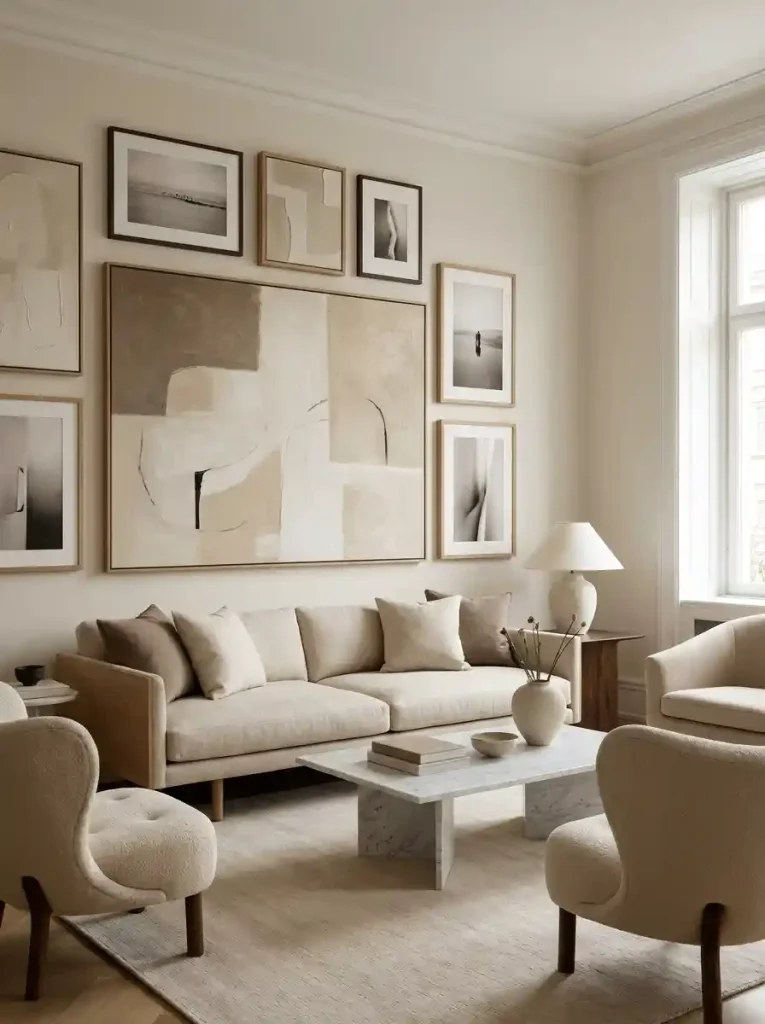
- Choose artwork with a consistent color story.
- Mix frame sizes for visual rhythm.
- Align pieces along an intentional layout.
- Leave balanced spacing between frames.
- Anchor the arrangement above a sofa or console.
- Repeat one or two colors from the room.
A gallery wall gives a home personality and makes blank walls feel purposeful. Rather than collecting unrelated pictures, select artwork that shares a similar mood, color palette, or subject. Abstract paintings, monochrome photography, and restrained line art can work together when their frames and proportions are carefully considered.
Plan the arrangement before hanging anything. A large central piece can anchor smaller works, while consistent spacing helps the collection feel cohesive. Keep the surrounding furniture relatively simple so the artwork remains the visual focus.
6. Elevate Your Bedroom with Hotel-Inspired Styling
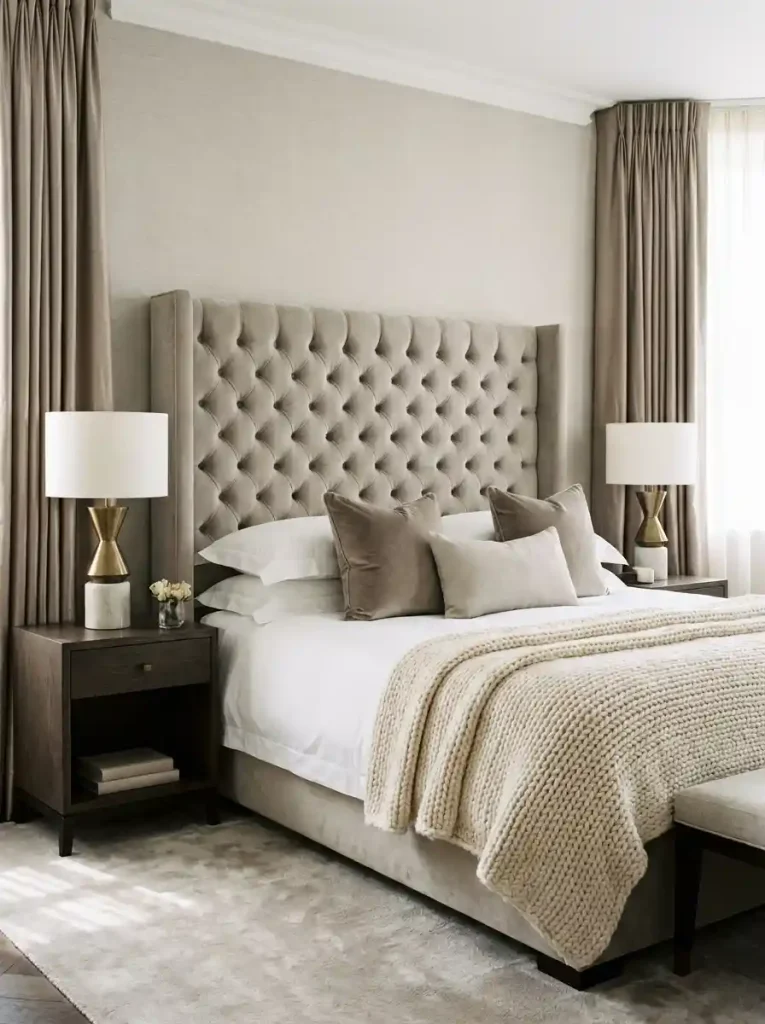
- Choose a tall upholstered headboard.
- Layer crisp sheets with a textured duvet.
- Add cushions in complementary neutral shades.
- Use matching or coordinated bedside tables.
- Select lamps with soft, diffused light.
- Keep bedside surfaces uncluttered.
A hotel-inspired bedroom combines visual order with layers of comfortable materials. A tall headboard creates a strong focal point, while crisp bedding and carefully arranged cushions make the bed look inviting. Matching bedside tables introduce symmetry, giving the room a calm and balanced appearance.
Focus on quality-looking textures instead of excessive decoration. A knitted throw, linen curtains, and softly upholstered furniture can add richness without making the bedroom feel crowded. Keeping everyday items neatly stored also helps preserve the serene atmosphere.
7. Add Character with Rich Wood Finishes
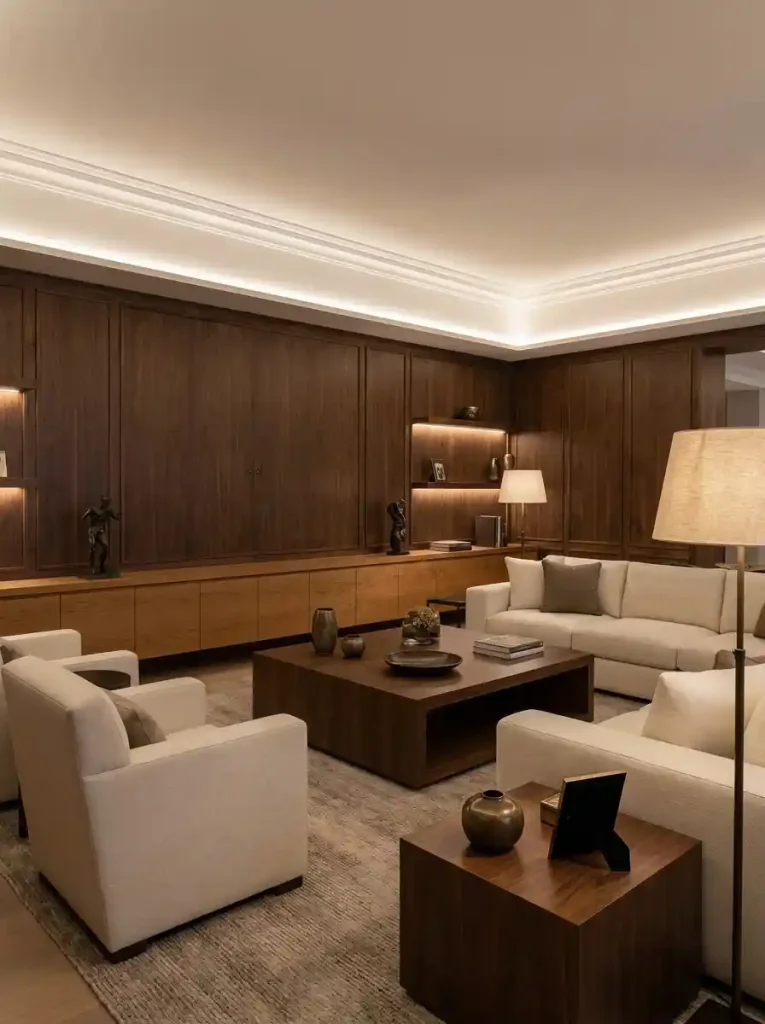
- Introduce walnut through furniture or cabinetry.
- Balance darker wood with light upholstery.
- Highlight natural grain instead of glossy finishes.
- Repeat wood tones across two or three elements.
- Use warm metal accents sparingly.
- Add soft textiles to balance the harder surfaces.
Wood adds warmth and permanence to an interior, especially when paired with contemporary furniture and understated accessories. Dark walnut can create depth, while lighter oak offers an airy, natural feel. Both finishes can look luxurious when the grain remains visible and the surrounding palette feels intentional.
Avoid introducing too many unrelated wood tones in one room. Instead, choose a dominant finish and repeat it through a console, coffee table, or cabinetry. Light fabrics and warm lighting can soften darker timber, helping the room feel rich rather than heavy.
8. Style Open Shelves Like a Designer
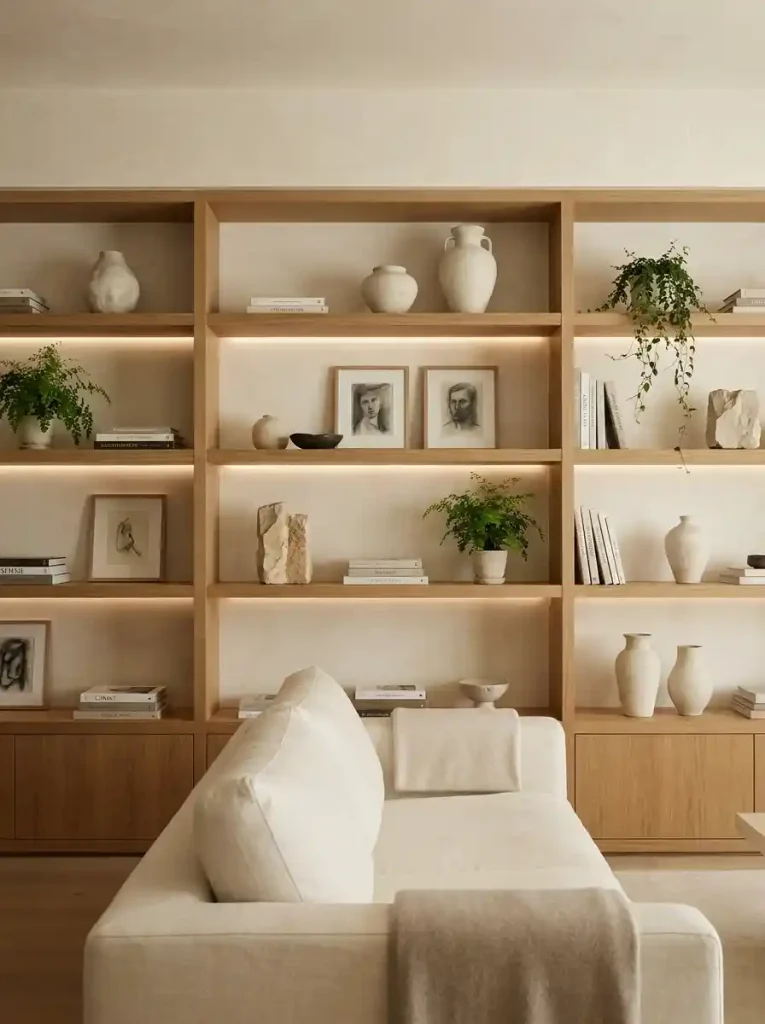
- Group accessories in small collections.
- Mix horizontal and vertical book arrangements.
- Combine matte ceramics with natural stone.
- Leave some shelves partially empty.
- Repeat a limited color palette.
- Add subtle integrated shelf lighting.
Open shelves can become a decorative feature when objects are arranged with balance and restraint. Books provide structure, ceramics introduce organic shapes, and small artworks add personality. Leaving gaps between objects allows each piece to stand out instead of turning the shelves into a crowded display.
Use a consistent palette that relates to the rest of the room. Cream, warm wood, muted brown, and soft black can create a sophisticated combination. Revisit the arrangement occasionally, removing pieces that no longer contribute to the overall composition.
9. Make a Statement with Oversized Artwork
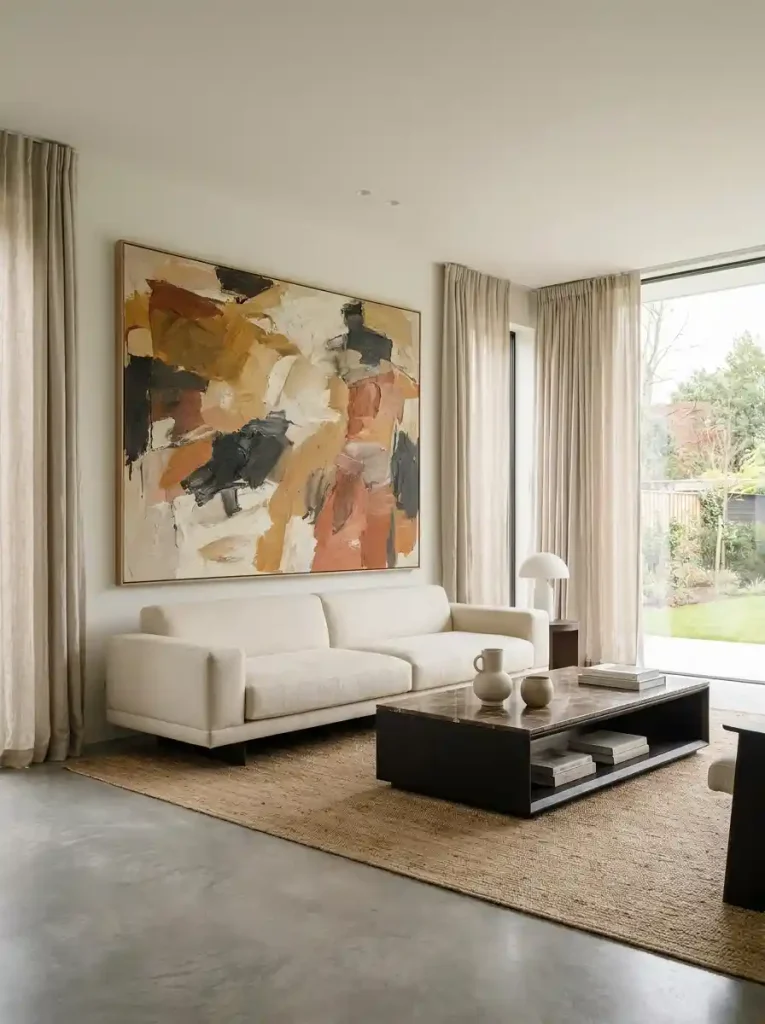
- Choose one large artwork instead of many small pieces.
- Coordinate its colors with the room.
- Hang it at a visually comfortable height.
- Use a simple frame or an unframed canvas.
- Keep nearby accessories restrained.
- Repeat a subtle artwork color elsewhere in the room.
Oversized artwork creates a confident focal point and can make a room feel more complete. A large canvas above a sofa or console gives the eye a clear destination, helping the surrounding furniture feel connected. Abstract art is particularly versatile because it can introduce color without requiring the room to follow a specific theme.
Consider the scale of the wall before choosing a piece. Artwork that is too small may appear disconnected, while a suitably sized canvas can anchor the entire arrangement. Repeat one subtle shade from the painting in cushions, flowers, or a decorative object to bring the composition together.
10. Bring Soft Curves into Your Interior
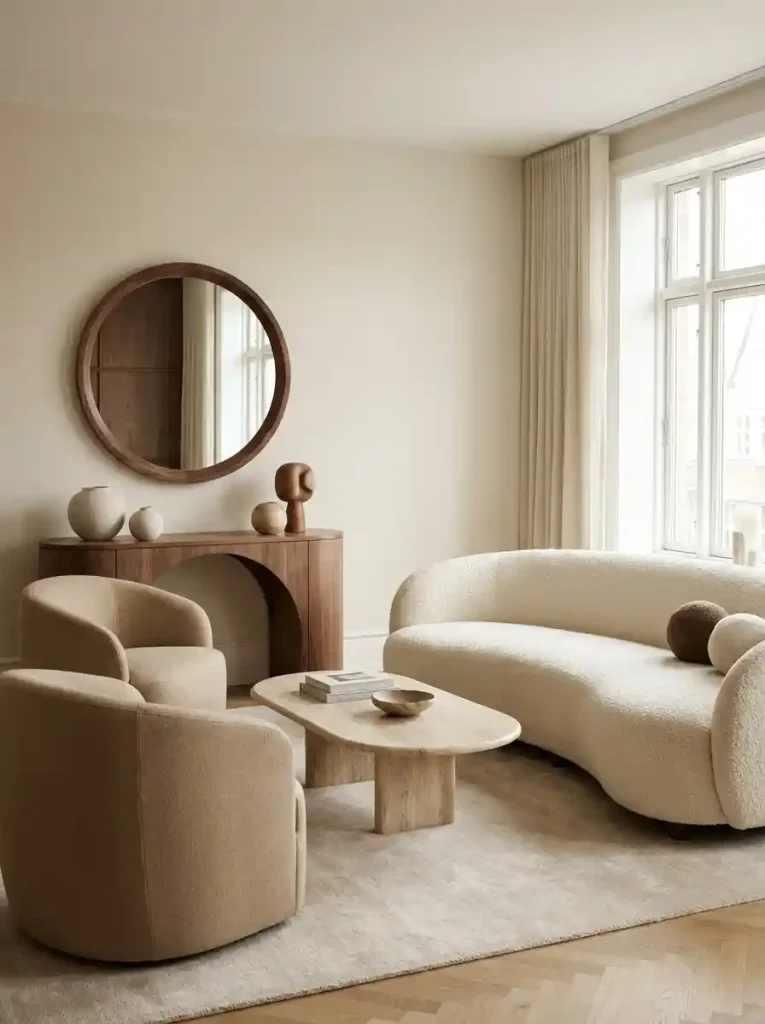
- Select a rounded sofa or accent chair.
- Pair it with an oval coffee table.
- Use circular mirrors or rounded artwork.
- Add soft, tactile upholstery.
- Balance curves with a few straight lines.
- Maintain clear circulation around furniture.
Curved furniture introduces a softer visual language that can make contemporary interiors feel welcoming. Rounded silhouettes work especially well in living rooms, where they can encourage conversation and contrast with straight architectural lines. Oval tables and circular mirrors can reinforce the theme without requiring every object to have a curved shape.
Balance is important when using organic forms. Combine rounded furniture with straight shelving, rectangular artwork, or clean-lined cabinetry to keep the room visually grounded. This mix creates a contemporary interior that feels expressive without appearing overly themed.
11. Create a Beautifully Styled Console Table
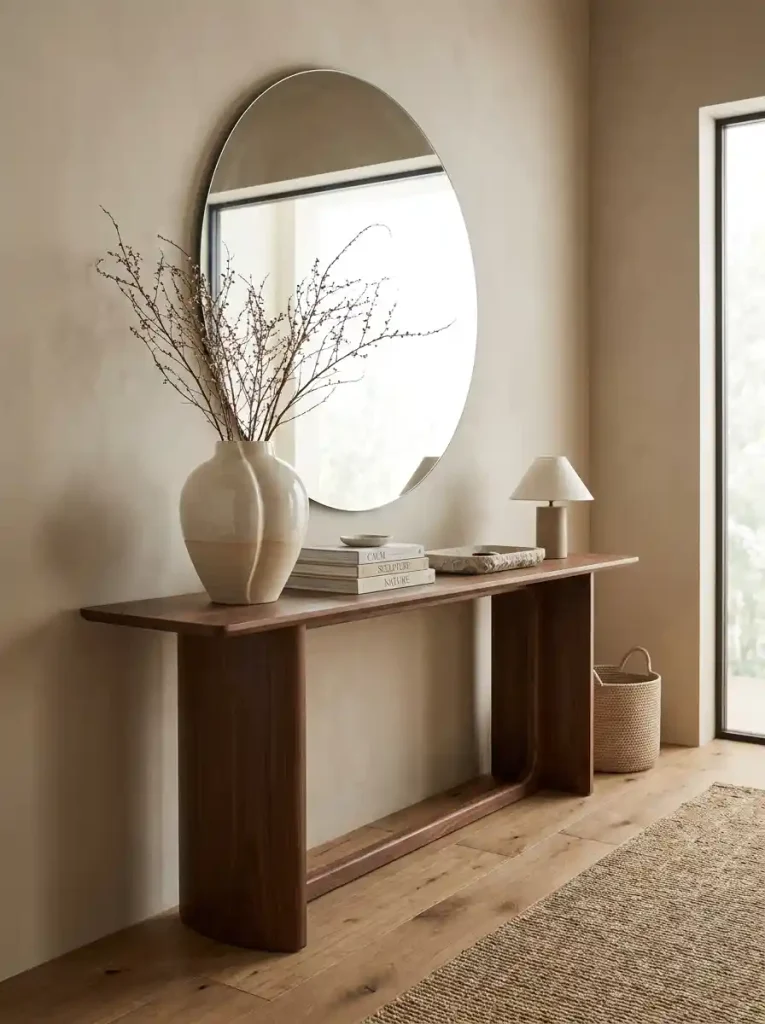
- Choose a console suited to the wall’s width.
- Hang a mirror or artwork above it.
- Display one statement vase.
- Add books or a small decorative bowl.
- Keep keys and daily essentials in a tray.
- Leave sufficient empty surface space.
A console table offers an easy opportunity to introduce personality without redesigning an entire room. In an entryway, it creates a welcoming first impression; in a living room, it can fill an empty wall and display carefully selected accessories. A mirror above the table can also reflect light and create a greater sense of openness.
Use a simple arrangement with varied heights. A tall vase, a lower stack of books, and a small tray provide enough variation to feel composed. Keep practical items organized so the display remains attractive and useful.
12. Use Floor-Length Curtains for a Refined Finish
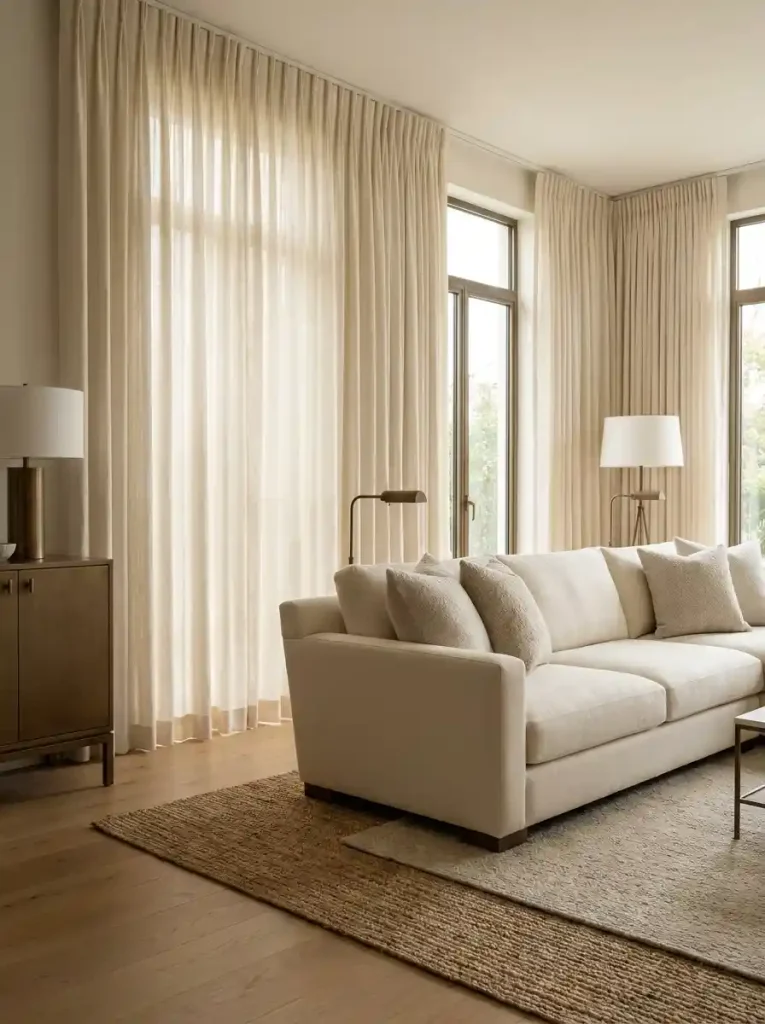
- Hang curtains close to the ceiling where practical.
- Extend the curtain rod beyond the window frame.
- Choose linen or a linen-blend fabric.
- Select a color that complements the walls.
- Ensure the hem falls neatly near the floor.
- Use simple, coordinated curtain hardware.
Curtains influence the proportions and mood of a room more than many people realize. Long panels can draw the eye upward, making ceilings appear taller and windows feel more substantial. Soft linen and linen-blend fabrics provide texture while allowing a relaxed amount of daylight into the space.
For a cohesive look, coordinate curtain colors with the wall and upholstery rather than matching every fabric exactly. A warm ivory curtain can complement beige walls, while a deeper taupe shade may add contrast to a pale interior. Accurate measurements and neat hanging make the final result feel intentional.
13. Add a Touch of Luxury with Metallic Accents
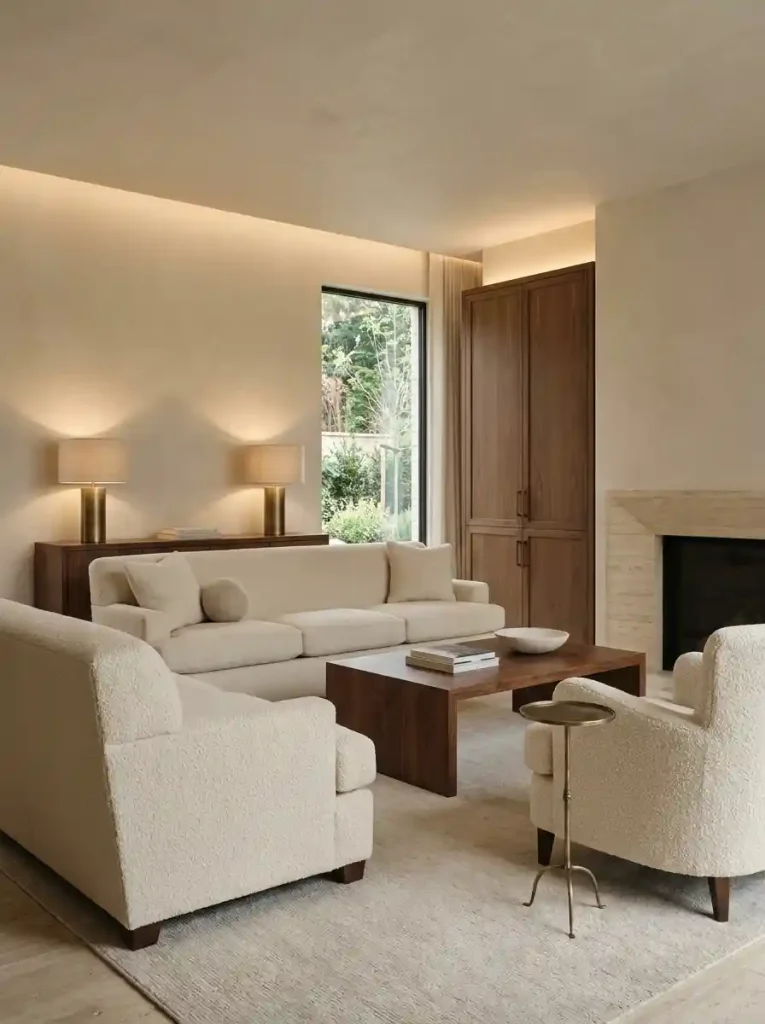
- Choose one dominant metal finish.
- Use brass or bronze on lighting fixtures.
- Repeat the finish in small hardware details.
- Combine metals with wood and stone.
- Avoid covering every surface with metallic objects.
- Prefer brushed or softly aged finishes for subtlety.
Metallic details can add a refined highlight to an otherwise understated room. Brushed brass, bronze, and muted champagne finishes work beautifully with neutral upholstery, natural stone, and warm wood. Their reflective surfaces catch the light without requiring large decorative statements.
Consistency matters more than using an expensive finish everywhere. Repeat one metal tone in a lamp, a cabinet handle, and a small accessory to create a connected look. A restrained approach allows the details to feel intentional instead of flashy.
14. Bring Nature Indoors with Thoughtful Greenery
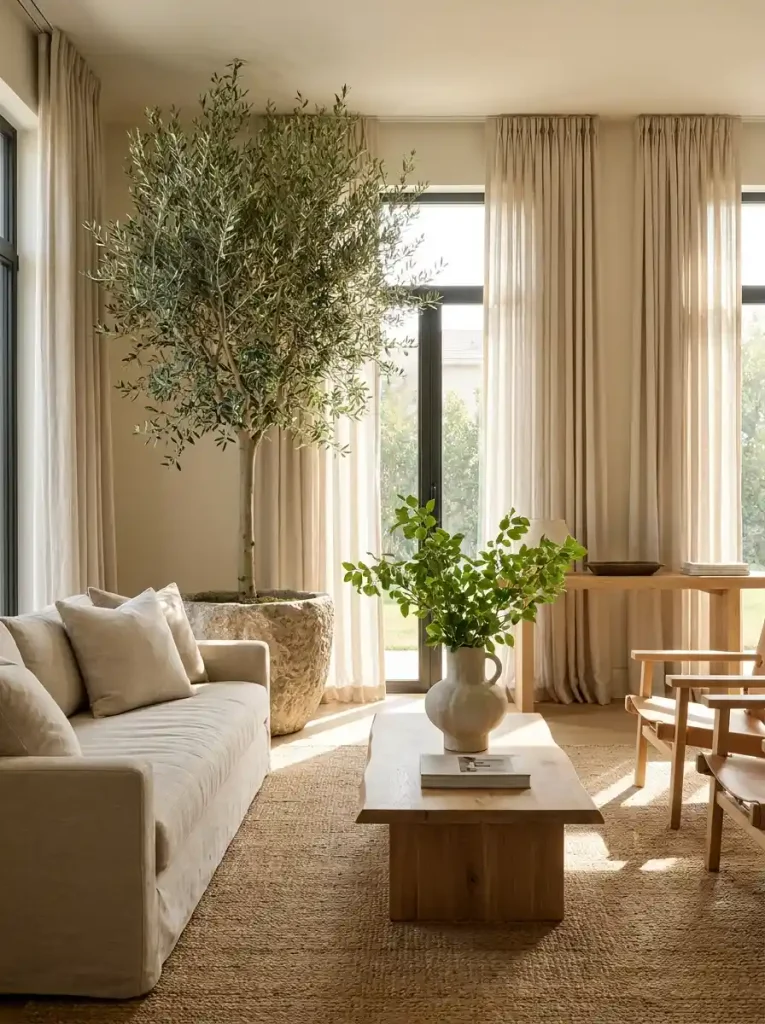
- Choose plants suited to the available light.
- Use one larger plant to anchor an empty corner.
- Select planters in stone, ceramic, or natural textures.
- Display fresh branches in a sculptural vase.
- Avoid crowding shelves with too many small plants.
- Keep foliage healthy and neatly maintained.
Greenery adds a natural element that softens clean-lined interiors. A larger plant can bring life to an empty corner, while branches in a vase add height to a console or dining table. The combination of organic shapes and natural green tones works particularly well with neutral palettes and timber furniture.
Choose plants according to the light and maintenance conditions in your home. The container also matters: a textured ceramic or stone planter can complement the rest of the decor. A few thoughtfully placed plants often have more impact than filling every available surface with greenery.
15. Design a Dining Area with Sculptural Lighting
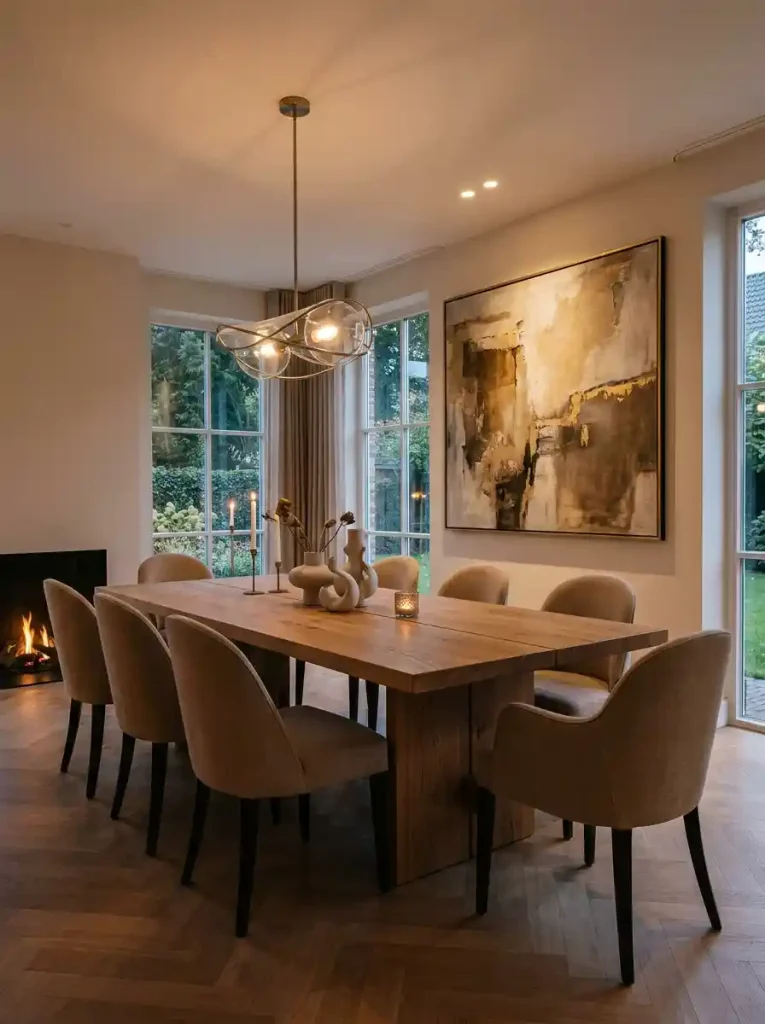
- Center the pendant over the dining table.
- Choose a light fixture proportionate to the table.
- Pair the table with comfortable upholstered chairs.
- Keep the centerpiece low enough for conversation.
- Add artwork or a mirror to the nearby wall.
- Use layered lighting for evening meals.
A dining area feels more intentional when its lighting and furniture are treated as a coordinated composition. A sculptural pendant creates a focal point, while a substantial dining table provides a grounding element. Upholstered chairs introduce comfort and soften the harder surfaces.
Keep the tabletop styling simple enough for everyday use. A low ceramic bowl, a small arrangement of branches, or a textured runner can provide character without taking up too much space. At night, warm lighting helps the dining area feel intimate and inviting.
16. Introduce Texture Through Layered Fabrics
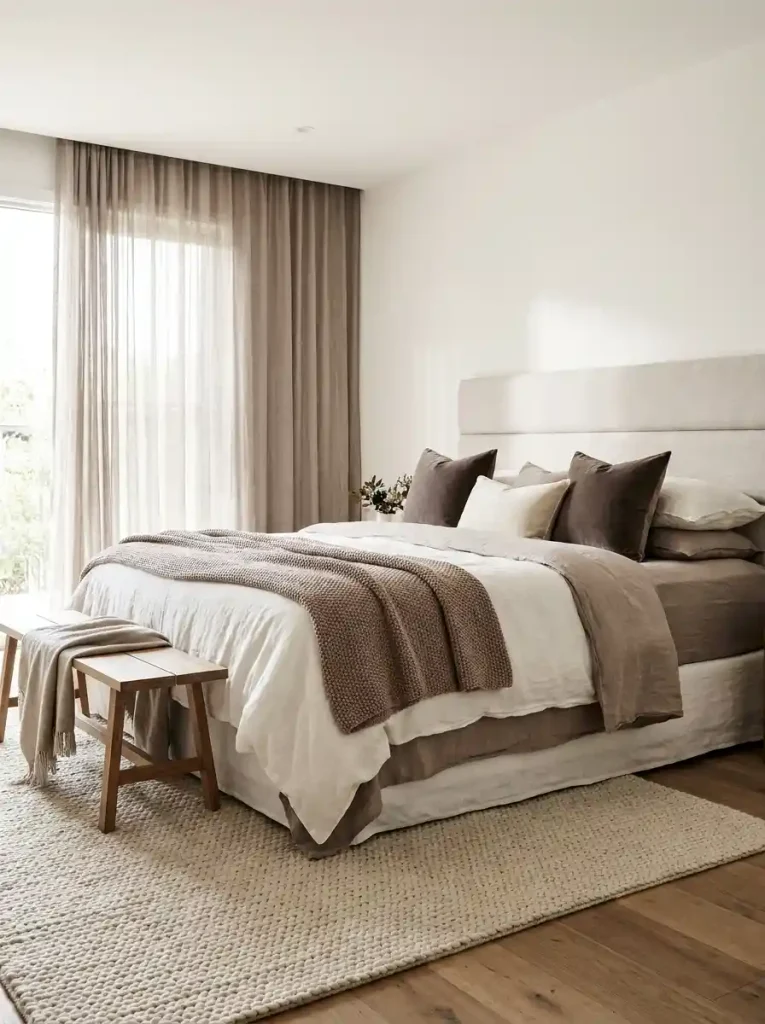
- Combine linen, wool, cotton, and velvet.
- Mix smooth and textured fabrics.
- Use related shades rather than identical colors.
- Layer a throw across the bed or sofa.
- Choose rugs that suit the room’s proportions.
- Keep patterns limited and coordinated.
Texture adds richness even when the color palette is simple. Linen has a relaxed, natural appearance, velvet introduces softness, and wool brings warmth underfoot. Combining these materials creates a room that feels layered and inviting without depending on bright colors or complicated patterns.
Start with a few complementary textures and build gradually. A linen sofa can be paired with a wool throw and velvet cushions, while a bedroom can combine crisp cotton bedding with a chunky blanket. Keeping the colors related helps the different surfaces work together harmoniously.
17. Create a Luxurious Small Reading Corner
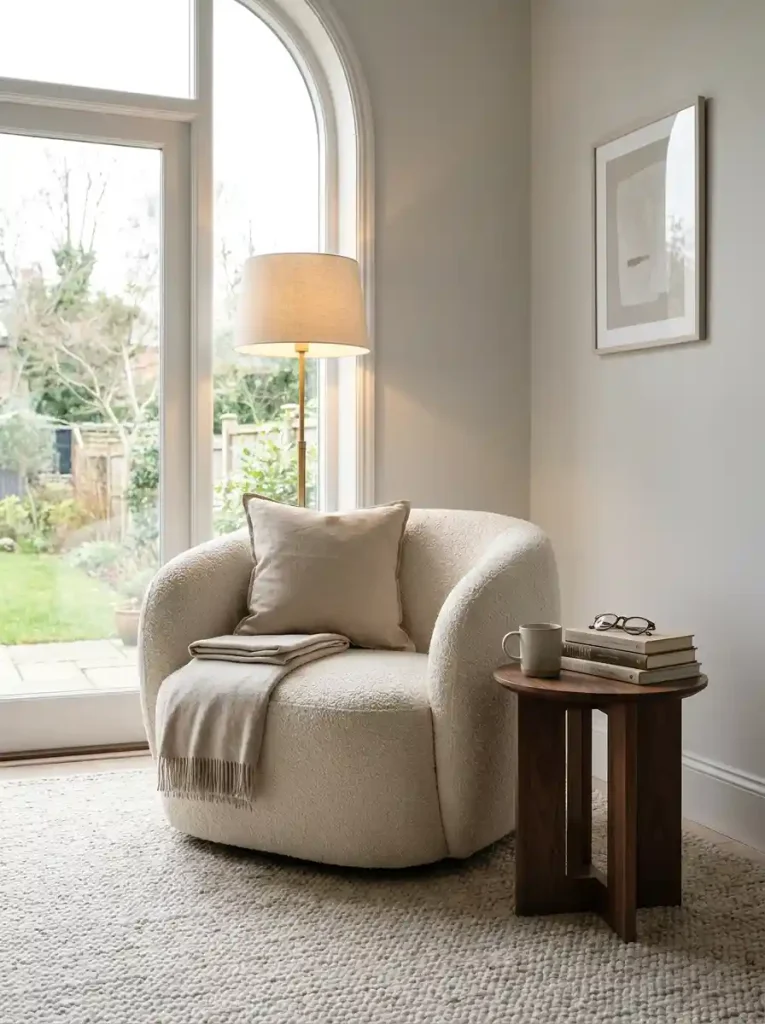
- Select a comfortable armchair with supportive seating.
- Position it near natural light when possible.
- Add a small table for books and drinks.
- Choose a floor or table lamp for evening reading.
- Anchor the corner with a soft rug.
- Keep essential items within easy reach.
A reading corner turns an unused area into a functional part of the home. A comfortable chair, a small side table, and suitable lighting are usually enough to establish the space. A rug or floor lamp can help visually separate the nook from the rest of the room without requiring a partition.
Make comfort the priority, then refine the look through materials and accessories. A textured cushion, a warm wood table, and a small selection of books can create a personal atmosphere. If space is limited, choose furniture with compact proportions so the corner remains open and practical.
18. Use Color Blocking for Contemporary Sophistication
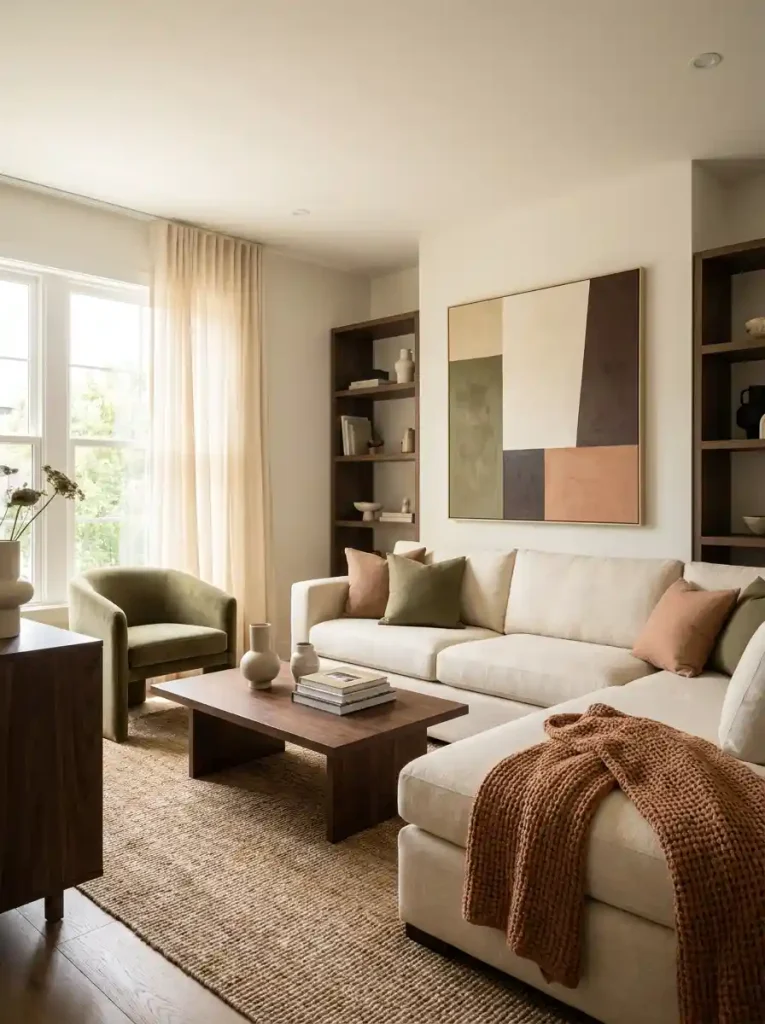
- Select two main colors and one accent.
- Use the strongest shade on a limited number of elements.
- Keep larger furniture pieces visually balanced.
- Repeat accent colors in small accessories.
- Use neutral surfaces to provide breathing room.
- Test paint and fabric samples in different lighting.
Color blocking gives a neutral interior more personality without overwhelming the space. Instead of introducing many unrelated shades, choose a small palette and distribute it deliberately. An olive chair, a terracotta artwork detail, and a cocoa-colored accent can add depth to a room built around warm cream.
The key is to control how much of each color appears. Use neutral tones for the larger surfaces and reserve stronger shades for selected furniture or accessories. Repeating an accent color in two or three places creates a sense of connection and helps the design feel complete.
19. Style a Minimalist Bathroom with Spa-Like Details
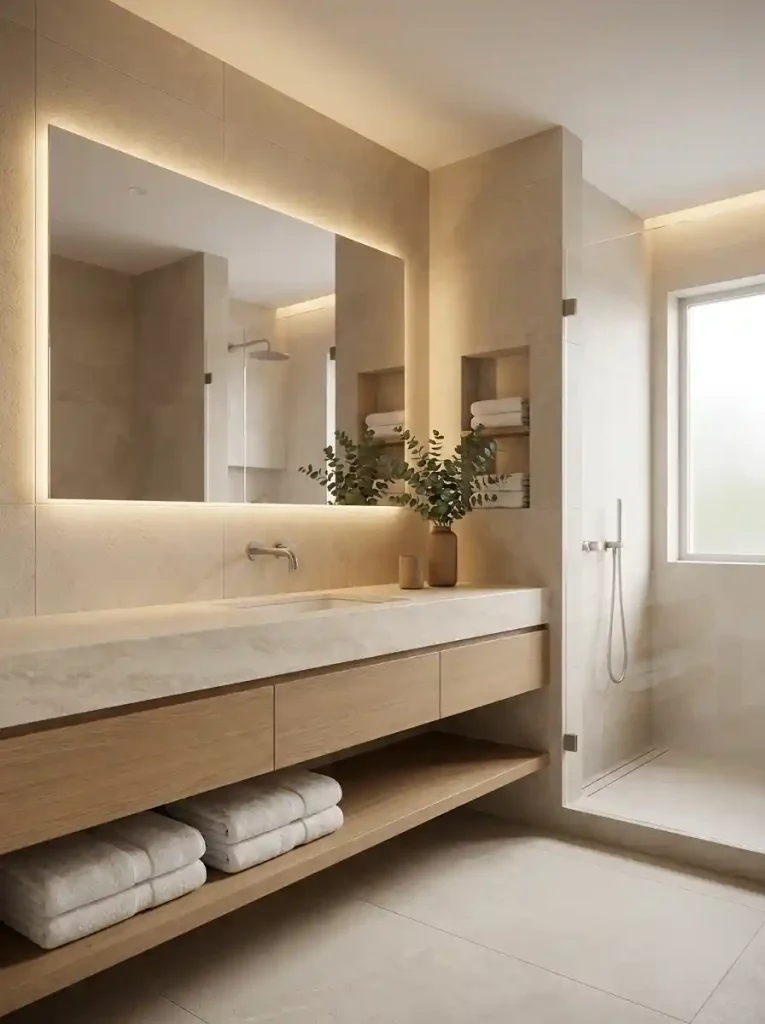
- Keep the countertop mostly clear.
- Use coordinated soap dispensers and containers.
- Display neatly folded towels.
- Add a small plant suited to the environment.
- Choose warm, flattering mirror lighting.
- Combine stone, wood, and subtle neutral finishes.
A luxurious bathroom feels calm when practical necessities are organized and the materials work together. A floating vanity creates a clean visual line, while stone surfaces and warm wood introduce natural character. Coordinated containers and neatly folded towels help everyday items feel like part of the design.
Avoid filling the countertop with decorative accessories. Choose a few useful pieces that share similar finishes and keep personal products stored away where possible. Good lighting is equally important, especially around the mirror, where it should provide clear illumination without making the space feel harsh.
20. Finish Your Interior with Curated Decorative Objects
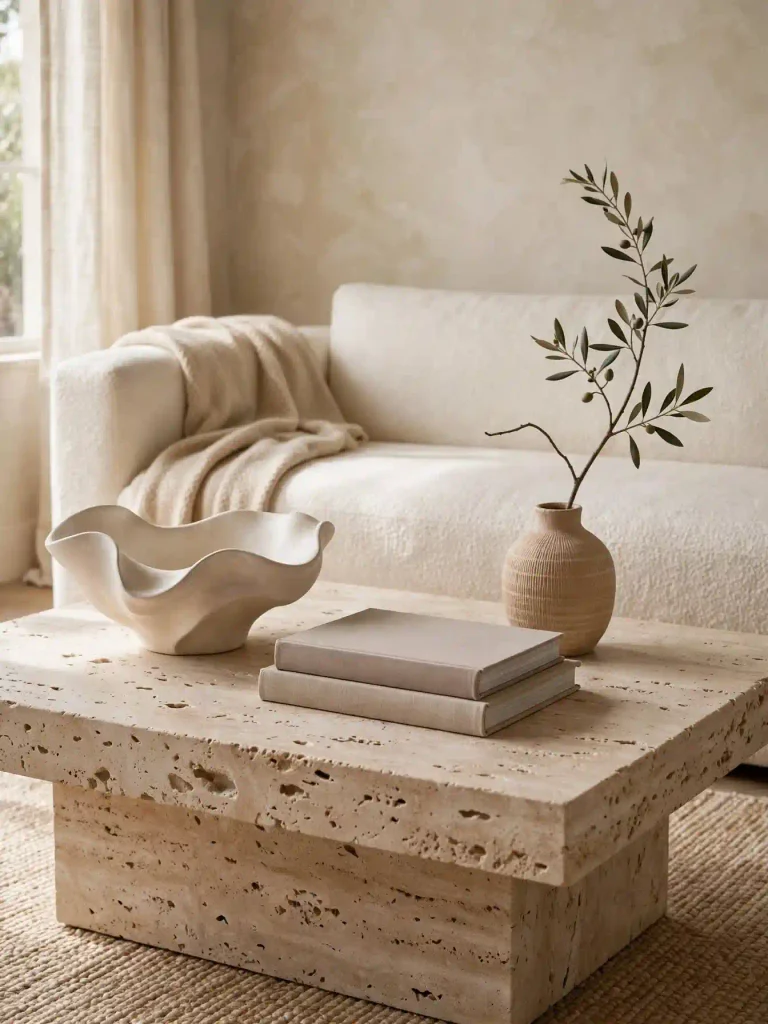
- Choose accessories in different heights.
- Combine ceramic, stone, glass, and natural materials.
- Arrange objects in small, balanced groups.
- Include books that reflect personal interests.
- Leave empty space around decorative pieces.
- Edit the arrangement whenever it feels crowded.
Decorative objects provide the finishing layer that makes a home feel personal rather than staged. A sculptural bowl, a favorite book, or a handmade vase can add character while connecting the room’s colors and textures. The most effective displays usually combine a few different shapes and heights without filling the entire surface.
Think of styling as an editing process. Begin with the objects you genuinely enjoy, arrange them in a small group, and remove anything that feels unnecessary. This approach allows individual pieces to stand out and keeps the interior feeling refined, comfortable, and lived-in.
Final Thoughts: Interior Styling Ideas
Creating a luxe home is less about buying expensive furnishings and more about making thoughtful design choices. From sculptural furniture and layered lighting to natural stone, rich wood, and carefully curated accessories, the right details can transform a room’s overall atmosphere.
Start with one area that needs attention, choose a consistent color palette, and introduce textures and lighting that complement your existing furniture. You do not need to apply all 20 ideas at once. A few well-chosen changes can make your home feel more cohesive, inviting, and sophisticated.
Above all, let your interior reflect your personal taste. The most successful luxury spaces combine beautiful design with everyday comfort, creating rooms that look considered and feel wonderful to live in.