35 Corner Wall Gallery Ideas for Stunning Empty Spaces
An empty corner can make an otherwise beautiful room feel unfinished, but the right gallery wall can turn that overlooked space into one of the most interesting features in your home. Corner wall gallery ideas by The Home Vista are especially useful when you want to add personality without taking up valuable floor space. From layered artwork and family photographs to mirrors, woven pieces, and sculptural accents, there are countless ways to create a display that feels intentional and stylish.
The key is to treat the corner as part of the room’s architecture rather than simply filling an empty wall. In my experience, gallery displays look most polished when they combine different sizes, textures, and frames while maintaining one clear visual connection. These ideas will help you create a Pinterest-worthy corner that feels personal, balanced, and beautifully finished.
1. Floor-to-Ceiling Gallery Wall
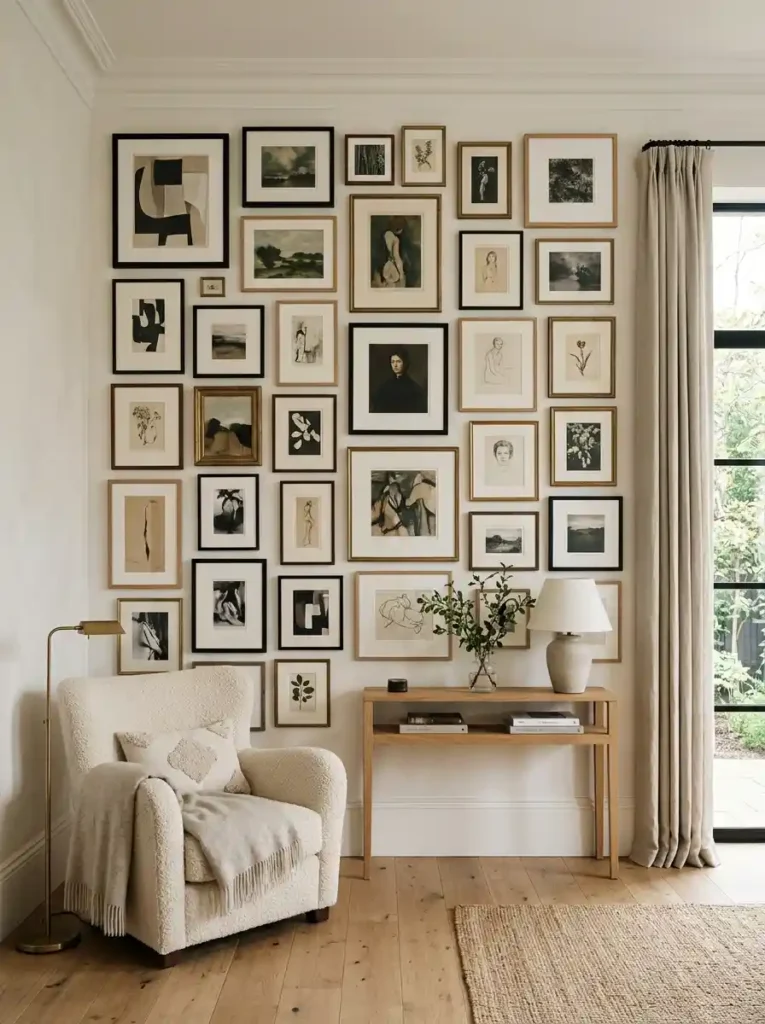
Turn an overlooked corner into a dramatic focal point with artwork arranged from near the floor toward the ceiling. Mixing framed prints, photography, and small decorative pieces creates a collected appearance that feels sophisticated rather than overly coordinated. Keep a consistent color palette throughout the display so the different artwork still feels connected. This approach works particularly well in living rooms, stairway corners, and tall entryways where vertical space would otherwise go unused. The result is an immersive gallery that makes the entire wall feel taller and more thoughtfully designed.
2. Black Frame Art Gallery
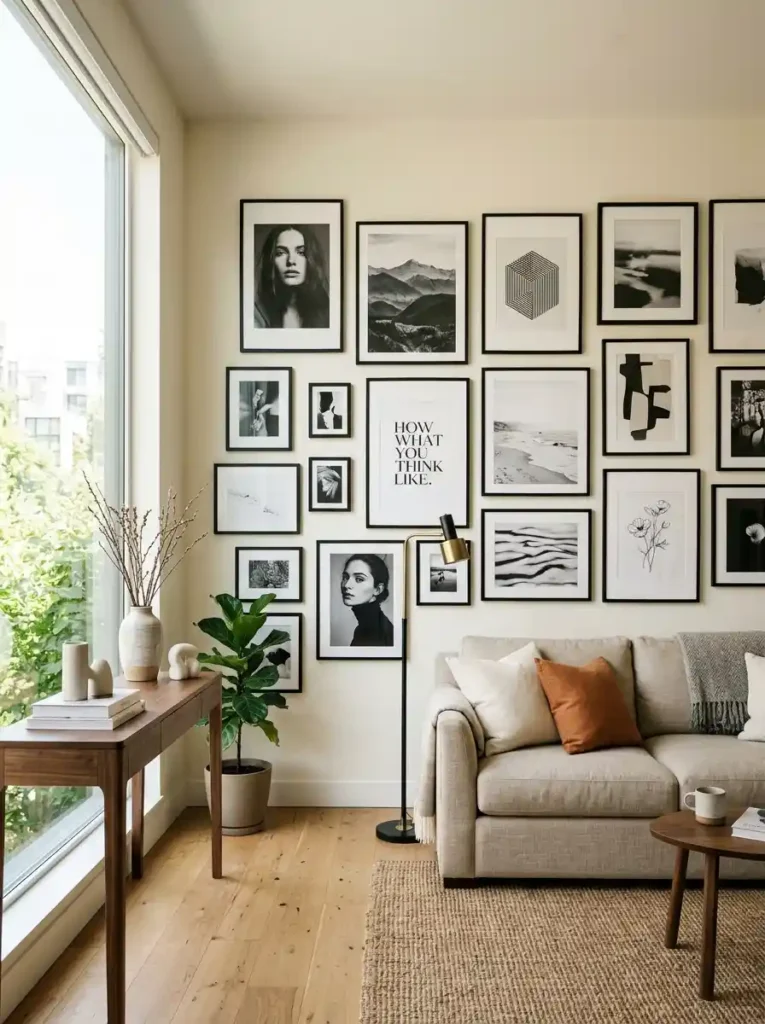
Black frames create an instantly polished gallery wall while giving artwork a crisp, contemporary appearance. Arrange different print sizes around a central larger piece to create a balanced composition without making everything perfectly symmetrical. Black frames work beautifully against white, beige, greige, and muted sage walls, making this idea extremely versatile. Add a few black decorative accents elsewhere in the room to repeat the finish. The cohesive connection helps the gallery feel intentionally designed rather than randomly assembled.
3. Neutral Abstract Gallery
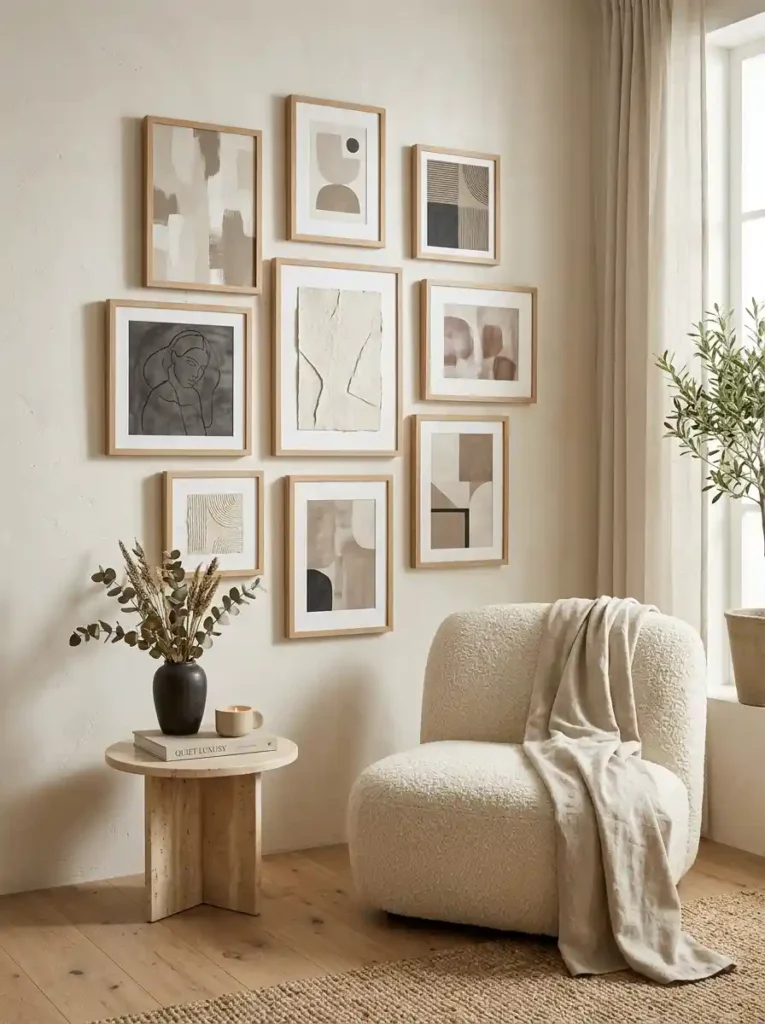
A neutral abstract gallery brings sophisticated artwork into an empty corner without overwhelming the rest of the room. Choose pieces featuring cream, taupe, beige, charcoal, and soft brown tones, then combine several frame styles within the same palette. Abstract artwork works particularly well with organic modern interiors because its subtle shapes complement natural materials such as wood, linen, and stone. Keep the surrounding furniture simple so the artwork remains the visual focus. This is an excellent choice for creating a calm, designer-inspired atmosphere.
4. Family Photo Corner
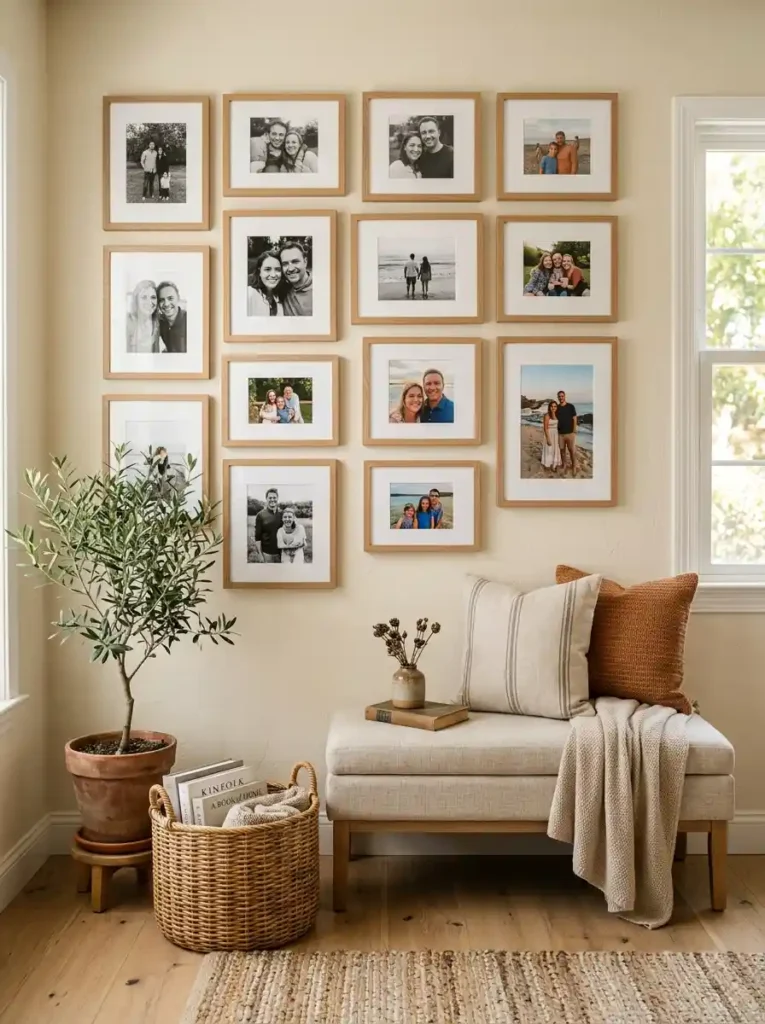
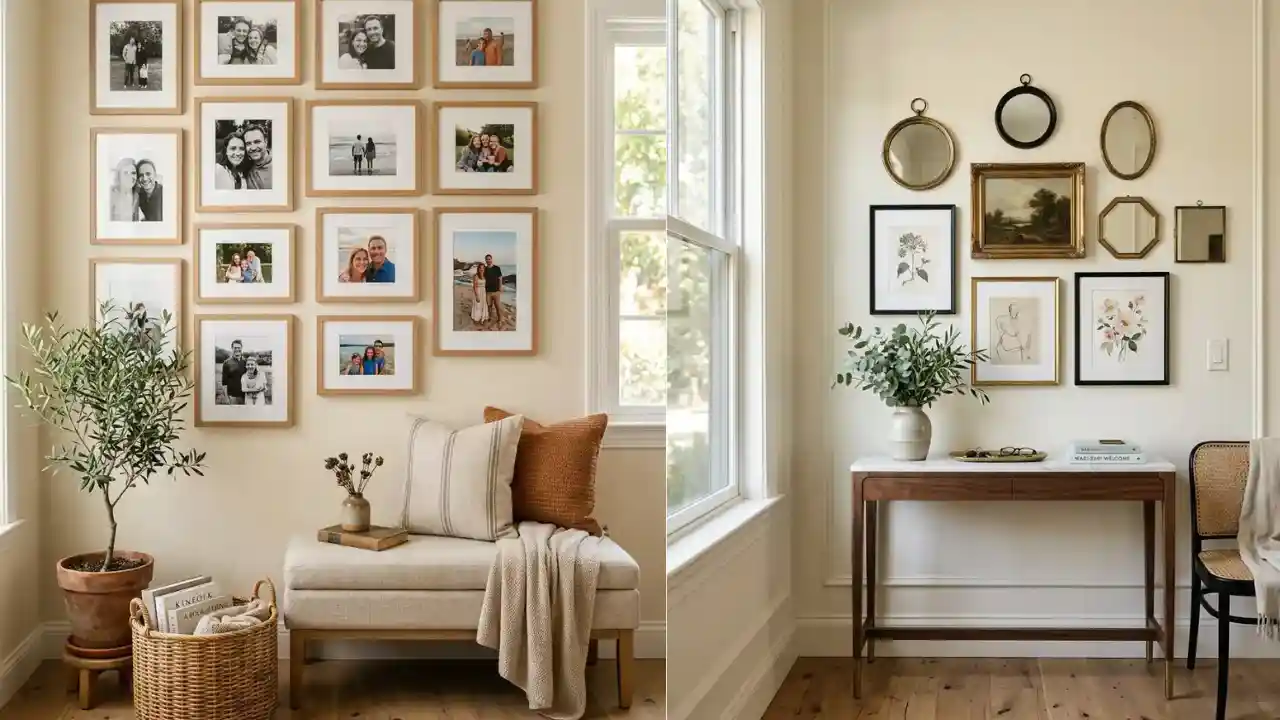
Turn a forgotten corner into a meaningful display by creating a curated family photo gallery. Use matching frames in warm wood, black, or soft brass to give personal photographs a sophisticated presentation. Mix portrait and landscape images while maintaining similar spacing between each frame. Rather than displaying every photograph you own, select images that share a meaningful story or visual style. This keeps the arrangement elegant while making the corner feel genuinely personal. It’s especially beautiful in hallways, staircases, and family living spaces.
5. Gallery Wall With Mirrors
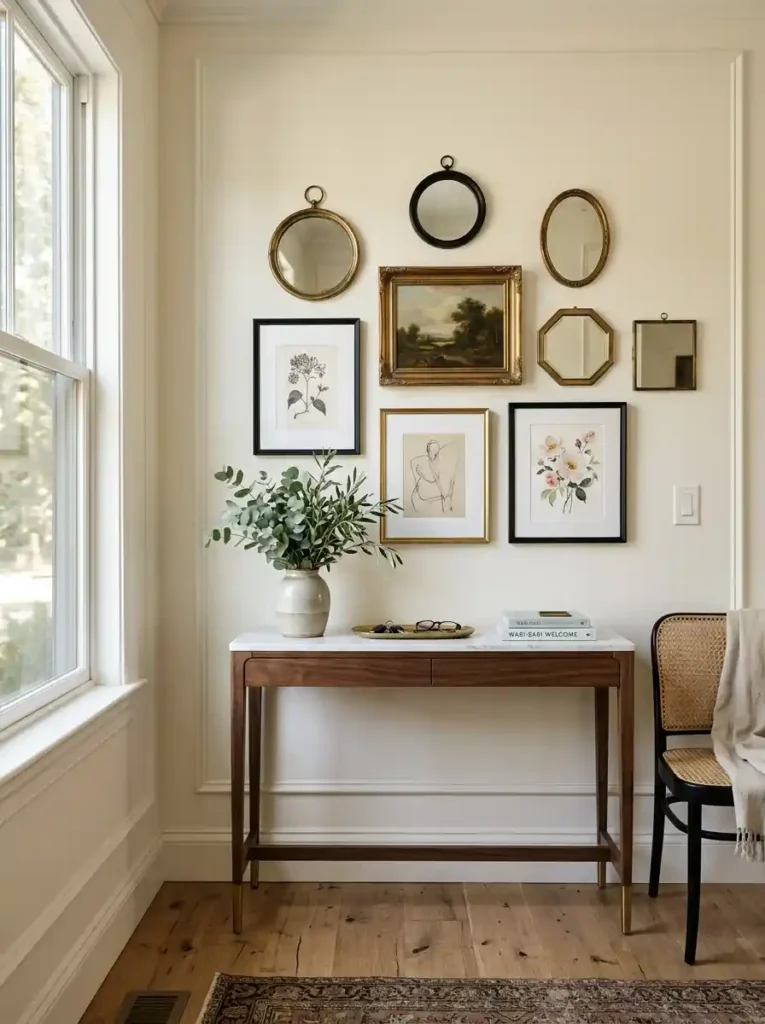
Combining mirrors with framed artwork adds both personality and light to an otherwise unused corner. Small decorative mirrors can be positioned between prints to create visual variety while reflecting windows and natural light around the room. Choose mirrors with similar finishes, such as antique brass, matte black, or natural wood, to maintain cohesion. This technique is particularly effective in smaller rooms because reflective surfaces create the impression of additional depth. The result is a gallery display that feels decorative while serving a practical purpose.
6. Vintage Frame Collection
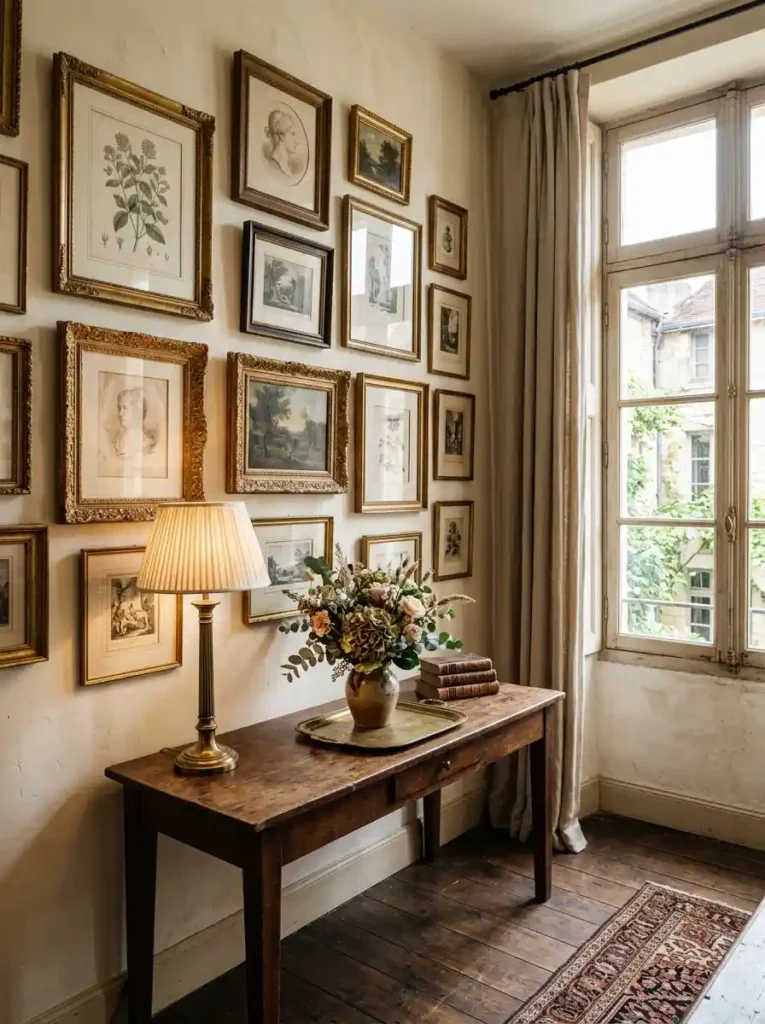
A collection of vintage-inspired frames gives an empty corner character and an effortlessly collected appearance. Look for ornate gold frames, aged wood finishes, antique brass details, and slightly weathered textures. The artwork inside doesn’t have to be old; modern botanical prints or abstract paintings can create an interesting contrast. Arrange the frames organically rather than forcing a rigid grid. This style works beautifully in traditional, European, cottage, and eclectic interiors where warmth and personality are essential.
7. Botanical Print Gallery
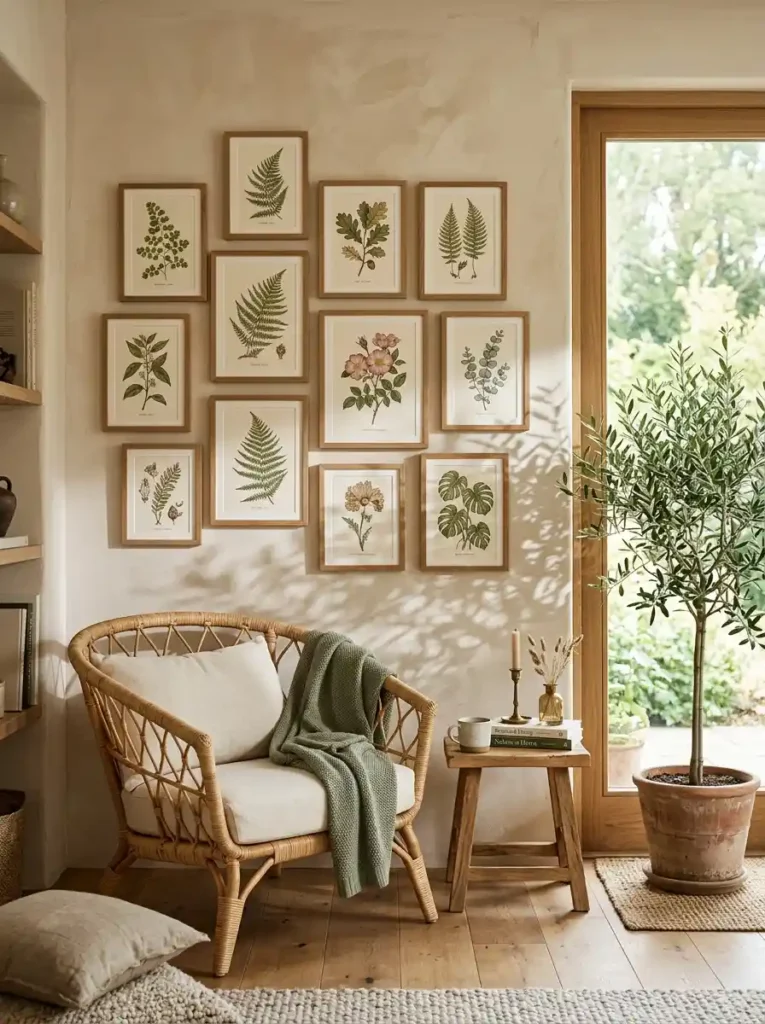
Bring a subtle connection to nature into your home with a collection of botanical prints. Fern illustrations, pressed-flower artwork, vintage plant studies, and botanical photography create a fresh and timeless display. Natural oak or light wood frames work especially well with green, cream, and earthy tones. Place the gallery near indoor plants to strengthen the natural theme without making the corner feel overly decorated. This approach is ideal for bedrooms, dining areas, entryways, and organic modern living rooms.
8. Oversized Statement Artwork
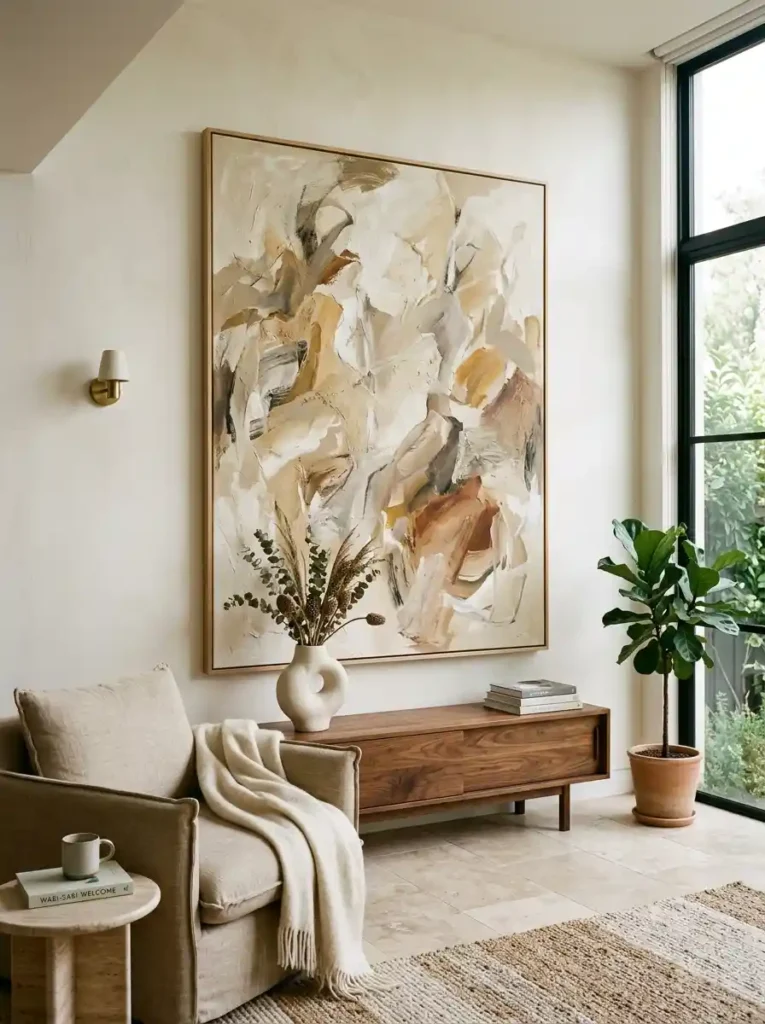
Sometimes one dramatic artwork is more effective than an entire collection. An oversized painting or photographic print can fill a tall corner wall while creating a strong visual anchor for the room. Choose a piece with colors that complement your existing furniture and textiles. A large artwork works especially well above a console, accent chair, or narrow cabinet. The simplicity makes the corner feel luxurious and intentional, while the scale prevents the wall from appearing unfinished.
9. Eclectic Art Arrangement
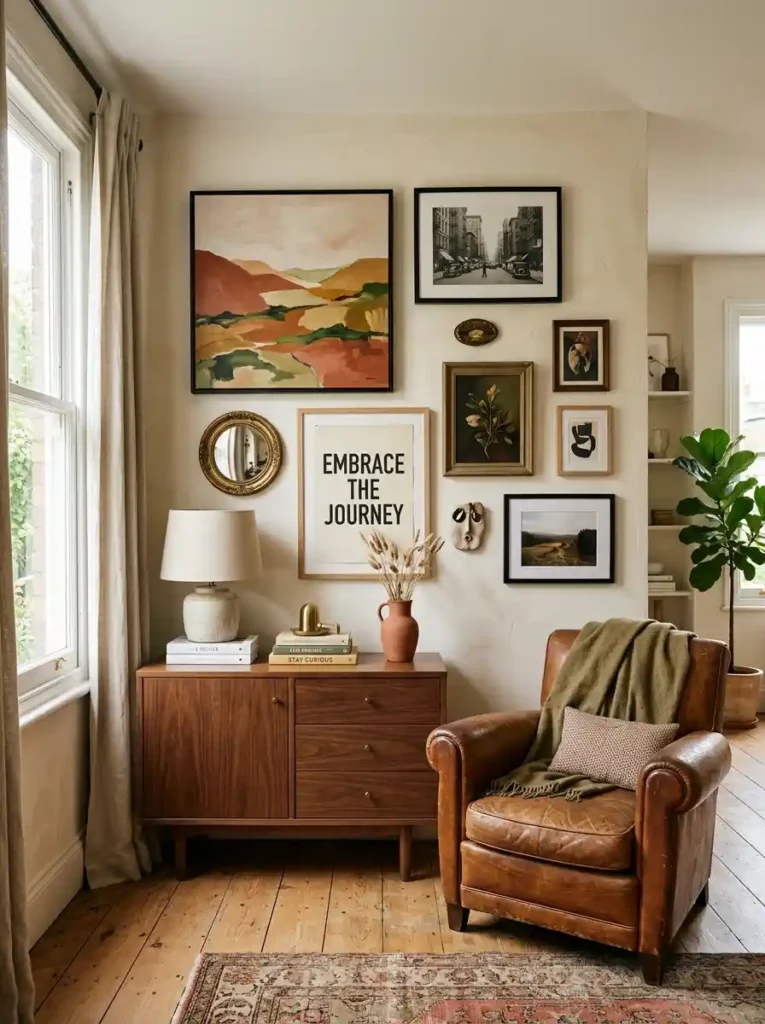
An eclectic gallery wall allows you to combine artwork, photographs, mirrors, typography, and small decorative objects in one expressive composition. The secret is to create consistency through color, frame finishes, or subject matter rather than making every piece identical. Start with your largest artwork and gradually build outward using smaller pieces. Leave enough breathing room between objects so the display remains visually balanced. This style is perfect for creative homeowners who want their interiors to feel collected over time.
10. Warm Wood Frame Gallery
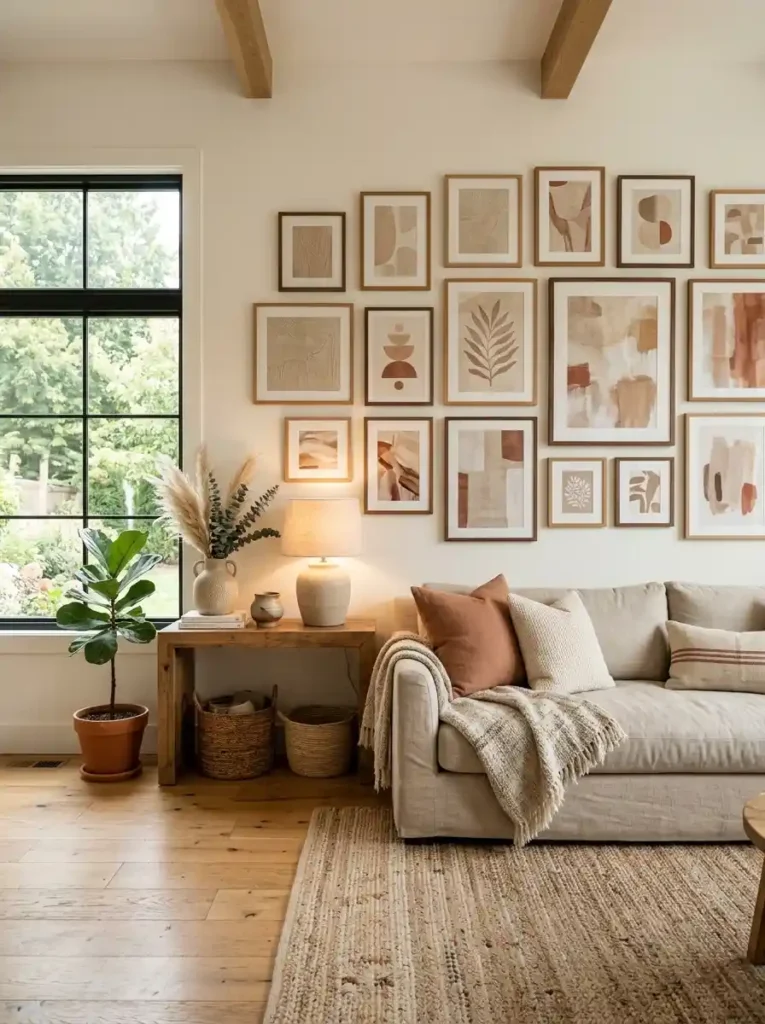
Warm wood frames instantly introduce natural texture and softness to a gallery wall. Choose oak, walnut, or reclaimed wood depending on the mood you’re creating, then pair the frames with artwork in warm neutral tones. The combination works beautifully with linen furniture, woven baskets, natural rugs, and other organic materials. A wood-framed gallery feels less formal than a collection of matching black frames while still looking highly curated. It’s particularly effective in cozy living rooms and Scandinavian-inspired interiors.
11. Corner Gallery With Shelves
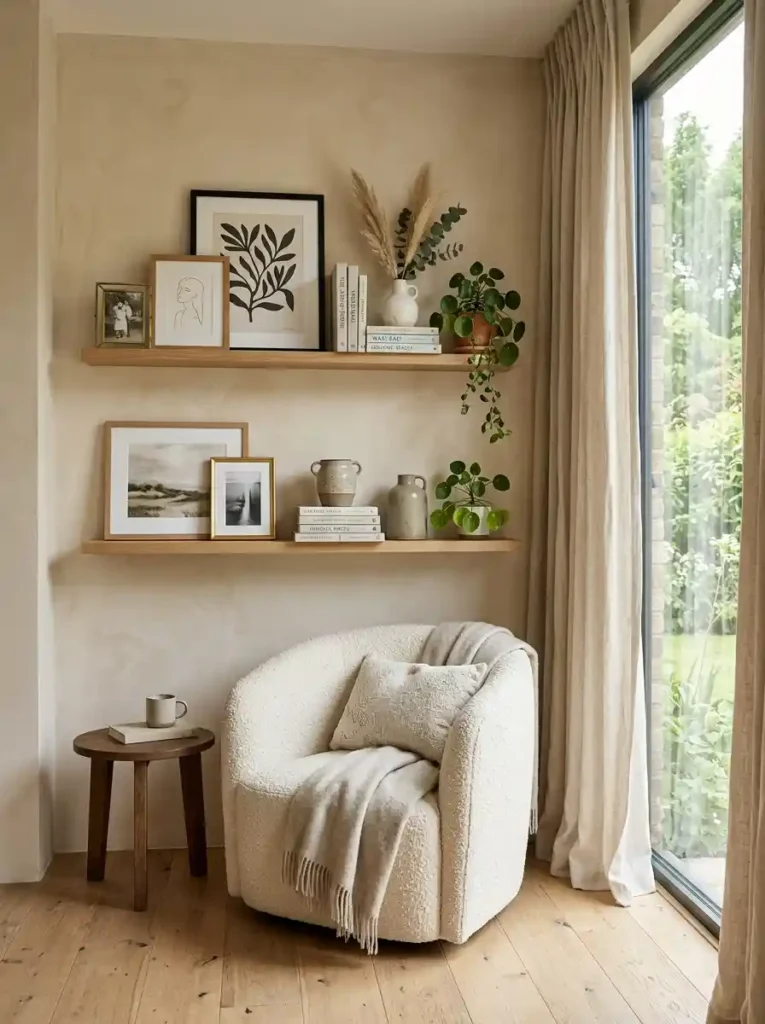
Floating picture ledges add another dimension to a traditional gallery wall by allowing artwork to be layered instead of permanently fixed. Place larger frames against the wall and lean smaller prints, photographs, and decorative objects in front. This makes it easy to refresh the display whenever your style changes. Choose shelves in the same wood or finish as nearby furniture to create continuity. The combination of shelving and framed artwork turns an ordinary corner into a flexible decorative feature.
12. Minimalist Monochrome Gallery
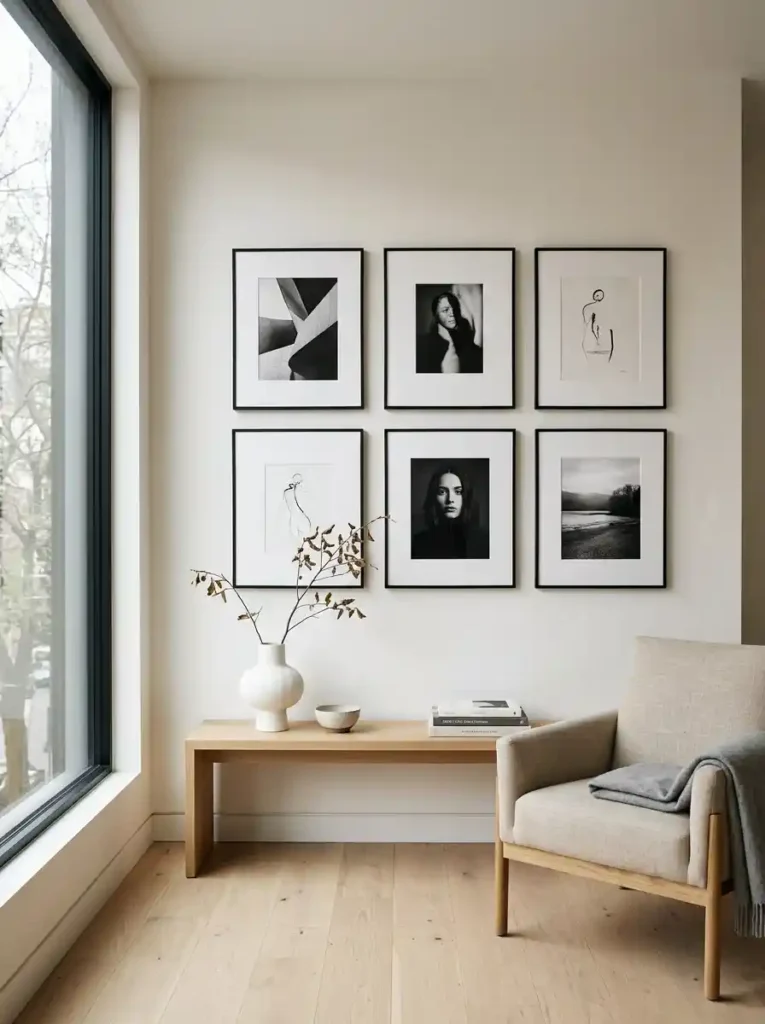
A monochrome gallery creates a refined appearance by using artwork that shares one simple color palette. Black-and-white photography, charcoal sketches, and minimalist typography work particularly well together. Use thin black frames and generous spacing to maintain a clean, sophisticated composition. This approach is ideal for modern apartments and contemporary interiors where visual simplicity is important. The restrained palette allows the artwork to create interest without making the room feel busy.
13. Stairway Corner Gallery
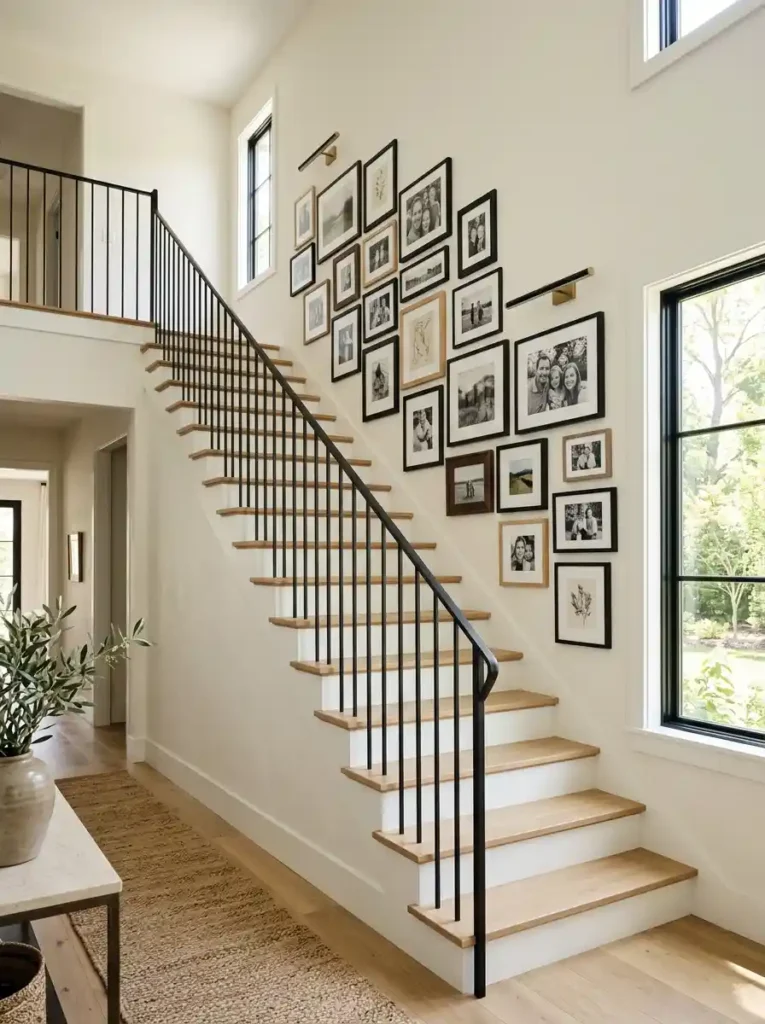
The empty wall beside a staircase provides a natural opportunity for a dramatic gallery display. Arrange artwork along the angle or direction of the staircase so the collection visually follows the architecture. Mix portrait and landscape frames to create movement while keeping consistent spacing. Family photography works especially well here because the display becomes something you’ll naturally see while moving through the house. The result transforms an overlooked transitional area into a memorable design feature.
14. Brass Frame Gallery
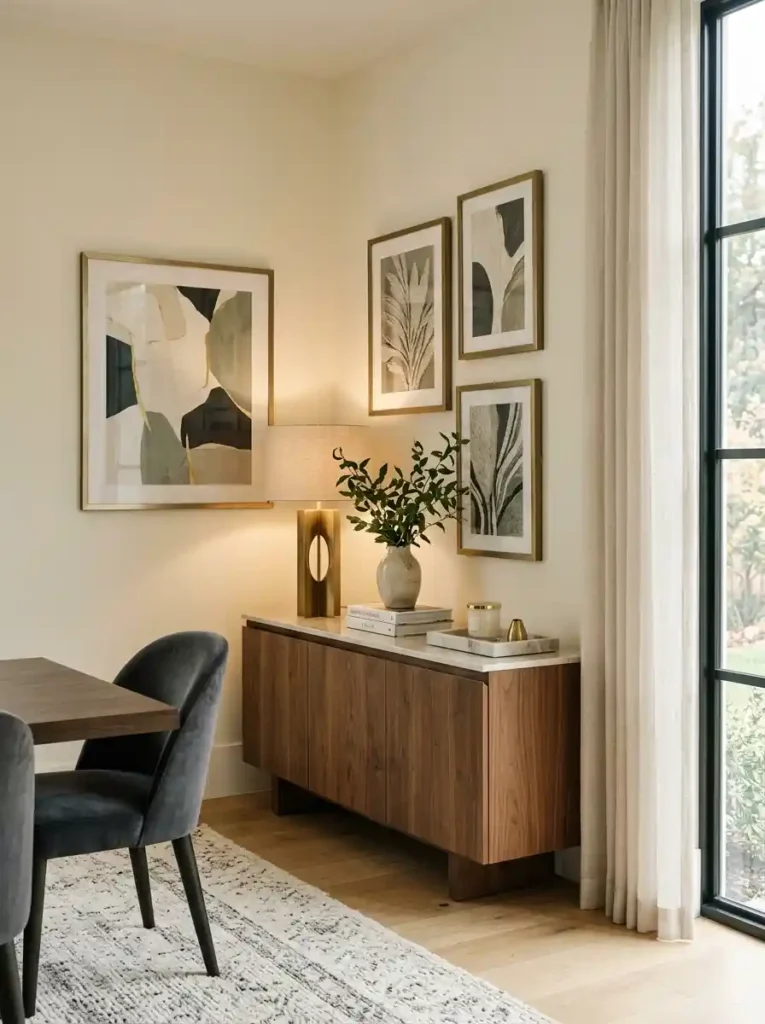
Brass frames bring warmth and subtle glamour to an otherwise plain wall. Choose antique brass for a traditional appearance or brushed brass for a cleaner contemporary look. Pair the frames with artwork featuring cream, charcoal, muted green, or soft blue tones to keep the overall arrangement sophisticated. Repeating brass details through lighting, furniture hardware, or decorative accessories helps the gallery feel connected to the rest of the room. This approach works beautifully in elegant bedrooms, dining rooms, and entryways.
15. Gallery Wall Above Console
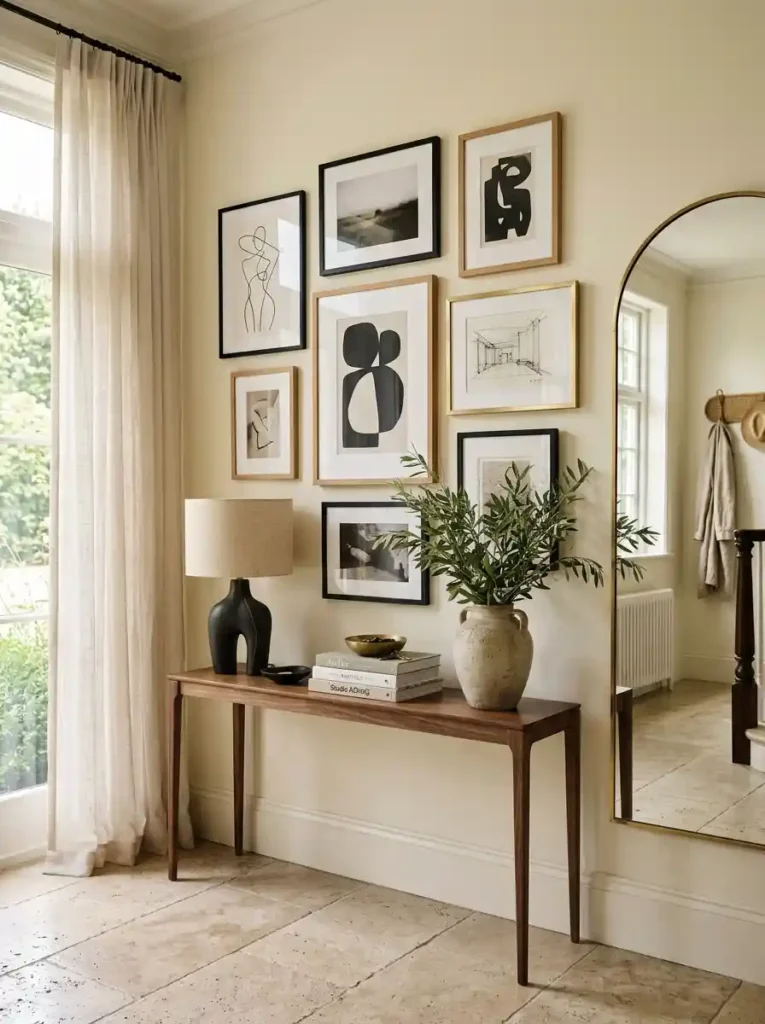
A narrow console table provides the perfect foundation for a corner gallery wall. Hang a collection of artwork above the console, then style the surface with a sculptural lamp, ceramic vase, books, and greenery. The furniture anchors the gallery while giving the entire arrangement a finished appearance. Keep the artwork slightly wider than the console to create balanced proportions. This combination works particularly well in entryways, living rooms, and dining spaces where an empty vertical wall needs more visual interest.
16. Layered Corner Artwork
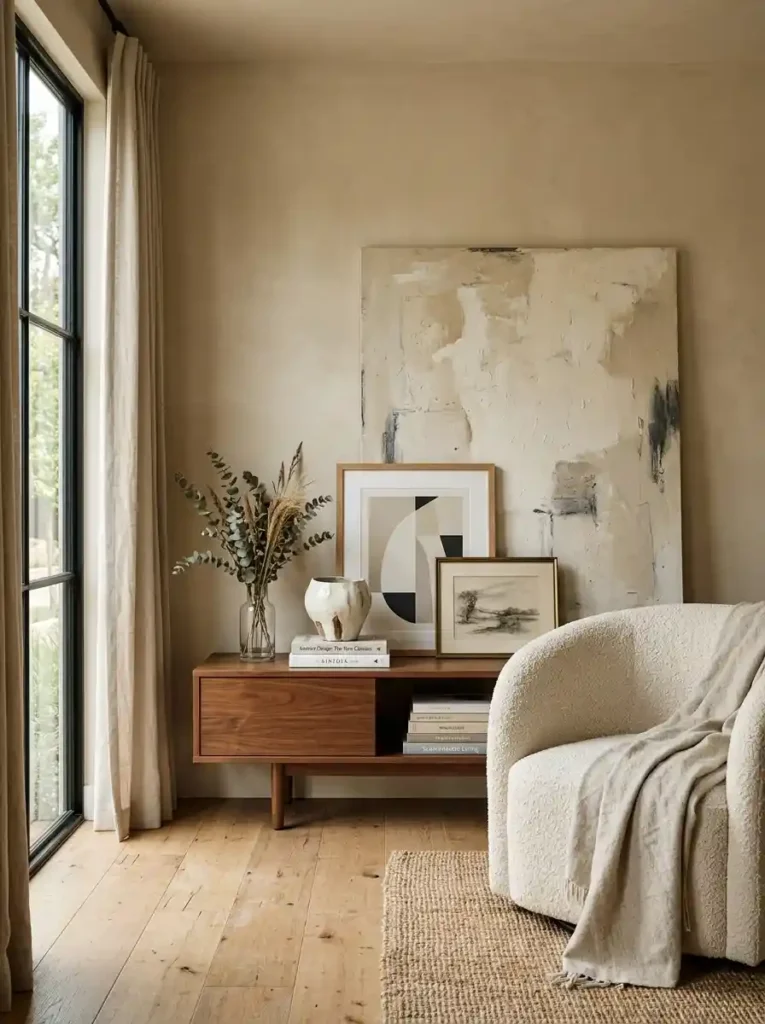
Layering artwork creates a relaxed, designer-inspired appearance that feels less rigid than a traditional grid. Start with one large frame leaning against the wall, then overlap smaller artwork and decorative pieces in front. Use a narrow console or floating shelf as the base if you need additional support. Different textures such as canvas, paper, wood, and ceramic make the arrangement more visually interesting. The beauty of this approach is that you can easily change individual pieces without redesigning the entire display.
17. Coastal Gallery Wall
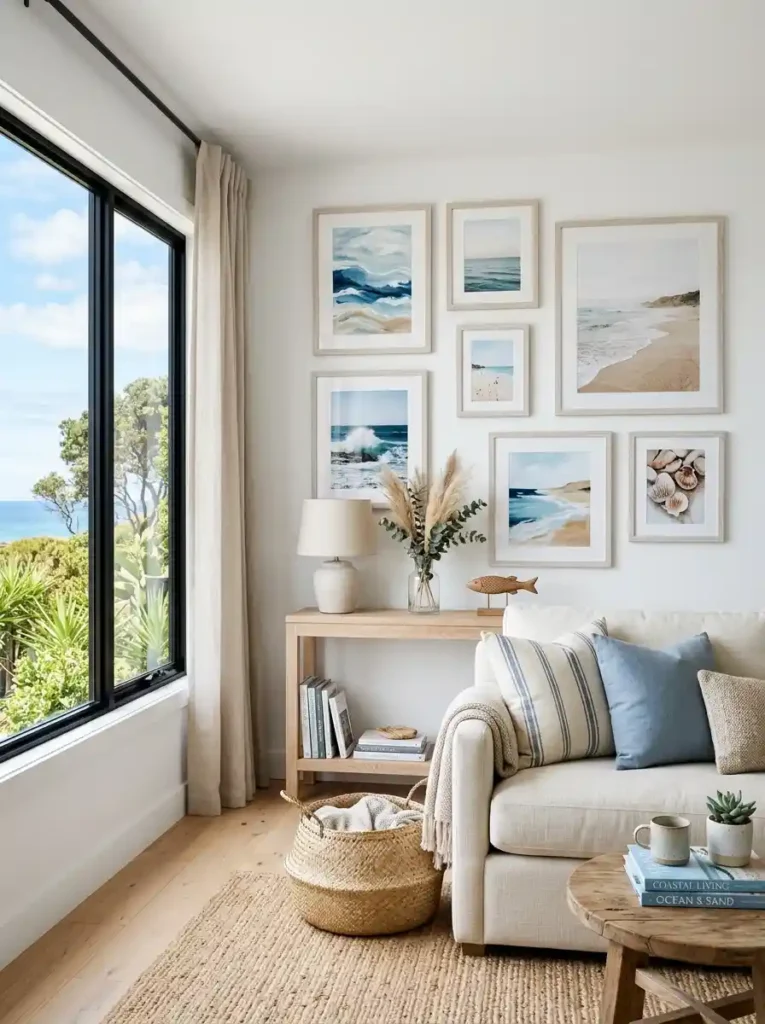
A coastal-inspired gallery brings relaxed vacation energy into the home without relying on obvious beach-themed decorations. Choose artwork featuring soft blue, sandy beige, white, weathered wood, and muted ocean tones. Photography of waves, abstract coastal landscapes, shells, or natural textures can all work beautifully. Light oak or whitewashed frames strengthen the breezy aesthetic. This display is particularly effective in bedrooms, entryways, and living rooms where you want the atmosphere to feel bright and relaxed.
18. Sculptural Wall Collection
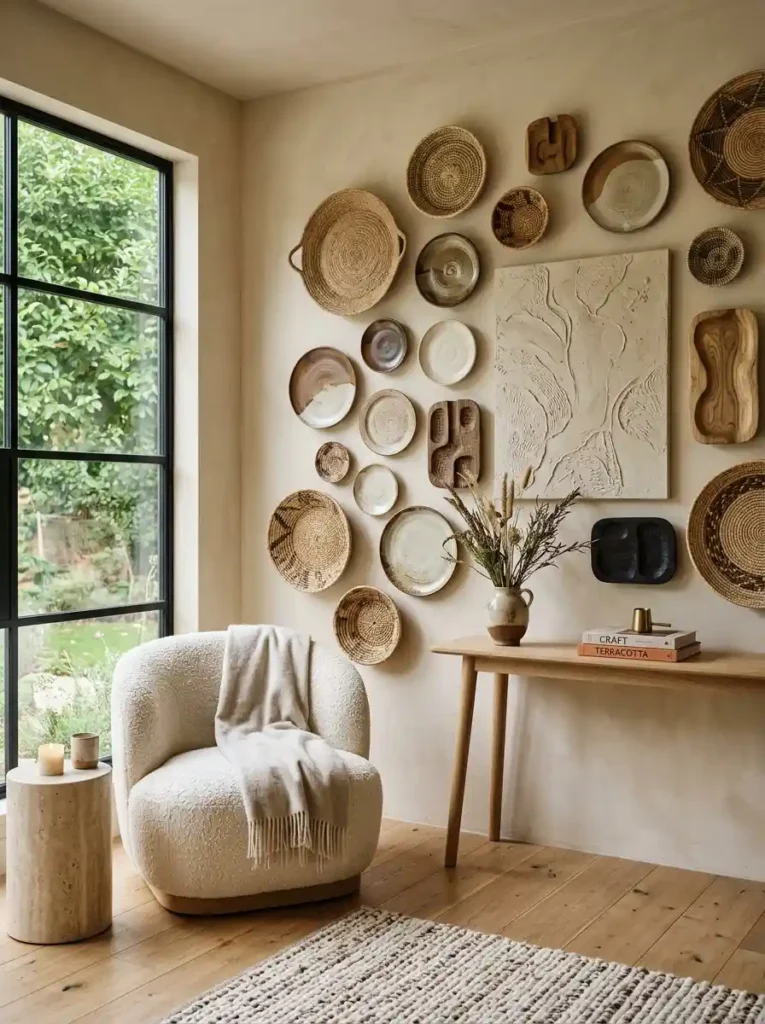
Move beyond traditional artwork by incorporating three-dimensional pieces into your gallery display. Woven baskets, ceramic plates, carved wooden objects, sculptural plaster pieces, and textured wall art can create a sophisticated layered composition. Use a restrained color palette to prevent the different textures from competing with one another. This style is especially effective in organic modern and Mediterranean interiors where natural materials are central to the design. The finished wall feels more like an art installation than a conventional picture arrangement.
19. Gallery Wall With Plants
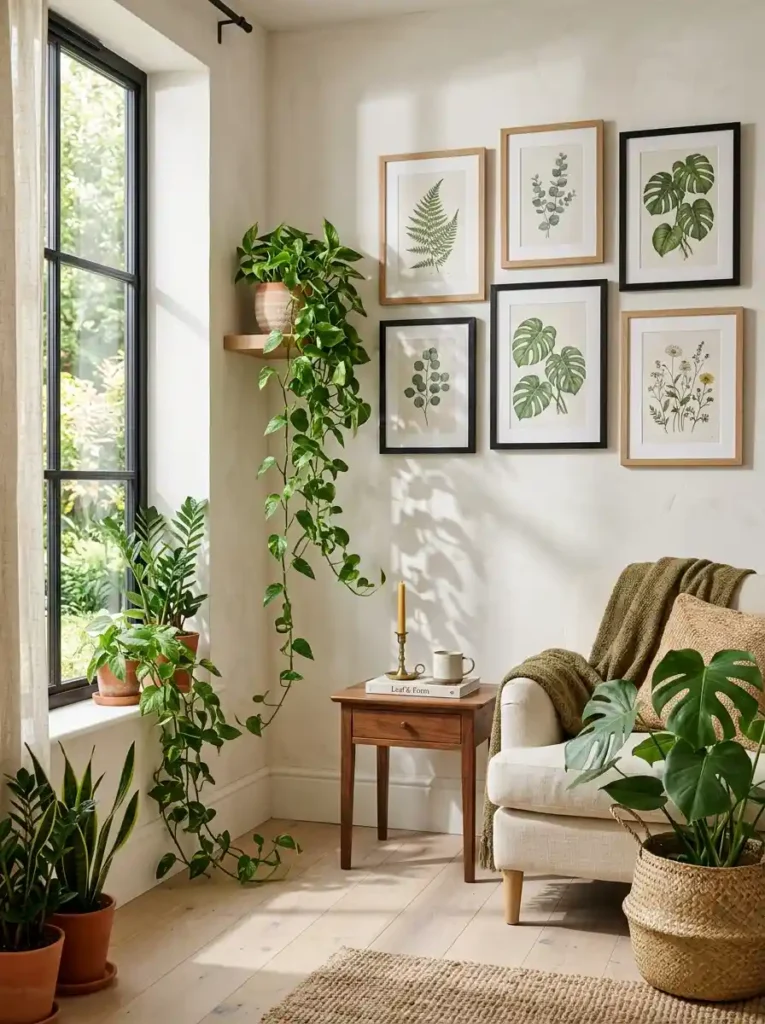
Combine framed artwork with hanging and wall-mounted plants to create a fresh, biophilic display. Botanical prints can reinforce the theme, while trailing plants add movement and soften the hard edges of frames. Choose plants according to the available natural light so the arrangement remains healthy and attractive. Terracotta, ceramic, or woven planters can introduce additional texture. This combination works beautifully in living rooms and home offices where greenery can make the atmosphere feel more welcoming.
20. Gallery Wall With Typography
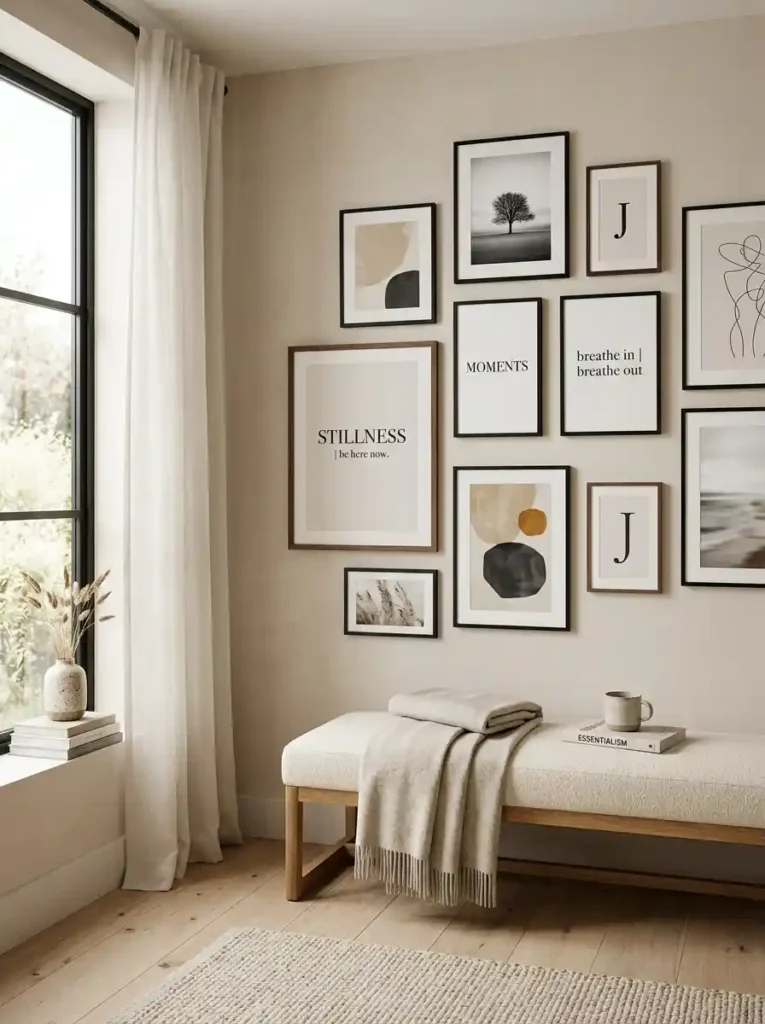
Typography artwork adds personality and a contemporary edge to a corner gallery. Choose meaningful words, minimalist phrases, vintage typography, or elegant letterforms rather than filling the arrangement with random quotes. Keep fonts and colors visually connected so the display feels sophisticated. Pair typography with photography or abstract artwork to prevent the wall from looking like a collection of posters. This idea works particularly well in creative offices, bedrooms, kitchens, and casual living spaces.
21. European-Inspired Gallery
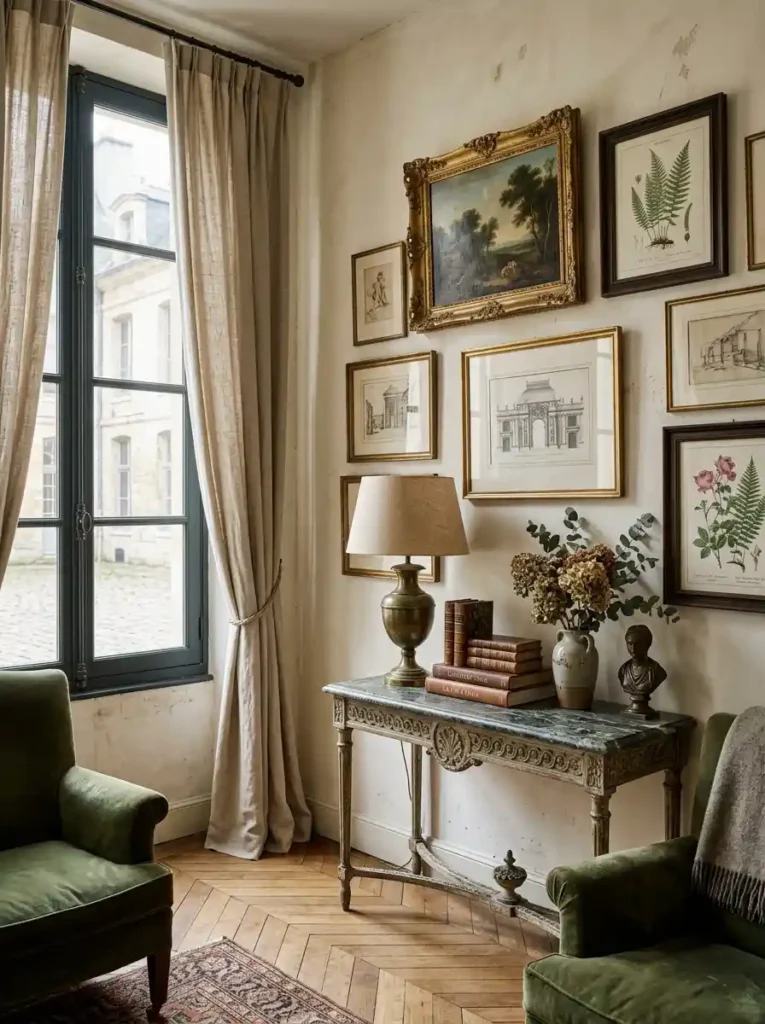
Create an old-world atmosphere with artwork inspired by European architecture, vintage landscapes, classical portraits, and antique botanical illustrations. Ornate frames in aged gold, dark wood, or distressed finishes strengthen the historic character. Arrange the pieces with slightly varied spacing to achieve the collected look often seen in traditional European interiors. A nearby antique console, marble surface, or vintage lamp can reinforce the theme. This style brings depth and character to modern homes without requiring a complete decorating overhaul.
22. Small Corner Art Grid
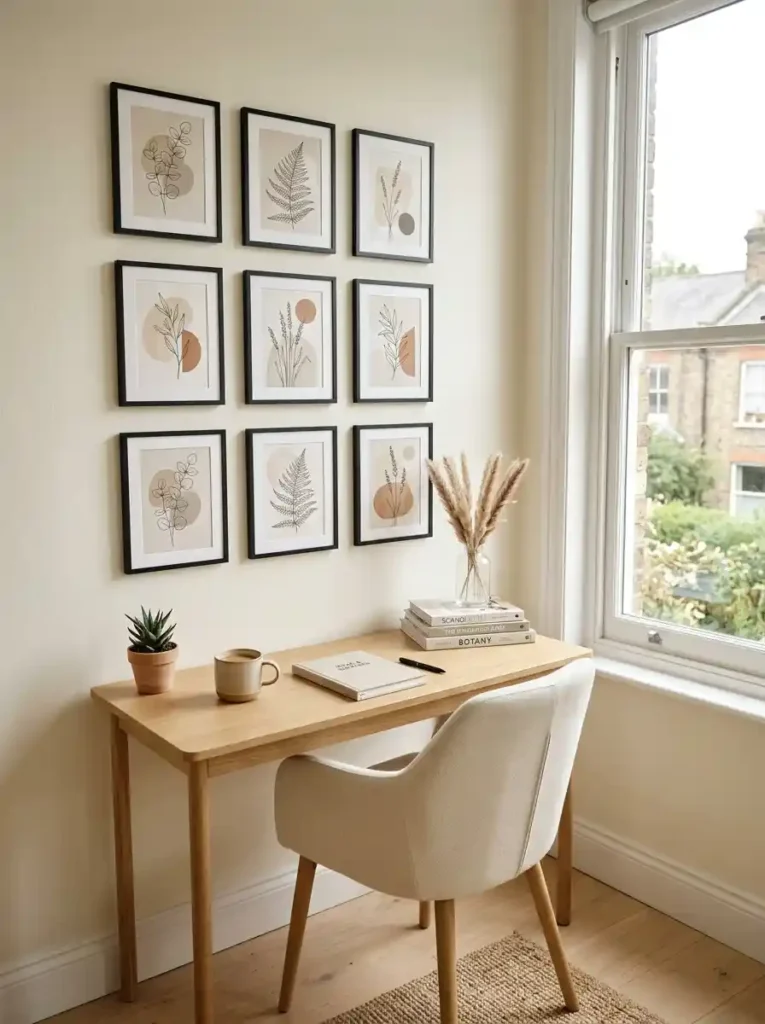
A small, structured grid is perfect when you want a gallery effect without overwhelming a compact wall. Choose four, six, or nine similarly sized frames and align them carefully for a clean appearance. Black-and-white photographs, abstract prints, or botanical illustrations work especially well in this format. Consistent spacing creates visual order while the repeated frames add rhythm. This approach is ideal for apartments, narrow hallways, home offices, and smaller corners where a large arrangement would feel too heavy.
23. Gallery Wall With Textile Art
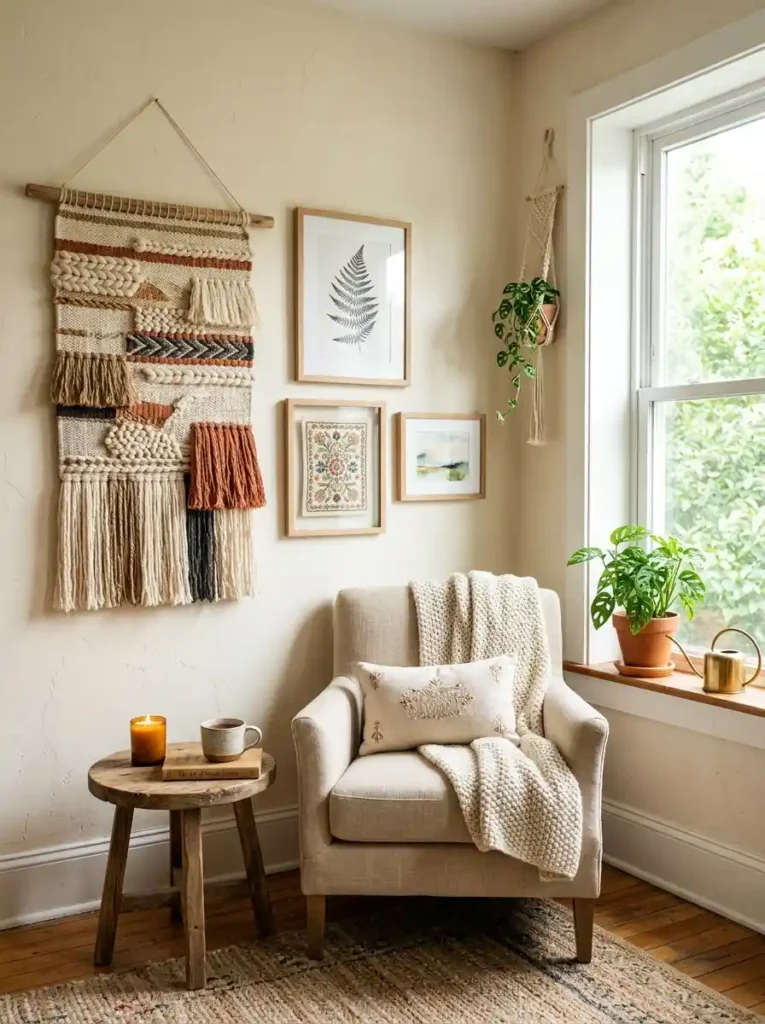
Textile artwork introduces softness that framed prints alone cannot provide. Macramé, woven wall hangings, embroidered pieces, and textured fabric art create warmth and dimension while breaking up a collection of hard surfaces. Neutral textiles work beautifully with wood frames and natural materials, making this approach particularly suitable for bohemian and organic modern interiors. Combine one larger textile piece with smaller framed artwork for balance. The result feels tactile, comfortable, and intentionally collected.
24. Oversized Mirror Gallery
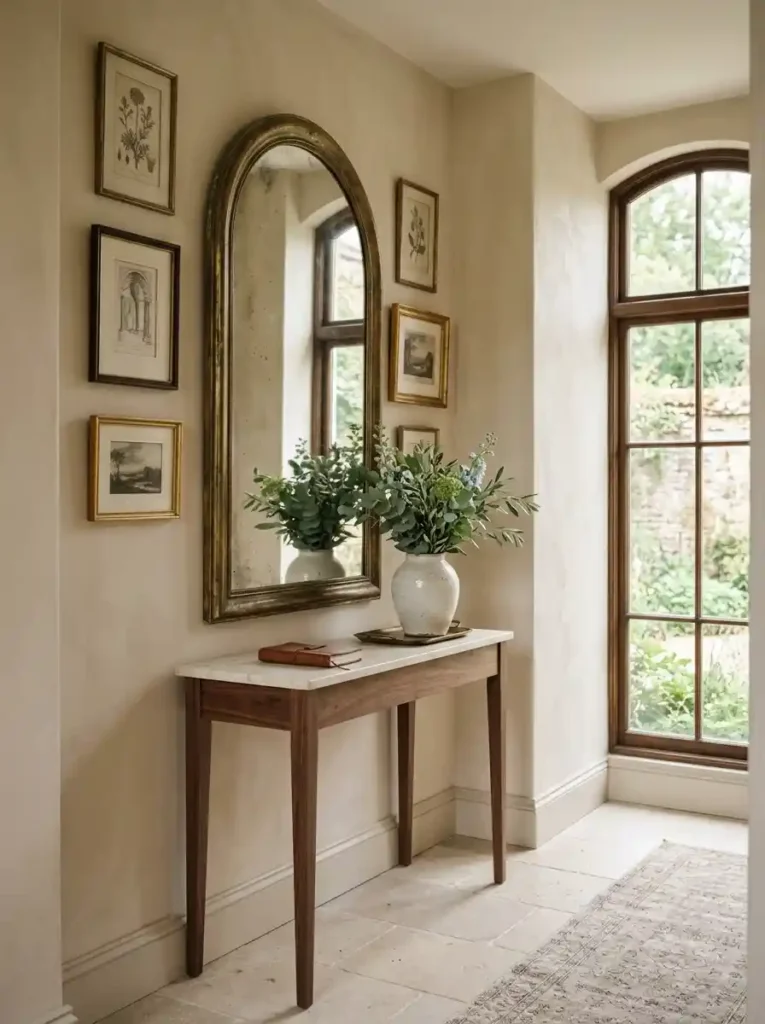
Instead of filling the entire corner with artwork, use an oversized mirror as the main focal point and surround it with smaller decorative pieces. The mirror reflects natural light and helps visually expand the room, while the surrounding artwork adds personality. Arched, round, or organically shaped mirrors can soften rooms filled with straight architectural lines. Choose a frame that coordinates with your existing hardware and lighting. This is especially effective in darker hallways and compact living spaces.
25. Color-Coordinated Art Wall
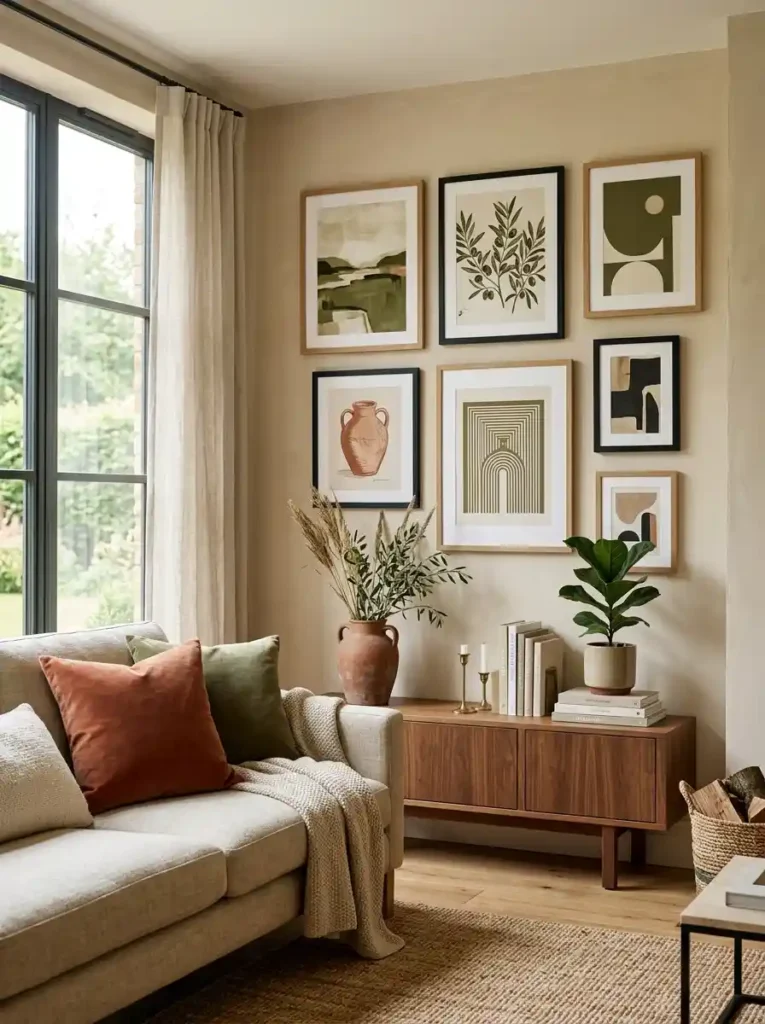
A carefully selected color palette can make a large collection of artwork feel remarkably cohesive. Choose two or three dominant colors that already appear in your room, then find prints that repeat those shades. For example, muted olive, cream, and terracotta can create a warm earthy display, while navy, ivory, and brass feel more sophisticated. Consistent color creates connection even when the artwork comes from different styles. This makes the gallery feel custom-designed rather than randomly assembled.
26. Gallery Wall With Ceramics
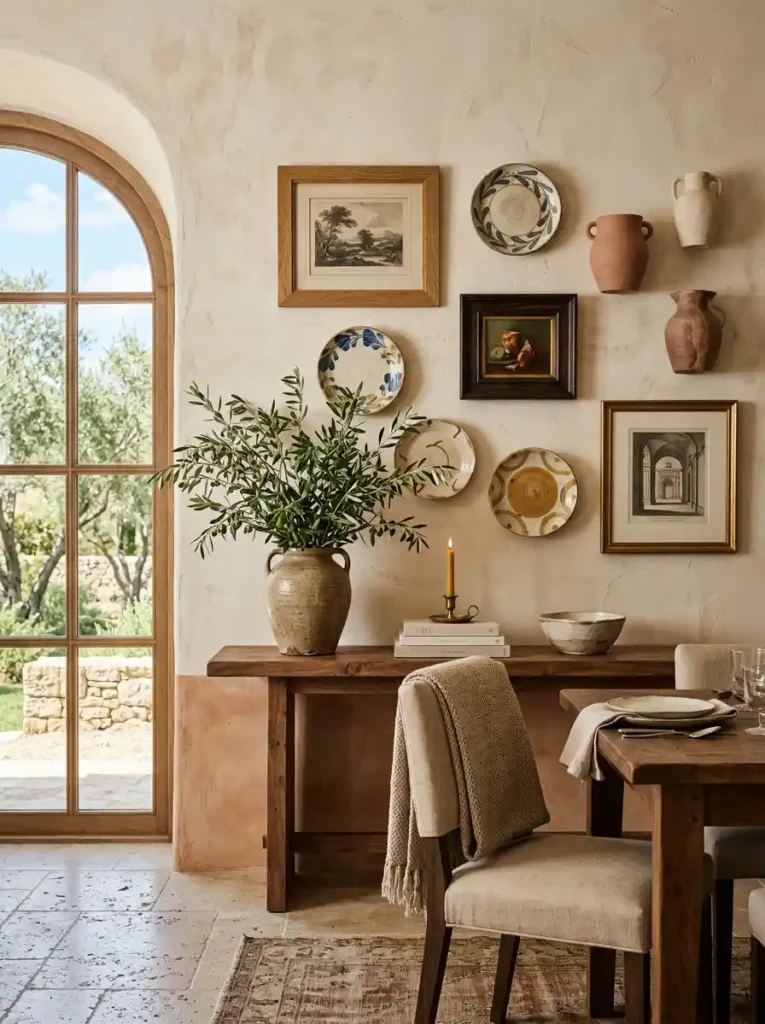
Ceramic wall plates and sculptural pottery can give a gallery display a handcrafted quality. Combine shallow decorative plates with framed artwork, small ceramic sculptures, and textured pieces for an arrangement filled with dimension. Neutral ceramics keep the display sophisticated, while colorful handmade pieces can create a more eclectic appearance. Consider varying the shapes and sizes while keeping the overall palette coordinated. This idea works particularly well in dining rooms, kitchens, and Mediterranean-inspired interiors.
27. Japandi Gallery Corner
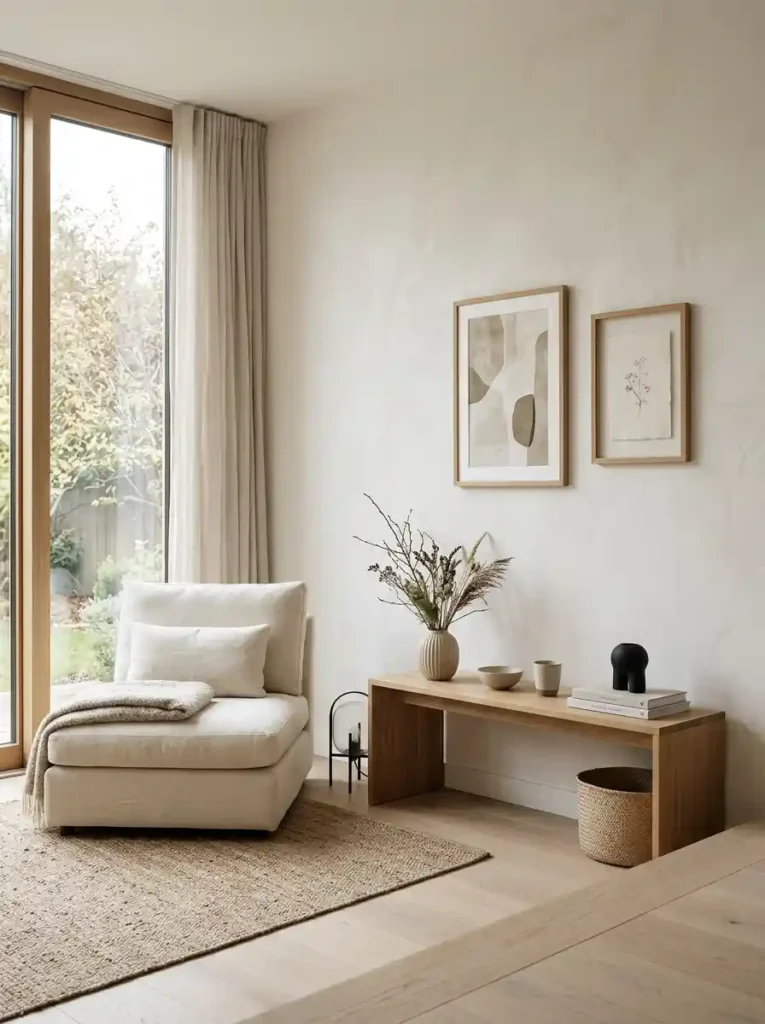
A Japandi-inspired gallery combines Japanese simplicity with Scandinavian warmth. Choose minimalist artwork, natural oak frames, soft beige tones, and a few carefully selected ceramic pieces. Leave generous negative space between the pieces so the arrangement feels calm rather than crowded. A simple branch arrangement or small indoor tree can add organic movement without disrupting the minimalist aesthetic. This approach is ideal for homeowners who prefer peaceful interiors with refined but understated decoration.
28. Gallery Wall Around a Mirror
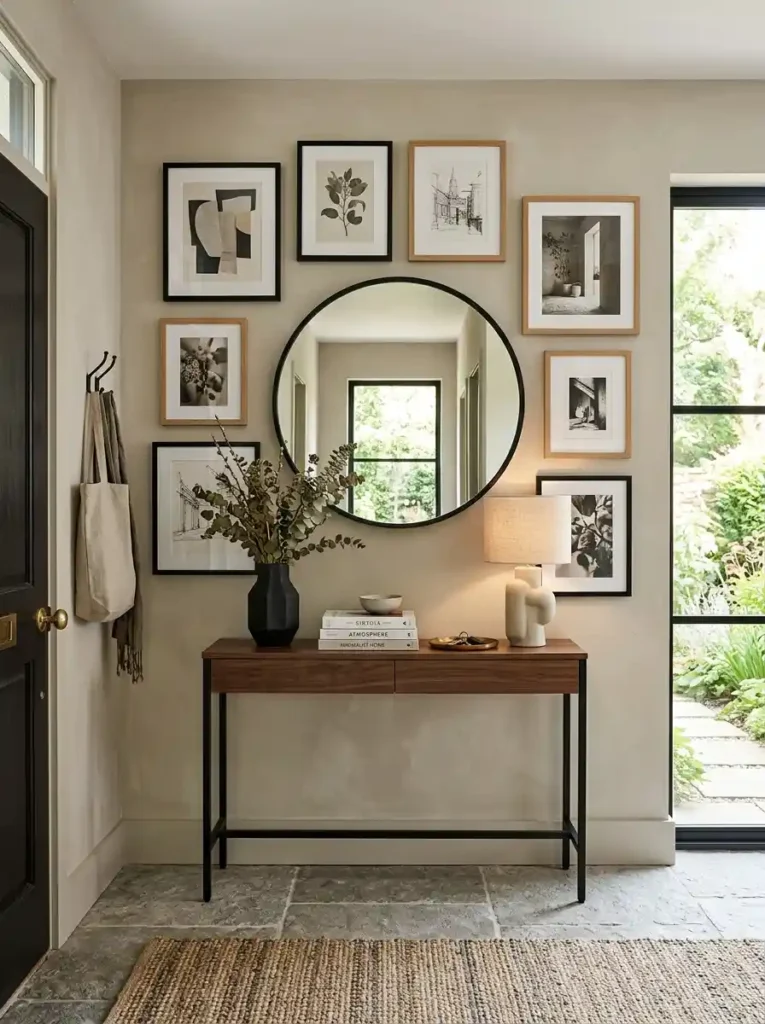
Create a dynamic display by positioning framed artwork around a central mirror. The mirror becomes the visual anchor while smaller pieces fill the surrounding wall with personality and texture. Keep the frame finishes coordinated so the arrangement doesn’t feel chaotic. This technique works especially well in entryways because the mirror serves a practical purpose while the surrounding artwork creates a memorable first impression. It can also make narrow spaces feel brighter and more open.
29. Moody Gallery Display
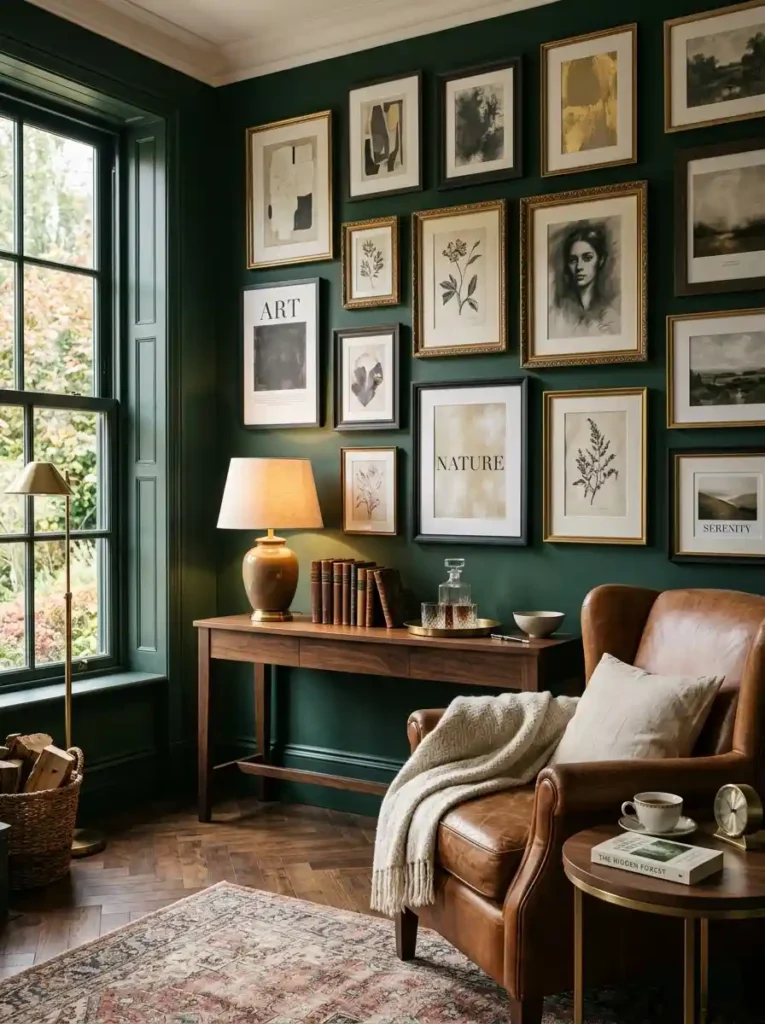
Dark walls can make artwork appear dramatically more sophisticated while creating a cozy, intimate atmosphere. Try deep charcoal, forest green, navy, or warm brown as the backdrop, then layer artwork in contrasting cream, muted gold, and earthy tones. Brass or antique gold frames work especially well against darker colors. Warm directional lighting helps highlight individual pieces after sunset. This approach is perfect for studies, dining rooms, libraries, and evening-focused living spaces.
30. Gallery Wall With Floating Frames
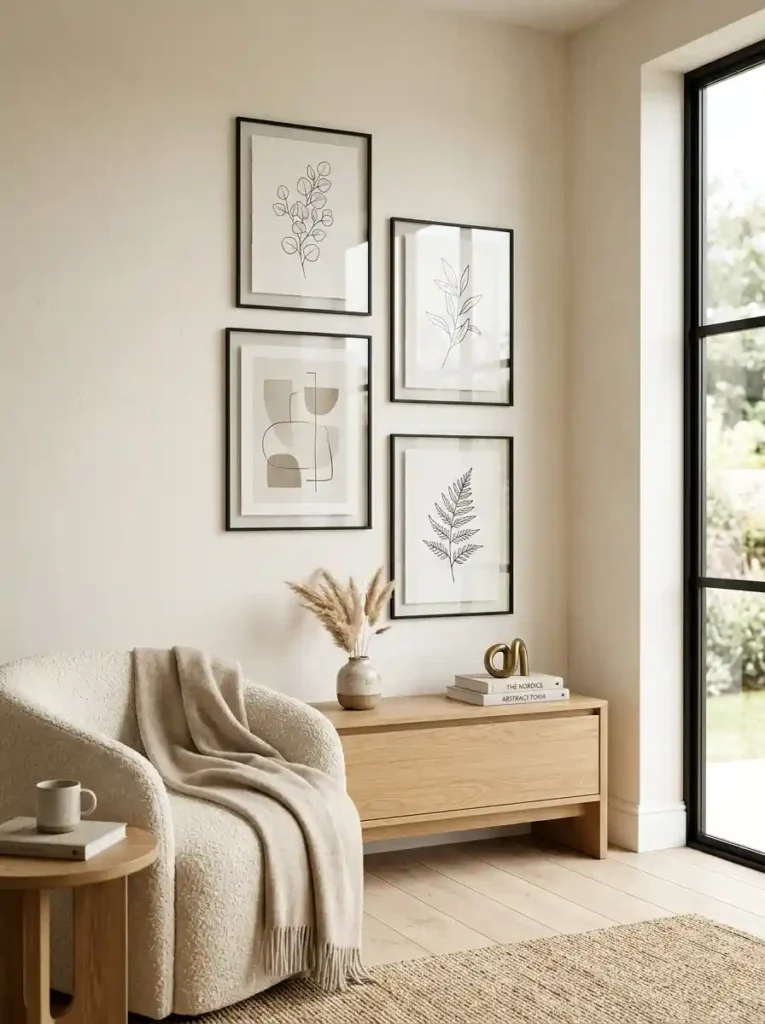
Floating frames create a contemporary appearance by allowing artwork to sit between transparent glass panels rather than inside traditional solid frames. The extra negative space around each piece makes the display feel lighter and more architectural. Use several sizes to create a balanced composition while maintaining consistent spacing. This style works beautifully with minimalist photography, abstract artwork, and botanical prints. It’s an excellent choice for modern homes where clean lines and visual openness are priorities.
31. Vintage Photography Gallery
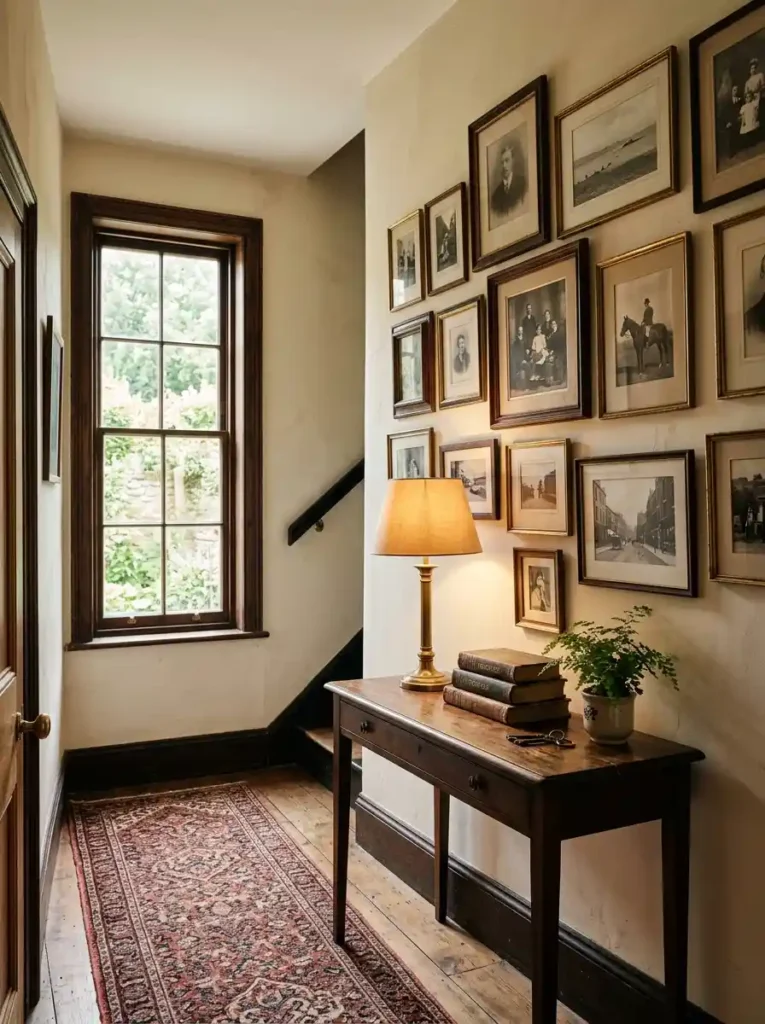
Black-and-white or sepia photography brings timeless character to an empty corner. Choose architectural photographs, travel scenes, family portraits, or vintage city imagery depending on your personal style. Matching frames create cohesion, while different image sizes prevent the arrangement from feeling overly rigid. Warm wood or antique brass frames enhance the nostalgic atmosphere. This type of gallery works especially well in hallways, staircases, studies, and traditional living rooms.
32. Gallery Wall With Shelved Decor
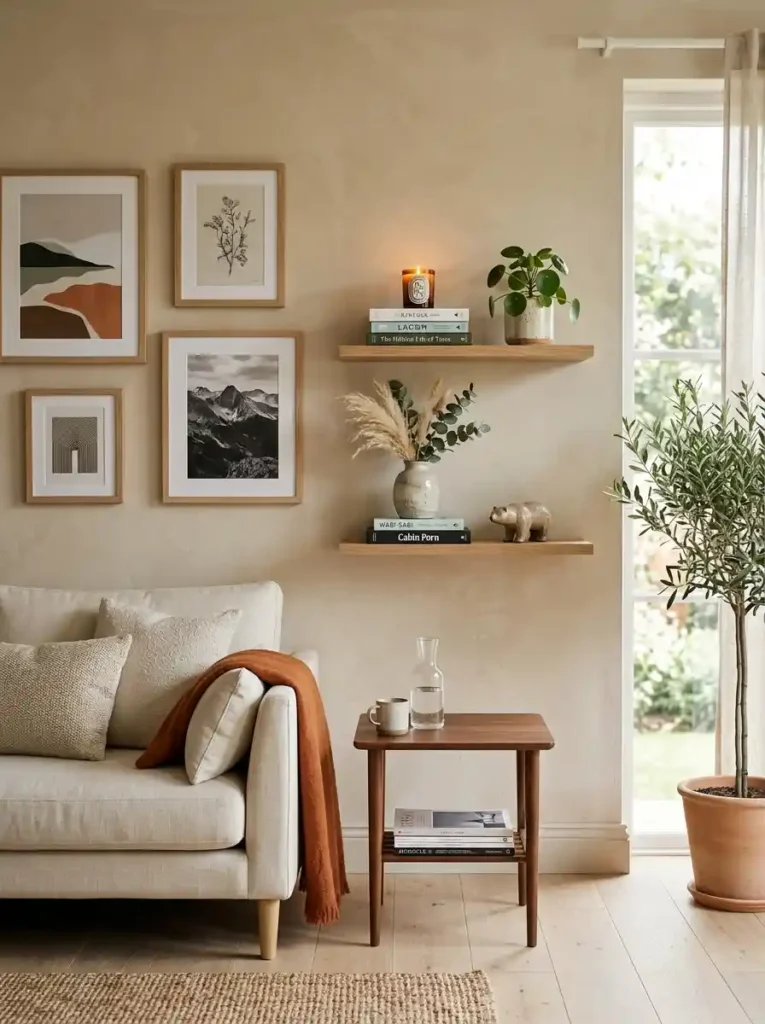
Combine framed artwork with narrow wall shelves to create a display that mixes visual art and functional decoration. Books, candles, small plants, ceramics, and sculptural objects can sit alongside photographs and prints. The shelves allow you to rotate pieces seasonally without making new holes in the wall. Keep the number of objects controlled so the arrangement remains intentional. This flexible setup is ideal for homeowners who enjoy refreshing their décor throughout the year.
33. Floor-Leaning Art Display
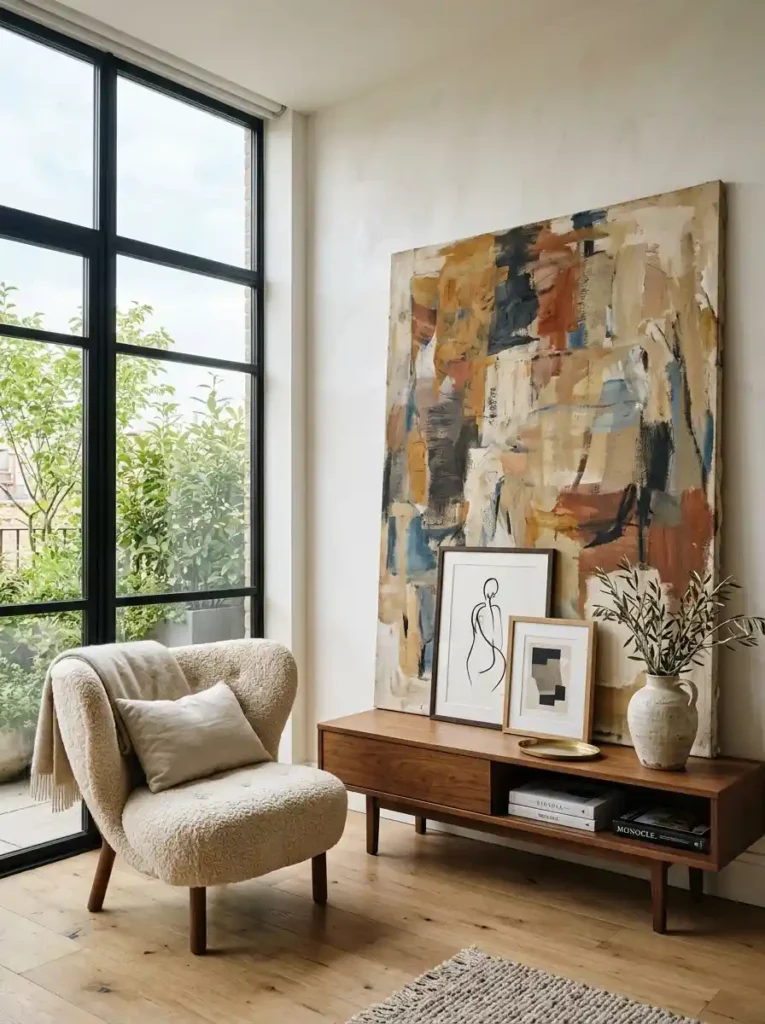
For a more relaxed luxury look, allow oversized artwork to lean against the wall rather than hanging every piece. A large canvas placed on the floor beside a console or cabinet can create an effortless designer appearance. Layer a smaller frame in front to add depth and visual interest. This approach works particularly well in spacious rooms with tall ceilings. It also gives renters a way to create an impressive display without making permanent changes to the walls.
34. Black-and-White Photo Gallery
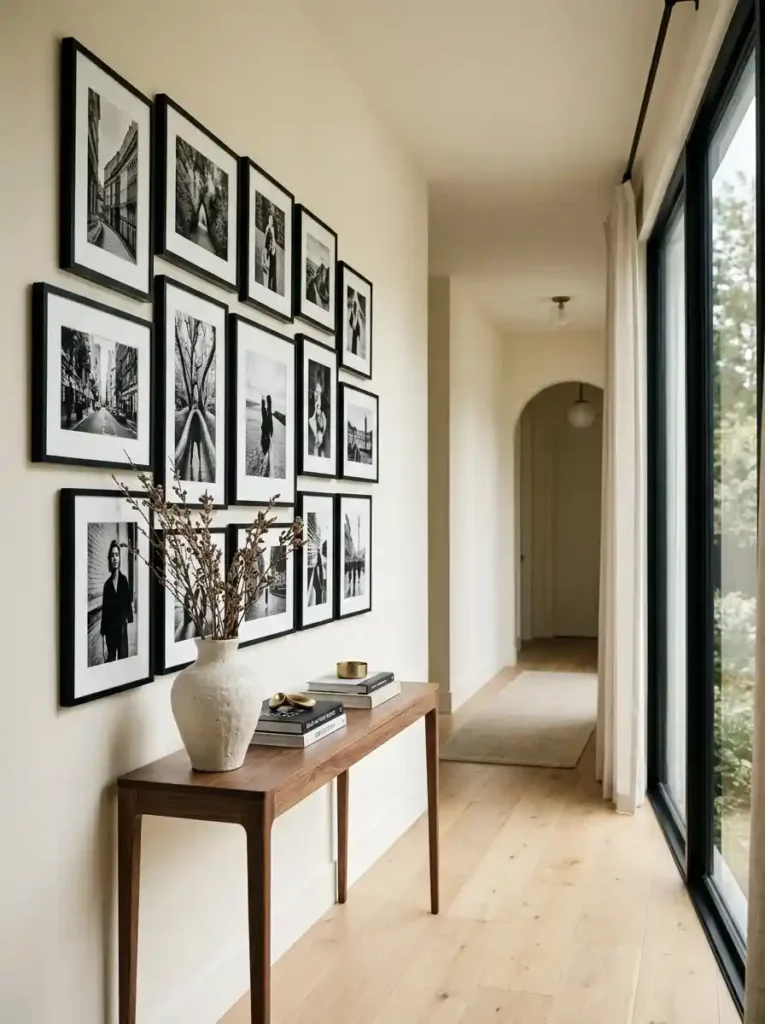
A black-and-white photo gallery creates a timeless display that works with almost any interior style. Family portraits, architectural photography, travel images, and candid moments can all become part of the collection. Use consistent black or dark wood frames to keep the arrangement visually cohesive. The monochromatic palette allows the photographs to tell the story without competing with colorful furniture or accessories. It’s a particularly elegant choice for hallways, bedrooms, and contemporary living spaces.
35. Curated Corner Art Wall
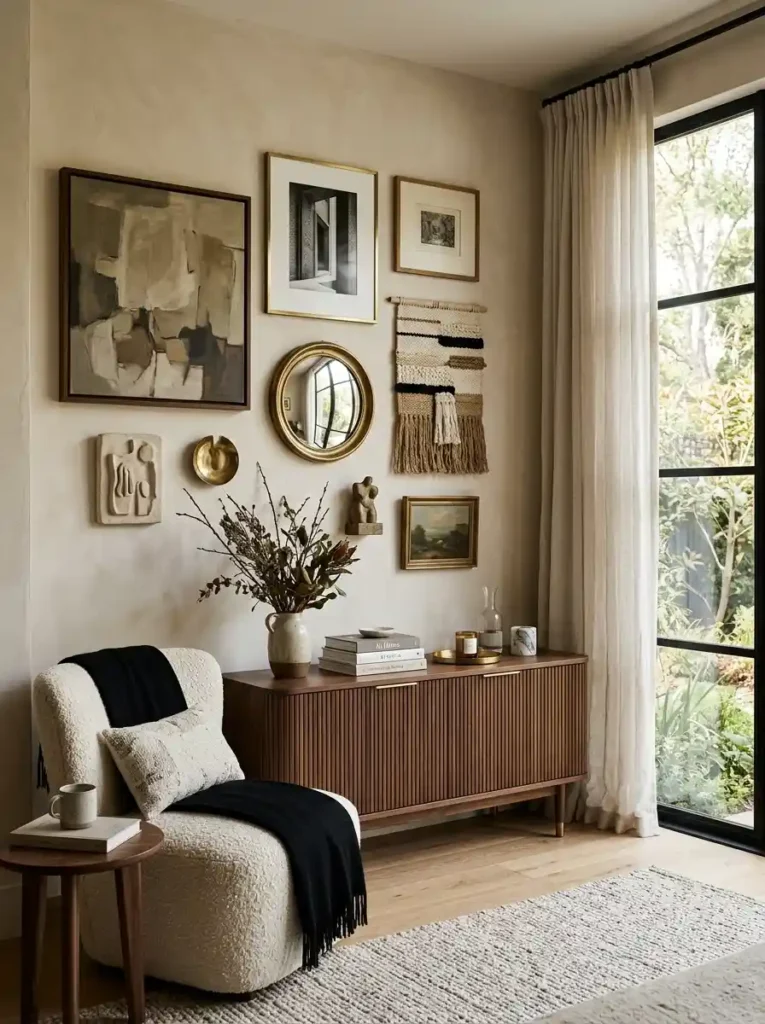
A curated corner art wall brings together your favorite pieces in a display that feels personal rather than overly styled. Combine artwork, photography, mirrors, textiles, and sculptural objects that genuinely reflect your taste. Instead of matching everything perfectly, create harmony through repeated colors, materials, or frame finishes. Start with the largest piece and build outward until the corner feels balanced. The finished result should look collected naturally over time while still feeling polished enough for a designer home.
Final Thoughts: Corner Wall Gallery Ideas
An empty corner doesn’t have to remain an overlooked part of your home. With the right combination of artwork, mirrors, photographs, natural textures, and decorative objects, even an awkward wall can become a beautiful focal point. The best gallery displays aren’t necessarily the most expensive they’re the ones that feel intentional, personal, and connected to the rest of the room. Start with one piece you genuinely love, build around it gradually, and don’t be afraid to mix textures and proportions. Save your favorite corner wall gallery ideas to Pinterest, experiment with your own arrangement, and turn that forgotten space into a display you’ll enjoy every day.