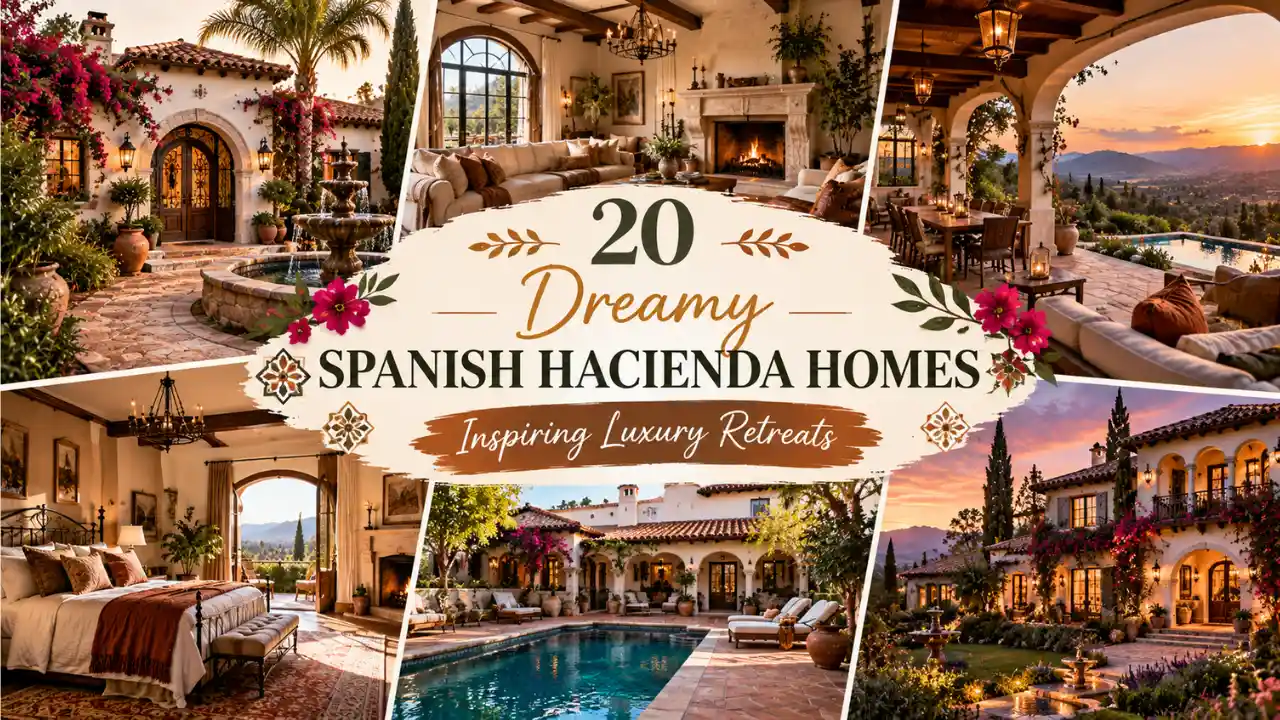
20 Dreamy Spanish Hacienda Homes: Inspiring Luxury Retreats
Spanish hacienda homes have a special kind of beauty that feels warm, romantic, and deeply connected to nature. Inspired by traditional Spanish architecture, these homes are known for their white stucco walls, terracotta roof tiles, graceful arches, rustic wooden doors, and peaceful courtyards. Every detail contributes to an atmosphere that feels welcoming rather than overly formal, making hacienda-style homes an enduring source of inspiration for homeowners who appreciate character and timeless design.
What makes this architectural style especially appealing is its ability to combine rustic charm with understated luxury. Weathered timber, natural stone, wrought-iron accents, handcrafted tiles, and earthy colors create a distinctive visual identity. Whether the exterior features a simple white facade or a grand courtyard surrounded by arched walkways, Spanish hacienda architecture celebrates natural materials and thoughtful craftsmanship.
Modern interpretations of hacienda homes bring fresh possibilities to this traditional aesthetic. Larger windows, contemporary landscaping, cleaner architectural lines, and updated outdoor living spaces can make these homes feel relevant for 2026 while preserving their historic character. From compact ranch-inspired properties to expansive estates, the style can be adapted to different settings, budgets, and personal preferences.
If you are planning a home renovation, designing a new property, or simply collecting architectural inspiration, these Spanish Hacienda Homes by The Home Vista offer plenty of beautiful details to explore. From charming courtyards and dramatic wooden entrances to elegant white exteriors and Mediterranean-inspired gardens, each idea shows how traditional craftsmanship can create a home with lasting appeal.
1. Classic White Spanish Hacienda Home
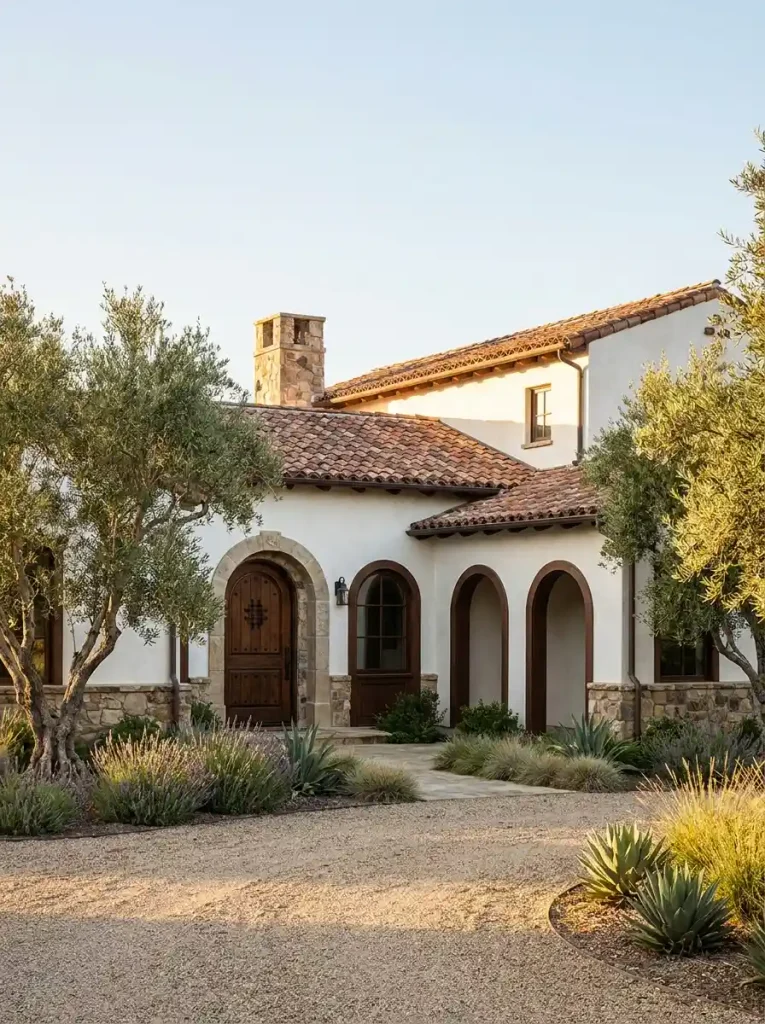
Styling Elements:
- Use warm white or creamy stucco for the exterior.
- Choose traditional terracotta roof tiles.
- Add a dark wooden front door.
- Incorporate rounded arches around the entrance.
- Plant olive trees or other Mediterranean-style greenery.
- Finish the approach with stone paving or gravel.
A classic white Spanish hacienda home captures the simplicity and warmth that make this architectural style so appealing. The combination of white stucco, terracotta roofing, and dark wood creates a striking contrast without relying on excessive decoration. Rounded arches soften the overall structure, while natural stone details add texture and a sense of permanence.
The landscaping is equally important in completing the design. Olive trees, low-growing shrubs, and gravel pathways create an organic setting that complements the architecture. Rather than filling every corner with plants, choose a few well-positioned features that frame the entrance and emphasize the home’s natural proportions.
2. Modern Spanish Hacienda with Luxury Details
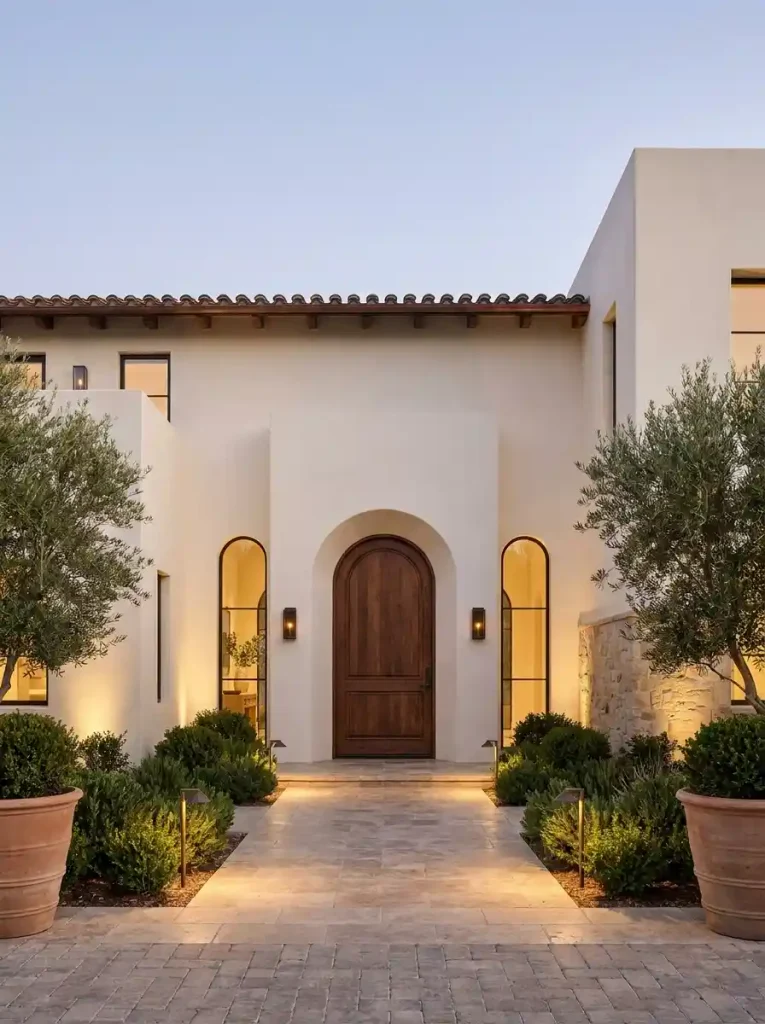
Styling Elements:
- Combine traditional stucco with cleaner architectural lines.
- Use oversized wooden entrance doors.
- Keep the window frames understated.
- Introduce bronze or dark metal fixtures.
- Choose natural stone for pathways and terraces.
- Use restrained landscaping with sculptural plants.
A modern Spanish hacienda combines the warmth of traditional architecture with a more streamlined appearance. Clean lines, carefully proportioned windows, and understated metalwork give the home a contemporary edge, while terracotta roofing and stucco walls maintain its Spanish identity. This approach is particularly attractive for homeowners who want a luxurious exterior without making the property feel overly ornate.
To keep the design cohesive, select a limited range of materials and repeat them across the facade. Warm wood, pale stucco, natural stone, and muted metal finishes create a balanced palette. Contemporary landscaping can reinforce the modern character, but the architecture should remain the main attraction.
3. Spanish Hacienda with a Charming Central Courtyard
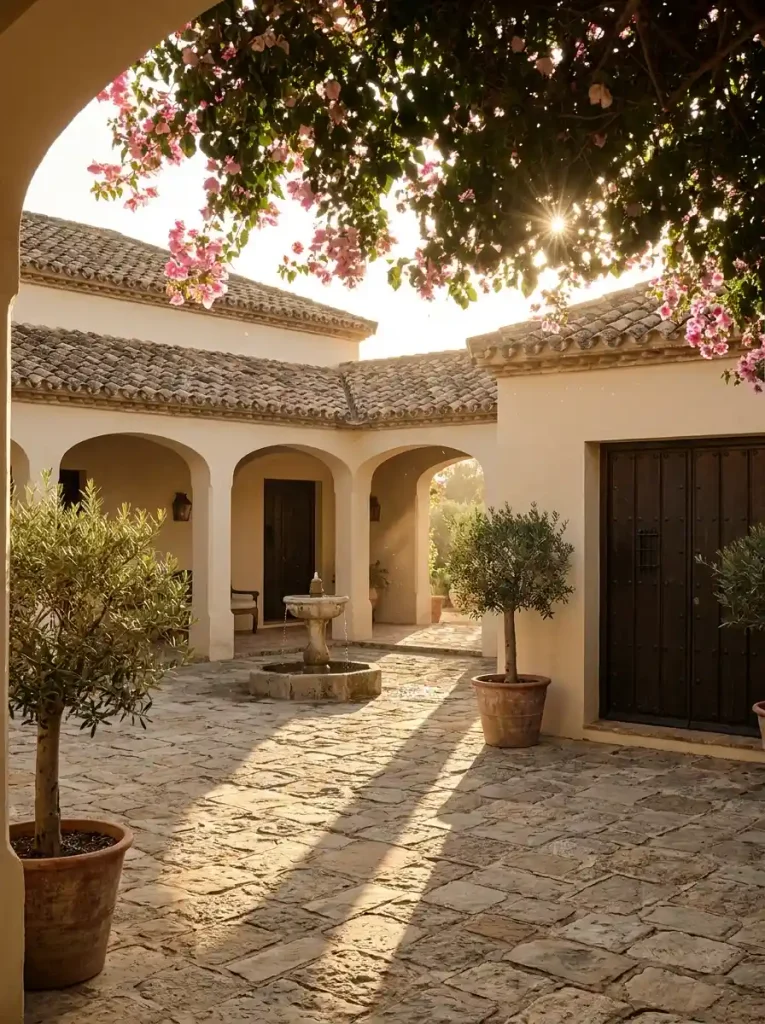
Styling Elements:
- Organize the courtyard around a central focal point.
- Use stone paving in warm earthy shades.
- Add a small fountain or sculptural planter.
- Frame walkways with rounded arches.
- Introduce climbing bougainvillea where suitable.
- Include shaded seating for outdoor relaxation.
The central courtyard is one of the most distinctive features of traditional hacienda architecture. It creates a private outdoor space that feels connected to the home while providing an inviting place to relax, entertain, or enjoy a quiet morning. Arched walkways establish architectural rhythm, and a fountain or large planter can anchor the composition.
Natural materials help the courtyard feel authentic and grounded. Stone paving, wooden doors, and terracotta pots develop character over time, while plants add color and movement. Even in a smaller courtyard, a few carefully selected elements can create a memorable outdoor setting without making the space feel crowded.
4. Rustic Spanish Hacienda with Natural Stone Walls
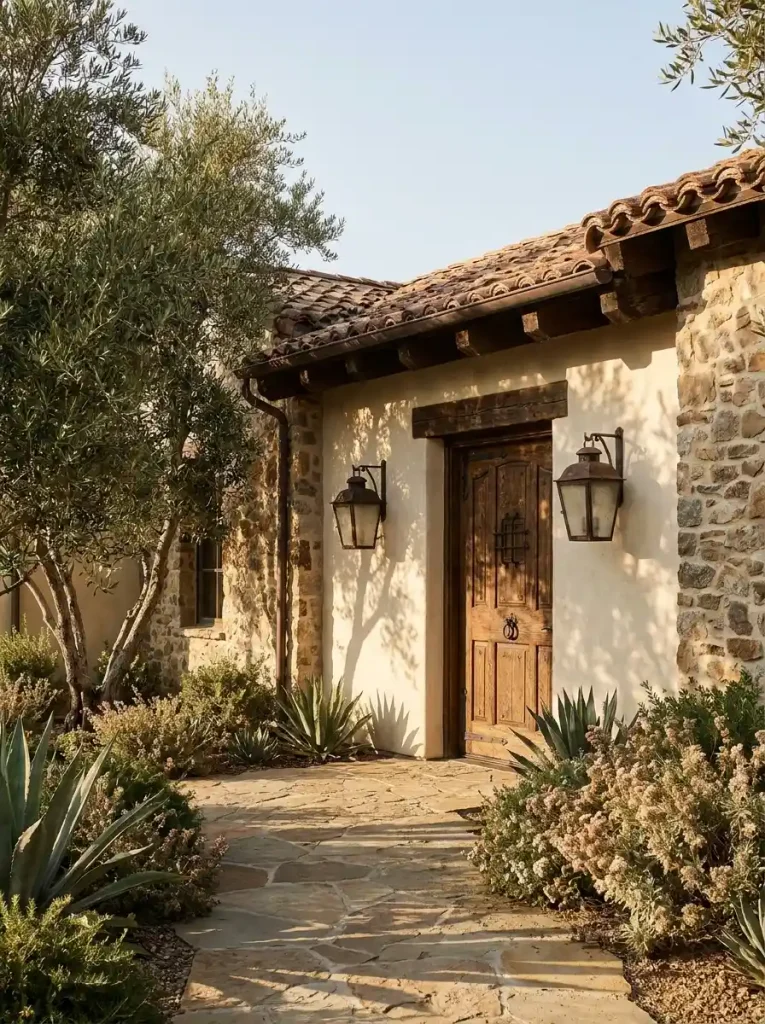
Styling Elements:
- Combine stucco with selected stone sections.
- Choose irregular natural stone with warm undertones.
- Add exposed timber beams where architecturally appropriate.
- Use a solid wooden front door.
- Install traditional-style iron lanterns.
- Keep the surrounding garden natural and restrained.
Natural stone gives a Spanish hacienda an earthy, established appearance. Its irregular surface creates contrast against smooth stucco, making the facade feel layered and handcrafted. Stone works particularly well around the entrance, on low exterior walls, or as a feature around a covered porch.
The key is to use stone with intention. Covering every surface can make the home look visually heavy, while selective placement preserves the balance between rustic texture and clean architectural lines. Timber beams and traditional lanterns reinforce the character, and simple landscaping allows the materials to remain the focus.
5. Elegant Hacienda with Arched Windows and Doorways
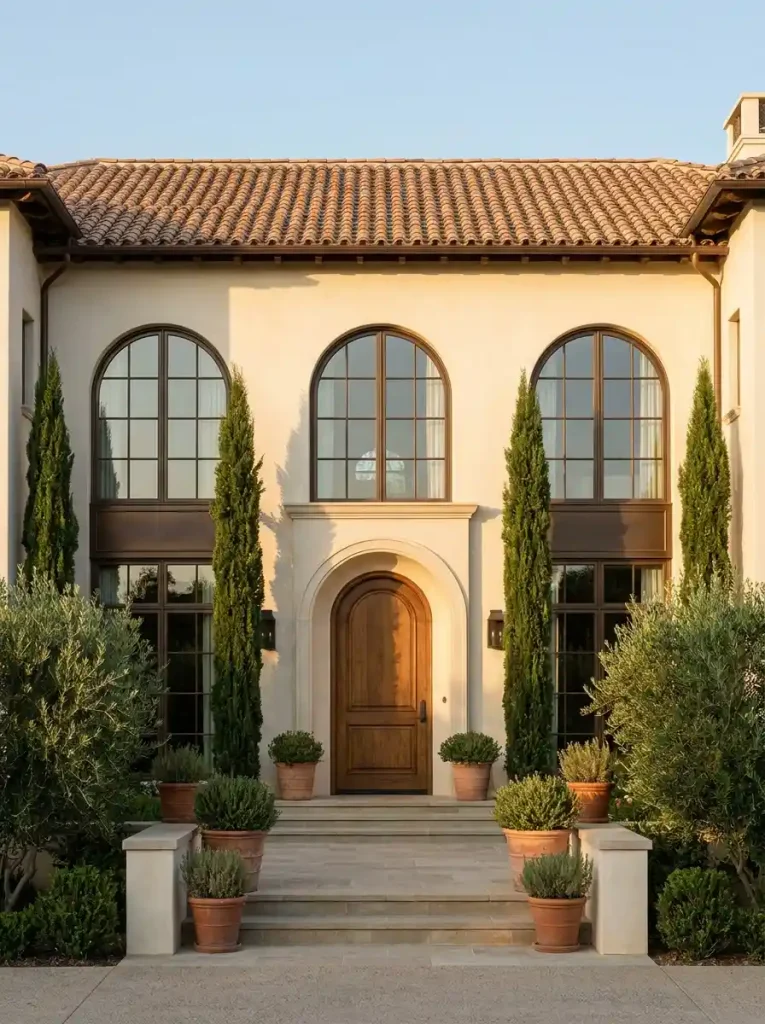
Styling Elements:
- Use arches to frame entrances and windows.
- Maintain consistent proportions across openings.
- Choose dark bronze or wood window frames.
- Highlight the main doorway with a deeper recess.
- Add stone trim where it suits the architecture.
- Frame the facade with structured Mediterranean planting.
Arched openings give Spanish hacienda homes their recognizable architectural rhythm. Their curved shapes soften the facade and create a sense of movement, especially when repeated across windows, doorways, and covered outdoor passages. Tall arched windows can also make the exterior feel more substantial without requiring elaborate ornamentation.
For the most cohesive result, keep the arches related in shape and proportion. A grand entrance can serve as the primary focal point, while smaller openings reinforce the overall design. Dark frames and wooden doors provide contrast against pale stucco, allowing the architectural details to stand out naturally.
6. Spanish Hacienda with a Terracotta Roof and Warm Stucco
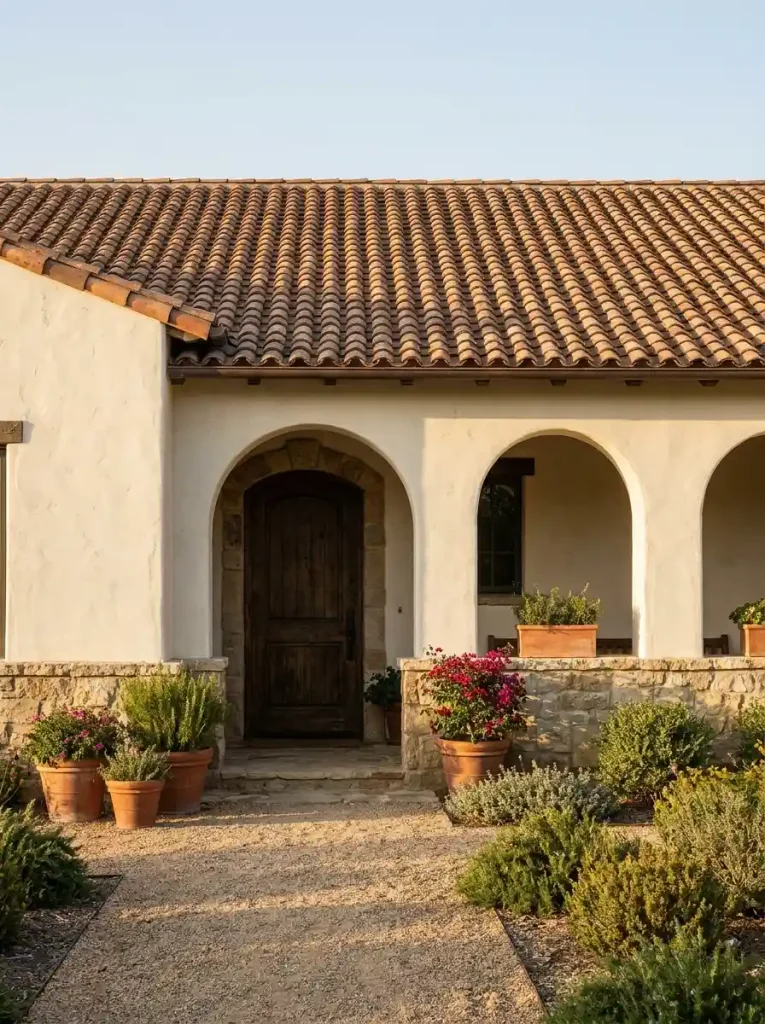
Styling Elements:
- Choose authentic-looking barrel roof tiles.
- Pair terracotta with warm ivory stucco.
- Add a wooden door with visible grain.
- Introduce stone at the base of the facade.
- Use terracotta planters around the entrance.
- Keep the roofline visually balanced with the walls.
Terracotta roofing is one of the strongest visual signatures of Spanish hacienda architecture. Its warm reddish-brown color contrasts beautifully with creamy stucco and gives the home a strong connection to Mediterranean building traditions. The variation between individual tiles adds texture that flat, uniform roofing materials cannot fully reproduce.
The exterior colors should complement the roof rather than compete with it. Warm ivory, sand, and pale beige create a natural backdrop, while dark wood provides definition around the entrance. A few terracotta planters can repeat the roof color at ground level, helping the entire facade feel visually connected.
7. Dreamy Hacienda with Bougainvillea and Mediterranean Gardens
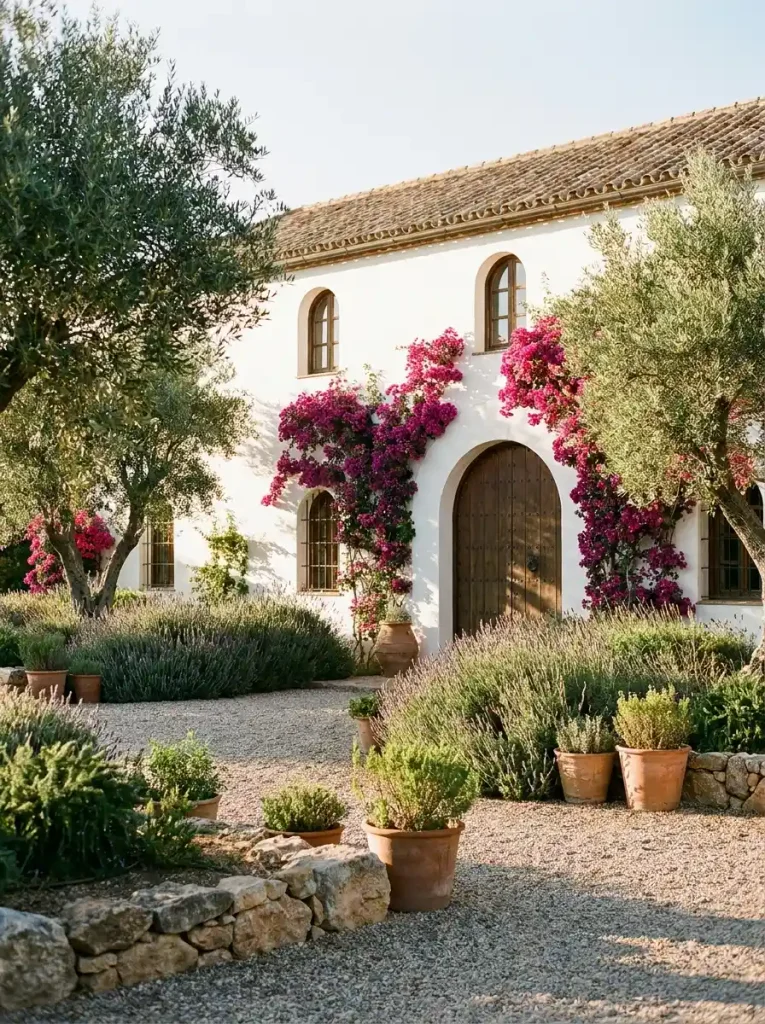
Styling Elements:
- Plant climbing bougainvillea where climate permits.
- Use olive trees or other regionally suitable trees.
- Combine gravel paths with stone edging.
- Add terracotta pots in different sizes.
- Choose drought-tolerant plants suited to the local climate.
- Keep clear sightlines toward the front entrance.
Mediterranean-inspired landscaping can make a Spanish hacienda feel as inviting outdoors as it does inside. Flowering vines introduce seasonal color against pale walls, while olive trees and structured shrubs provide greenery and architectural balance. Gravel and stone pathways reinforce the natural character of the property.
Plant selection should suit the local climate and water availability. In warmer, dry regions, drought-tolerant species can help preserve the intended look with less maintenance. Where bougainvillea or olive trees are not suitable, choose locally adapted plants with similar forms or colors to achieve a harmonious result.
8. Spanish Hacienda with a Grand Wooden Entrance
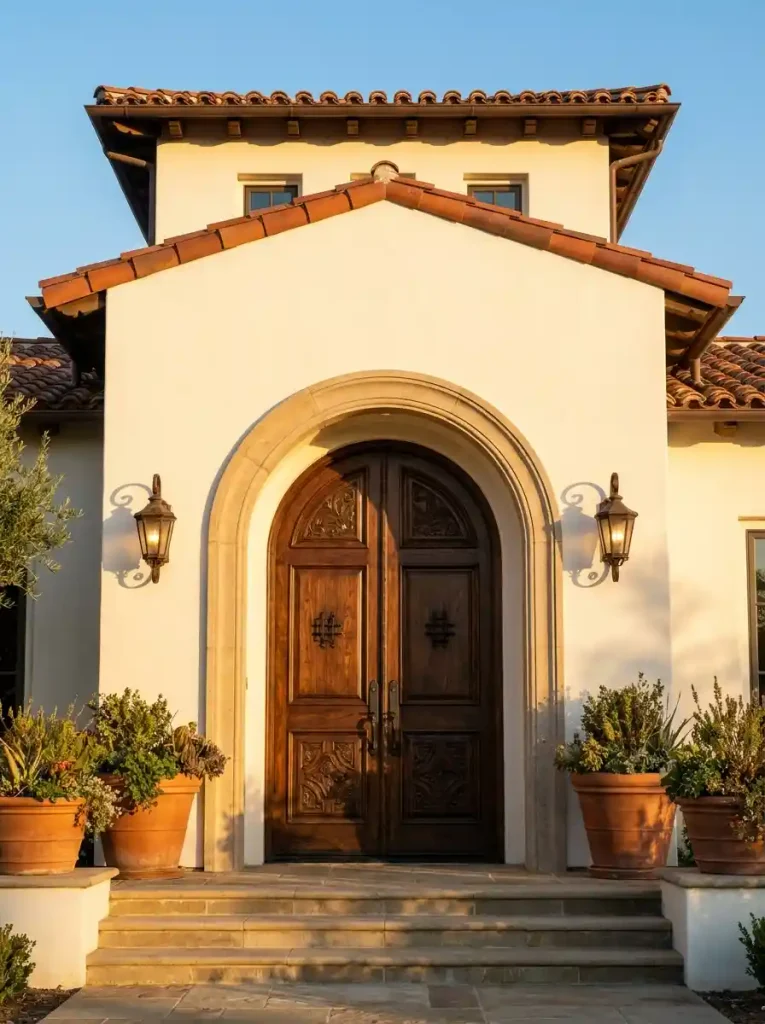
Styling Elements:
- Make the front door the visual centerpiece.
- Choose a solid timber door with visible grain.
- Use dark iron or bronze hardware.
- Frame the entrance with a rounded arch.
- Add stone steps or a simple threshold.
- Place matching planters on either side where space allows.
A grand wooden entrance gives a hacienda home a sense of character before visitors even step inside. Dark walnut or weathered oak creates a striking contrast against white stucco, while the deep arch adds shadow and dimension. Traditional hardware reinforces the handcrafted quality of the design.
Keep the surrounding details simple so the doorway remains the main attraction. Stone steps, two terracotta planters, and carefully positioned lanterns can create a balanced entrance without making it feel overly decorated. The wood finish should also complement any exposed beams or other timber elements visible across the exterior.
9. Modern Hacienda with a Flat and Pitched Roof Combination
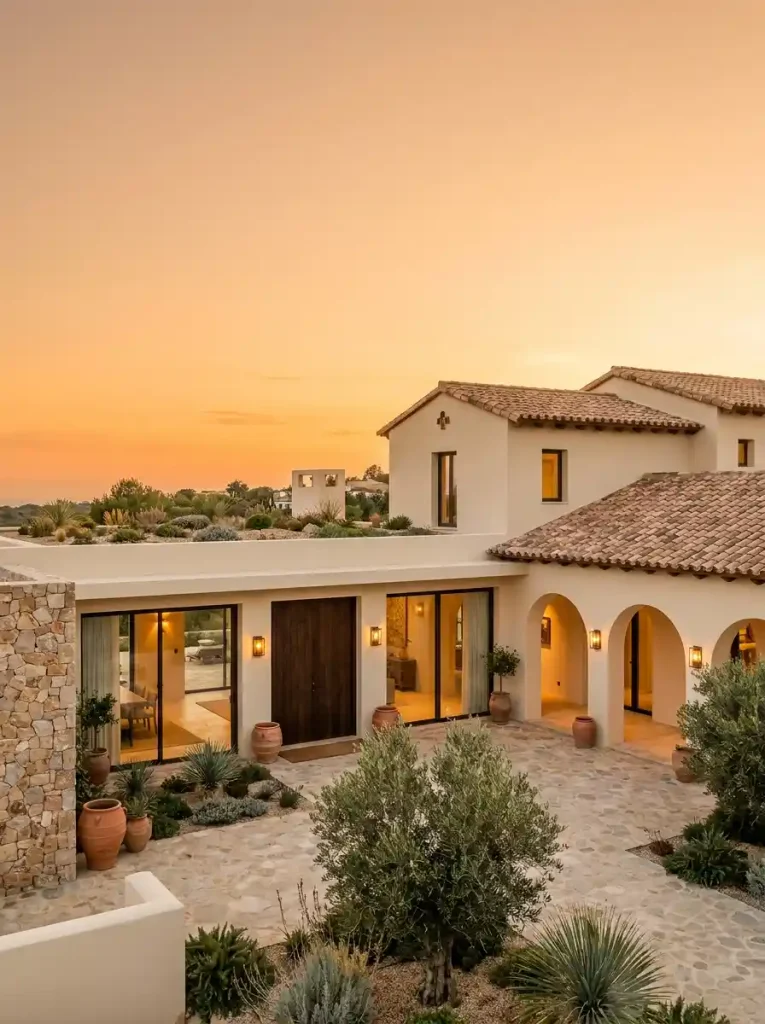
Styling Elements:
- Combine roof forms only where the architecture supports them.
- Maintain a consistent exterior color palette.
- Use terracotta tiles on the traditional roof sections.
- Add modern glazing in carefully selected areas.
- Keep the main entrance visually prominent.
- Repeat stone or timber finishes across the facade.
A modern hacienda can blend traditional and contemporary forms without losing its distinctive identity. Pitched terracotta roofs preserve the familiar Spanish silhouette, while carefully designed flat-roof sections can introduce a cleaner profile. This combination may also help define different areas of the home, such as a courtyard wing or an outdoor living zone.
The design works best when the materials tie the different roof forms together. Cream stucco, natural stone, and timber can create continuity across the facade. Large glass doors may improve the connection between indoor and outdoor spaces, while arched details maintain the warmth associated with hacienda architecture.
10. Spanish Hacienda with a Peaceful Covered Patio
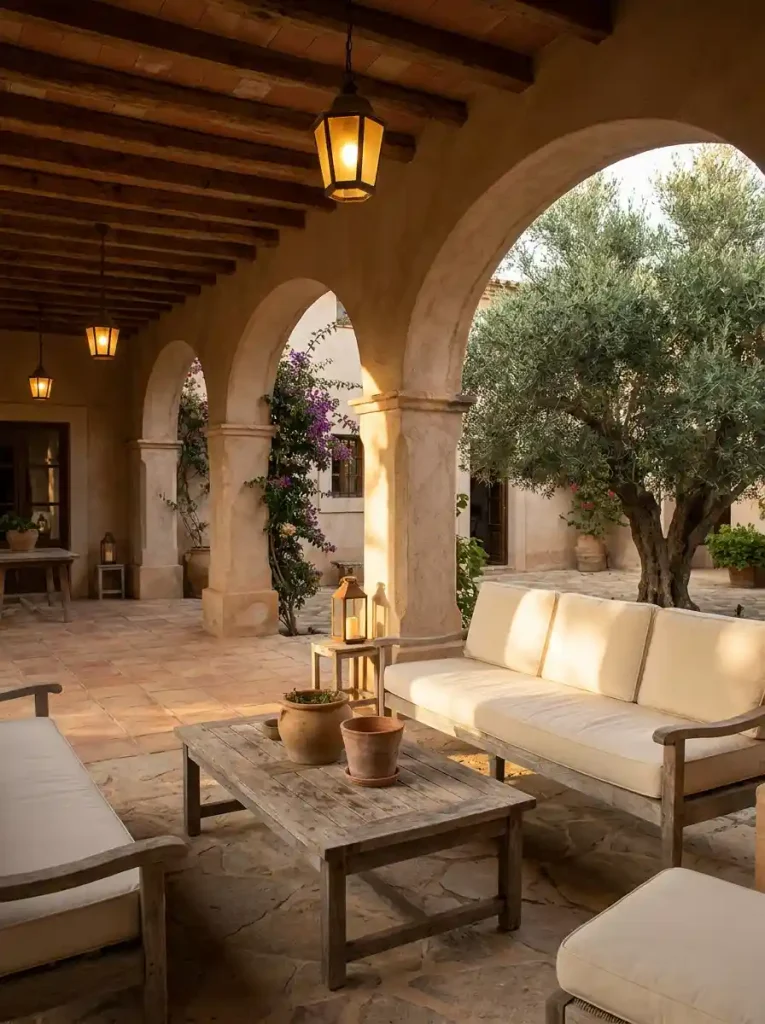
Styling Elements:
- Use arches or substantial columns to frame the patio.
- Add exposed timber ceiling beams where appropriate.
- Choose outdoor furniture with natural textures.
- Use stone or terracotta flooring.
- Include lanterns or warm outdoor lighting.
- Add weather-appropriate cushions and planters.
A covered patio extends the living area outdoors while providing shade and shelter. Thick stucco columns, timber beams, and terracotta roofing create an architectural connection with the rest of the hacienda, making the patio feel like an intentional part of the home rather than an added structure.
Comfortable furniture turns this area into a place for dining, relaxing, or entertaining. Choose materials designed for outdoor conditions and keep the color palette consistent with the exterior. A few lanterns and terracotta pots can complete the space, creating an inviting atmosphere throughout the day and into the evening.
11. Spanish Hacienda with a Beautiful Courtyard Fountain
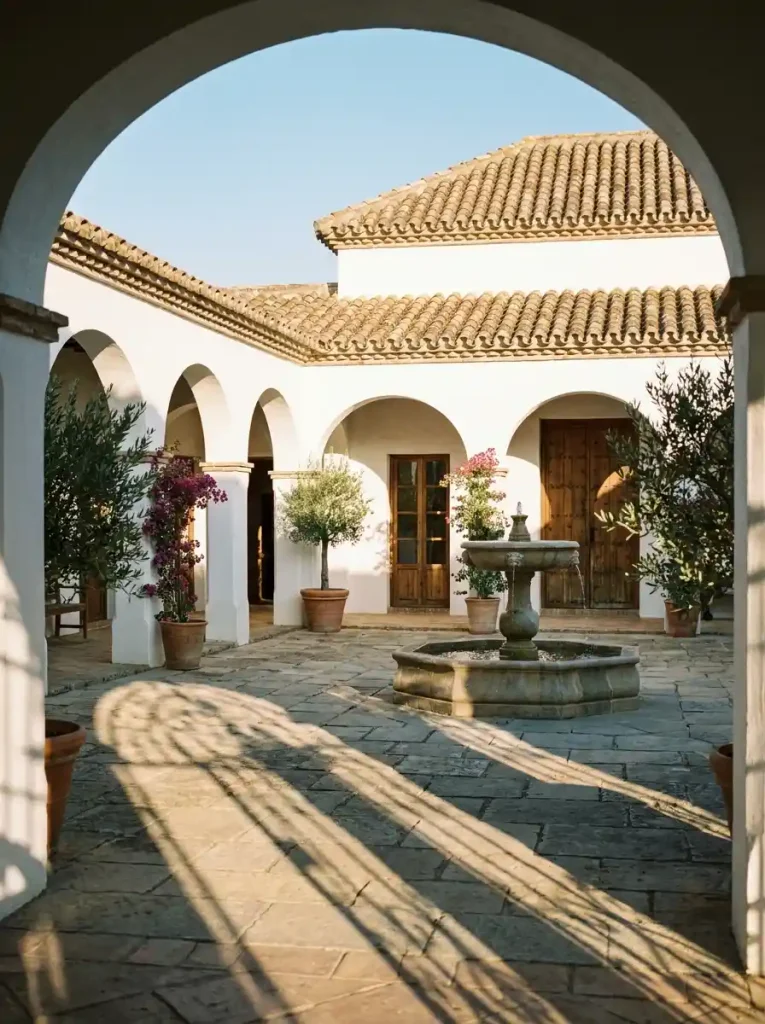
Styling Elements:
- Place the fountain where it can be seen from key rooms.
- Choose stone or a traditional-looking fountain finish.
- Surround it with simple paving.
- Use matching terracotta planters around the courtyard.
- Keep plant heights varied but controlled.
- Ensure drainage and water maintenance are planned.
A courtyard fountain can provide a memorable focal point in a Spanish hacienda. The sound and movement of water create a tranquil atmosphere, while the fountain’s shape introduces another layer of traditional craftsmanship. When positioned within a courtyard surrounded by arches, it creates a strong visual center that connects the architecture and garden.
The fountain does not need to be elaborate to make an impact. A simple stone basin can feel authentic when paired with natural paving and restrained planting. Practical considerations such as drainage, maintenance, and water use should be addressed early, ensuring the courtyard remains attractive and functional over time.
12. Small Spanish Hacienda with Charming Details
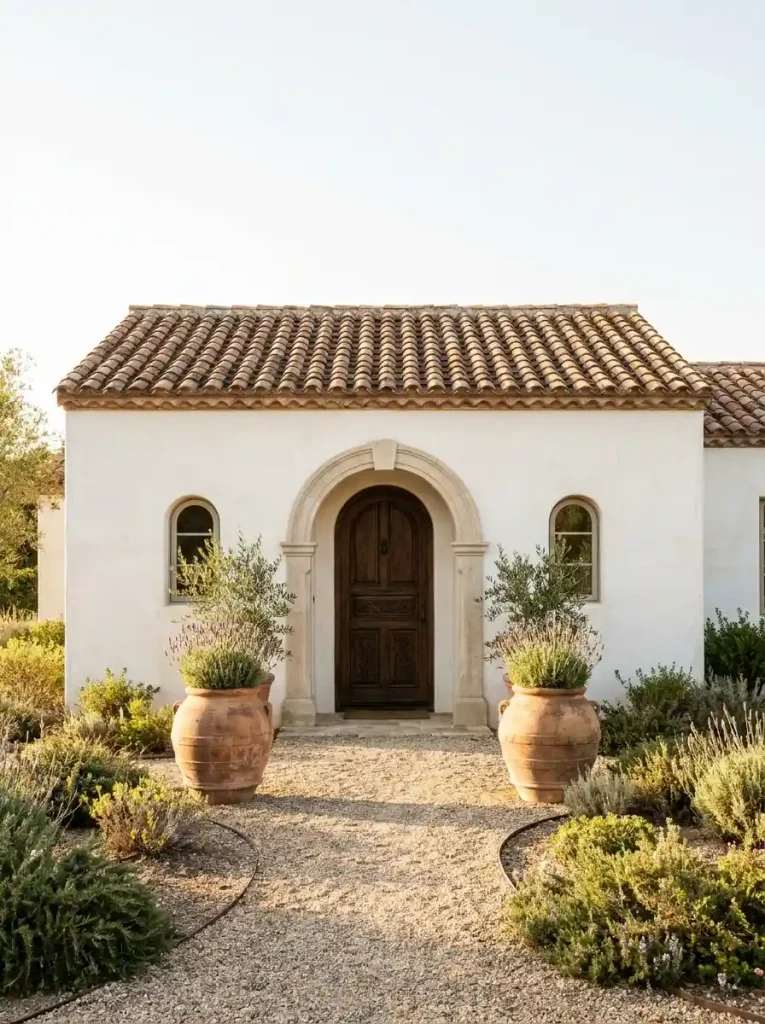
Styling Elements:
- Keep the facade simple and well-proportioned.
- Use one distinctive arched entrance.
- Choose a compact terracotta roof design.
- Add a dark wooden door for contrast.
- Use small planters instead of crowded garden beds.
- Keep the pathway clear and welcoming.
A smaller Spanish hacienda can capture the same warmth as a grand estate through thoughtful proportions and authentic materials. White stucco, terracotta roofing, and a wooden door establish the architectural identity without requiring a large footprint. A carefully placed arch or a pair of small windows can provide enough detail to make the facade memorable.
Avoid adding too many decorative features to a compact exterior. A simple pathway, a few terracotta planters, and low planting can frame the entrance while preserving open space. The emphasis should be on the quality and balance of the materials rather than the size of the property.
13. Luxury Spanish Hacienda with a Resort-Inspired Pool
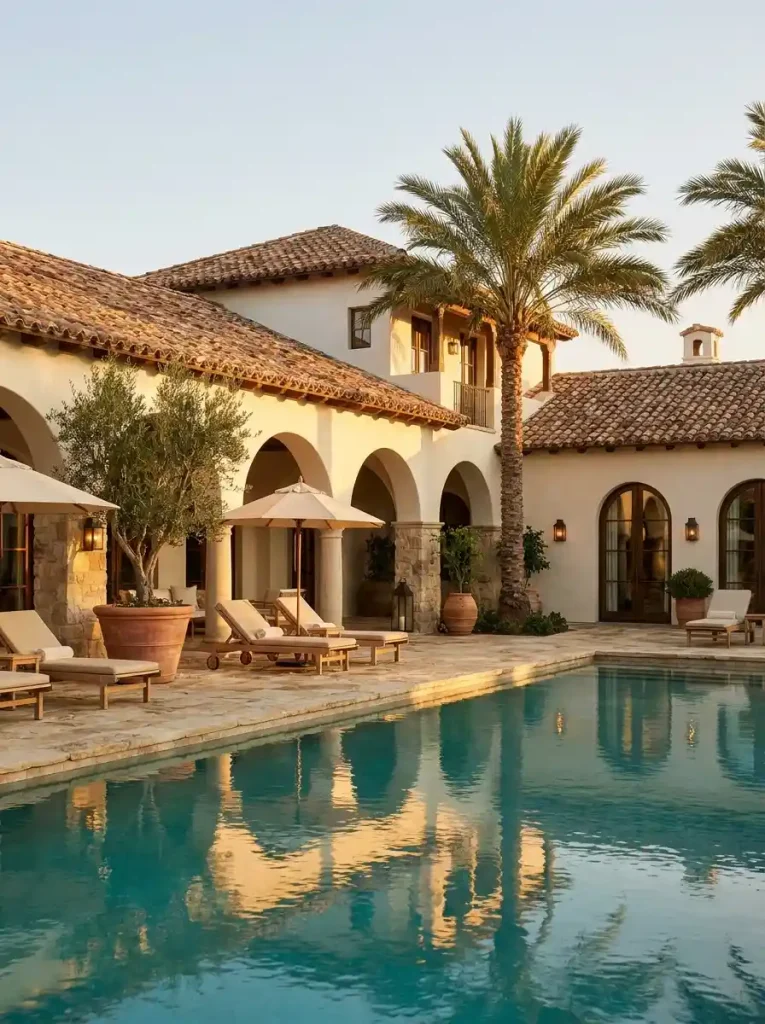
Styling Elements:
- Position the pool to complement the architecture.
- Use natural stone or textured paving around the water.
- Repeat the home’s stucco and terracotta colors.
- Include shaded seating near the pool.
- Choose outdoor furniture with simple silhouettes.
- Add landscape lighting for evening use.
A pool can transform a Spanish hacienda estate into a private retreat, especially when its shape and surrounding materials complement the architecture. Pale stone paving, terracotta roofing, and arched loggias create a cohesive Mediterranean-inspired setting. The contrast between turquoise water and warm exterior colors adds visual appeal without requiring excessive decoration.
The surrounding space should be designed for everyday use as well as appearance. Shaded seating, comfortable loungers, and practical pathways make the pool area more inviting. Choose plants suited to the climate and consider slip-resistant paving, drainage, and appropriate pool safety measures when planning the design.
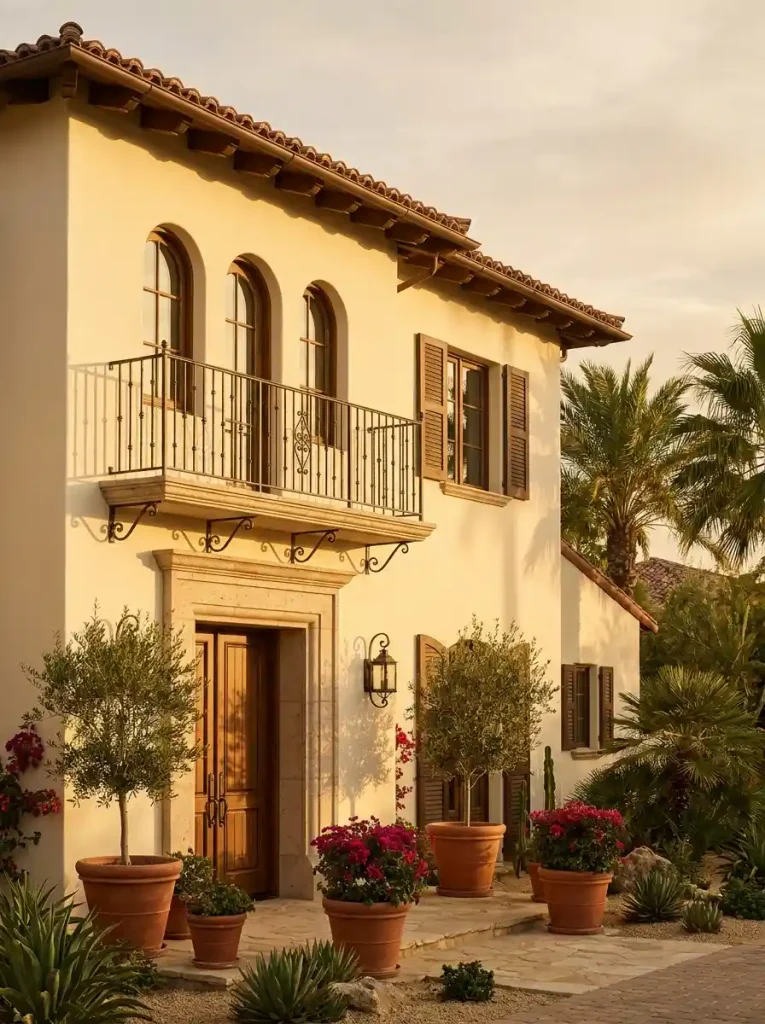
14. Spanish Hacienda with Wrought-Iron Balcony Details
Styling Elements:
- Use wrought iron for balcony railings.
- Pair ironwork with warm stucco walls.
- Choose coordinated window and door finishes.
- Keep balcony decorations minimal.
- Add terracotta planters where appropriate.
- Use the balcony to reinforce the facade’s proportions.
Wrought-iron details can introduce craftsmanship and visual contrast to a Spanish hacienda, especially on a two-story facade. Balcony railings with simple curved patterns complement arched windows and terracotta roofing, giving the exterior a distinctive architectural character. Dark ironwork also stands out beautifully against pale stucco.
The best designs balance decorative detail with simplicity. Let the railing serve as a focal point instead of covering the facade with numerous competing elements. Coordinated wooden shutters, restrained planters, and warm exterior lighting can help the balcony feel integrated with the rest of the architecture.
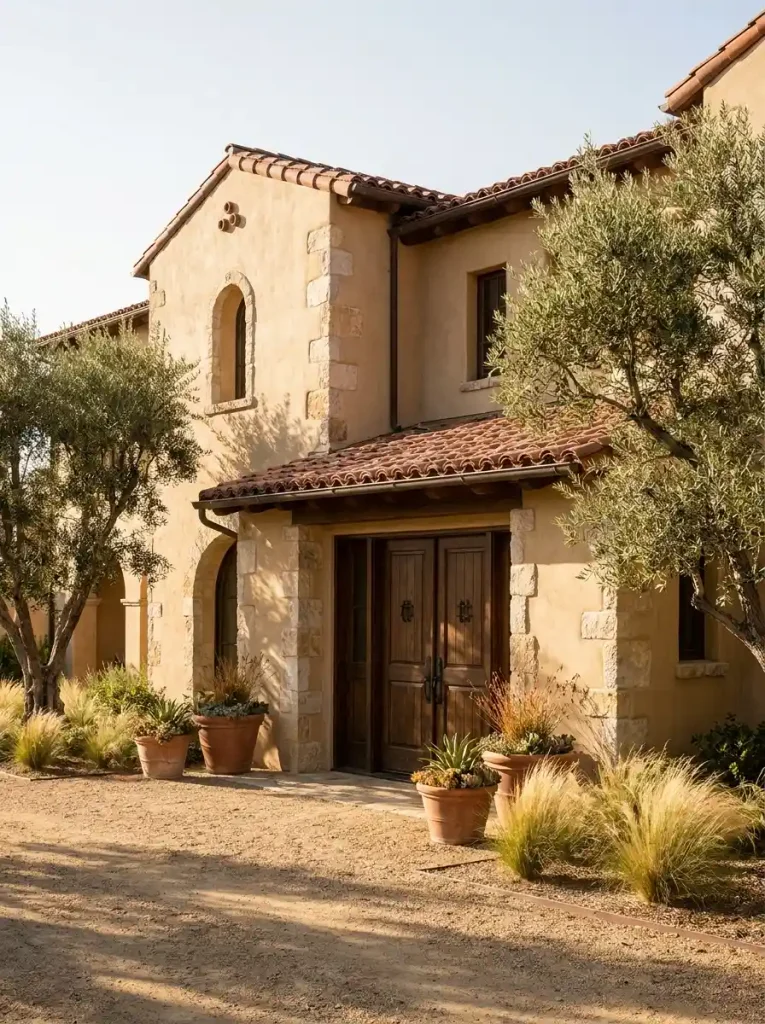
15. Earthy Hacienda with Sand-Colored Stucco
Styling Elements:
- Choose sand or warm beige stucco.
- Pair the walls with terracotta roof tiles.
- Introduce dark wood for the entrance.
- Use limestone or pale stone accents.
- Add drought-tolerant planting suited to the climate.
- Keep the garden palette muted and natural.
Sand-colored stucco offers a warmer alternative to pure white and can give a hacienda a softer, more earthy appearance. The shade works naturally with terracotta roofing and pale stone, creating a palette that feels grounded in the landscape. Dark timber adds definition, while muted greenery keeps the facade from appearing too monochromatic.
To achieve a cohesive result, test exterior colors in natural light before making a final decision. Stucco can look very different under direct sun and in shaded areas. Choosing a warm undertone that complements the roof and surrounding landscape helps the entire property feel harmonious.
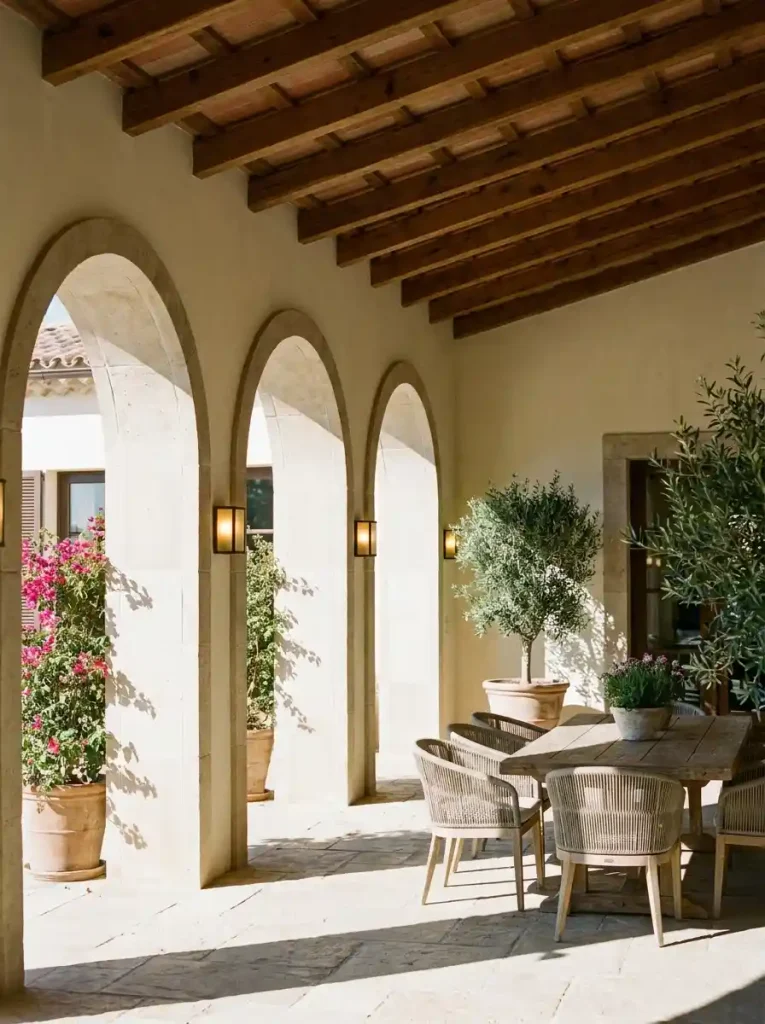
16. Spanish Hacienda with a Dramatic Arched Loggia
Styling Elements:
- Create a repeated series of proportionate arches.
- Use natural stone for the loggia flooring.
- Introduce timber beams across the ceiling.
- Add a dining or lounge arrangement.
- Use simple lanterns or wall-mounted lighting.
- Keep the outdoor decor consistent with the architecture.
A loggia adds architectural depth by creating a sheltered transition between indoor rooms and the garden. Its repeating arches produce rhythm and beautiful shadows, while the covered roof makes the outdoor area useful in different weather conditions. In a Spanish hacienda, the loggia can become one of the property’s defining features.
Furniture should be selected according to how the space will be used. A dining table works well for entertaining, while lounge seating creates a relaxed retreat. Natural materials and understated accessories allow the arches and ceiling structure to remain the main attraction.
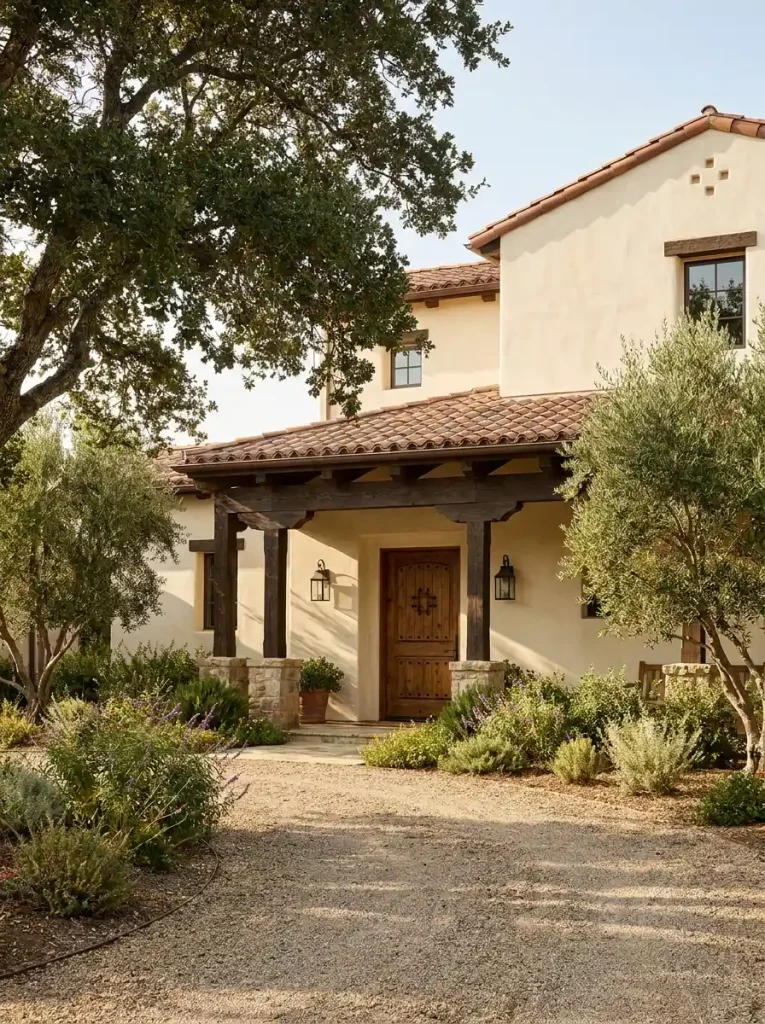
17. Spanish Hacienda with a Rustic Farmhouse Influence
Styling Elements:
- Use traditional Spanish roof and stucco finishes.
- Add exposed timber details where appropriate.
- Choose a substantial wooden entrance door.
- Introduce simple iron lighting fixtures.
- Use natural stone sparingly for texture.
- Keep the landscape relaxed rather than overly formal.
A subtle farmhouse influence can make a Spanish hacienda feel relaxed and approachable. Exposed timber, rustic stone, and simple iron fixtures introduce a sense of craftsmanship while preserving the traditional Spanish roofline and arches. The key is to combine influences carefully rather than mixing unrelated architectural features.
Choose a consistent material palette that feels natural and age-friendly. Timber and stone can provide rustic character, while smooth stucco keeps the exterior visually balanced. Simple landscaping and an uncluttered entrance reinforce the welcoming quality of the design.
18. Spanish Hacienda with a Beautiful Outdoor Dining Area
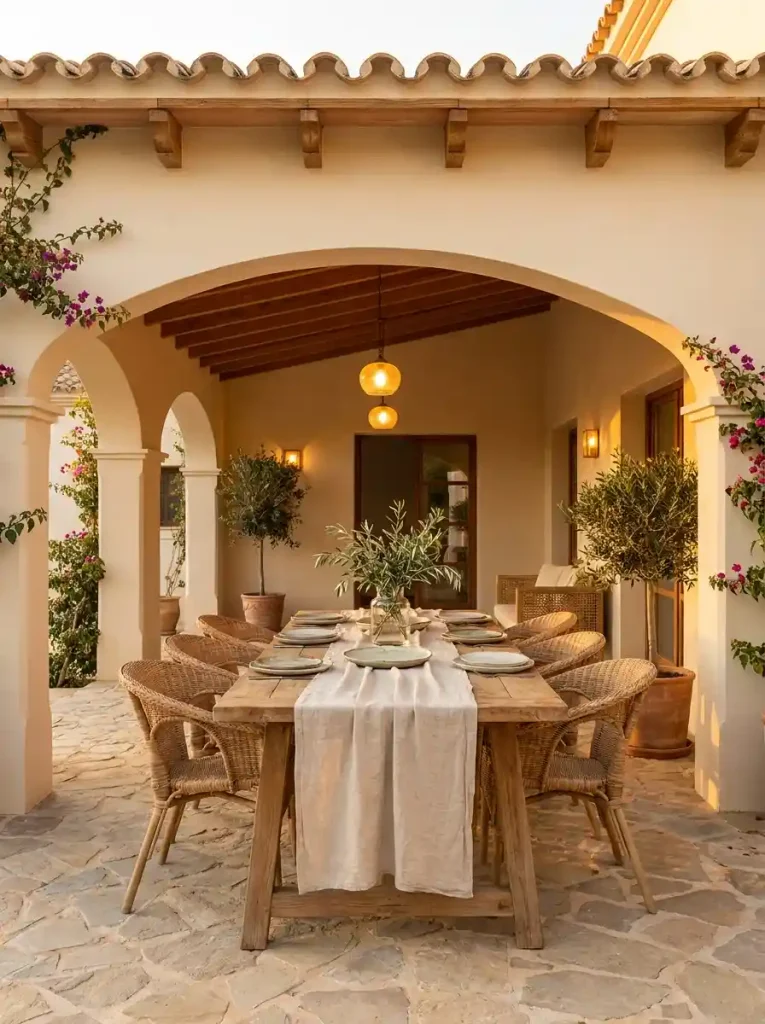
Styling Elements:
- Place the dining area near a kitchen or covered patio.
- Choose a sturdy wooden table.
- Use comfortable outdoor dining chairs.
- Add natural linen and handmade ceramics.
- Provide shade through a roofed patio or pergola.
- Install suitable lighting for evening gatherings.
Outdoor dining is a natural extension of hacienda living because the architecture often emphasizes the relationship between the home and its courtyard or garden. A wooden table beneath an arched patio creates a relaxed setting for family meals and gatherings, while stone flooring and terracotta roofing tie the space to the rest of the property.
Practical details help the dining area work throughout the season. Choose furniture designed for outdoor exposure, provide shade, and ensure there is enough room to move chairs comfortably. A simple centerpiece and warm evening lighting can make the space feel special without requiring elaborate decoration.
19. Spanish Hacienda with Minimalist Mediterranean Landscaping
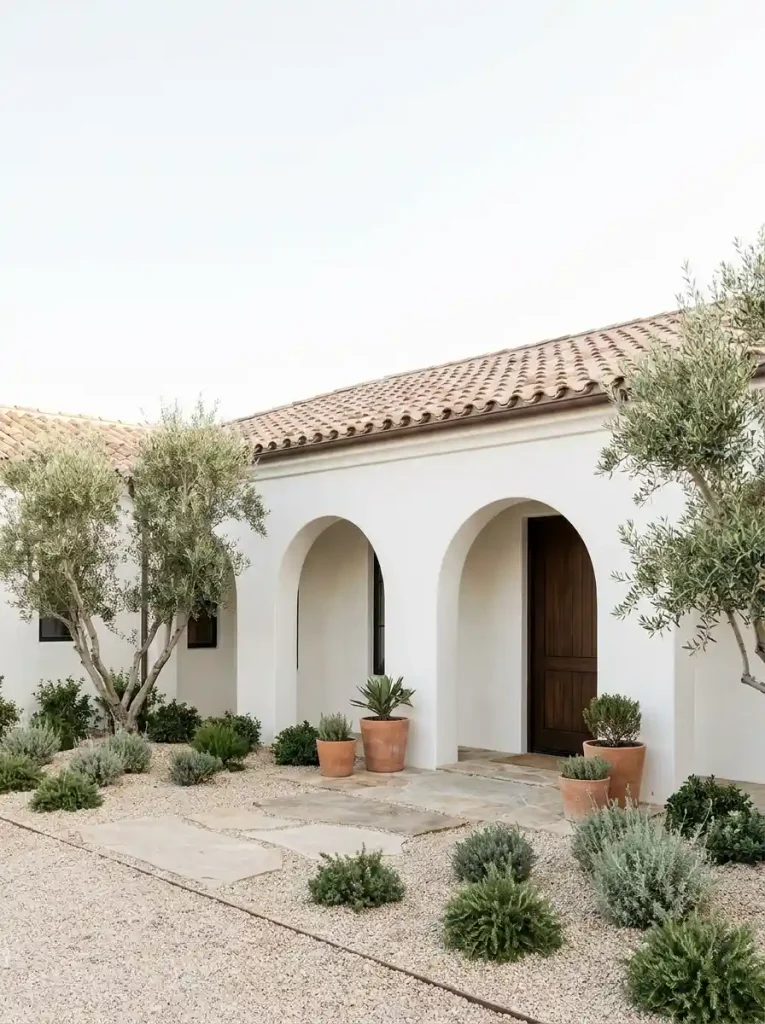
Styling Elements:
- Use a limited selection of plant species.
- Place olive trees or sculptural shrubs strategically.
- Combine gravel with large stone pavers.
- Leave open areas around the entrance.
- Repeat terracotta in selected planters.
- Choose plants suited to the local climate and water needs.
Minimalist Mediterranean landscaping allows the architecture to remain the central focus. Instead of filling the garden with many different plants, use a restrained selection of sculptural trees, low shrubs, and natural ground materials. The clean composition works especially well with white stucco and terracotta roofing because the textures already provide substantial visual interest.
Spacing is essential to this approach. Allow the plants room to develop, maintain clear pathways, and avoid blocking important architectural features. The result is a landscape that feels intentional and calm while reducing the need for excessive decorative elements.
20. Dreamy Spanish Hacienda with Warm Evening Lighting
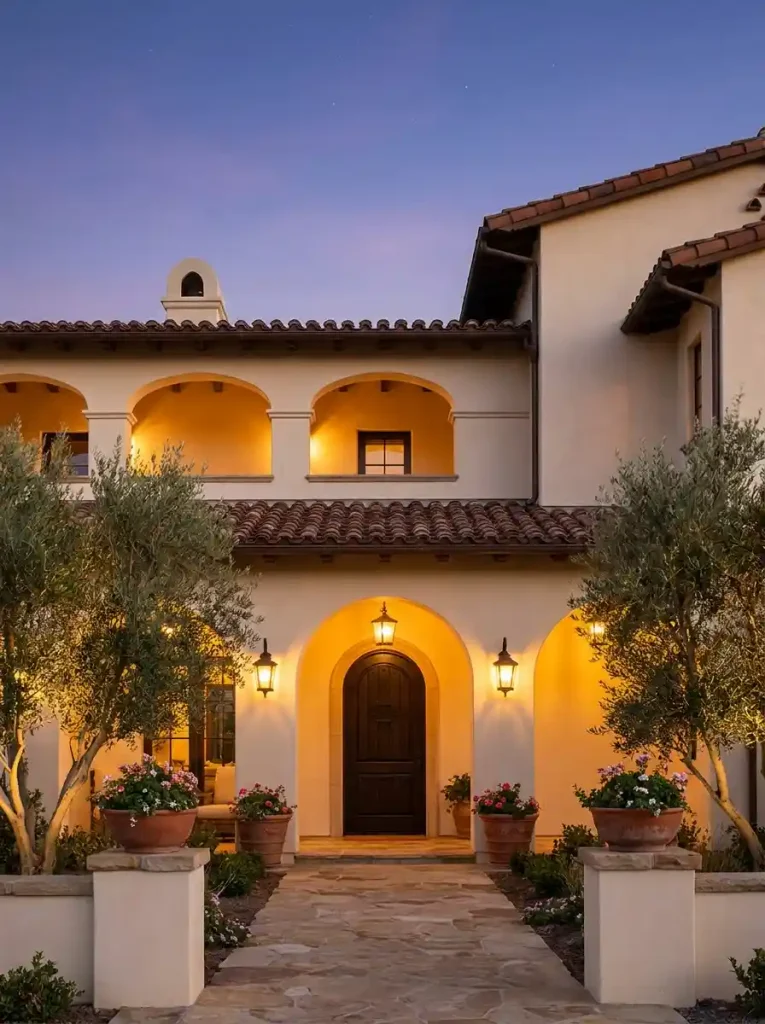
Styling Elements:
- Highlight the main entrance with warm lighting.
- Illuminate arches to reveal their depth.
- Use low-level lights along pathways.
- Add subtle landscape lighting around trees.
- Choose fixtures that complement the architecture.
- Avoid excessive brightness or harsh glare.
Evening lighting can reveal a completely different side of a Spanish hacienda. Warm illumination emphasizes the depth of arches, the texture of stucco, and the natural variation in terracotta roofing. When combined with a darkening sky, these details create a welcoming atmosphere that feels both luxurious and intimate.
A successful lighting plan highlights the home’s strongest architectural features instead of illuminating every surface equally. Wall lanterns can frame the entrance, while discreet pathway lights improve visibility. Carefully positioned landscape lighting adds depth to the garden, helping the exterior feel connected and inviting after sunset.
Final Thoughts: Spanish Hacienda Homes
Spanish hacienda homes remain appealing because they combine architectural character, natural materials, and a welcoming relationship between indoor and outdoor spaces. From white stucco facades and terracotta roofs to graceful arches, rustic wooden doors, and peaceful courtyards, these details create a timeless look that can adapt beautifully to modern living.
You do not need a grand estate to bring this style into your own home. Start with a warm exterior palette, a distinctive entrance, natural stone accents, or Mediterranean-inspired landscaping. If you are planning a larger project, consider how courtyards, covered patios, and arched walkways can improve both the appearance and everyday functionality of the property.
The most successful hacienda designs balance tradition with personal taste. By choosing authentic-looking materials, keeping the architectural details cohesive, and designing outdoor spaces with care, you can create a home that feels warm, distinctive, and enduringly beautiful. Whether your inspiration is rustic, modern, or luxurious, Spanish hacienda architecture offers countless ways to create a property with genuine character.