21 Remarkable Brooklyn Brownstone Townhomes to Discover
Brooklyn brownstone townhomes have a distinctive architectural character that makes them instantly recognizable. Their tall proportions, classic facades, detailed stonework, generous windows, and welcoming stoops create a strong connection between historic architecture and everyday city living. Even when these homes are updated, their original character can remain one of the most memorable parts of the design.
What makes a Brooklyn brownstone especially interesting is the way traditional details can work alongside refreshed interiors and carefully considered exterior updates. Deep brown and warm stone tones can be paired with black-framed windows, elegant lighting, natural greenery, and understated entry details to create a home that feels sophisticated without losing its historic identity.
These Brooklyn Brownstone Town homes by The Home Vista offer plenty of inspiration for anyone drawn to historic city architecture, timeless curb appeal, and character-rich residential design. Whether you prefer traditional details or a more refreshed interpretation, these ideas show how a brownstone town home can make a memorable impression while still feeling warm, livable, and connected to its surroundings.
1. Classic Brownstone Facade With Refined Details
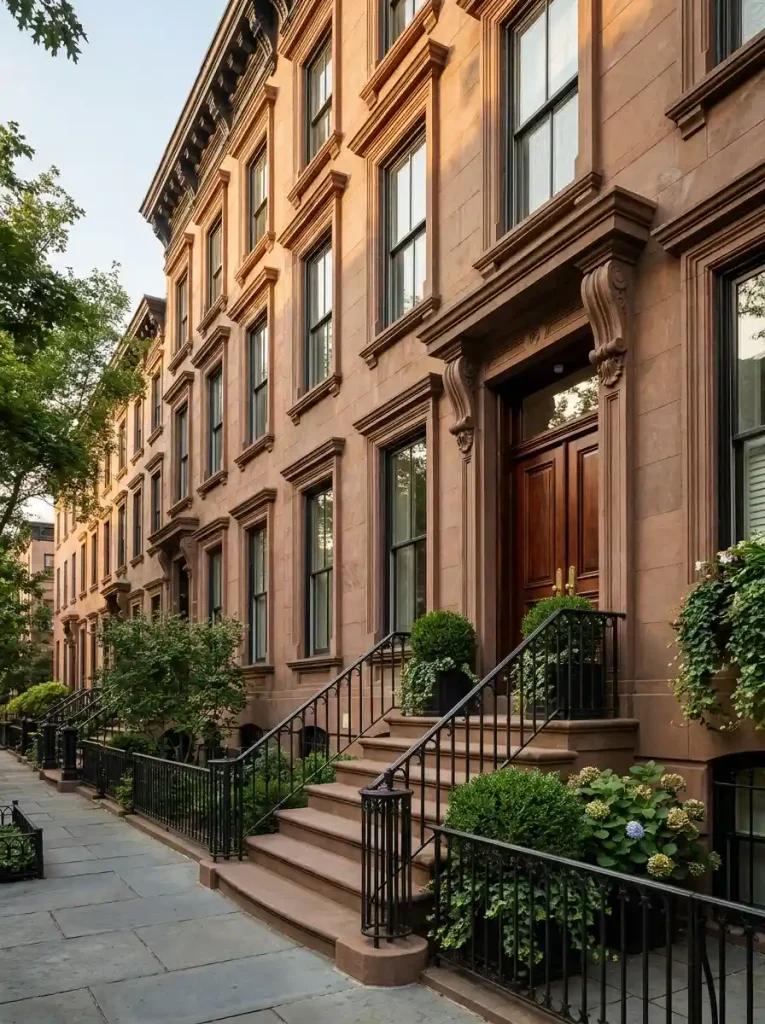
- Warm brownstone exterior creates instant character
- Tall windows emphasize the townhouse proportions
- Original stone detailing adds architectural depth
- Raised stoop creates a recognizable entrance
- Dark accents sharpen the traditional facade
- Simple landscaping keeps the design elegant
The strength of this style comes from restraint. Instead of covering the facade with modern additions, the design allows the brownstone itself to become the main visual feature. The natural variation in the stone gives the exterior warmth, while carefully maintained architectural details create depth from one floor to the next. Even simple window treatments and understated exterior lighting can make the entire townhouse appear more intentional.
For homeowners inspired by historic Brooklyn architecture, preserving these details can be more impactful than adding unnecessary decoration. A classic facade can also be refreshed through subtle improvements such as restored stonework, updated doors, better lighting, and neatly maintained greenery. These changes keep the recognizable brownstone personality intact while giving the townhome a cleaner and more cared-for appearance.
2. Brownstone Townhome With Dramatic Black Accents
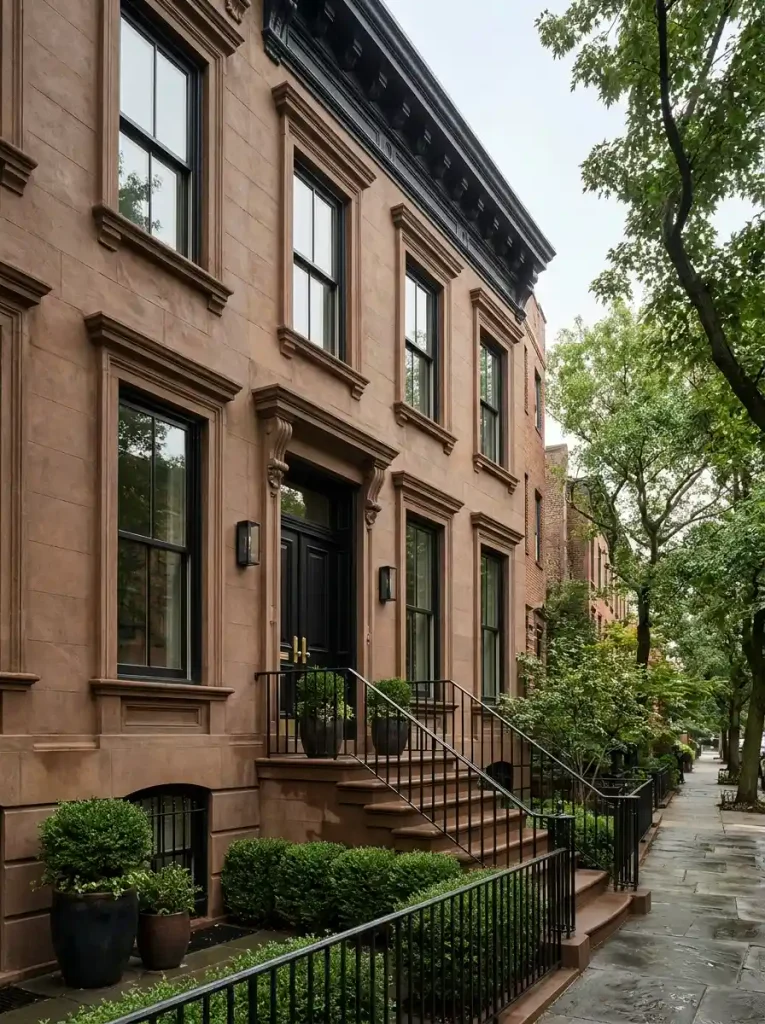
- Black frames create strong exterior contrast
- Dark railings emphasize the front stoop
- Brownstone remains the dominant material
- Matching accents create visual consistency
- Simple greenery softens the darker palette
- Traditional details prevent the design from feeling flat
The contrast between warm stone and black details is particularly effective because the two materials naturally balance one another. The brownstone supplies texture and warmth, while black provides definition around the areas that deserve attention. This can make windows appear taller, entrances more prominent, and architectural lines easier to read from the street.
The key is to keep the black accents intentional rather than overwhelming. A black door, railing, window frame, and a few lighting fixtures may be enough to create the effect. When every surface becomes dark, the natural beauty of the brownstone can disappear. Keeping the stone visible allows the townhouse to retain the character that makes this architectural style so appealing.
3. Elegant Townhome With a Statement Front Door
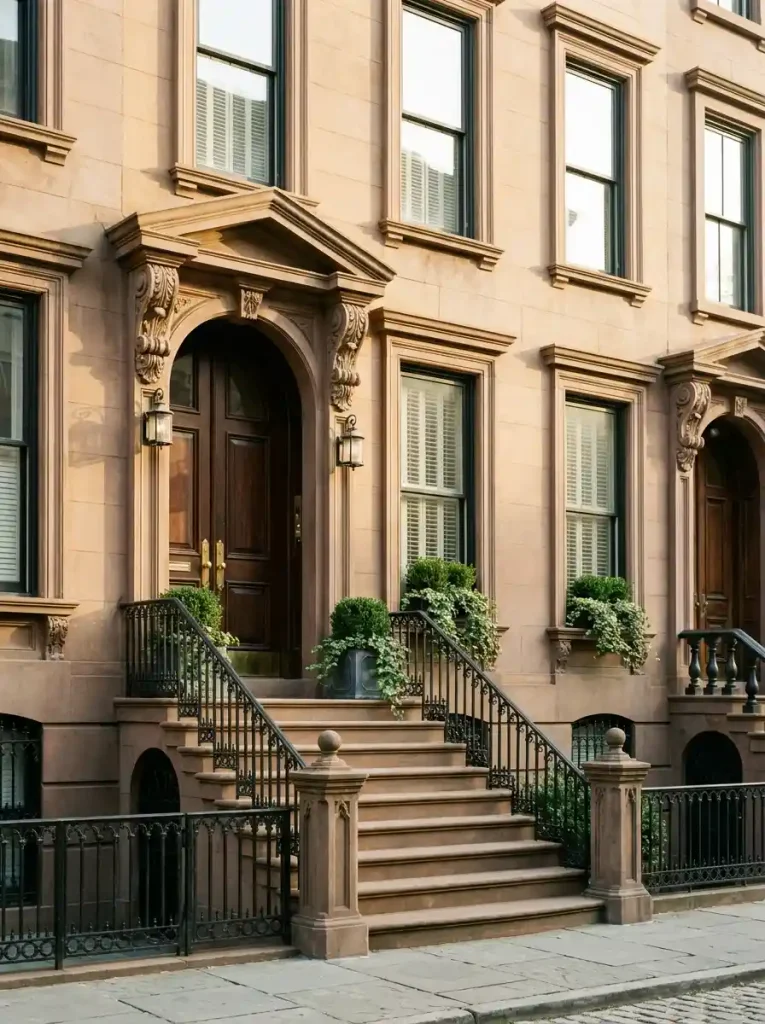
- Statement door becomes the natural focal point
- Natural wood adds warmth to the stone facade
- Brass hardware provides subtle elegance
- Traditional lighting enhances the entrance
- Greenery gives the stoop a welcoming feeling
- Minimal decoration keeps the architecture visible
A statement entrance does not need to be oversized or highly decorative. In fact, the strongest results often come from choosing one beautiful door and allowing the surrounding architecture to frame it. The texture of the wood, the shape of the hardware, and the quality of the lighting can provide enough visual interest without competing with the original brownstone details.
This approach is also practical because the entrance can be refreshed without changing the entire facade. A new door finish, restored hardware, updated sconces, or seasonal planters can noticeably change the way the townhome feels from the street. The result is a front entry that feels personal and inviting while remaining consistent with the traditional character of Brooklyn brownstone architecture.
4. Brownstone With Tall Floor-to-Ceiling Windows
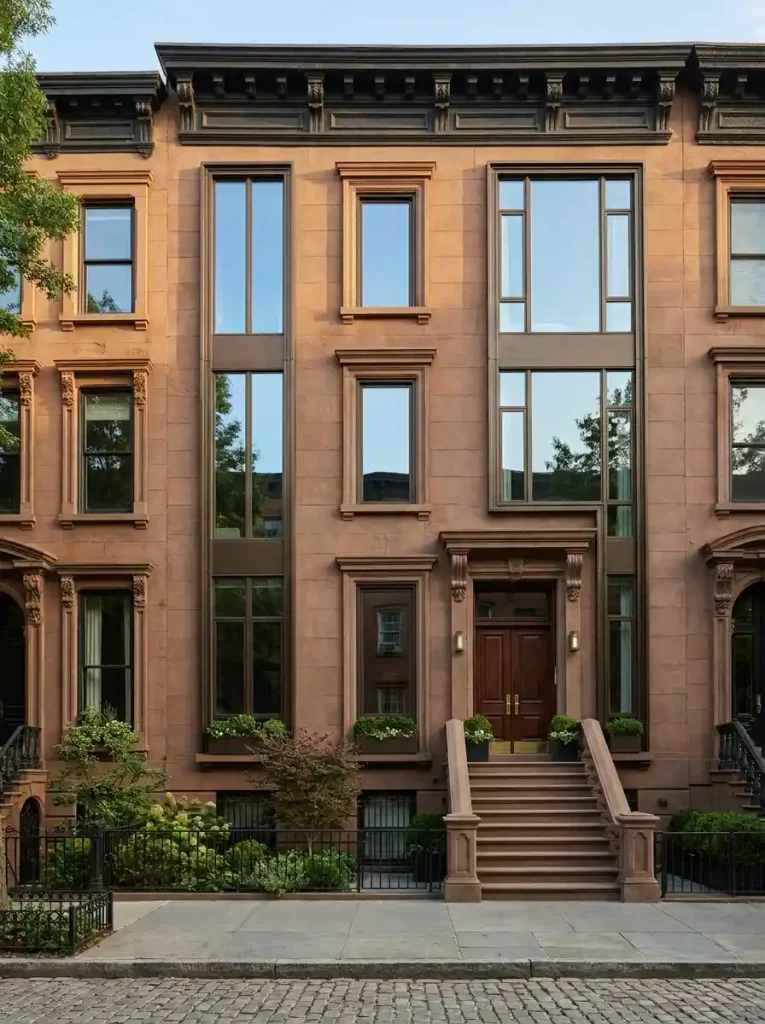
- Tall windows strengthen vertical proportions
- Large glazing brings visual openness
- Dark frames define each window clearly
- Historic stone surrounds preserve character
- Natural reflections add realism
- Balanced proportions keep the facade cohesive
Windows are especially important on narrow urban homes because they influence both the appearance of the exterior and the atmosphere inside. Taller openings can visually stretch the building upward and create a more generous sense of scale. When the frames remain simple, the eye naturally focuses on the architectural relationship between the glass, stone, and surrounding facade.
For a successful brownstone renovation, window design should complement rather than compete with the existing structure. Repeating similar proportions across multiple floors creates rhythm and makes the facade feel carefully composed. Even when the windows are updated for modern comfort and efficiency, their placement and framing can remain visually connected to the original architectural character.
5. Timeless Brownstone With Lush Greenery
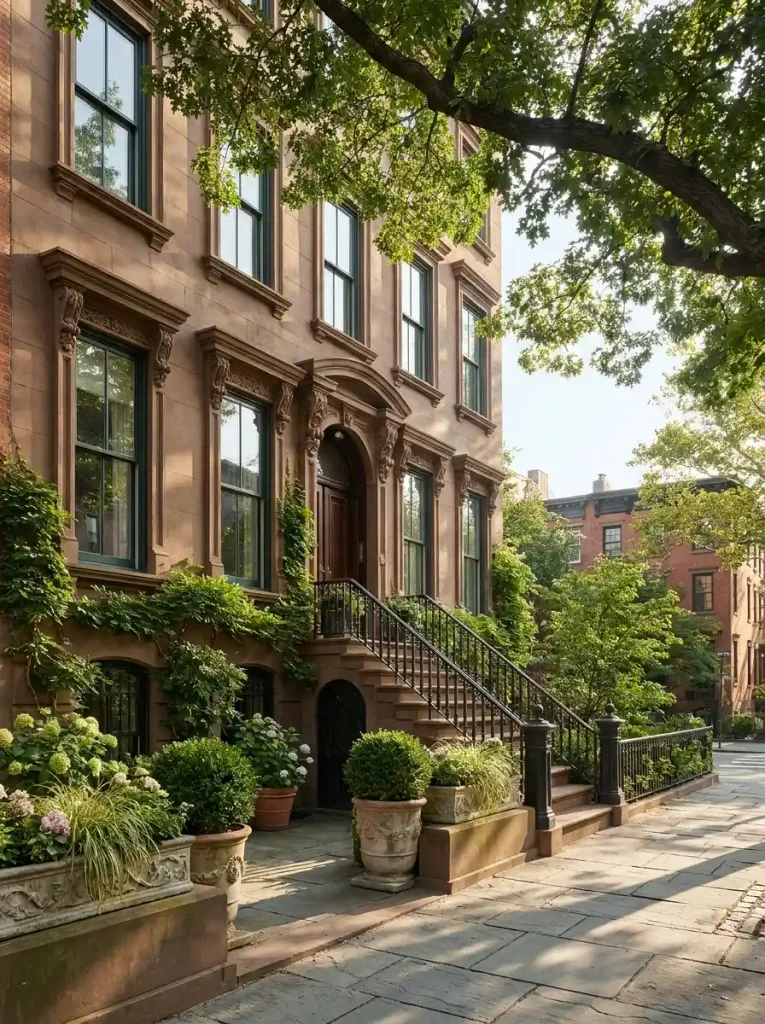
- Greenery softens the stone architecture
- Mature plants make the home feel established
- Structured landscaping adds curb appeal
- Natural foliage introduces color and texture
- Planters can frame the entrance beautifully
- Trees provide depth around the facade
A brownstone exterior already contains plenty of visual texture, so landscaping should support the architecture instead of hiding it. Plants with different heights can create a layered appearance, while keeping the center of the entrance relatively open allows the front door and stoop to remain visible. This balance creates a more polished streetscape and prevents the townhouse from looking overcrowded.
Greenery can also help a historic urban home feel more connected to nature. Even a narrow stoop or small front area can accommodate planters, climbing vines, or compact trees when the selections are made carefully. The goal is not to create a large garden but to introduce enough natural softness to balance the substantial stone facade.
23 Beautiful Nautical Living Room Makeovers for a Stunning Look
6. Refined Brownstone With Traditional Ironwork
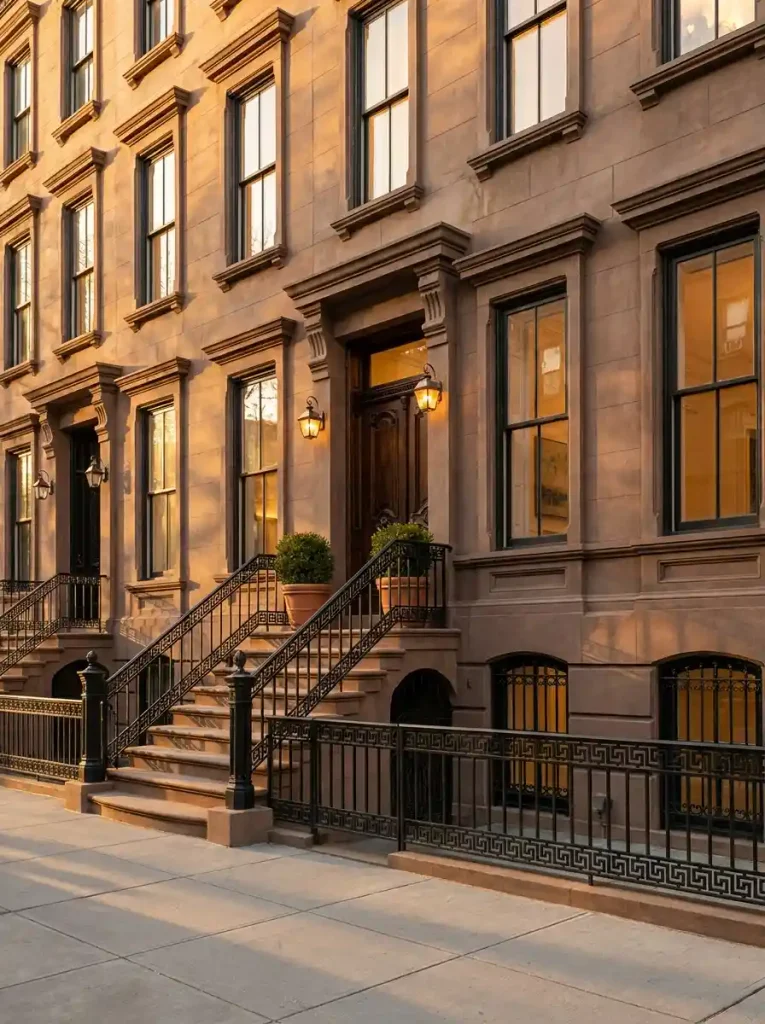
- Iron railings add historic character
- Dark metal contrasts naturally with stone
- Geometric patterns feel timeless
- Entry gates strengthen the facade
- Warm lighting highlights the metalwork
- Restrained detailing keeps the design refined
Ironwork works particularly well because it creates a visual connection between different parts of the exterior. When the same dark finish appears on railings, gates, lanterns, and small hardware details, the facade feels unified. This repetition gives the home a finished quality without requiring additional decorative elements.
The best ironwork also respects the scale of the building. Very complicated patterns can make a narrow facade feel visually busy, while simple lines allow the architecture to remain the star. A thoughtfully designed railing can therefore provide both practical safety and a strong decorative contribution to the overall character of the townhome.
7. Warm Brownstone With Soft Neutral Styling
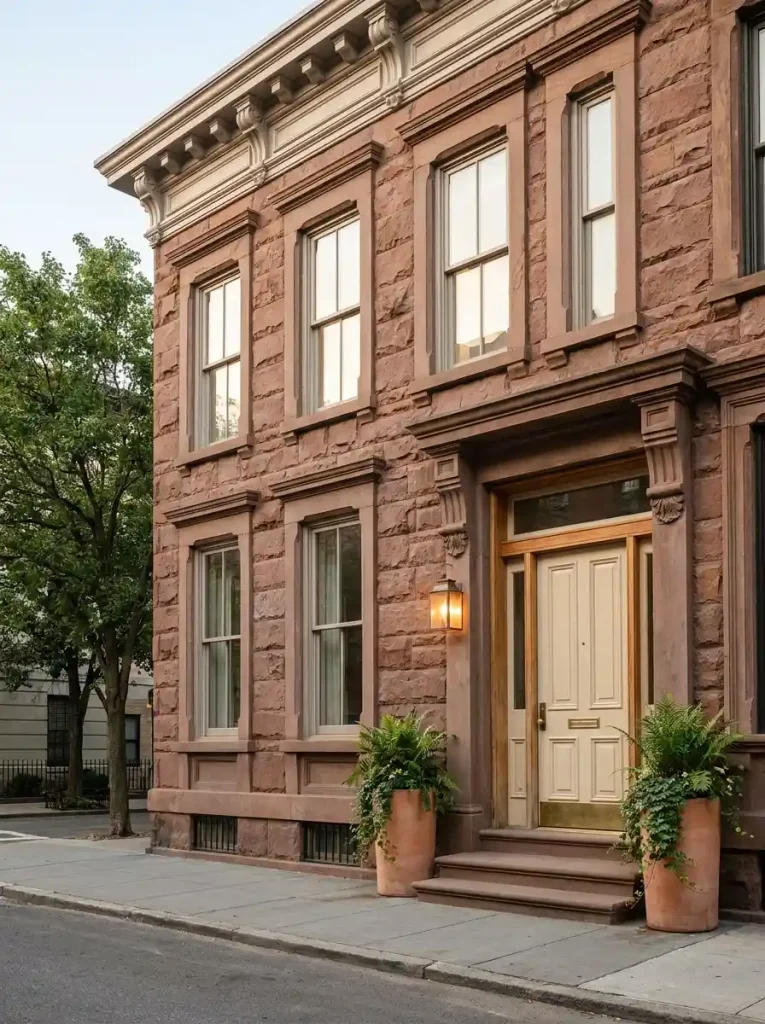
- Warm neutrals create a welcoming mood
- Cream accents soften the darker stone
- Natural wood introduces subtle texture
- Muted greenery complements the palette
- Soft lighting enhances the entrance
- Tonal variation creates understated depth
Neutral styling can be surprisingly effective on an architectural facade because it lets texture become the source of visual interest. Instead of depending on bright colors or strong contrasts, the design relies on the difference between stone, wood, metal, glass, and greenery. These materials create a layered appearance that remains attractive across different seasons.
This palette also offers flexibility for future changes. Neutral doors, planters, lighting, and hardware can easily be updated without forcing the homeowner to redesign the entire exterior. The result is a brownstone that feels current enough for contemporary city living while retaining a calm, timeless quality.
8. Brooklyn Brownstone With a Dramatic Evening Glow
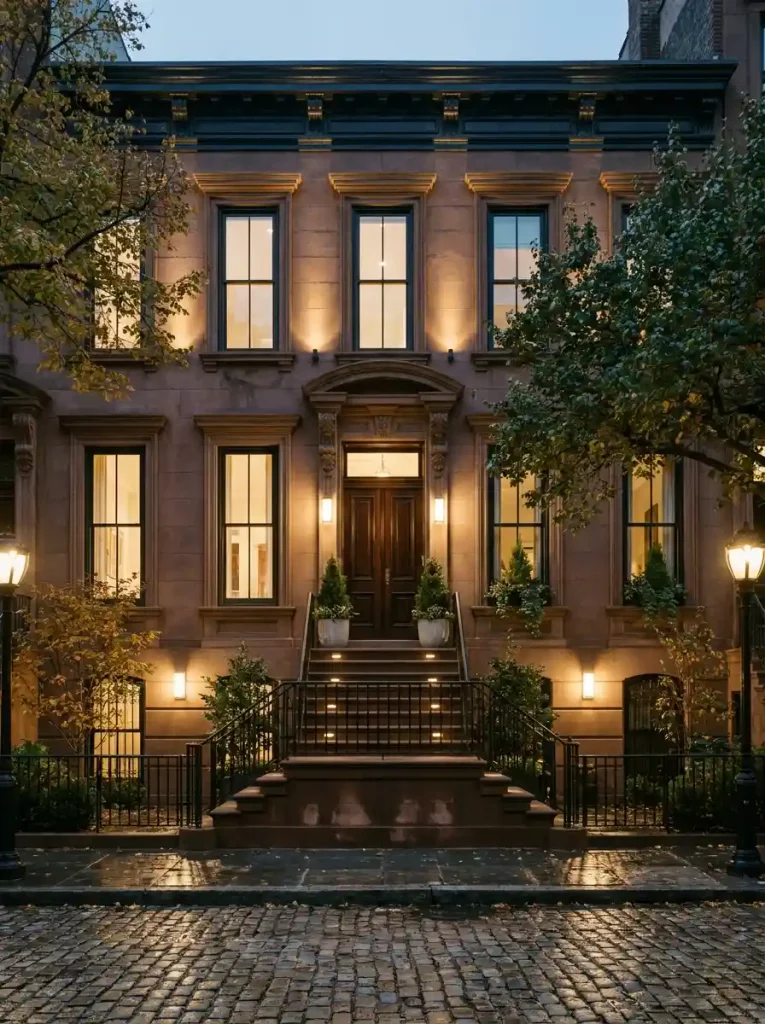
- Warm lighting emphasizes stone texture
- Entry lights create a welcoming atmosphere
- Step lighting improves visual depth
- Evening shadows add architectural dimension
- Subtle illumination feels sophisticated
- Dark surroundings make the facade stand out
Lighting is most effective when it reveals architectural features rather than simply making the entire building brighter. A narrow beam can emphasize a stone column, while a soft wall sconce can draw attention toward the entrance. Layering different levels of illumination creates depth and prevents the facade from looking flat after dark.
The choice of color temperature also matters. Warm light generally works naturally with brownstone because it complements the earthy tones of the material. Instead of using strong white floodlights, a combination of gentle entry lighting and targeted architectural illumination can create a more comfortable evening appearance while maintaining the elegant character of the building.
9. Brownstone Townhome With a Modern Glass Addition
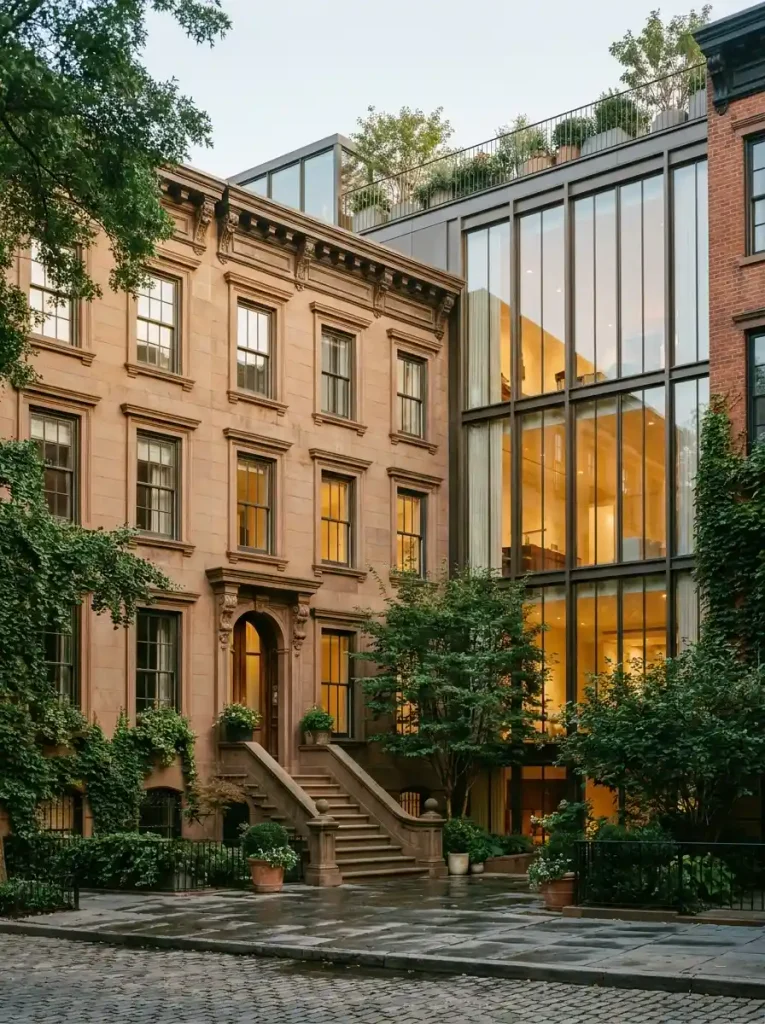
- Historic stone provides visual grounding
- Glass introduces contemporary openness
- Slim frames keep the addition lightweight
- Old and new materials create contrast
- Clean geometry balances ornate details
- Greenery helps connect both styles
The appeal of this approach lies in the contrast between solid and transparent materials. Brownstone has a substantial visual weight, while glass feels light and open. Bringing the two together can create a layered architectural story where the historic portion remains recognizable and the newer section communicates a different era of design.
A successful addition should still consider the proportions of the original building. The new architecture does not have to imitate every historic detail, but it should feel intentional in scale, placement, and material quality. When the transition is handled carefully, the combination can make the townhome feel more spacious while preserving the elements that give it its Brooklyn identity.
10. Narrow Brownstone With a Grand Stoop Entrance
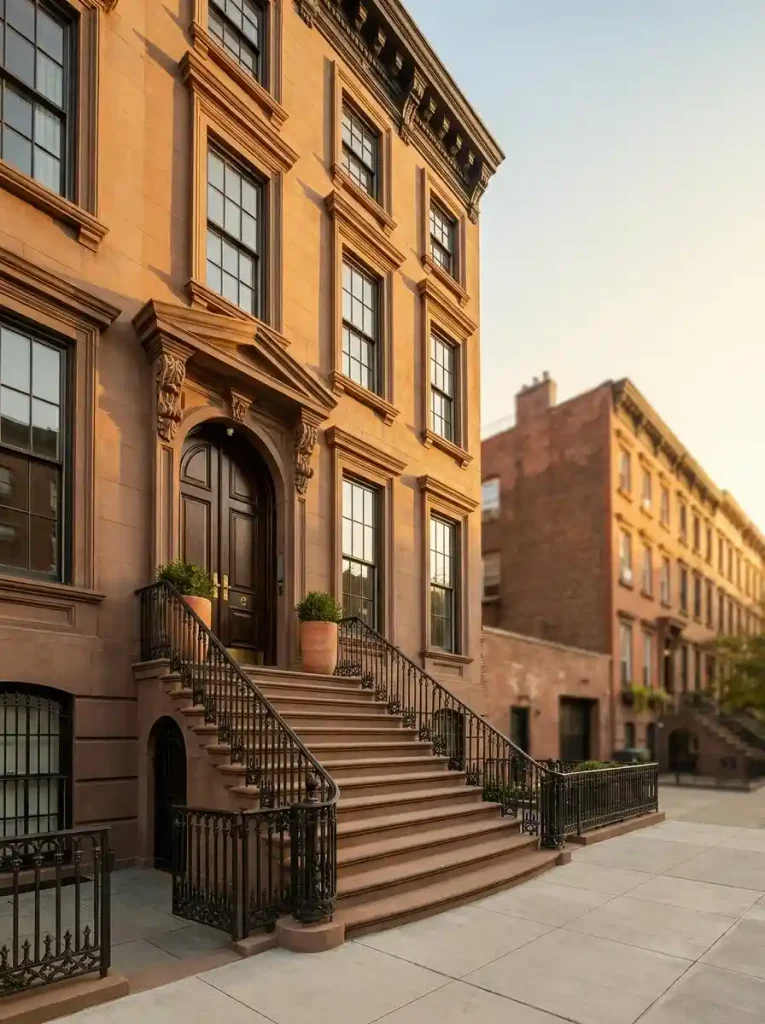
- Long stoop creates vertical drama
- Stone steps add substantial texture
- Iron railings frame the entrance
- Symmetry makes the facade feel composed
- Tall windows reinforce the height
- Minimal landscaping keeps attention on the entry
The stoop does more than provide access to the home; it creates a distinctive relationship between the private residence and the public sidewalk. The elevation gives the entrance presence and makes the front door feel like a destination. This architectural feature can therefore remain highly effective even when the facade itself is relatively narrow.
Because the stoop is so prominent, its condition and detailing can have a major impact on curb appeal. Clean stone, well-maintained railings, attractive lighting, and a carefully chosen front door can make a substantial difference. Small upgrades to these areas can refresh the appearance of the entire townhouse without requiring a full exterior renovation.
11. Brownstone With Sophisticated Navy Accents
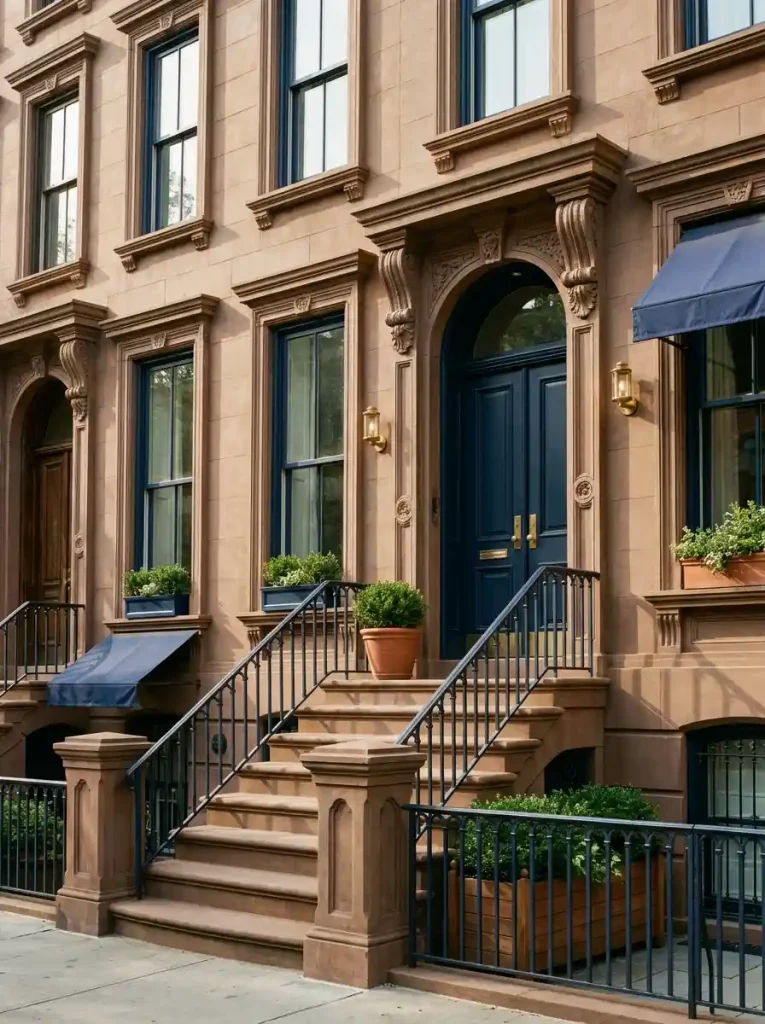
- Navy adds depth without harsh contrast
- Brownstone remains the visual foundation
- Brass hardware adds warmth
- Greenery balances the darker tones
- Dark railings reinforce the color palette
- Restrained accents preserve historic character
Navy is useful when a homeowner wants more color but does not want the facade to feel overly bold. Its depth works naturally with warm stone and can create a more distinctive entrance without becoming the sole visual focus. A navy door can be especially effective when paired with warm brass hardware and soft exterior lighting.
The color can also be repeated in small, carefully selected details rather than applied broadly. This keeps the facade balanced and makes the entrance feel intentional. When the surrounding stone and architectural detailing remain visible, the navy becomes an accent that enhances the brownstone rather than competing with it.
12. Historic Brownstone With Restored Stonework
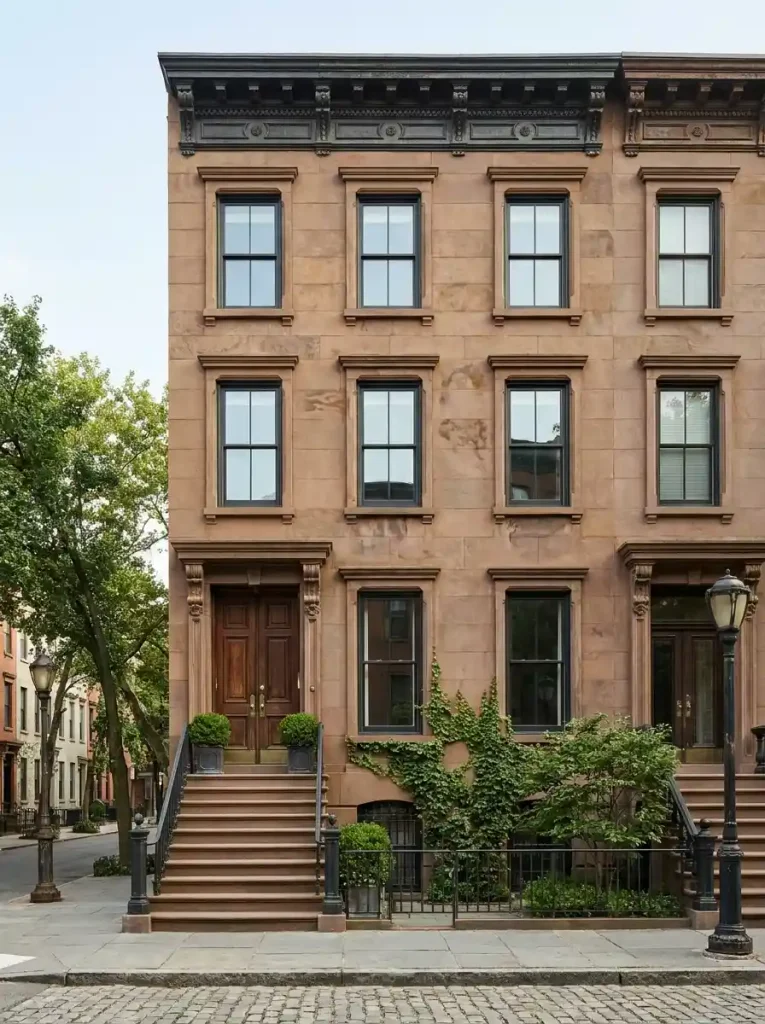
- Restored stone reveals original character
- Historic craftsmanship becomes more visible
- Natural texture adds authenticity
- Preserved details strengthen the facade
- Refreshed doors complement the restoration
- Simple landscaping keeps the architecture prominent
Restoration has a different visual language from replacement. New materials can look perfectly clean, but restored materials often retain small variations that communicate age and craftsmanship. Those imperfections can be part of what makes a brownstone feel authentic. Preserving original details also helps maintain the visual continuity of a historic neighborhood.
A thoughtful restoration should therefore focus on repairing what exists before adding new decorative elements. Cleaning, repointing, repairing stone, refinishing doors, and maintaining original metalwork can produce a dramatic improvement. The result is a home that feels cared for while still reflecting the history that makes Brooklyn brownstones so recognizable.
13. Brownstone With Symmetrical Window Styling
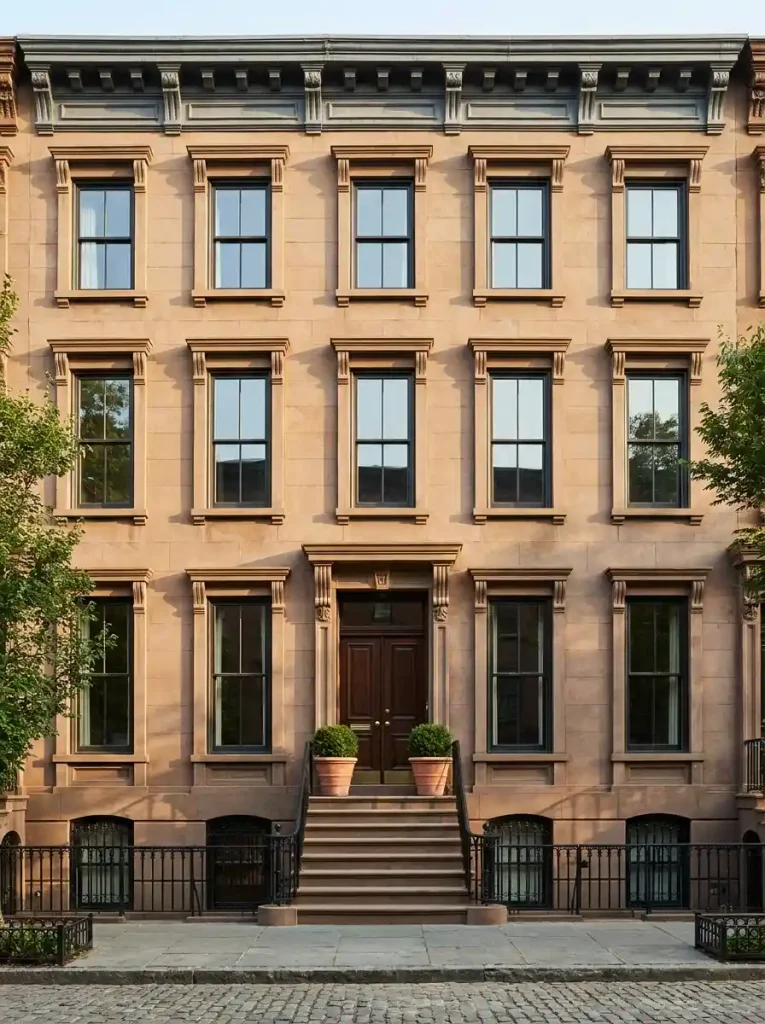
- Symmetry creates immediate visual order
- Aligned windows strengthen vertical rhythm
- Centered entry adds architectural focus
- Matching details create consistency
- Balanced planters reinforce the composition
- Minimal styling lets structure lead
Symmetry is particularly valuable on townhomes because it can make a relatively narrow facade appear more substantial. The repeated placement of windows and architectural elements guides the eye upward and gives every level a relationship with the one below it. This creates a sense of continuity that remains attractive from both close and distant views.
The same principle can be applied to smaller details. Matching sconces, planters, railings, and window treatments can create subtle balance without making the facade look overly formal. The goal is not perfect decoration but a visual rhythm that makes the architecture feel intentional and complete.
14. Brownstone Townhome With a Cozy Garden Entrance
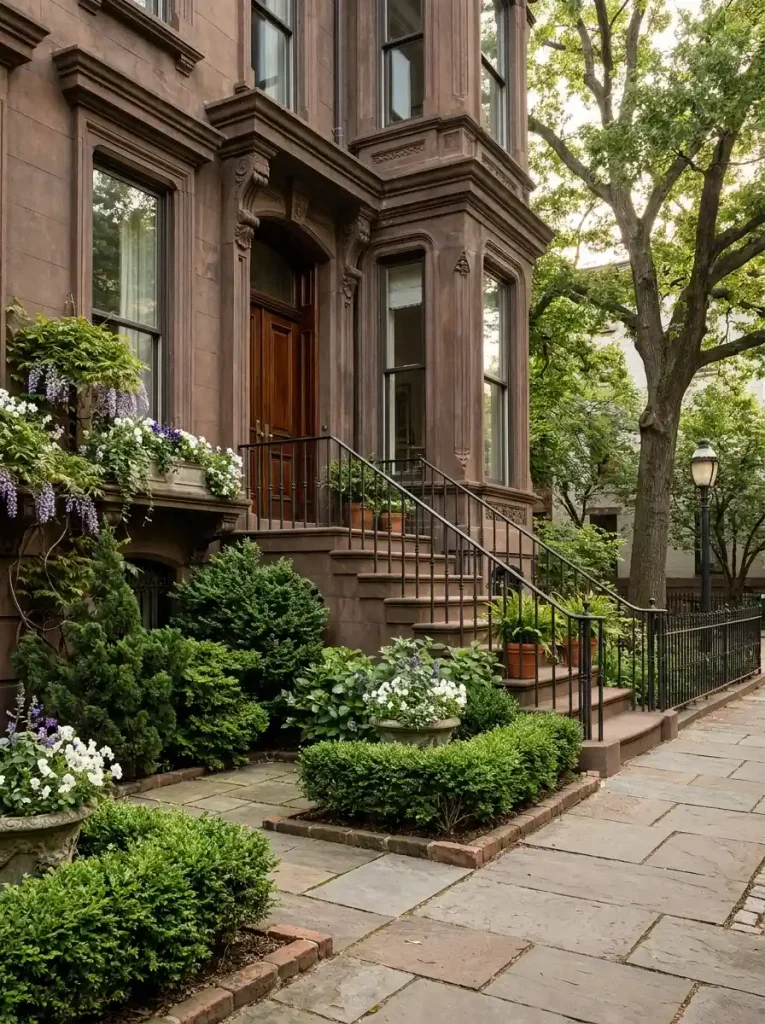
- Garden elements soften hard architecture
- Layered plants add depth
- Seasonal flowers introduce subtle color
- Natural stone complements brownstone
- Climbing greenery adds vertical interest
- Controlled landscaping keeps the facade visible
The most attractive garden entrances usually have a sense of structure. Different plant heights can create depth, while repeating similar materials keeps the small space from feeling chaotic. A few evergreen plants can provide year-round form, while seasonal flowers can add temporary color without changing the fundamental character of the entrance.
This type of landscaping also creates a softer transition between the public sidewalk and the private home. The greenery can make the stoop feel more welcoming and provide a small sense of separation from the street. Even when space is limited, thoughtful planting can give the entrance a much richer visual experience.
15. Refined Brownstone With Warm Wood Details
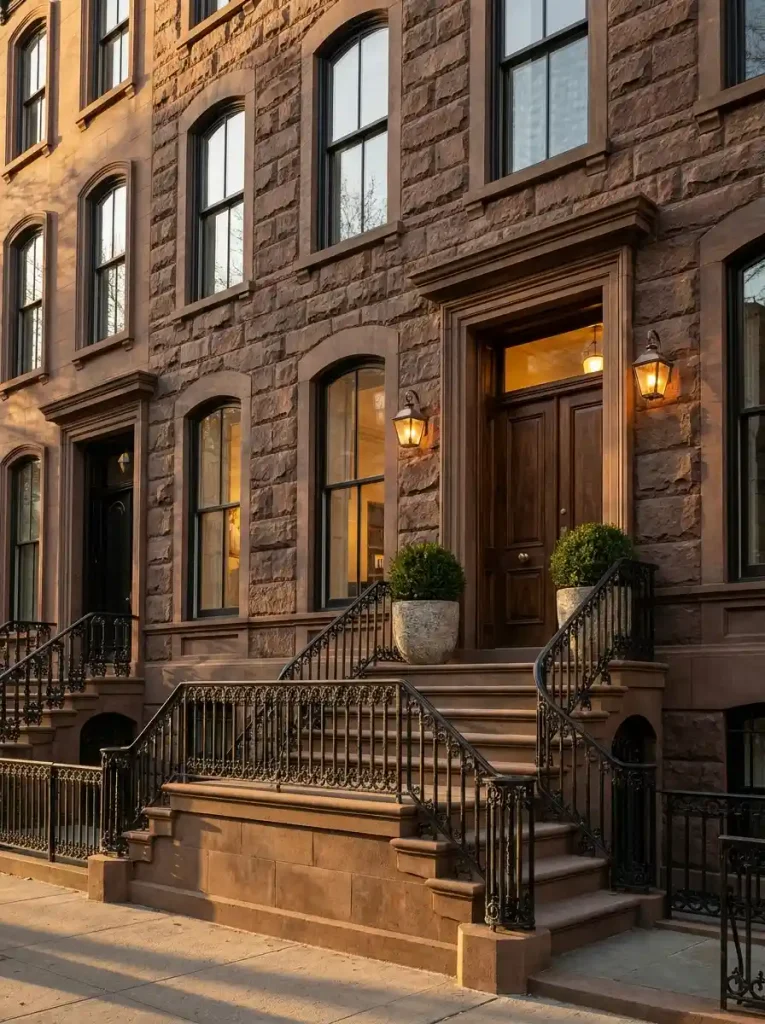
- Natural wood warms the stone facade
- Wood grain adds tactile character
- Brass hardware complements warm tones
- Dark iron provides subtle contrast
- Simple greenery keeps the palette natural
- Traditional architecture remains the focus
Wood has a natural ability to make substantial stone architecture feel more approachable. The contrast is subtle because both materials contain warm, earthy qualities. A wood front door can therefore become a welcoming focal point without introducing an entirely different visual language to the facade.
The finish matters as much as the material itself. Natural grain and slightly varied tones often feel more authentic than an overly glossy surface. When the wood is combined with restrained lighting and traditional hardware, it can give the entrance a sense of craftsmanship that works beautifully with the historic personality of a Brooklyn brownstone.
16. Brownstone With Contemporary Minimalist Lighting
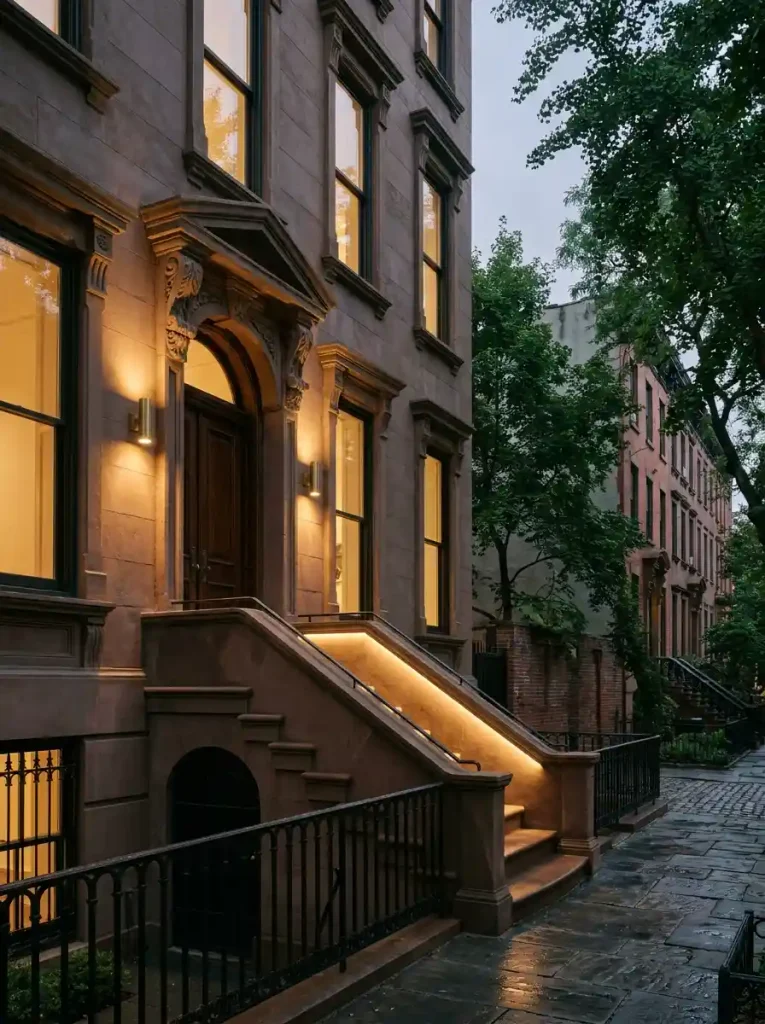
- Minimal fixtures keep the facade clean
- Wall sconces highlight important details
- Step lighting improves depth
- Warm illumination complements brownstone
- Contemporary details refresh the exterior
- Historic architecture remains dominant
Lighting can serve as both a practical feature and an architectural tool. When fixtures are kept visually quiet, the light itself becomes more important than the hardware. Soft illumination can reveal the texture of stone, define the edge of the stoop, and create a gentle focus around the front entrance.
This approach is especially useful for homeowners who want a refreshed appearance without making visible structural changes. Replacing dated exterior fixtures with cleaner designs can make the property feel noticeably more current. Because the architecture remains untouched, the update feels subtle rather than like a complete stylistic departure.
17. Brooklyn Brownstone With a Sophisticated Entry Courtyard
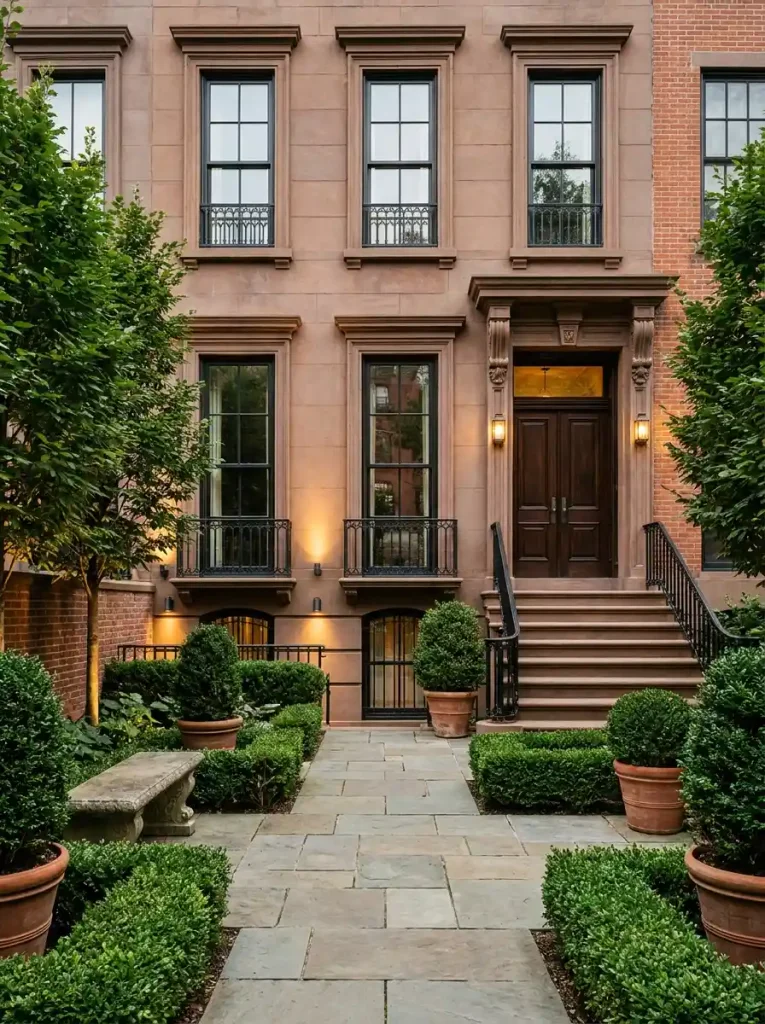
- Courtyard creates a layered entrance
- Stone paving complements the facade
- Structured greenery adds privacy
- Simple seating makes the area usable
- Warm lighting improves evening atmosphere
- Minimal styling keeps the space elegant
An entry courtyard can make a small urban property feel surprisingly private. The combination of plants, paving, and architectural boundaries creates a transition zone before reaching the actual front door. This can make the home feel more considered and welcoming while giving residents a small outdoor area to enjoy.
The courtyard should still respect the scale of the property. Too many plants or oversized furniture can quickly make a narrow space feel crowded. A few strong materials, repeated thoughtfully, often produce a more sophisticated result. Natural stone, dark metal, greenery, and warm wood can form a cohesive palette that complements the brownstone beautifully.
18. Bold Brownstone With Deep Charcoal Exterior Details
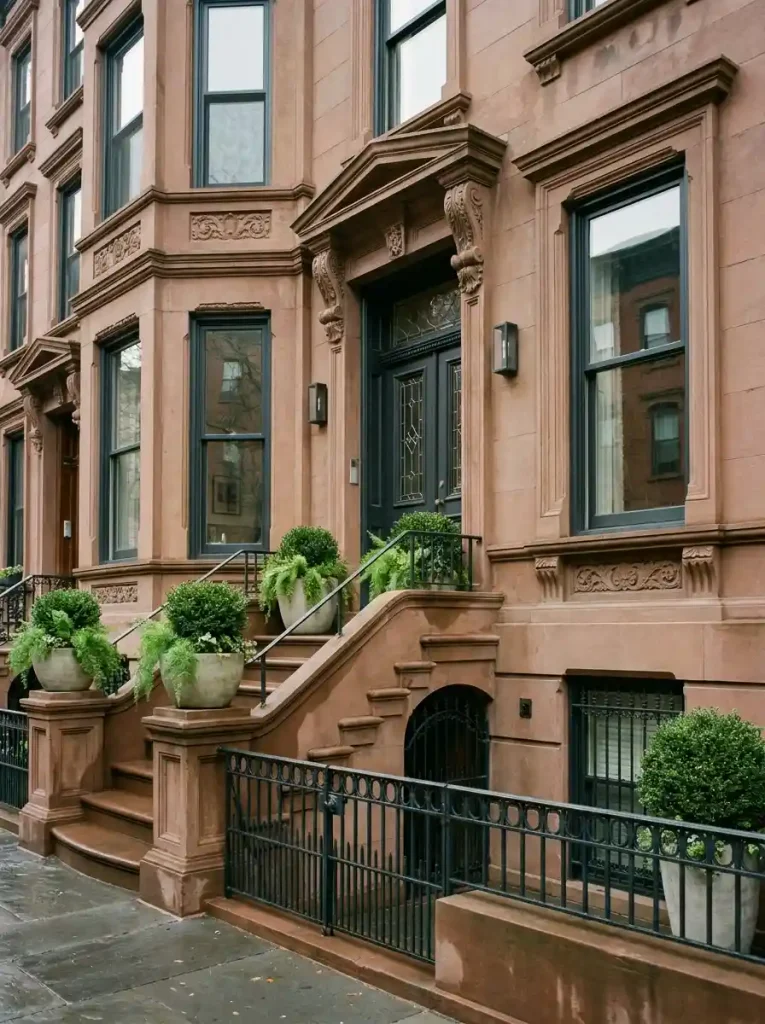
- Charcoal adds dramatic definition
- Brownstone keeps the palette warm
- Dark frames emphasize window proportions
- Matching details create continuity
- Greenery softens the darker accents
- Subtle lighting adds evening versatility
Charcoal can be a useful middle ground between traditional and dramatic exterior styling. It provides stronger contrast than lighter neutrals but remains softer than a completely black palette. This makes it particularly suitable for homeowners who want a more contemporary edge while still allowing the warm stone to remain visually important.
The strongest applications are usually selective. A charcoal door, railing, and window frame can create enough repetition to unify the facade without covering its historic details. When the darker elements are carefully distributed, they help guide the eye around the architecture and give the brownstone a more defined appearance.
19. Timeless Brownstone With Classic Lantern Lighting
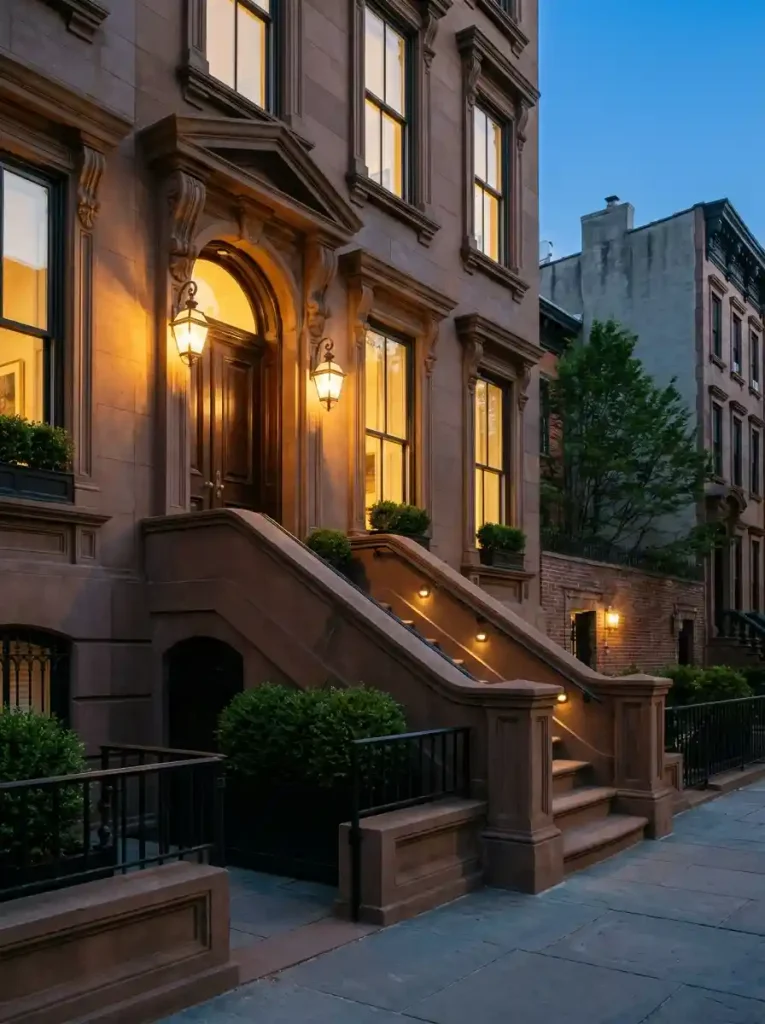
- Lanterns reinforce historic character
- Symmetrical fixtures frame the door
- Warm light creates an inviting entrance
- Iron details complement the fixtures
- Traditional styling suits the architecture
- Subtle lighting keeps the facade sophisticated
Traditional lanterns work because they visually belong to the architectural history of the brownstone. Their structured frames and warm glow can make an entrance feel established without requiring additional decoration. When placed symmetrically, they also strengthen the natural balance of the facade.
The fixture should still be scaled carefully to the entrance. Oversized lanterns can dominate a narrow doorway, while very small fixtures may disappear against the stone. A medium-sized design with a simple silhouette usually provides enough visual presence while allowing the brownstone, door, and stoop to remain the main elements.
20. Brownstone Townhome With a Layered Neutral Facade
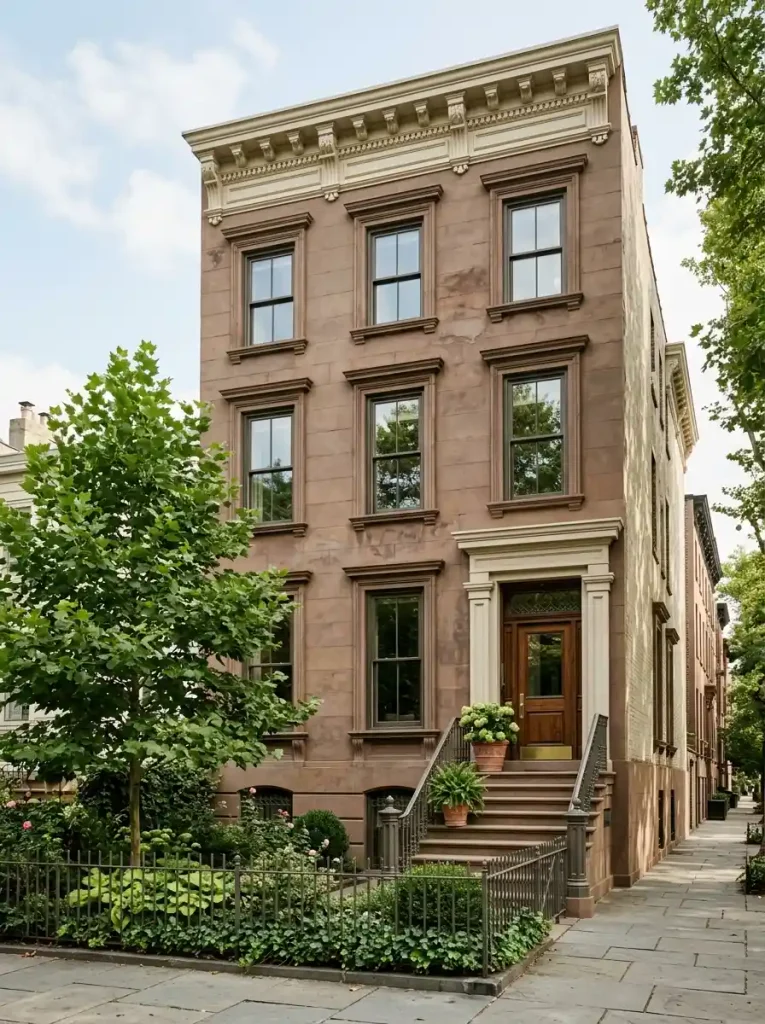
- Multiple neutrals create subtle depth
- Stone provides the strongest texture
- Cream accents soften the facade
- Wood introduces natural warmth
- Metal adds definition
- Greenery provides organic contrast
A layered neutral palette is valuable because it can feel visually rich without becoming visually loud. The eye notices differences in texture before it notices dramatic changes in color. Stone, wood, metal, and greenery each respond differently to natural light, creating movement and depth across the facade throughout the day.
This approach also provides a flexible foundation for future updates. Seasonal plants, different door finishes, or new lighting can be introduced without disrupting the overall composition. The townhome can therefore evolve over time while maintaining a consistent architectural identity.
21. Statement Brooklyn Brownstone With Unforgettable Curb Appeal
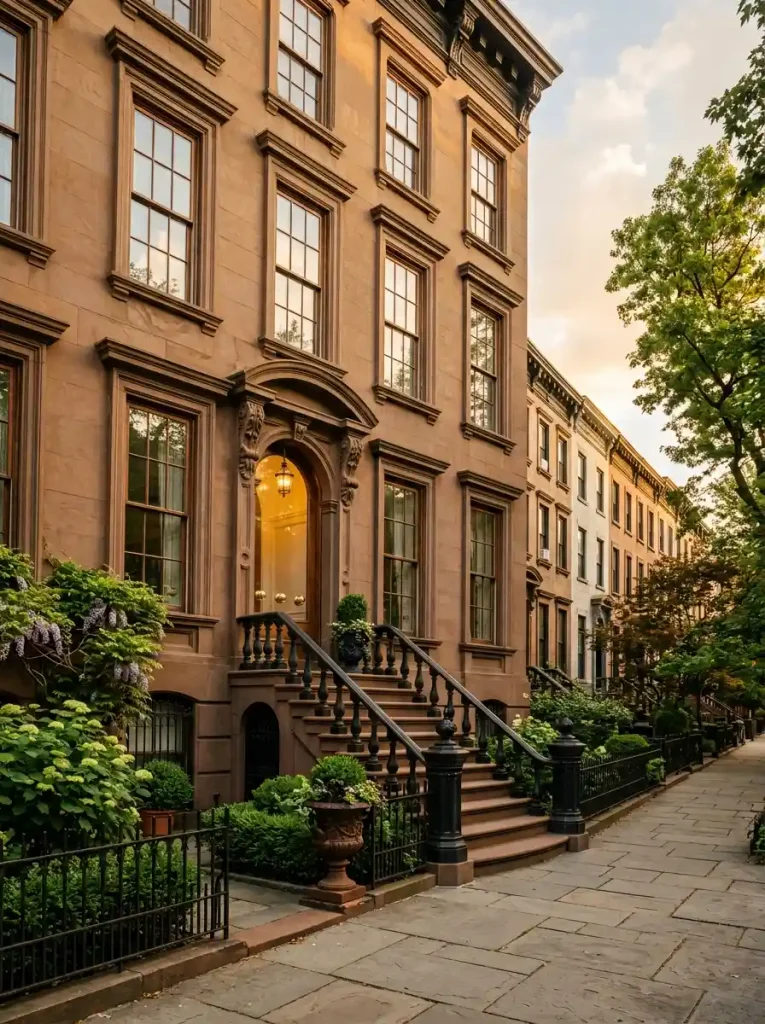
- Strong facade creates immediate visual impact
- Quality materials elevate the exterior
- Distinctive entrance adds personality
- Balanced windows strengthen the architecture
- Landscaping improves the street presence
- Layered details create memorable curb appeal
The most memorable brownstone townhomes are often successful because they feel cohesive rather than simply decorated. Every element has a relationship with the others: the door works with the stone, the railings work with the windows, the lighting works with the entrance, and the landscaping frames rather than hides the architecture. This creates a complete visual impression from the sidewalk.
Curb appeal also becomes stronger when maintenance is treated as part of the design. Clean stone, carefully maintained railings, healthy greenery, quality lighting, and a well-kept entrance can make even a traditional facade feel exceptionally inviting. The goal is not to make the townhome look completely different but to bring out the qualities that already make a Brooklyn brownstone special.
Final Thoughts: Brooklyn Brownstone Townhomes
Brooklyn brownstone townhomes have a rare ability to combine architectural history with highly livable city design. Their stone facades, tall windows, raised stoops, and detailed entrances already provide a strong foundation, so thoughtful updates can often make a bigger difference than dramatic renovations.
If you are taking inspiration from these homes, start with the elements that define the exterior: the front door, windows, stoop, railings, lighting, and landscaping. Improving a few of these areas can refresh the entire facade while keeping its original personality intact.
Ultimately, the most memorable brownstone townhomes are the ones that feel authentic, carefully maintained, and thoughtfully detailed. A strong entrance, quality materials, appropriate lighting, and restrained landscaping can create lasting curb appeal while allowing the distinctive character of Brooklyn brownstone architecture to remain the star.