20 Japanese Zen Living Room Ideas for a Peaceful & Minimalist Home
Japanese-Zen interiors are all about creating harmony, peace, and balance in your living space. Rooted in traditional Japanese design, these living rooms combine natural elements, minimal décor, and calming colors to promote mindfulness and relaxation. These Japanese Zen living room ideas by The Home Vista will inspire you to design a timeless and tranquil home.
With sliding shoji screens, tatami mats, and a strong connection to nature, the Zen style transforms your home into a serene retreat away from the noise of daily life. Whether you want a space for meditation, quiet family gatherings, or simply a soothing atmosphere.
1. Tatami Mat Flooring
Tatami mats are a traditional Japanese flooring choice that instantly creates a sense of authenticity and grounding. Their woven straw surface provides a natural texture while keeping the atmosphere breathable and cozy. A tatami-covered living room floor feels both peaceful and culturally inspired, setting the tone for Zen living.

2. Sliding Shoji Screens
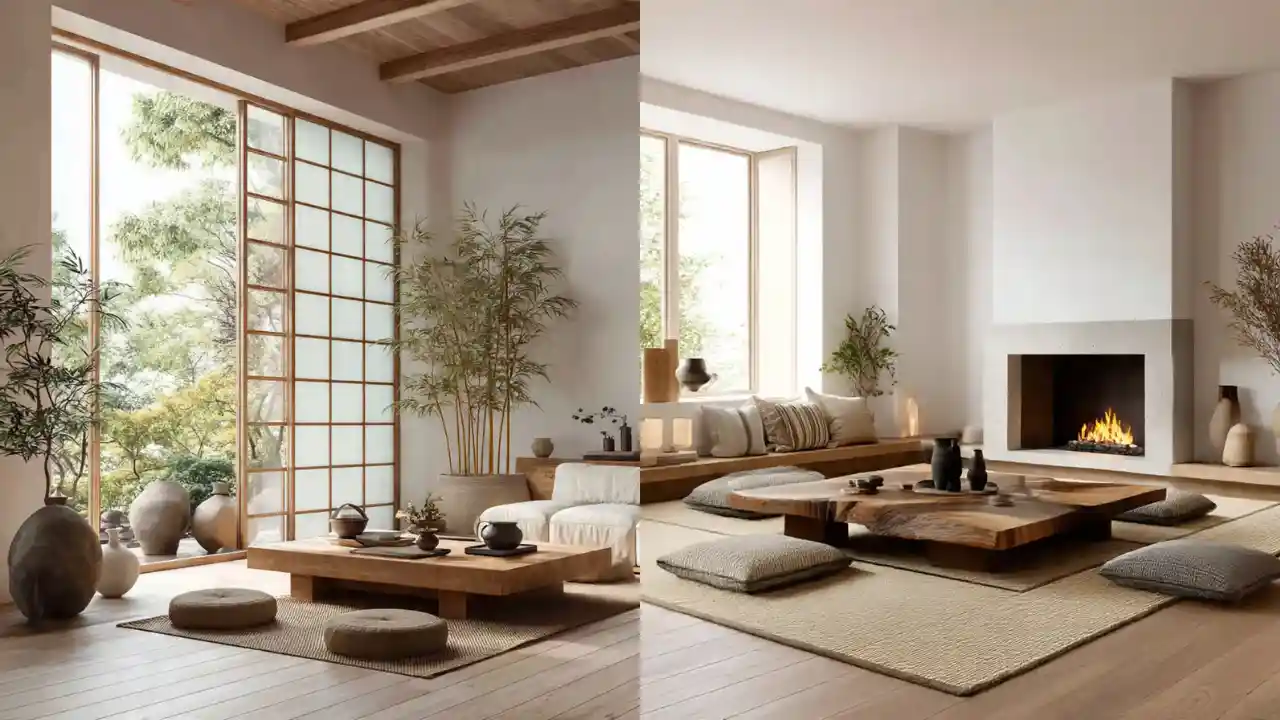
Shoji screens, with their paper-like texture and wooden frames, diffuse sunlight beautifully into the room. They replace heavy curtains or walls, giving your living space openness and serenity. Their soft glow and minimal aesthetic enhance the calm vibe of a Japanese-inspired interior.

3. Low Wooden Furniture
Low seating and tables crafted from simple wood add warmth and balance to a Zen living room. These pieces promote intimacy by bringing the sitting level closer to the ground. Their minimal design allows natural beauty and function to take center stage.

4. Floor Seating with Cushions
Arranging soft cushions or zabuton around a low table creates a warm, communal seating style. It encourages family and friends to gather comfortably while maintaining the grounded simplicity of Japanese culture. The setting feels cozy without compromising elegance.

5. Neutral Color Palette
Colors like beige, off-white, muted grey, and earthy browns form the foundation of Zen-inspired interiors. These calming hues create harmony, prevent visual clutter, and let natural materials stand out. The result is a soothing backdrop that promotes relaxation.

6. Indoor Plants for Natural Calm
Greenery plays a central role in connecting the indoors with nature. Potted bamboo, bonsai, or leafy plants enhance freshness while reinforcing Zen philosophy. Carefully placed plants bring balance, oxygen, and vibrancy to the living space.

7. Minimal Wall Art
Instead of cluttering walls, Zen interiors focus on one or two subtle art pieces. A simple ink painting or a calligraphy scroll brings personality while respecting minimalism. This understated approach allows the room’s natural beauty to shine.

8. Natural Lighting Design
Japanese interiors often rely on natural daylight rather than artificial sources. Large windows, skylights, and open layouts let sunlight flow freely across the space. This makes the living room feel alive, open, and peaceful throughout the day.

9. Wooden Ceiling Beams
Exposed wooden beams add character and rustic charm without breaking the simplicity of Zen design. Their natural finish complements other wooden furniture and connects the living space with traditional Japanese architecture.

10. Bamboo Accents
Using bamboo in furniture, wall panels, or décor introduces sustainability and cultural authenticity. Its light texture adds natural elegance, while its durability ensures practicality. Bamboo elements provide a subtle yet powerful connection to nature.

11. Zen Garden Corner
Designing a small indoor rock or sand garden creates a meditative nook inside the living room. With raked sand, stones, and maybe a bonsai, this corner becomes a mindful retreat. It adds tranquility and makes the living room unique.

12. Simple Window Treatments
Instead of heavy drapes, Japanese-inspired rooms often use light blinds or fabric panels. This lets light filter naturally while keeping the décor minimal. Simple treatments make the windows blend seamlessly into the serene atmosphere.

13. Wabi-Sabi Décor
Embracing imperfections in ceramics, wood, or handmade objects highlights the Wabi-Sabi philosophy. This design celebrates the beauty of simplicity and natural aging. Small rustic pieces add soul and character to the space.

14. Warm Ambient Lighting
Soft, warm lights in the form of floor lamps, lanterns, or pendant lamps enhance the cozy atmosphere. The lighting should never feel harsh but instead mimic the calm glow of natural sunlight. This subtle illumination brings peace after dark.

15. Stone or Pebble Accents
Adding stone textures whether in a coffee table, a fireplace corner, or decorative bowls introduces raw, natural elements. Pebbles can even be placed under indoor plants for added authenticity. Stone textures bring grounding energy to the space.

16. Built-In Storage
Clutter-free living is a cornerstone of Japanese interiors. Built-in storage solutions keep everything hidden and organized, maintaining the room’s clean look. This ensures simplicity and avoids distractions from the calming vibe.

17. Simple Tea Nook
Creating a small tea corner with a low table and floor seating reflects Japanese tradition. This cozy space encourages mindful moments of calm and hospitality. It also adds cultural richness without overwhelming the room.

18. Paper Lanterns
Hanging paper lanterns introduce a soft glow and a gentle cultural nod to Japanese design. Their round forms are simple yet beautiful, perfectly complementing minimal interiors. They create a warm and peaceful evening ambiance.

19. Natural Fabrics
Using linen, cotton, or hemp for curtains, cushions, and upholstery ensures breathability and a relaxed look. These fabrics enhance comfort while maintaining sustainability and simplicity. The textures make the living room feel grounded and natural.

20. Indoor-Outdoor Flow
Japanese interiors often blur the line between indoors and outdoors. Sliding doors that open to a garden or patio let fresh air and greenery merge with the living room. This flow strengthens the connection to nature, making the space harmonious.

Final Thoughts: Japanese Zen Living Room Ideas
A Japanese Zen living room is more than just a design; it’s a lifestyle rooted in peace, mindfulness, and a connection to nature. Every element, from tatami mats to bamboo accents, emphasizes simplicity and balance. By blending natural light, minimalist décor, and cultural touches, these 20 Japanese Zen Living Room Ideas can help you create a living space that feels like a daily retreat. The result is a timeless, calming interior that nurtures both body and soul.