
20 Ultimate Kyoto-Inspired Japanese Home Exteriors for a Serene Escape
Kyoto-inspired Japanese home exteriors are admired for their peaceful atmosphere, natural materials, graceful architectural details, and beautiful connection with nature. Inspired by traditional Japanese homes and the timeless streets of Kyoto, these designs bring together simplicity, craftsmanship, and understated elegance. From wooden facades and traditional tiled roofs to peaceful courtyard gardens, every detail creates a sense of balance that makes a home feel welcoming and harmonious.
One of the most beautiful features of Kyoto-inspired architecture is its thoughtful use of natural materials. Warm timber, stone, bamboo, clay tiles, and textured plaster create an organic appearance that feels connected to the surrounding landscape. Instead of relying on excessive decoration, these homes allow beautiful materials, balanced proportions, and carefully designed entrances to define their character.
Another reason this architectural style is so appealing is its ability to combine privacy with openness. Wooden screens, sliding doors, enclosed gardens, and sheltered entryways create peaceful spaces while allowing natural light and fresh air to flow throughout the home. Whether you prefer a traditional Japanese exterior or a contemporary interpretation, these elements can help create a home that feels calm, sophisticated, and timeless.
In this collection, discover 20 Kyoto-Inspired Japanese Home Exteriors by The Home Vista that celebrate natural beauty and thoughtful design. From traditional machiya-inspired facades and Zen gardens to modern timber homes and elegant stone pathways, these ideas will inspire you to create an exterior filled with warmth, simplicity, and serenity.
1. Traditional Kyoto Machiya-Inspired Home Exterior
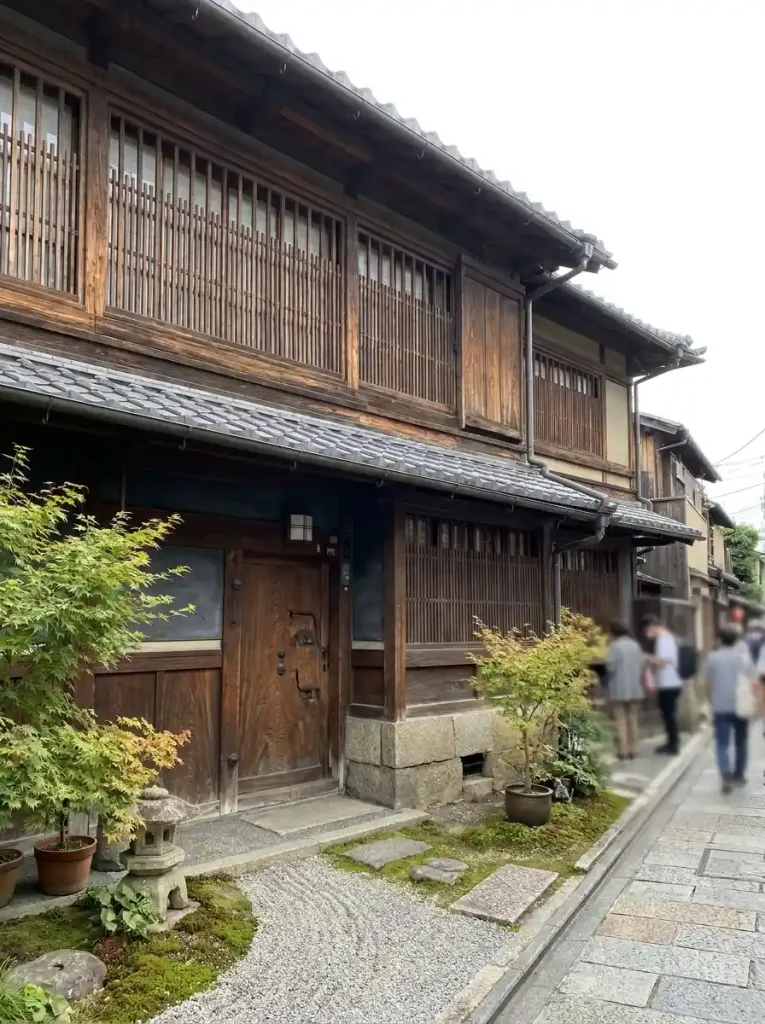
- Dark natural timber facade
- Traditional wooden lattice windows
- Classic Japanese tiled roof
- Elegant wooden entrance door
- Subtle stone exterior details
- Small landscaped entrance garden
A traditional machiya-inspired exterior captures the historic beauty of Kyoto’s wooden townhouses. Its dark timber facade, carefully arranged lattice windows, and traditional roofline create a distinctive appearance that feels connected to Japanese architectural heritage. The entrance can be designed with a beautifully crafted wooden door and subtle stone details to create a welcoming transition from the street. Keep the landscaping restrained with small shrubs, moss, and carefully placed greenery so the architecture remains the main attraction. Natural wood tones and traditional materials give this exterior a sense of authenticity that cannot easily be recreated with decorative features alone. It is an excellent choice for anyone who appreciates historic Japanese design and understated elegance.
2. Modern Japanese Home with a Natural Wood Facade
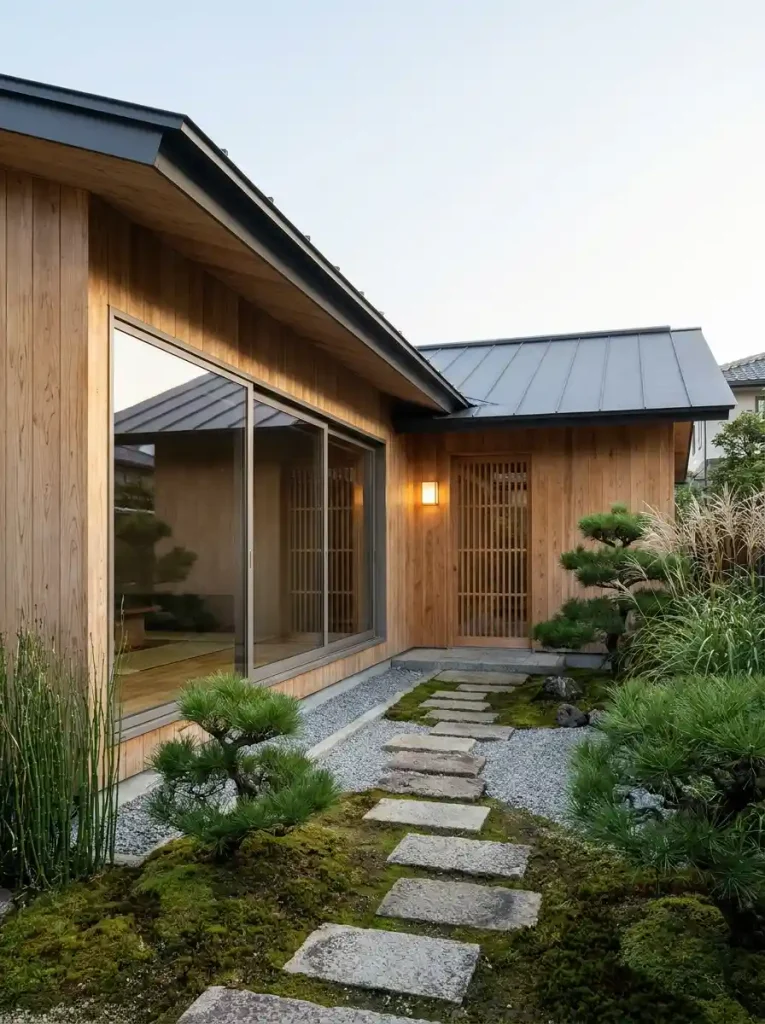
- Warm natural cedar wood siding
- Clean geometric exterior structure
- Large minimalist windows
- Low-pitched dark roof
- Minimalist wooden entrance
- Carefully arranged Japanese garden
Natural wood can make a contemporary Japanese exterior feel warm and inviting while preserving the simplicity of modern architecture. Cedar siding introduces subtle texture and natural color variations that give the facade more depth than a completely smooth finish. Large windows allow daylight to enter the home, while a simple roofline keeps the overall structure visually balanced. You can combine different wood tones to define the entrance or highlight selected architectural sections without making the design feel busy. A small garden with ornamental grasses, stone accents, and restrained greenery completes the look. This approach works beautifully for homeowners who love the calm character of Japanese architecture but prefer a fresh and modern exterior.
3. Kyoto-Inspired Home with a Traditional Clay Tile Roof
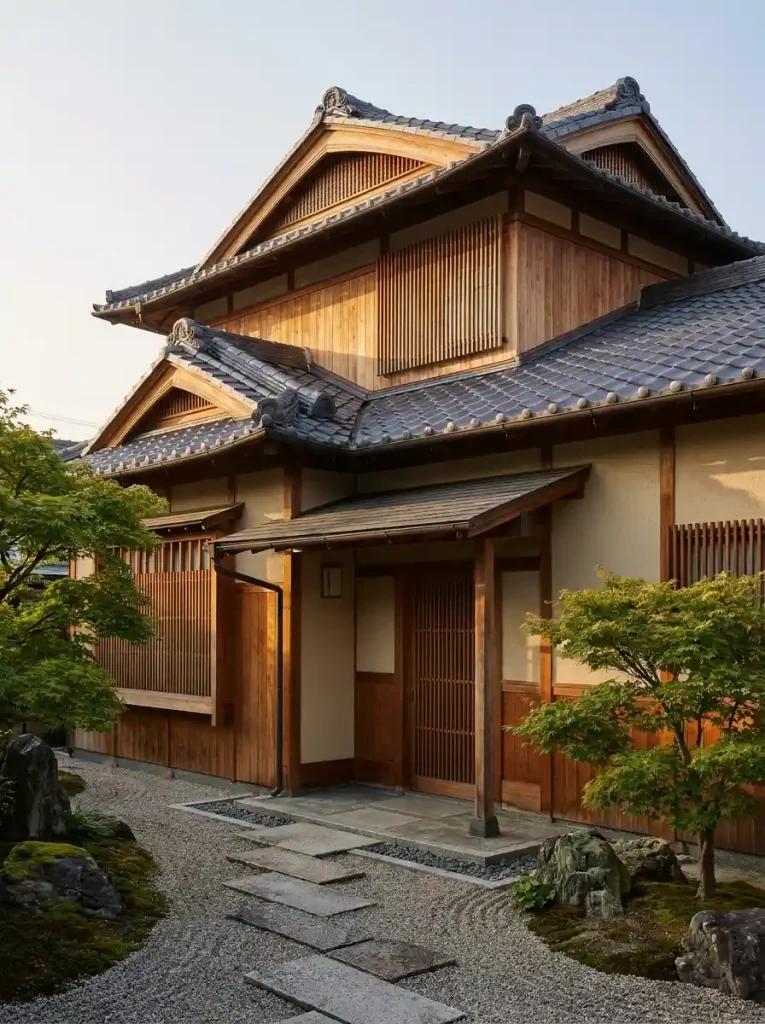
- Traditional charcoal clay roof tiles
- Warm timber exterior walls
- Natural textured plaster sections
- Wooden lattice window details
- Deep overhanging roof eaves
- Stone garden pathway
A traditional clay tile roof gives a Kyoto-inspired home an unmistakable architectural identity. Its dark surface creates a beautiful contrast against warm timber and natural plaster, while the overhanging eaves provide both visual character and practical shelter. The roof can become the main focal point when the rest of the facade is kept simple and balanced. Wooden lattice windows introduce traditional craftsmanship, while a stone pathway creates a natural connection between the entrance and the surrounding garden. Choose earthy colors that complement the roof instead of competing with it. This design is especially appealing for those who want to bring the atmosphere of traditional Japanese architecture into a residential exterior with lasting character.
4. Minimalist Japanese Home with a Zen Garden Entrance
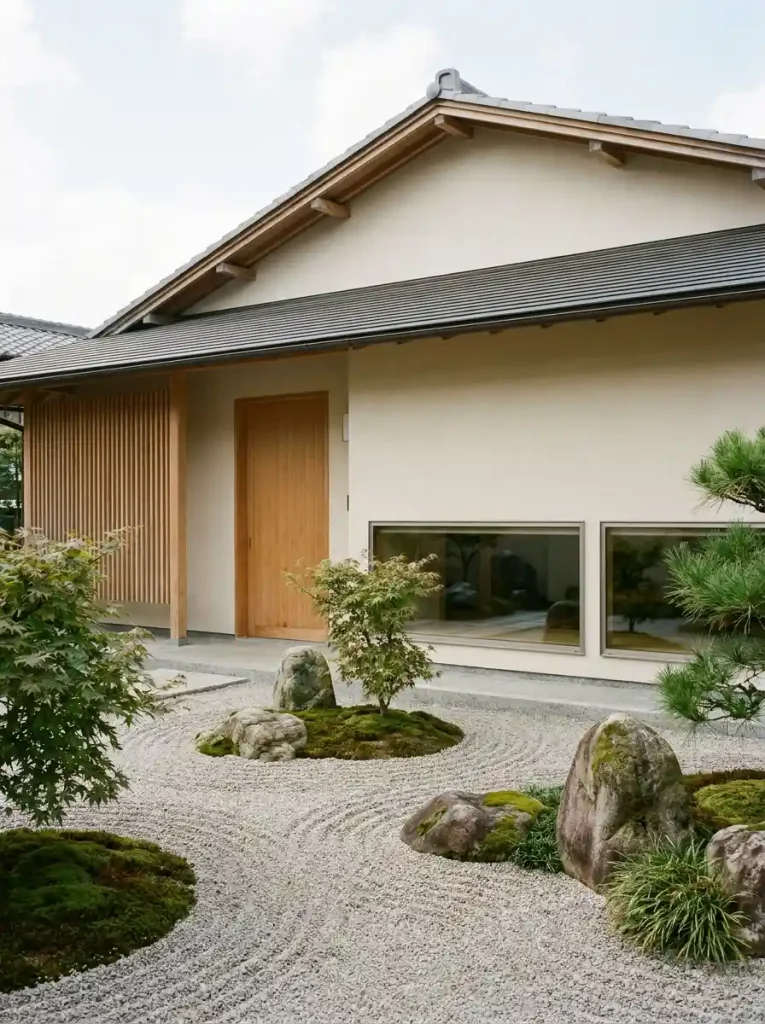
- Warm off-white plaster exterior
- Natural wooden entrance door
- Simple dark roof design
- Carefully raked gravel garden
- Smooth natural stone arrangement
- Sculptural moss and greenery
A Zen garden entrance can transform a minimalist Japanese home into a peaceful retreat. Rather than filling the front yard with numerous plants and decorations, this design uses carefully arranged gravel, stones, moss, and a few selected plants to create a balanced landscape. The warm off-white facade provides a quiet background, allowing the garden’s natural textures to become more noticeable. A wooden entrance door introduces warmth and creates a welcoming focal point without disrupting the simplicity of the architecture. Keep the overall arrangement intentional, with enough open space for each element to feel visually connected. This style is ideal for creating a calm first impression and bringing the principles of Japanese garden design into everyday residential living.
5. Kyoto-Inspired Home with a Bamboo Privacy Fence
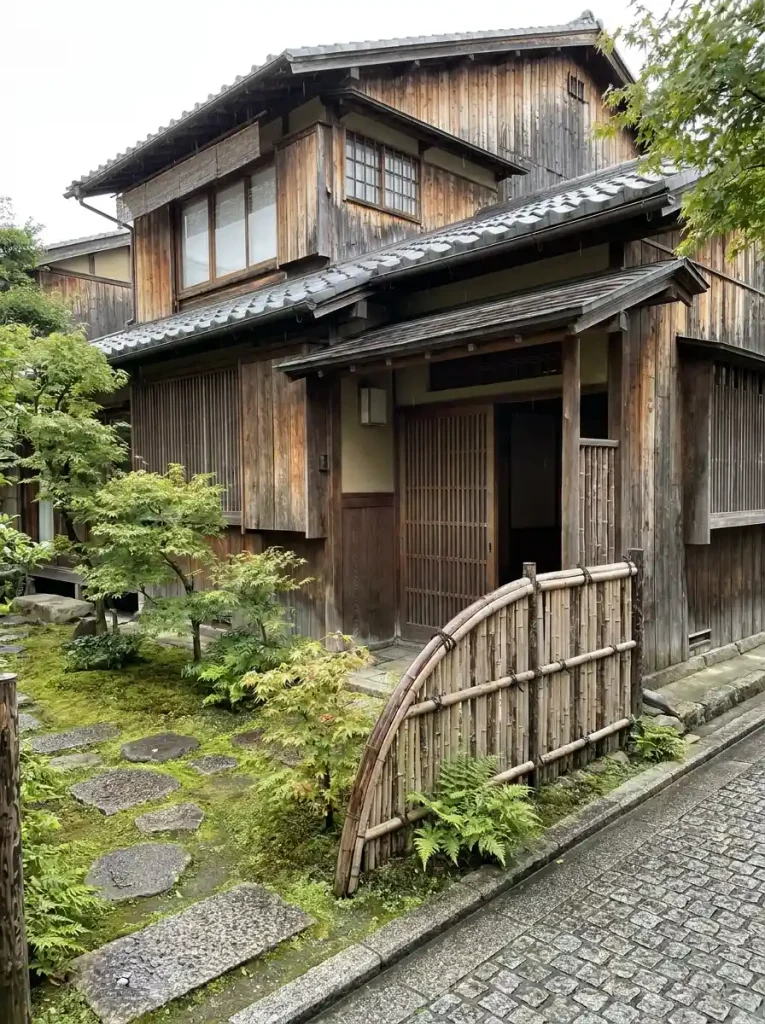
- Handcrafted natural bamboo fence
- Warm timber exterior facade
- Traditional dark tiled roof
- Elegant wooden entrance
- Natural stone garden pathway
- Moss and ornamental plants
A bamboo privacy fence is a beautiful way to introduce traditional Japanese character while making an exterior feel more secluded. Its natural texture creates a gentle visual barrier without the heavy appearance of a solid wall. When combined with warm timber siding and a traditional tiled roof, the fence becomes a natural extension of the home’s architecture. A simple stone pathway can guide visitors toward the entrance, while moss and carefully selected plants soften the surrounding garden. Choose bamboo in natural golden or warm brown tones to maintain a cohesive palette. This design is particularly useful when you want to create a private entrance that feels connected to nature and reflects the quiet beauty of Kyoto-inspired outdoor spaces.
6. Contemporary Japanese Home with a Stone and Timber Exterior
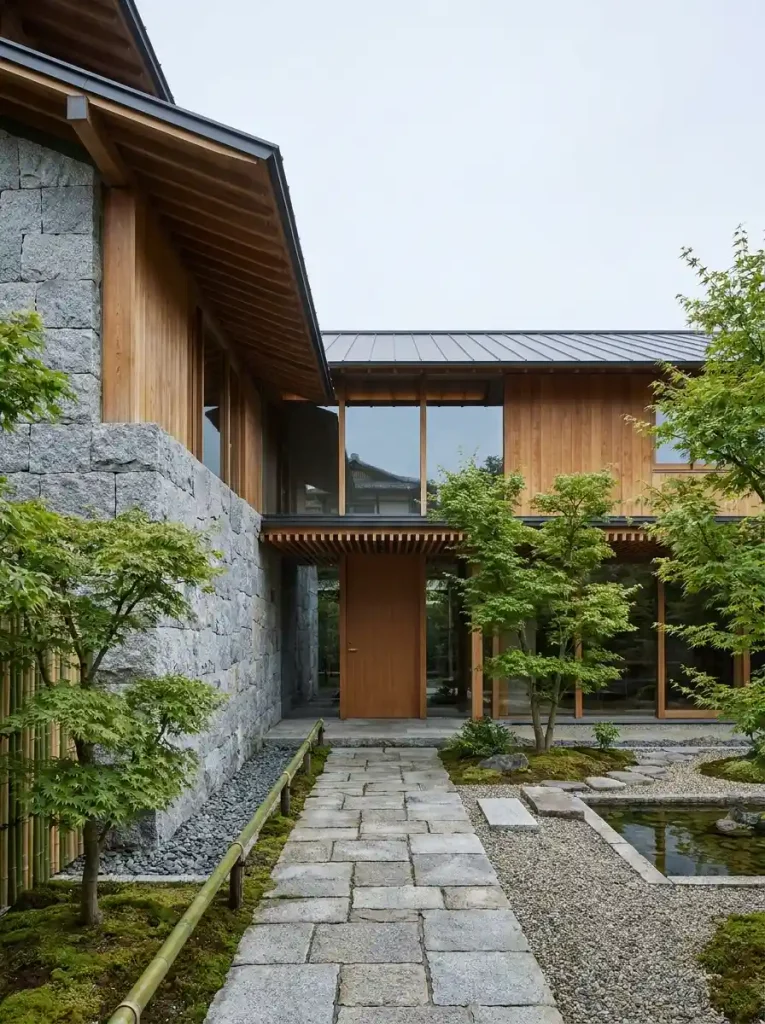
- Natural stone exterior walls
- Warm cedar timber cladding
- Large minimalist glass windows
- Simple dark roof structure
- Recessed wooden entrance
- Subtle Japanese garden planting
Combining stone and timber creates a contemporary Japanese exterior that feels grounded, natural, and sophisticated. Stone introduces a sense of permanence, while warm cedar brings softness and visual warmth to the facade. Rather than covering the entire exterior in one material, use each finish in carefully selected sections to create contrast and architectural depth. Large windows can make the home feel more open, while a recessed wooden entrance provides a welcoming focal point. A simple garden with natural stones and restrained greenery connects the structure to its surroundings. This combination is especially attractive for modern homes that want to preserve the calm, organic character associated with traditional Japanese design.
7. Kyoto-Inspired Home with a Beautiful Engawa Veranda
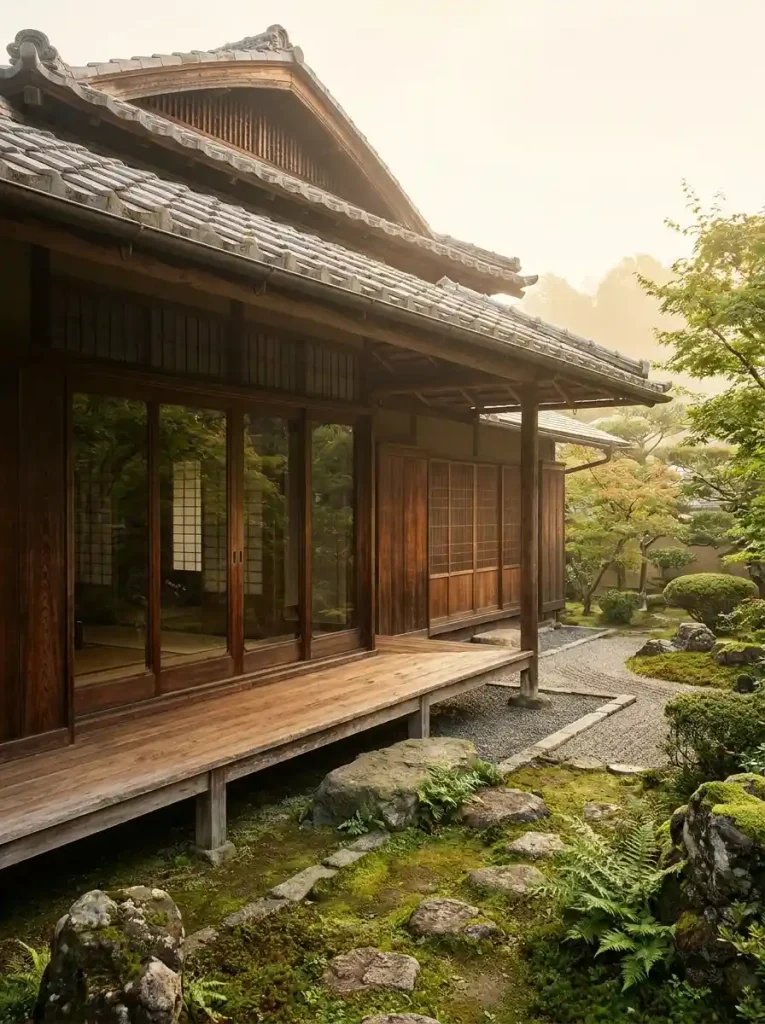
- Traditional wooden engawa veranda
- Warm timber exterior walls
- Large sliding glass doors
- Traditional tiled roof
- Deep protective roof eaves
- Peaceful surrounding garden
An engawa veranda creates a beautiful connection between the home and its garden. Traditionally, this narrow wooden space acts as a transition between indoor rooms and the outdoor environment, offering a comfortable place to sit and enjoy the changing seasons. Its natural timber flooring looks especially attractive alongside sliding glass doors and warm wooden walls. Deep roof eaves provide shelter and create soft shadows that add depth to the exterior. Keep the surrounding garden simple with stones, moss, and carefully placed greenery so the veranda remains the main feature. This design brings an inviting sense of openness to Japanese architecture while maintaining the privacy and peaceful atmosphere that make Kyoto-inspired homes so appealing.
8. Japanese Home with a Dark Charcoal Exterior
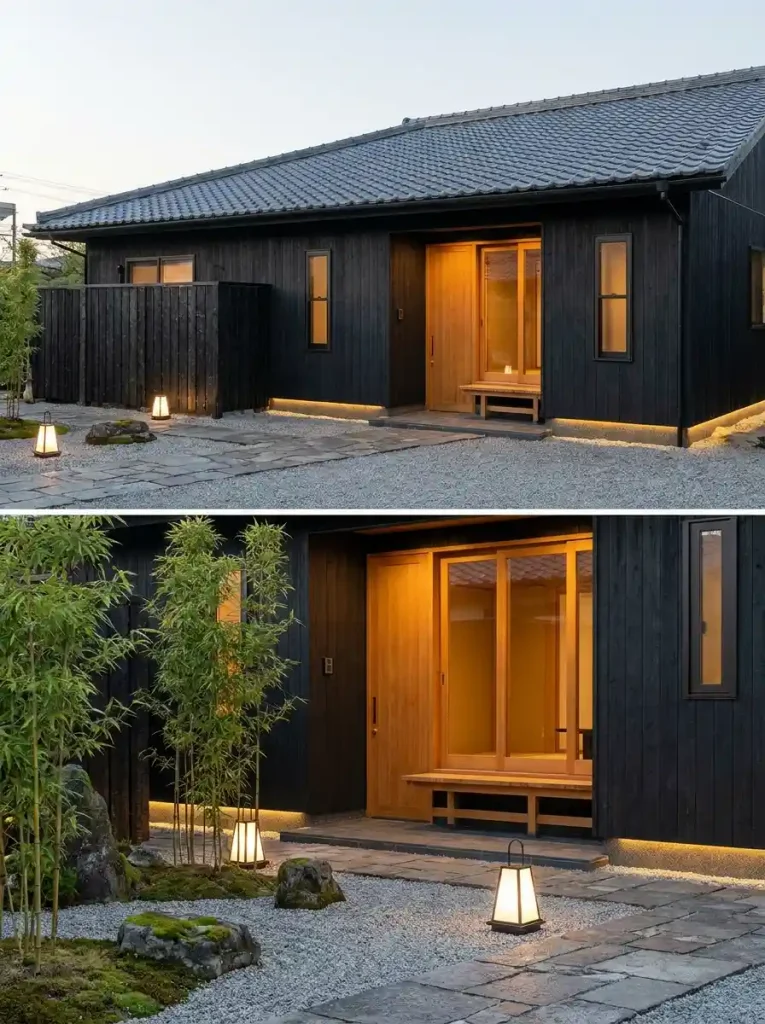
- Deep charcoal exterior walls
- Blackened timber cladding
- Traditional dark tiled roof
- Warm natural wood entrance
- Minimalist window arrangement
- Subtle stone and bamboo garden
A dark charcoal exterior gives a Kyoto-inspired home a dramatic yet refined appearance. The deep color creates a beautiful backdrop for natural wood, stone, and carefully selected garden plants. Blackened timber can introduce a traditional material character, while a warm wooden entrance prevents the facade from feeling too severe. The roof should complement the darker walls, creating a visually connected architectural composition. To soften the overall design, introduce bamboo, moss, and a few low-maintenance garden plants around the entrance. Subtle exterior lighting can also highlight the texture of the timber after sunset. This approach is ideal for anyone who prefers a more contemporary interpretation of Japanese architecture with a strong connection to natural materials.
9. Kyoto-Inspired Home with a Courtyard Garden
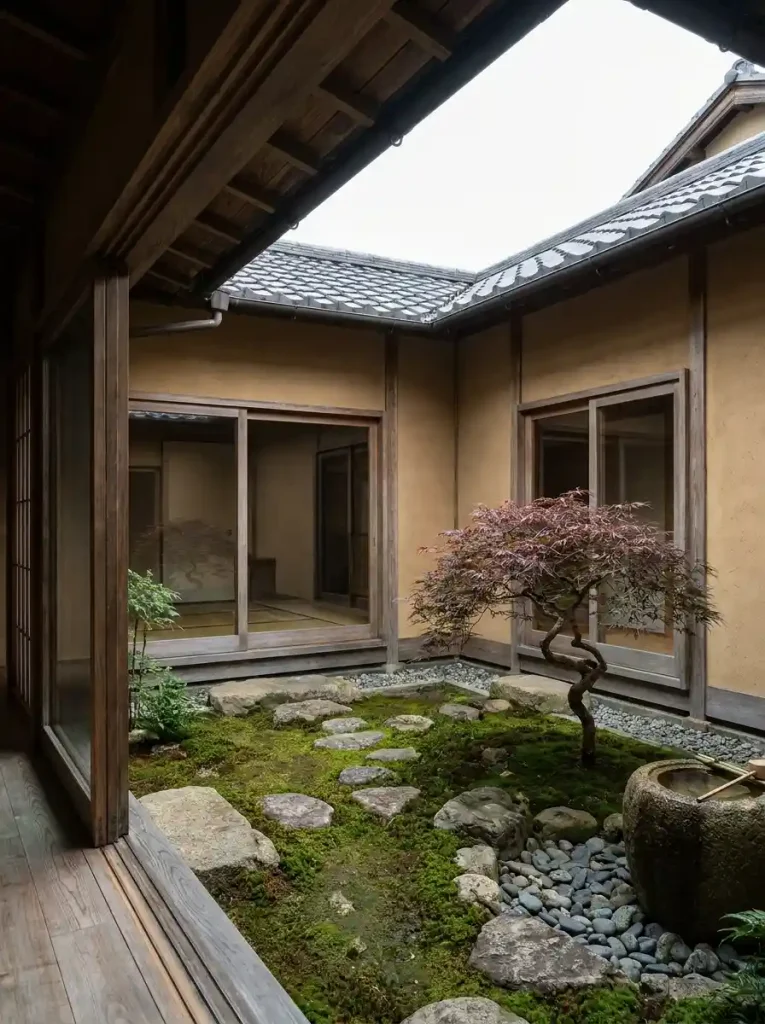
- Enclosed Japanese courtyard garden
- Natural timber exterior walls
- Warm textured plaster surfaces
- Sliding glass garden doors
- Moss-covered garden ground
- Sculptural Japanese maple tree
A courtyard garden brings a peaceful natural element into the heart of a Kyoto-inspired home. By arranging the architecture around a small outdoor space, the design creates privacy while allowing greenery and daylight to become part of the home’s visual experience. Natural timber walls and warm plaster surfaces provide a beautiful backdrop for the garden, while sliding glass doors create a gentle connection between indoor and outdoor areas. A Japanese maple tree can become the focal point, especially when surrounded by moss, stones, and carefully arranged plants. Keep the garden relatively simple so its individual elements can be appreciated. This design is perfect for homes where privacy, natural light, and peaceful outdoor views are important.
10. Traditional Japanese Home with a Beautiful Wooden Gate
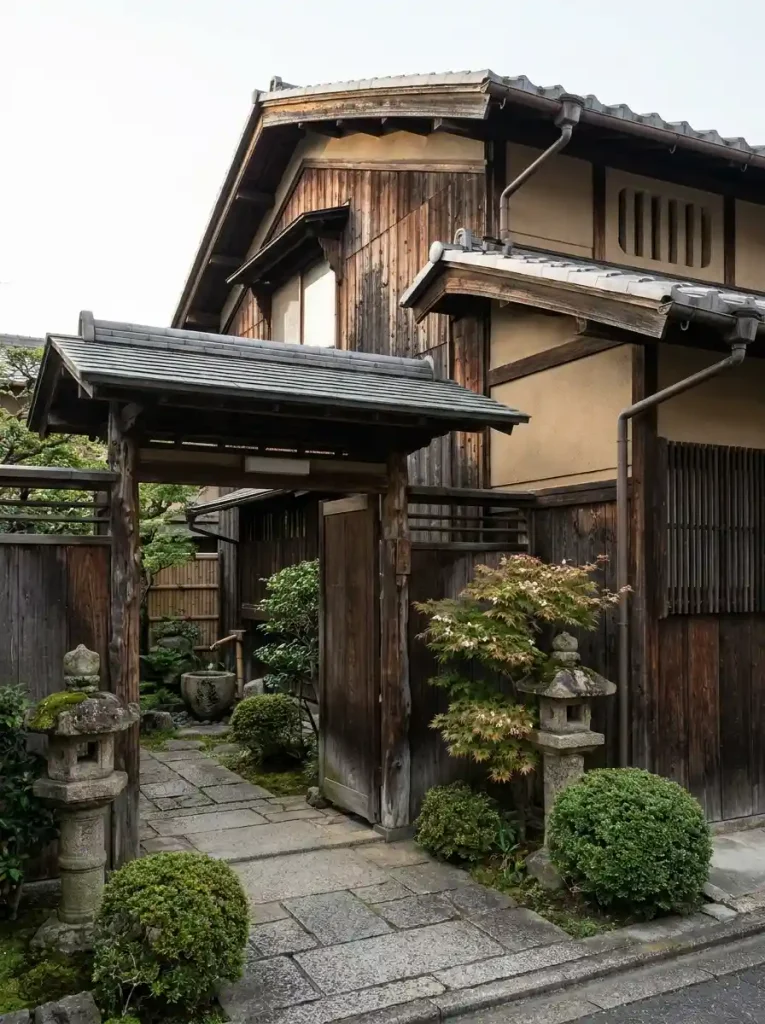
- Handcrafted wooden entrance gate
- Dark traditional timber facade
- Classic tiled roof
- Natural textured plaster walls
- Decorative stone lanterns
- Carefully maintained entrance garden
A handcrafted wooden gate gives a Japanese home a welcoming yet private entrance. Its traditional construction can introduce beautiful craftsmanship before visitors even reach the main doorway. Dark timber works especially well with natural plaster walls and traditional roof tiles, creating a balanced combination of materials and colors. A stone pathway leading through the gate can make the entrance feel more intentional, while small stone lanterns and restrained greenery add a subtle garden atmosphere. Choose wood with natural grain and a finish that allows its texture to remain visible. This design is particularly appealing for homes that need a stronger sense of privacy while still maintaining a warm, inviting connection with the surrounding landscape.
11. Kyoto-Inspired Home with Natural White Plaster Walls
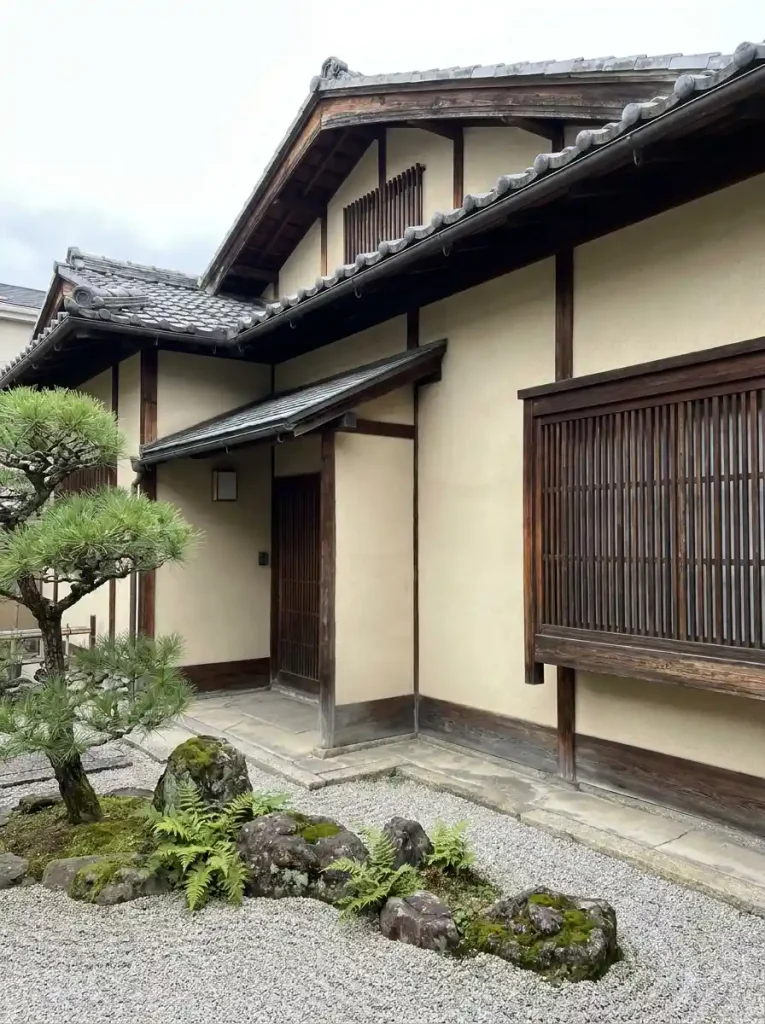
- Warm-white plaster exterior walls
- Natural cedar timber accents
- Traditional dark tiled roof
- Wooden lattice window details
- Simple recessed entrance
- Minimal stone garden
White plaster walls can give a Kyoto-inspired home a soft and timeless appearance. Their subtle texture creates visual interest without requiring elaborate exterior decoration. When paired with cedar timber accents, the facade gains warmth and depth while preserving a clean architectural character. Traditional roof tiles and wooden lattice windows introduce familiar Japanese details that help the exterior feel authentic rather than overly modern. A recessed entrance can create a quiet focal point, especially when framed by natural wood. For landscaping, choose a small stone garden with moss and a few carefully selected plants. This combination is ideal for homeowners who appreciate simplicity, natural materials, and a bright exterior that feels calm in every season.
12. Japanese Home with a Beautiful Stepping-Stone Pathway
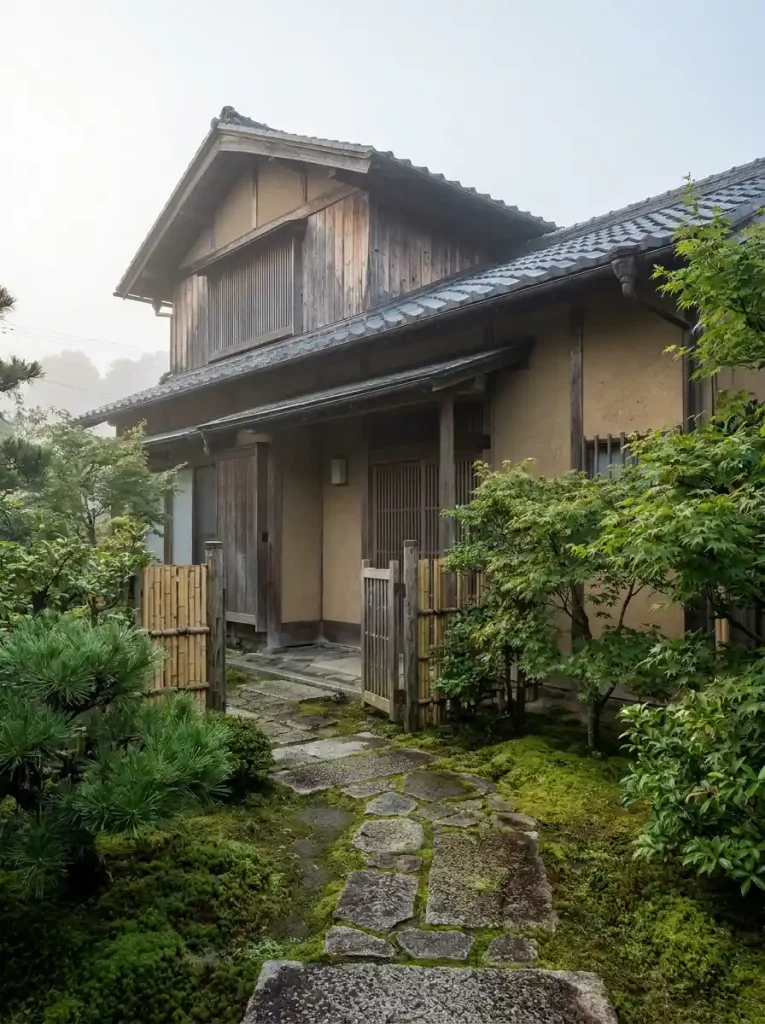
- Natural timber exterior facade
- Traditional tiled roof
- Carefully arranged stepping stones
- Moss-covered garden ground
- Small ornamental plants
- Simple wooden entrance door
Stepping stones create a gentle and natural route toward a Japanese home while adding a distinctive garden detail. Their irregular shapes and spacing make the pathway feel organic rather than overly formal. When surrounded by moss, small plants, and natural gravel, the stones become part of a peaceful landscape that complements the architecture. A warm timber facade and traditional roof provide a beautiful backdrop, while a simple wooden entrance keeps the design visually balanced. Consider using different sizes of natural stone to create a more relaxed walking experience. This idea is especially useful for smaller front gardens where a full paved walkway might feel too heavy. It brings texture, movement, and a sense of quiet beauty to the exterior.
13. Kyoto-Inspired Home with a Japanese Maple Garden
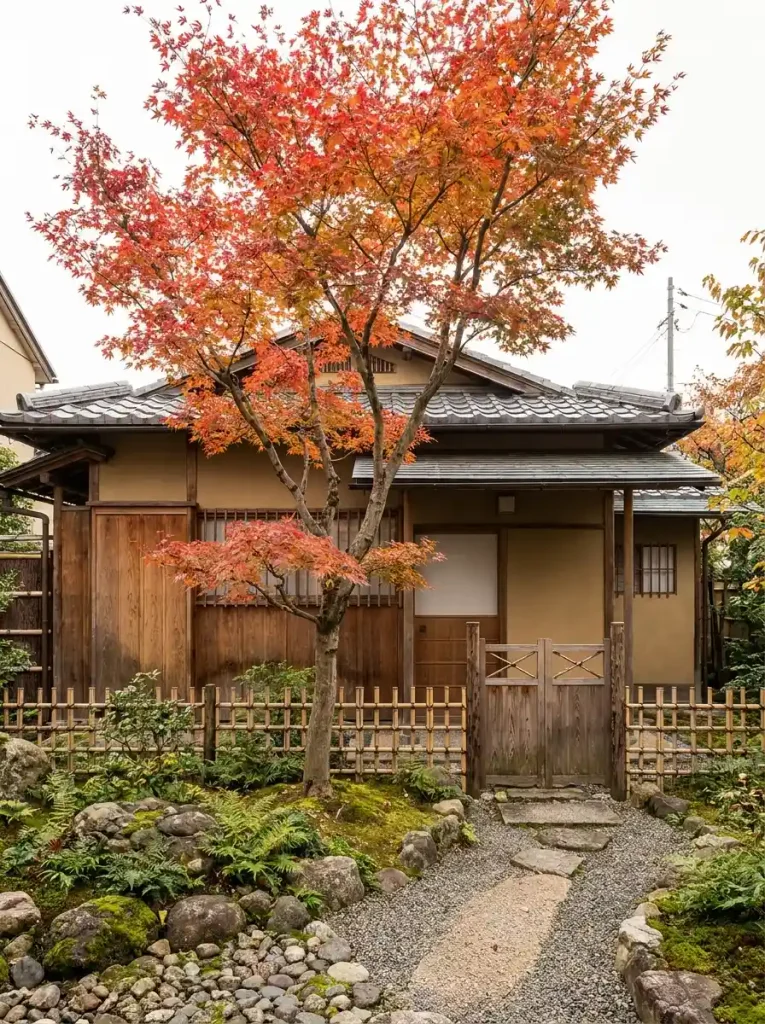
- Warm timber exterior siding
- Traditional dark tiled roof
- Natural plaster wall details
- Sculptural Japanese maple tree
- Moss and natural stone accents
- Simple wooden garden fence
A Japanese maple garden can make a Kyoto-inspired exterior feel especially graceful and connected to the changing seasons. The tree’s delicate branches and distinctive leaves provide a natural focal point that complements traditional timber architecture. In autumn, its foliage can introduce beautiful seasonal colors, while the surrounding moss and stones maintain a calm garden atmosphere throughout the year. Keep the facade relatively simple so the maple tree remains the main landscape feature. A low wooden fence can create a subtle boundary without making the entrance feel closed off. This design is a wonderful choice for homeowners who appreciate seasonal gardens and want their exterior to feel like a peaceful extension of the natural environment.
14. Modern Kyoto Home with Floor-to-Ceiling Glass Windows
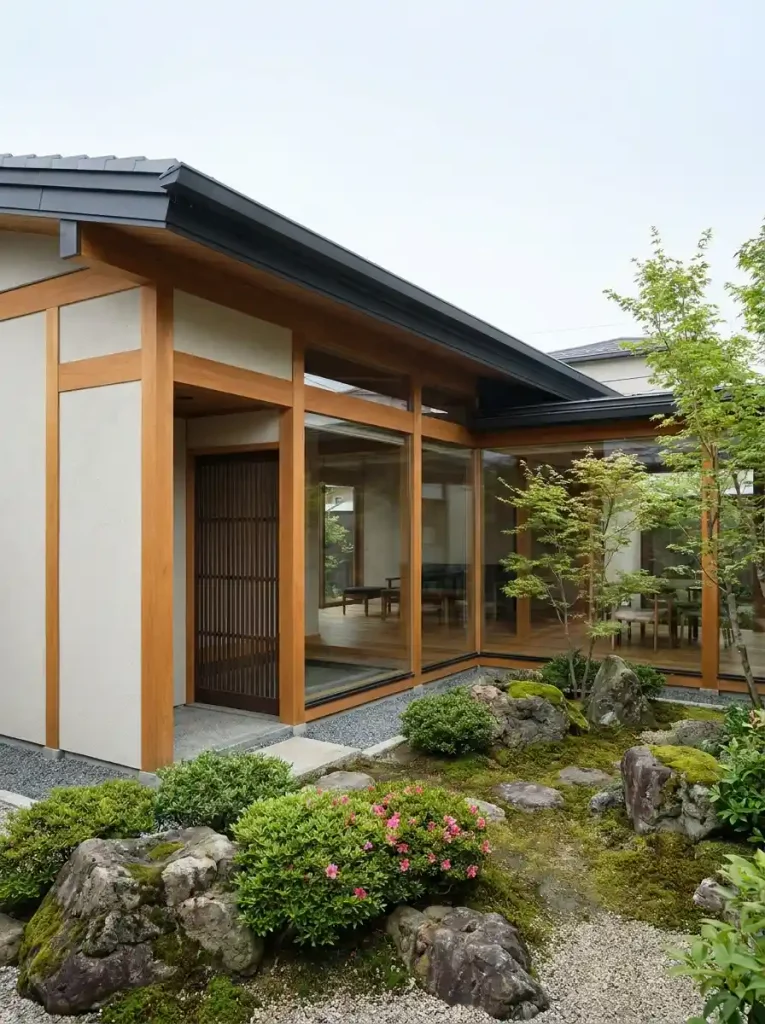
- Floor-to-ceiling glass windows
- Warm cedar timber framing
- Minimalist plaster exterior walls
- Low dark roof design
- Recessed wooden entrance
- Private Japanese garden
Large glass windows can make a contemporary Kyoto-inspired home feel open while strengthening its connection with the surrounding landscape. When framed with warm cedar timber, the glass creates a beautiful balance between modern transparency and traditional natural materials. Minimalist plaster walls keep the exterior from becoming visually overwhelming, while a low roof gives the home a calm horizontal profile. A private Japanese garden visible through the windows can become an important part of the exterior composition. Use natural stones, moss, and a few carefully selected plants to create a peaceful view. This design works particularly well for homeowners who want modern comfort while preserving the simplicity and nature-centered character of Japanese architecture.
15. Japanese Home with a Traditional Noren-Inspired Entrance
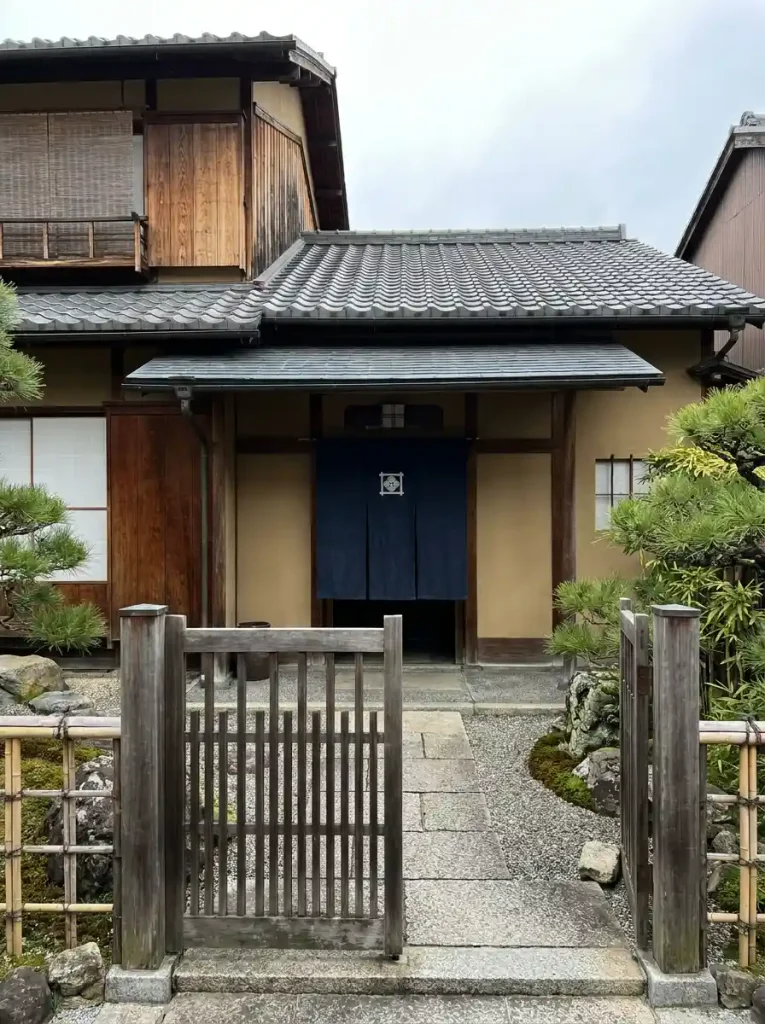
- Traditional wooden entrance door
- Warm timber exterior facade
- Natural plaster wall sections
- Dark traditional tiled roof
- Subtle noren-inspired fabric curtain
- Stone entrance pathway
A noren-inspired entrance can add a distinctive cultural detail to a Kyoto-inspired home. Traditionally associated with Japanese doorways and shopfronts, these fabric curtains create a soft transition between public and private spaces. For a residential exterior, choose a simple neutral fabric that complements the wooden doorway rather than introducing an overly decorative pattern. Warm timber walls, natural plaster, and dark roof tiles help maintain the architectural character around the entrance. A stone pathway and a few understated plants can make the doorway feel even more welcoming. This idea is best used as a subtle finishing detail, allowing the traditional materials and craftsmanship to remain the main focus of the overall exterior design.
16. Kyoto-Inspired Home with a Beautiful Moss Garden
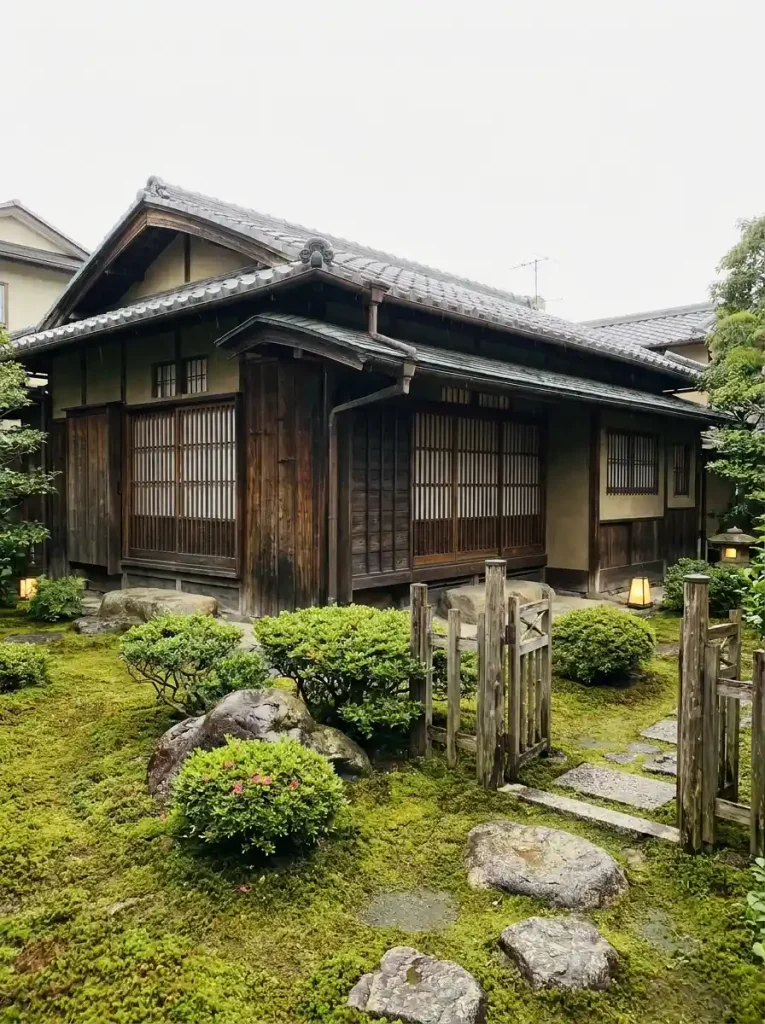
- Warm dark timber exterior walls
- Traditional Japanese tiled roof
- Wooden lattice windows
- Soft green moss garden
- Natural stone arrangements
- Carefully pruned garden shrubs
A moss garden can give a Kyoto-inspired home a quiet and beautifully textured landscape. Its soft green surface creates a gentle contrast against dark timber, stone, and traditional roof tiles. Rather than filling the garden with many colorful flowers, this design relies on different shades of green, natural stone arrangements, and carefully pruned shrubs. The result feels peaceful and visually connected to traditional Japanese garden aesthetics. A simple wooden entrance and lattice windows complete the architectural composition without competing with the garden. Moss works best in suitable shaded and moist conditions, so consider the local climate and maintenance requirements before using it extensively. When thoughtfully planned, this garden can make even a modest exterior feel like a serene retreat.
17. Contemporary Japanese Home with a Beautiful Cantilevered Roof
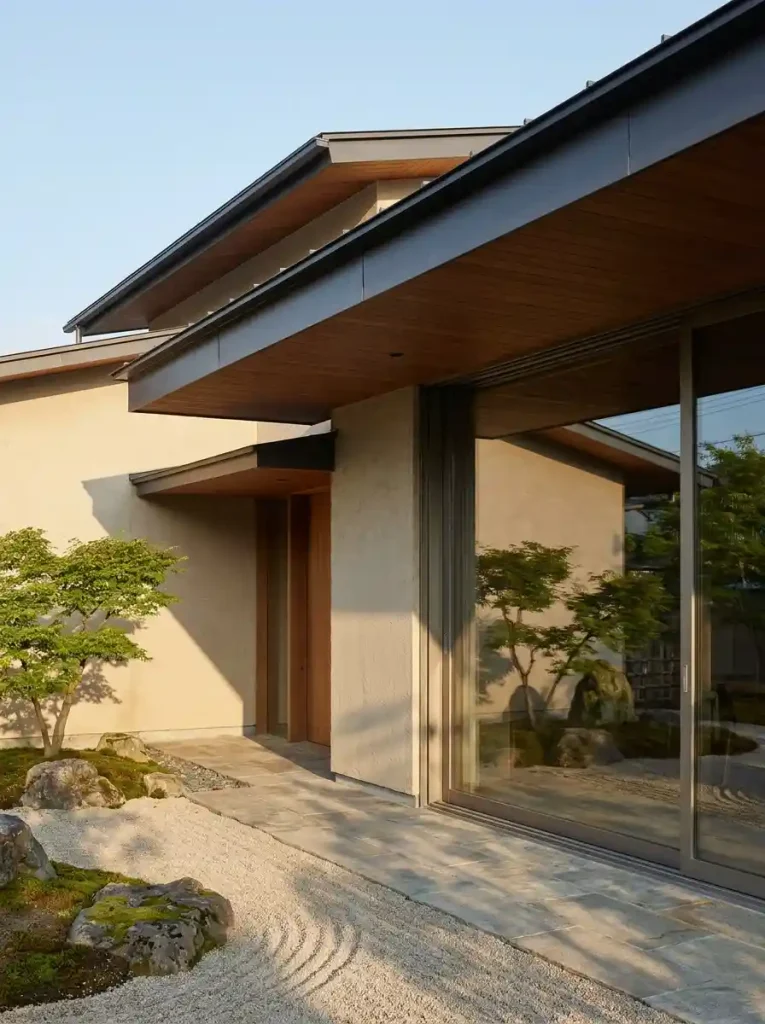
- Deep cantilevered roof overhang
- Warm natural timber soffits
- Minimalist plaster exterior walls
- Large understated windows
- Recessed wooden entrance
- Restrained stone garden
A cantilevered roof can give a modern Japanese home a strong architectural identity while preserving the calm simplicity of its overall design. Its extended edges create beautiful shadow patterns and provide shelter around entrances and outdoor spaces. Warm timber soffits soften the geometric structure, while minimalist plaster walls keep the facade balanced. Large windows can introduce natural light without making the exterior feel overly complicated. A recessed entrance adds depth and creates a welcoming transition into the home. Keep the landscaping restrained with natural stones, ornamental grasses, and a few carefully selected plants. This design is ideal for contemporary homes that want to combine striking architectural proportions with the understated elegance of Japanese design.
18. Kyoto-Inspired Home with a Traditional Stone Lantern Garden
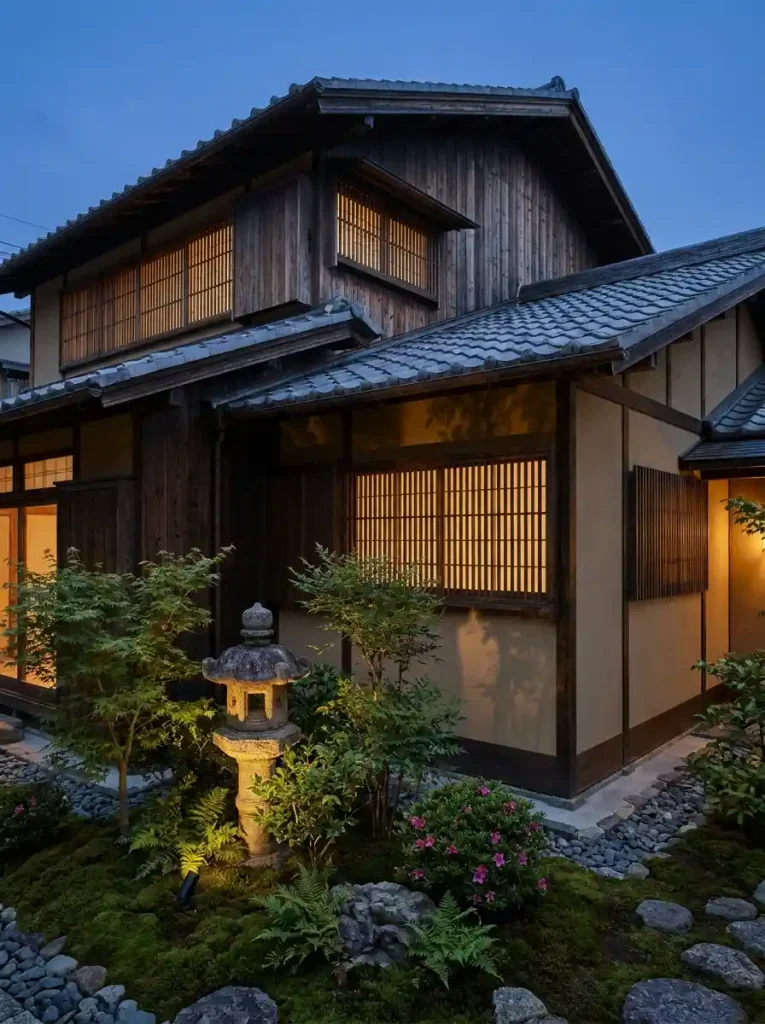
- Natural timber exterior siding
- Warm textured plaster walls
- Traditional tiled roof
- Wooden lattice window details
- Traditional Japanese stone lantern
- Moss and natural stone landscaping
A traditional stone lantern can become a beautiful focal point in a Kyoto-inspired front garden. Its sculptural shape adds a sense of history and craftsmanship while creating a connection to Japanese garden traditions. When placed among moss, natural stones, and carefully arranged shrubs, it feels like an intentional part of the landscape rather than a decorative object. The home’s timber siding and plaster walls provide a complementary architectural backdrop. Subtle outdoor lighting can highlight the lantern and surrounding textures during the evening without making the garden feel overly illuminated. Keep the remaining landscape simple so the stone feature can stand out naturally. This design is perfect for adding character and a peaceful atmosphere to a traditional Japanese exterior.
19. Japanese Home with a Minimalist Courtyard Entrance
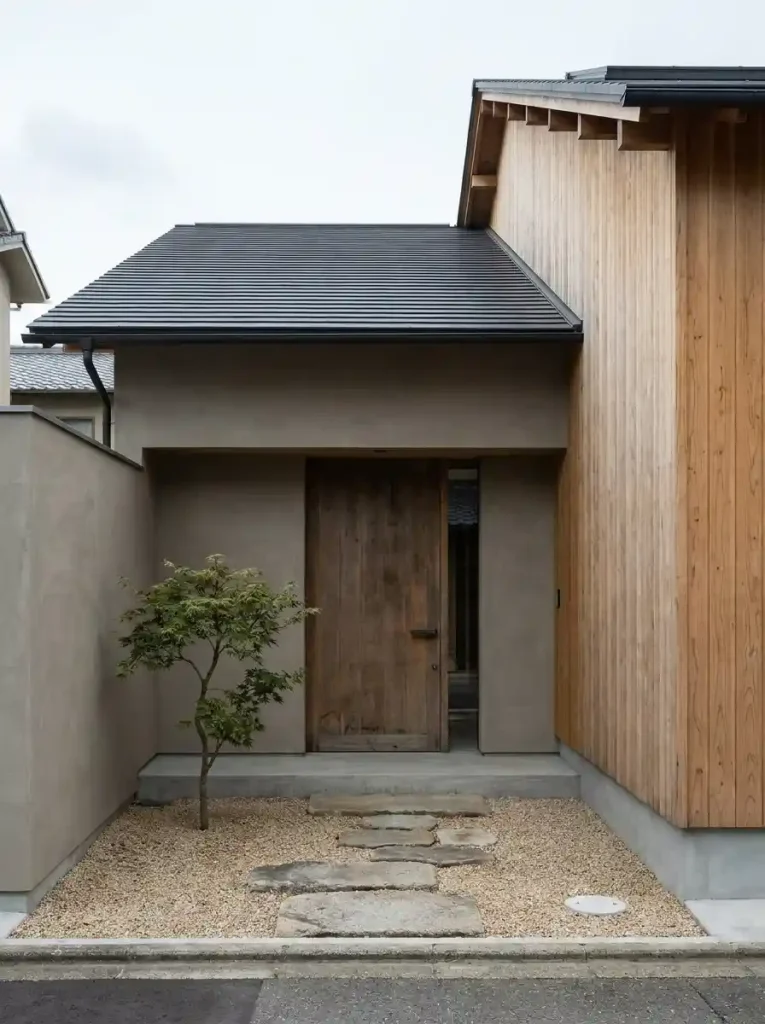
- Warm-gray plaster exterior walls
- Natural cedar wood panels
- Recessed courtyard entrance
- Simple dark roof structure
- Single sculptural garden plant
- Natural gravel and stone accents
A recessed courtyard entrance creates a sense of privacy and calm before entering a Japanese-inspired home. Instead of placing the front door directly against the outer facade, this design introduces a sheltered transition that adds architectural depth. Warm-gray plaster walls create a subtle background, while cedar panels bring natural warmth to the doorway. A small courtyard can remain beautifully simple with natural gravel, a few stones, and one carefully selected plant. This restrained approach allows each material to become noticeable without making the entrance feel crowded. The design is especially suitable for contemporary homes in urban settings where privacy and a peaceful arrival experience are important. Its simplicity gives the exterior a refined and timeless appearance.
20. Luxurious Kyoto-Inspired Japanese Home with Timeless Natural Materials
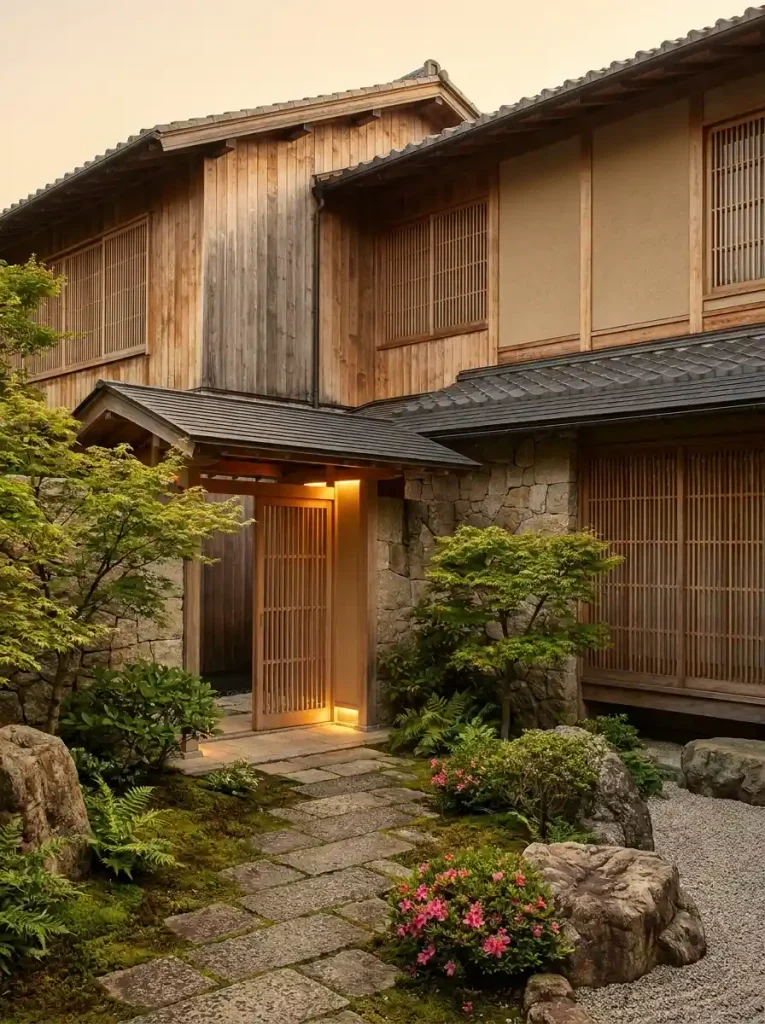
- Premium natural cedar timber facade
- Refined natural stone wall sections
- Traditional dark tiled roof
- Textured warm plaster surfaces
- Elegant wooden lattice screens
- Peaceful landscaped entrance garden
A luxurious Kyoto-inspired home brings together the most beautiful elements of Japanese exterior design without relying on excessive decoration. Natural cedar, stone, plaster, and traditional roof tiles create a layered material palette that feels rich yet balanced. Wooden lattice screens introduce craftsmanship and privacy, while a carefully designed entrance makes the home feel welcoming. The surrounding garden can include moss, natural stone pathways, and mature plants that connect the architecture to its landscape. Subtle lighting helps reveal the textures of the materials after sunset, creating a warm and peaceful atmosphere. The most important detail is maintaining harmony between every element, allowing the quality of the materials and the simplicity of the architecture to define the home’s luxury.
Final Thoughts: Kyoto-Inspired Japanese Home Exteriors
Kyoto-inspired Japanese home exteriors show how beautiful architecture can emerge from simplicity, natural materials, and a thoughtful relationship with the surrounding landscape. Whether you prefer a traditional timber townhouse, a contemporary home with large glass windows, or a peaceful Zen garden entrance, each design offers a different way to bring Japanese-inspired serenity into your exterior.
The secret to creating this look is choosing materials and details that work naturally together. Combine warm wood with stone, use earthy exterior colors, introduce thoughtful garden elements, and keep unnecessary decoration to a minimum. With the right balance of traditional craftsmanship and modern comfort, you can create a home exterior that feels peaceful, elegant, and timeless.