25 Aesthetic Apartment Room Ideas for a Modern Look
Your apartment doesn’t need a huge renovation to look completely different.These 25 Aesthetic Apartment Room Ideas by The Home Vista can turn ordinary spaces into polished, comfortable rooms that feel thoughtfully designed and genuinely personal. Whether your home feels too plain, cramped, dark, or simply disconnected, the right combination of furniture, lighting, color, texture, and storage can make a remarkable difference. From calming neutral living rooms to cozy bedrooms and clever small-space solutions, these ideas focus on creating beauty without sacrificing everyday functionality. In my experience, the most successful apartment makeovers are rarely about filling every corner; they are about choosing the right pieces, arranging them intentionally, and giving each room enough breathing space.
1. Neutral Living Room

- Soft neutral colors make the apartment feel brighter and more spacious.
- Natural wood introduces warmth without making the room feel heavy.
- Layered fabrics prevent a neutral palette from looking flat or unfinished.
- Simple furniture creates a flexible foundation for seasonal decorating.
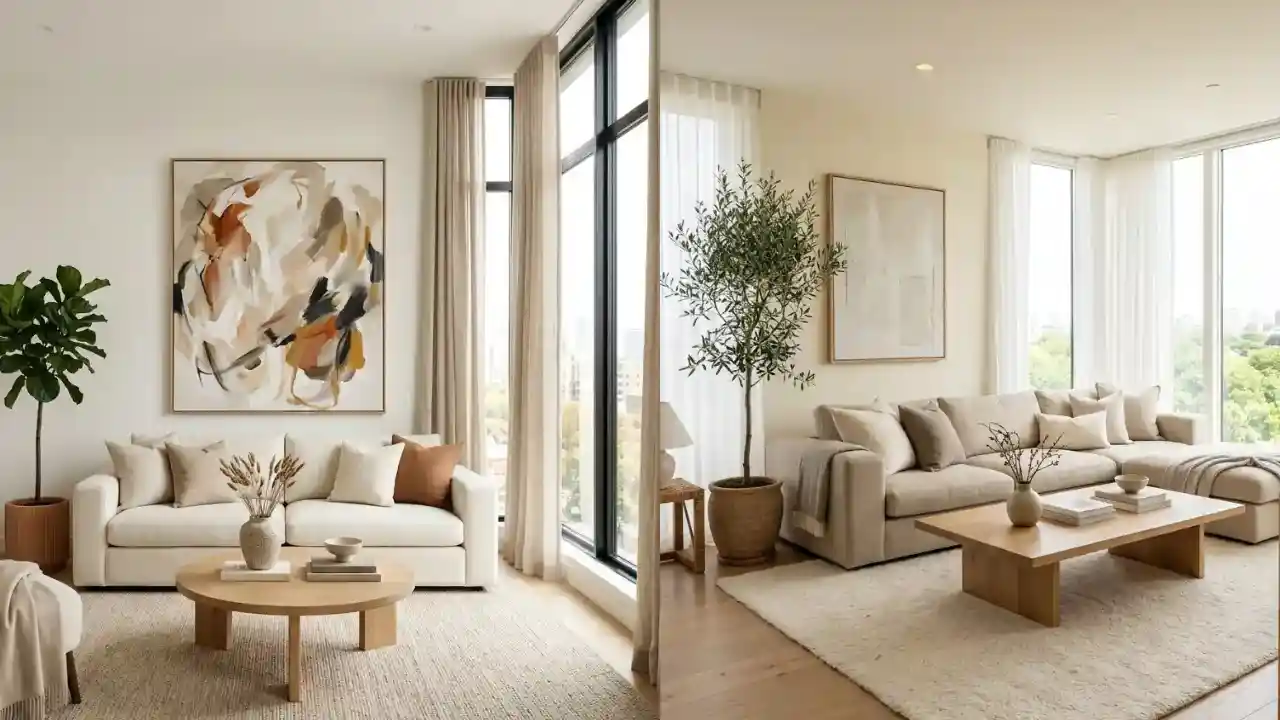
A neutral living room can instantly make an apartment feel calmer, brighter, and more sophisticated. Cream walls, a soft beige sofa, natural wood accents, and a textured area rug create a timeless foundation that works beautifully with contemporary architecture. The restrained palette also allows artwork, greenery, and decorative objects to become subtle focal points. Instead of relying on strong colors, the room gains personality through materials and proportions. This approach is particularly useful when working with limited square footage because lighter tones reflect natural light and help the entire living area feel more open.
The secret to making neutral apartment decor feel luxurious is layering rather than simply matching everything. Combine linen curtains, boucle upholstery, woven accessories, warm timber, and tactile cushions to create depth without visual clutter. A low-profile coffee table can preserve sightlines, while one oversized artwork gives the wall enough character without overwhelming it. This design works especially well for modern, Scandinavian, Japandi, and contemporary apartments. It is also easy to refresh later because neutral larger furniture pieces provide a versatile backdrop for changing accent colors, artwork, and seasonal accessories.
2. Curved Sofa Corner
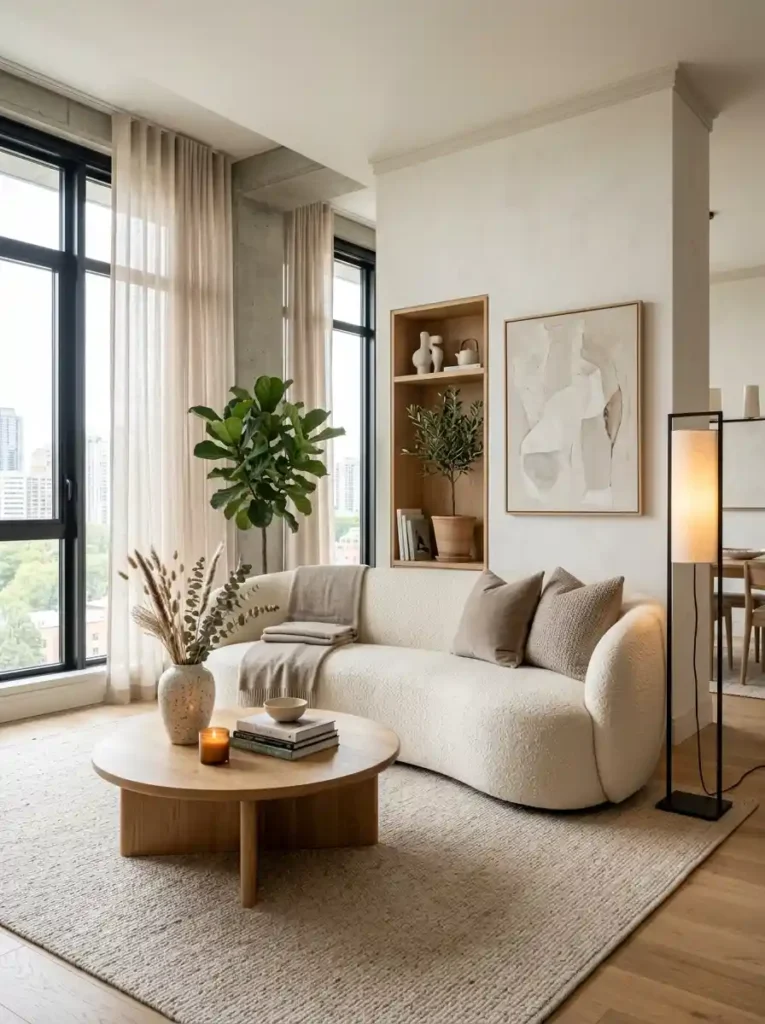
- Rounded furniture softens the sharp architectural lines common in modern apartments.
- A curved sofa creates an inviting focal point without excessive decoration.
- Compact rounded furniture can improve movement around smaller seating areas.
- Soft upholstery adds comfort while maintaining a refined appearance.
A curved sofa can completely change the personality of an apartment living room by introducing softer, more organic lines. Its rounded silhouette creates a natural focal point while making the seating arrangement feel more relaxed and conversational. Choose upholstery in ivory, taupe, warm gray, or another understated tone, then complement it with a round coffee table or sculptural side table. The result feels contemporary without looking overly trendy. I’ve noticed that curved seating can also make a room feel more welcoming because the furniture encourages people to face one another rather than following a rigid linear arrangement.
Scale becomes especially important when using curved furniture in an apartment. Look for a streamlined sofa with a relatively shallow depth and raised legs so more flooring remains visible underneath. This keeps the room feeling airy while providing comfortable seating. Pair it with a softly textured rug, simple curtains, and one statement artwork rather than filling the surrounding space with accessories. The design works particularly well in modern and contemporary apartments, but it can also soften minimalist interiors. With the right proportions, a curved sofa becomes both a practical seating solution and a sophisticated design feature.
3. Warm Wood Bedroom
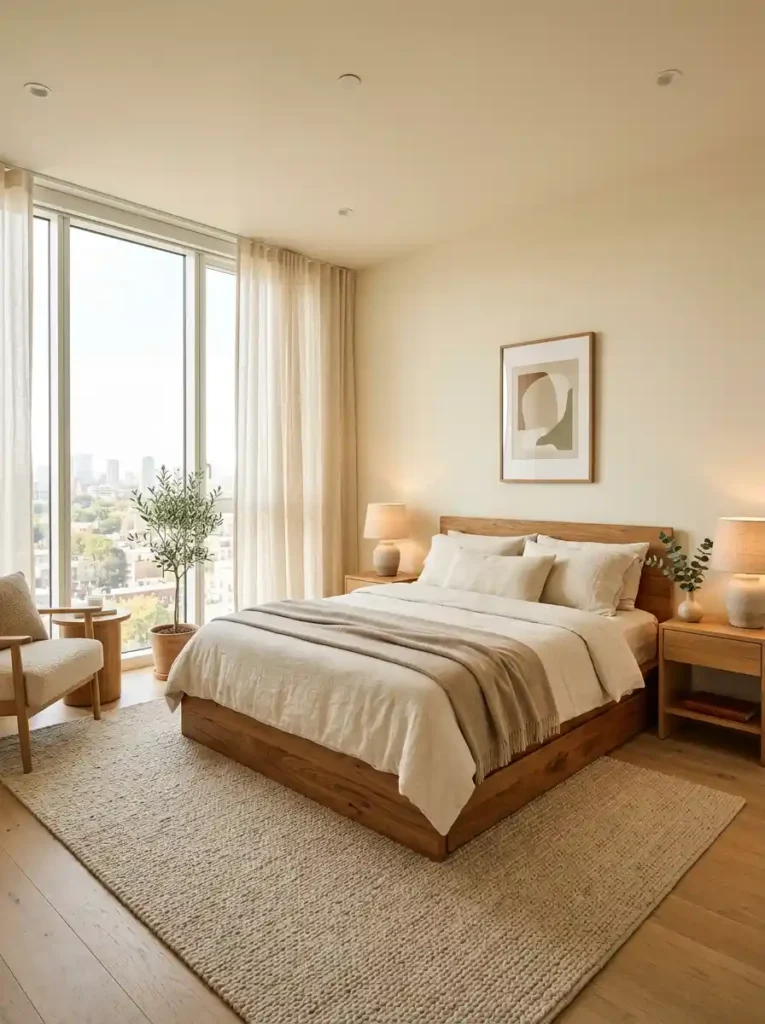
- Natural wood instantly adds warmth to a neutral apartment bedroom.
- Wooden furniture creates a timeless foundation that works with many decorating styles.
- Warm lighting enhances the richness of the wood tones at night.
- Minimal accessories keep the bedroom peaceful rather than visually crowded.
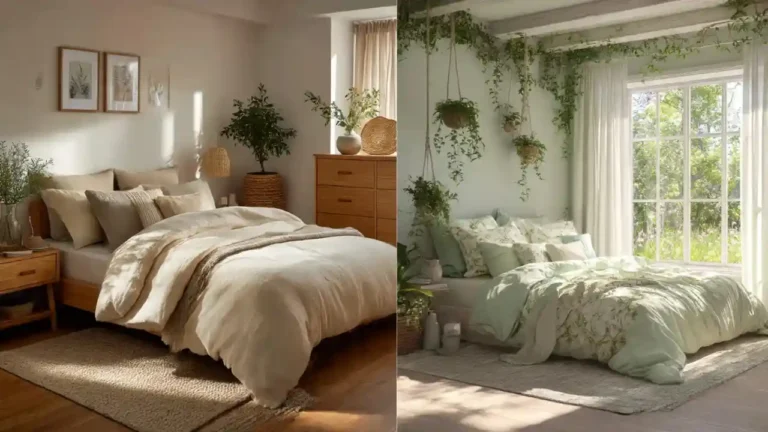
A warm wood bedroom creates an inviting retreat by combining natural materials with soft, understated colors. A light or medium oak bed frame can become the foundation, while matching bedside tables and subtle wood accents create visual continuity throughout the room. Pair these pieces with cream bedding, textured cushions, and warm beige walls for a relaxed modern look. Natural wood also works beautifully against apartment walls that may otherwise feel plain or impersonal. The combination creates enough character to feel custom while remaining flexible enough for changing artwork, bedding, and decorative accessories.
For the most cohesive result, avoid using too many competing wood tones in one small bedroom. Instead, choose one dominant finish and repeat it through two or three carefully selected elements. Soft linen curtains and a textured rug can introduce additional layers without making the room busy. Warm bedside lamps are especially useful because they emphasize the natural grain and create a comfortable evening atmosphere. I’ve found that this approach works particularly well in compact bedrooms because the organic materials add visual warmth without requiring large decorative pieces that consume valuable floor or wall space.
4. Layered Living Room Lighting
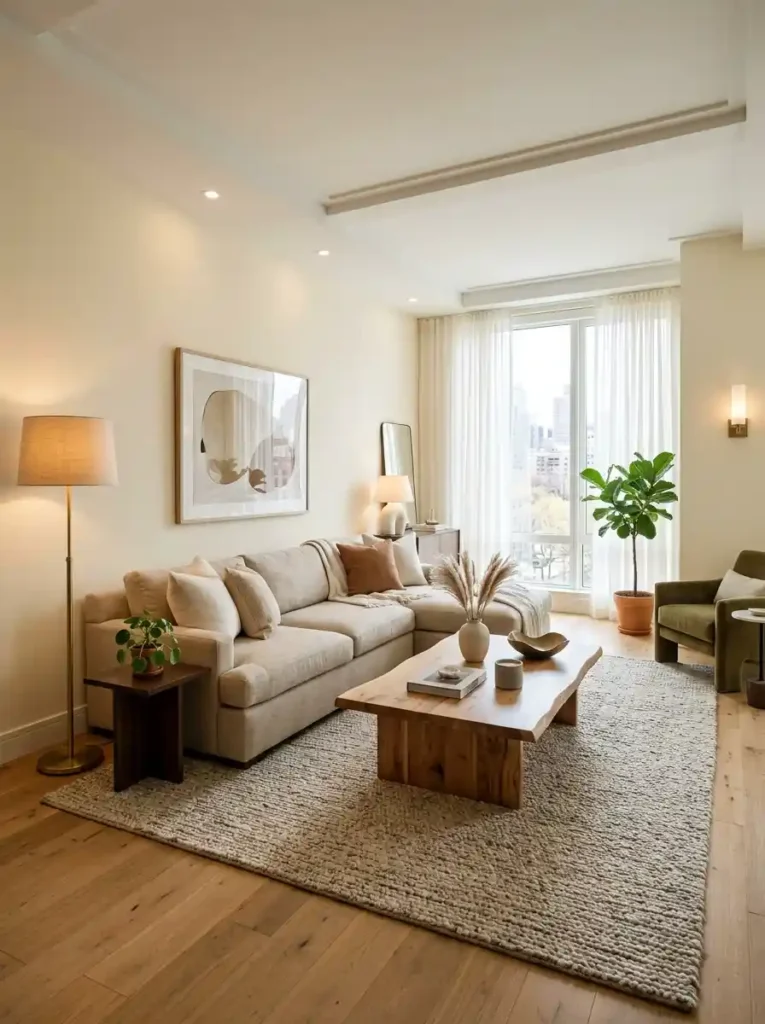
- Multiple light sources make an apartment living room feel warmer and more dimensional.
- Floor lamps can illuminate dark corners without taking up much surface space.
- Wall lighting adds atmosphere while keeping valuable furniture surfaces clear.
- Warm bulbs create a relaxed evening environment without changing the room’s color palette.
Good lighting can make even a modest apartment living room feel dramatically more refined. Instead of depending on one ceiling fixture, combine overhead lighting with a floor lamp, table lamp, or discreet wall light. This creates layers that can be adjusted throughout the day. Bright natural daylight keeps the room fresh during daytime, while warm accent lighting creates a softer atmosphere after sunset. The effect is subtle but powerful because different light sources highlight furniture, artwork, textures, and architectural details. A thoughtfully lit room often feels more expensive simply because every element becomes easier to appreciate.
When planning layered lighting, think about what each corner of the room needs rather than placing fixtures randomly. A reading chair benefits from focused light, while a console or artwork may need gentle accent illumination. Keep the fixture finishes coordinated with existing hardware for a more intentional appearance. In smaller apartments, slim floor lamps and wall-mounted fixtures are particularly useful because they preserve floor and tabletop space. Many interior designers recommend using warm-toned bulbs for living areas because they create a comfortable atmosphere while complementing wood, cream, beige, and earthy interior palettes.
5. Statement Wall Art
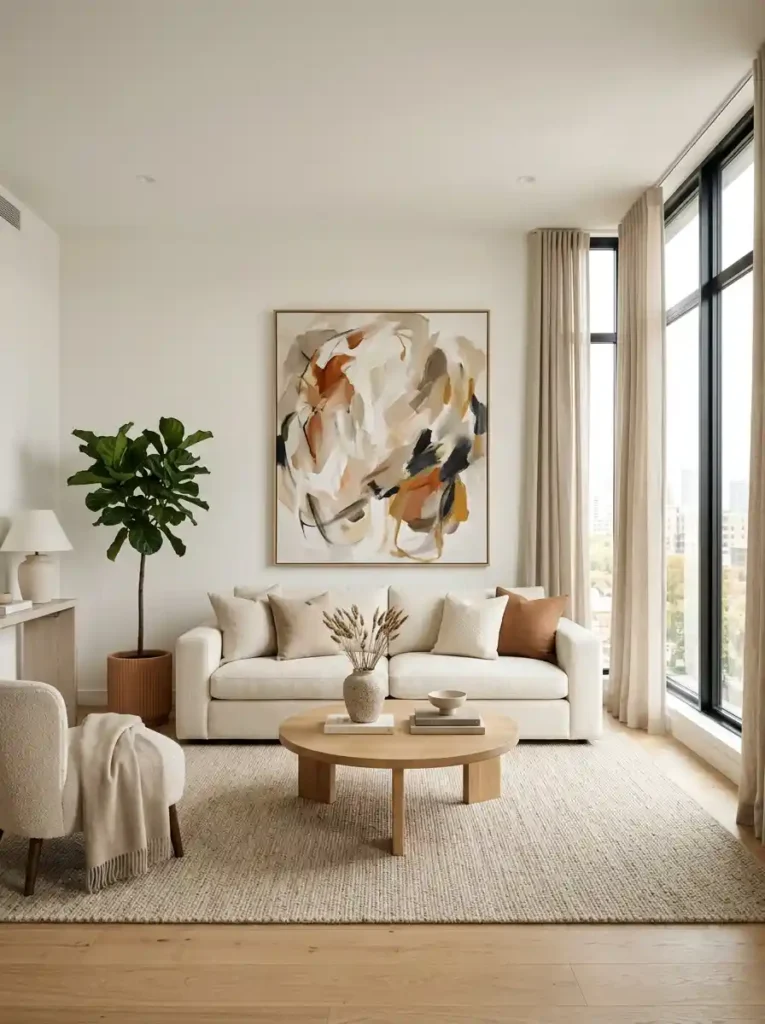
- One oversized artwork can give a simple apartment room an instant focal point.
- Large-scale pieces often look more intentional than many tiny frames.
- Abstract artwork works well with neutral furniture and contemporary interiors.
- Keeping the surrounding décor restrained allows the artwork to remain visually powerful.
A statement artwork can transform a blank apartment wall without requiring structural changes or complicated decorating. Choose one large canvas, framed print, or abstract composition that complements the room’s existing palette. Rather than matching every color precisely, look for artwork that repeats one or two subtle tones already present in the furniture or accessories. This creates cohesion while allowing the piece to stand out. In a living room, placing oversized art above a sofa immediately establishes a visual anchor and can make otherwise basic apartment furniture feel considerably more intentional and elevated.
Placement matters just as much as the artwork itself. A piece that is too small can disappear against a large wall, while an oversized work placed at the wrong height can make the room feel unbalanced. Aim for a comfortable relationship between the artwork and the furniture beneath it, leaving enough surrounding wall space for the composition to breathe. This idea works particularly well for renters because removable hanging solutions can provide a dramatic update without permanent alterations. Pair statement art with simple lighting, neutral furnishings, and minimal accessories for a sophisticated contemporary apartment aesthetic.
6. Compact Dining Nook
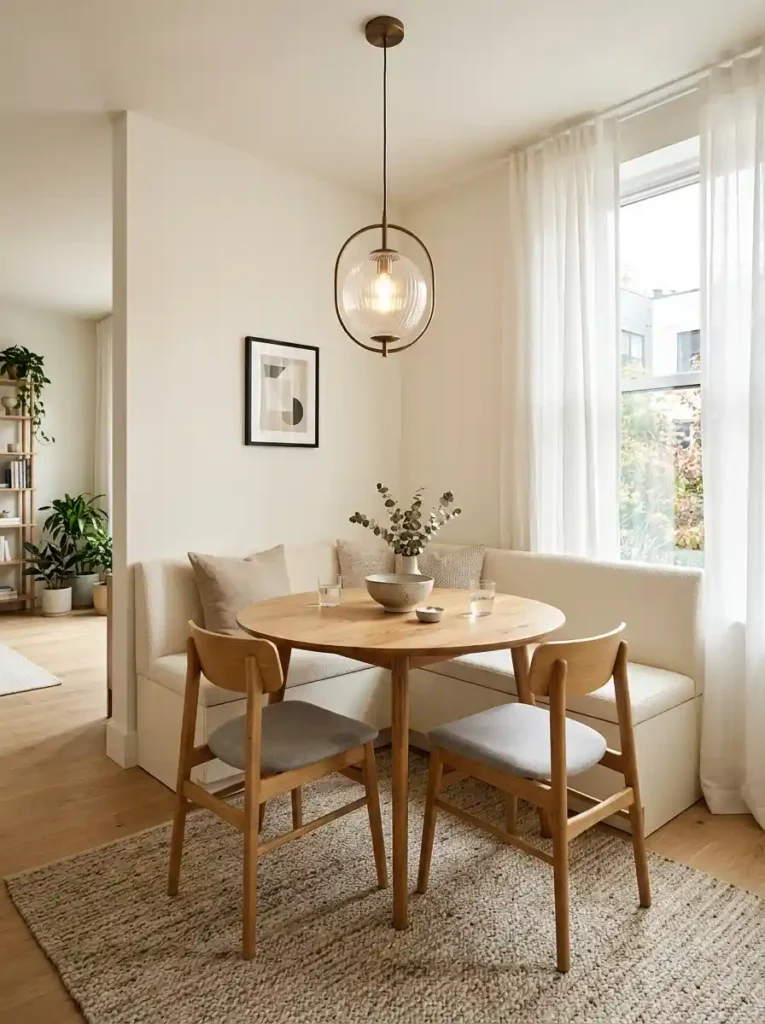
- A small dining nook makes unused corners much more functional.
- A wall-mounted table can save valuable floor space in compact apartments.
- Built-in or bench seating provides comfortable dining without bulky chairs.
- A pendant light helps visually define the eating area.
A compact dining nook can turn an overlooked apartment corner into one of the most useful spaces in the home. Instead of squeezing a full dining set into a narrow room, use a slim rectangular table, built-in bench, or small round table that fits the available footprint. Keeping the furniture close to the wall preserves circulation and makes the rest of the apartment feel less crowded. Add a comfortable upholstered bench and one or two lightweight chairs for flexibility. The result creates a dedicated dining zone while maintaining the open feeling that many modern apartment layouts need.
To make the nook feel intentional rather than temporary, give it its own visual identity. A pendant light centered above the table immediately establishes the zone, while a small artwork or textured wall treatment adds personality. Choose finishes that repeat materials from nearby rooms so the dining area feels connected to the overall apartment. For very small spaces, a pedestal table is particularly useful because its central base makes seating easier to arrange. This approach proves that limited square footage does not have to mean sacrificing comfort, style, or a proper place to enjoy everyday meals.
7. Built-In Storage Wall
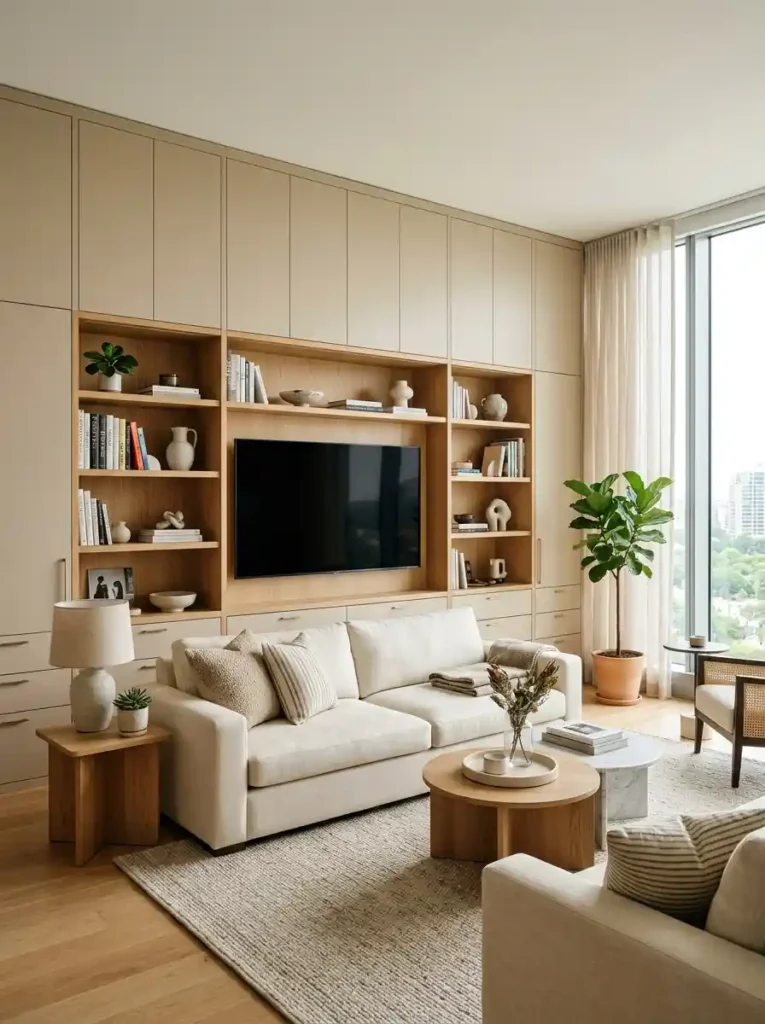
- Floor-to-ceiling storage uses vertical space efficiently.
- Closed cabinetry keeps everyday clutter hidden and the room visually calm.
- Open shelves provide space for carefully selected decorative pieces.
- Integrated storage can make an apartment feel more custom and organized.
A built-in storage wall can completely change how an apartment functions by turning an entire vertical surface into useful space. Floor-to-ceiling cabinetry provides room for books, electronics, clothing, household supplies, and decorative objects without spreading storage furniture throughout the room. Closed doors are particularly valuable because they hide everyday clutter and maintain a clean appearance. Combining a few open shelves with concealed cabinets creates visual variety while keeping the majority of belongings organized. The finished effect resembles custom millwork, giving even a standard apartment a more tailored and architectural character.
Before planning built-in storage, consider what you actually need to keep inside it. Adjustable shelves, deep drawers, cable management, and dedicated compartments can make the installation far more useful than simple decorative cabinetry. Choose finishes that relate to the apartment’s flooring, doors, or existing furniture for a cohesive appearance. In smaller rooms, matching cabinetry to the wall color can visually reduce its presence, while contrasting wood can create a warmer focal point. This design is especially effective for apartments where every square foot matters because it combines organization, display, and architectural impact in one solution.
8. Soft Textured Bedroom
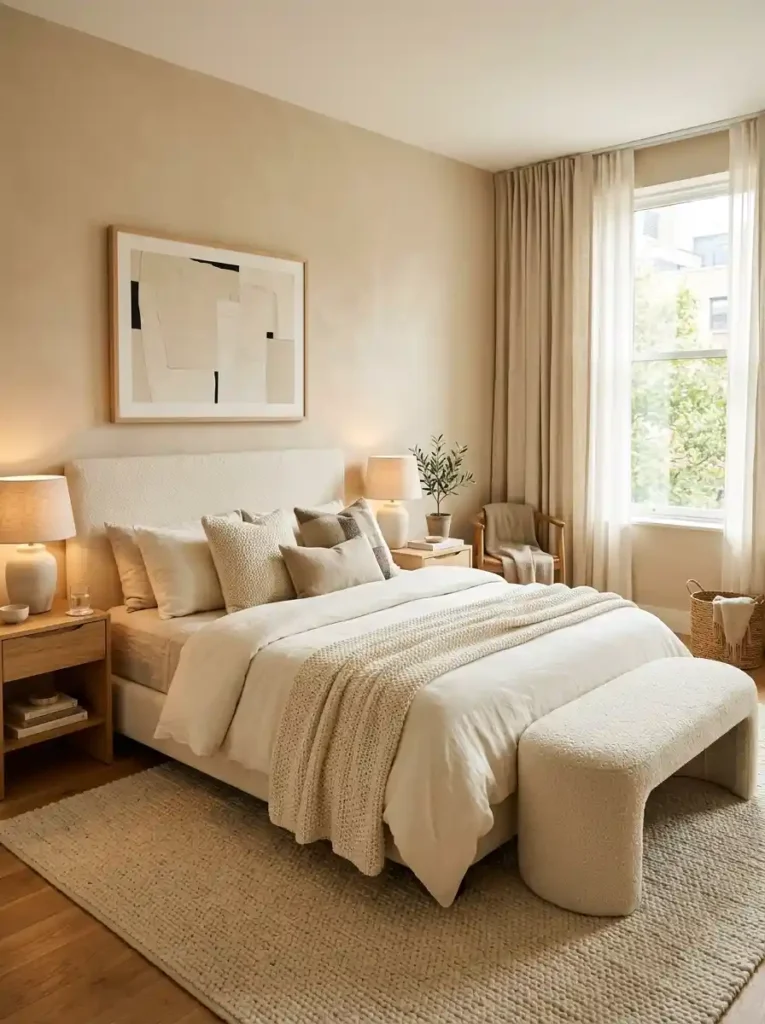
- Layered fabrics make a bedroom feel warmer and more comfortable.
- Linen, boucle, wool, and cotton add visual depth without strong colors.
- Soft neutral bedding creates a calm foundation for everyday relaxation.
- A textured rug can make a small bedroom feel noticeably more finished.
A soft textured bedroom creates a cozy atmosphere by allowing materials to provide the visual interest instead of relying heavily on color. Start with neutral bedding in cream, oatmeal, or warm white, then introduce linen cushions, a knitted throw, a boucle bench, or a plush area rug. These subtle differences in texture prevent the room from feeling flat while maintaining a calm palette. The approach is especially effective in apartments where the bedroom may have limited architectural character. By layering tactile materials, you can create a sense of comfort and depth without filling the room with unnecessary furniture.
The most successful version of this look balances softness with structure. Keep the main furniture simple, then let textiles create the welcoming character. A padded headboard can provide a strong backdrop, while matching bedside lamps establish symmetry and make the room feel organized. Natural curtains can soften strong daylight without making the space dark. If the bedroom is small, choose one substantial rug rather than several smaller ones because fewer visual breaks can make the floor feel larger. This style works beautifully with contemporary, Scandinavian, Japandi, and minimalist apartment interiors.
9. Modern Entryway Console
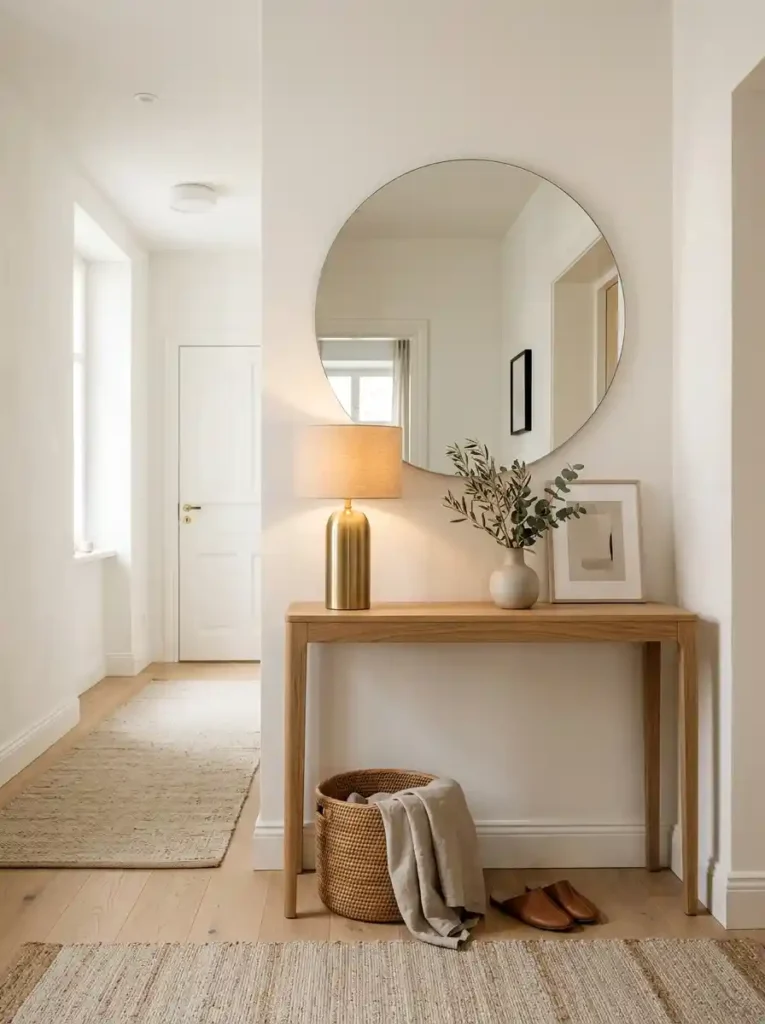
- A slim console creates a practical landing spot near the apartment entrance.
- A mirror can visually enlarge the entry and reflect available light.
- Closed drawers keep keys and everyday essentials organized.
- Minimal décor prevents a narrow entryway from feeling crowded.
A modern entryway console gives an apartment entrance an immediate sense of order and personality. Choose a slim console with clean lines so it does not interfere with circulation, especially in narrow hallways. A large round or rectangular mirror positioned above it can reflect light and make the entrance appear more spacious. Add a small tray for keys, one sculptural object, and perhaps a compact vase to keep the styling purposeful. The combination creates a welcoming first impression while giving everyday belongings a designated place instead of allowing them to collect on nearby surfaces.
Function should remain the priority when styling a compact entry. Drawers or a concealed compartment are useful for items you reach for frequently, while a lower shelf can hold a basket for shoes or accessories. Keep the decorative arrangement relatively restrained because crowded surfaces can make a small entrance feel even narrower. If the apartment receives limited daylight, choose a lighter console finish and use a nearby warm lamp to create visual brightness. I’ve noticed that even a very small entryway feels more polished when storage and decoration are planned together rather than treated as separate elements.
10. Cozy Window Seat
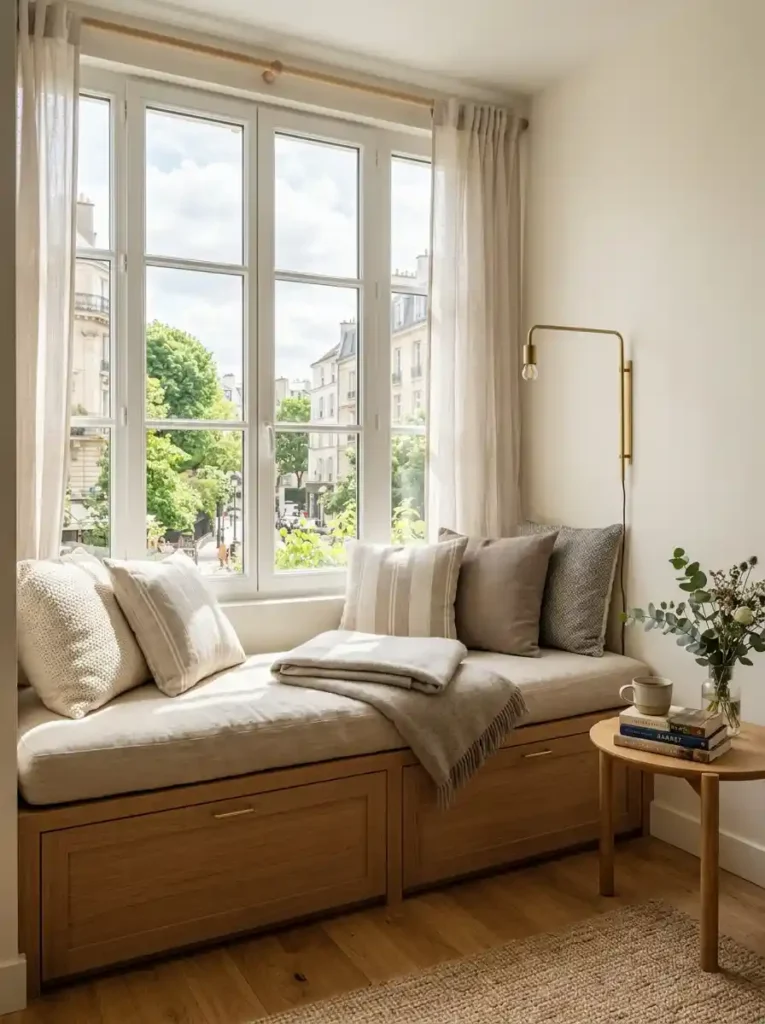
- A window seat turns unused space into a comfortable reading or relaxing zone.
- Built-in drawers underneath can provide valuable hidden storage.
- Soft cushions introduce color and texture without taking much floor space.
- Natural daylight makes the corner feel bright and inviting.
A cozy window seat can transform an otherwise overlooked apartment window into a beautiful multifunctional corner. A simple built-in bench topped with a thick cushion creates a comfortable place to read, relax, or enjoy morning light without requiring a separate lounge chair. Layer the seat with two or three cushions in complementary fabrics and keep the surrounding furniture minimal. If the apartment has a particularly attractive view, avoid heavy window treatments that block daylight. The finished corner feels personal and intentional while making use of space that might otherwise remain completely unused.
The most practical window seats include storage beneath the cushion. Drawers or lift-up compartments can hide blankets, books, seasonal accessories, or other items that would otherwise occupy valuable closets. Choose durable upholstery if the seat will receive frequent use, especially in a busy household. A small wall-mounted reading light can make the area useful after sunset without consuming floor space. This idea works especially well in bedrooms, living rooms, and wide hallway windows. With thoughtful proportions and soft materials, a simple window becomes a standout architectural feature within the apartment.
11. Floating Media Console
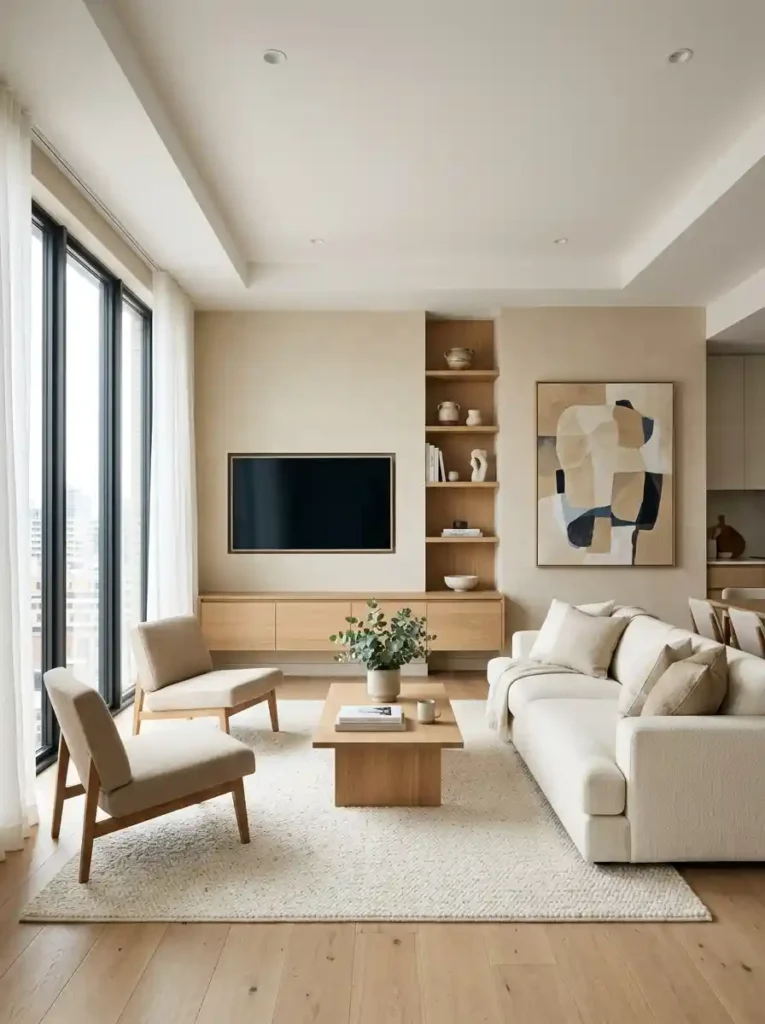
- A wall-mounted console keeps the floor visually open and uncluttered.
- Hidden compartments provide useful storage for electronics and everyday items.
- Natural wood finishes add warmth to a contemporary apartment.
- Minimal styling keeps the entertainment area sophisticated rather than busy.
A floating media console is an excellent way to make an apartment living room feel cleaner and more architectural. Mounted directly to the wall, the cabinet leaves visible flooring underneath, creating a lighter visual effect that can be especially valuable in smaller rooms. Choose a warm wood, matte neutral, or softly textured finish that complements the surrounding furniture. Concealed compartments can hide gaming equipment, remotes, cables, and other everyday items. The result is a streamlined entertainment area that feels intentional rather than dominated by a television and bulky storage furniture.
Functionality is where this design becomes particularly useful. Before installation, plan cable routes and ventilation for electronics so the finished wall remains completely tidy. Open shelving can be added sparingly for books or decorative objects, while closed doors handle less attractive essentials. A large piece of artwork beside the television can help balance the composition and prevent the screen from becoming the only focal point. This idea suits modern, minimalist, Scandinavian, and contemporary apartments particularly well, especially where preserving floor space and reducing visual clutter are important design priorities.
12. Japandi Bedroom Retreat
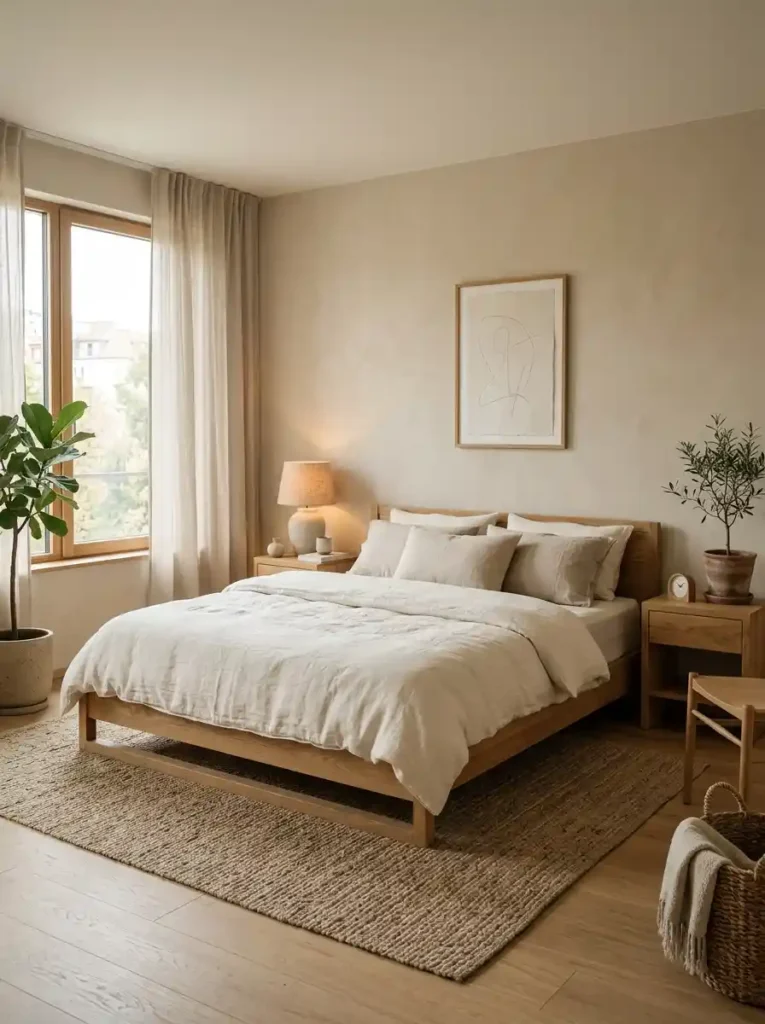
- Natural materials create a calm and grounded bedroom atmosphere.
- Low-profile furniture helps smaller bedrooms feel more spacious.
- Neutral colors make the room visually peaceful and easy to maintain.
- Minimal decoration keeps attention on comfort and quality.
A Japandi-inspired bedroom combines Japanese simplicity with Scandinavian warmth, creating an atmosphere that feels calm without becoming stark. Start with a low-profile wooden bed, warm neutral bedding, and furniture with simple silhouettes. Cream walls, natural oak, woven textures, and carefully chosen greenery provide enough visual interest while keeping the overall composition restrained. This approach works particularly well in apartments because it avoids unnecessary furniture and emphasizes open floor area. The bedroom feels intentionally quiet, making it easier to create a restful environment without relying on elaborate decoration.
Balance is essential when creating this style. Too many pale surfaces can make the room feel cold, while excessive wood can make a compact space feel visually heavy. Introduce soft textiles through linen curtains, a textured rug, and layered bedding to bridge the two. Keep accessories limited to pieces that have a clear purpose or strong visual quality. A warm bedside lamp can add a gentle evening glow while highlighting the natural materials. I’ve found that this combination works especially well for apartment bedrooms where simplicity, storage, and relaxation need to coexist.
13. Open Kitchen Shelving
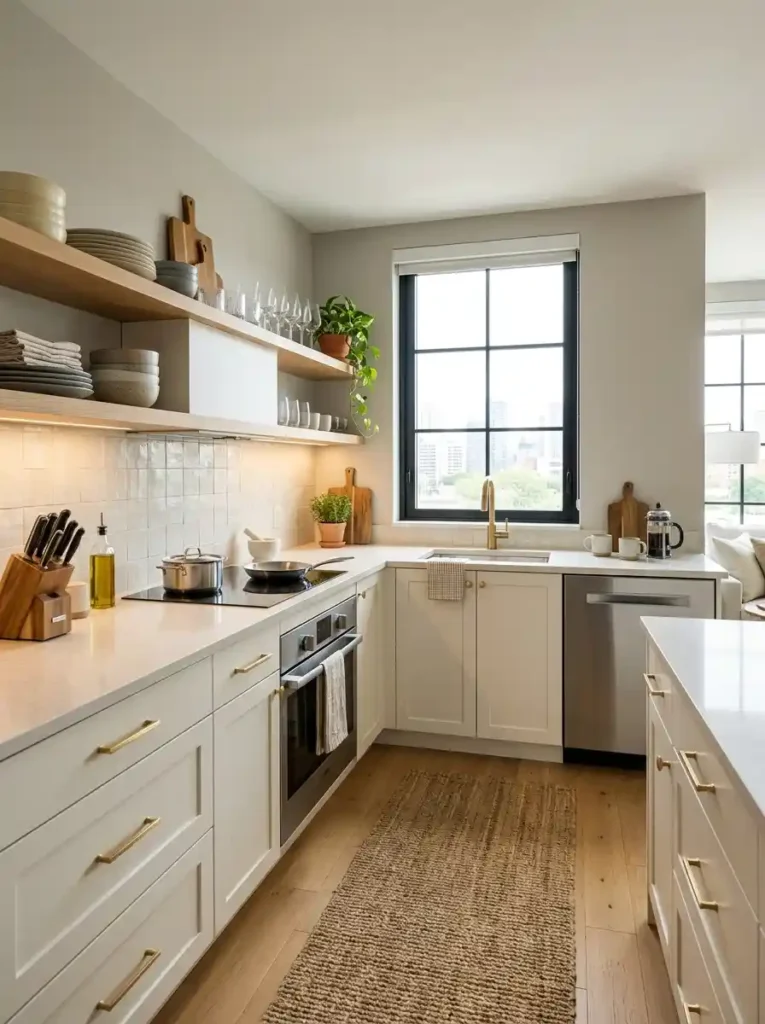
- Open shelves make everyday kitchen items easy to access.
- Carefully selected ceramics can become part of the room’s decoration.
- Wooden shelving adds warmth to modern apartment kitchens.
- Limiting displayed items prevents the space from appearing cluttered.
Open kitchen shelving can give a modern apartment a lighter and more personalized appearance. Instead of filling every wall with closed cabinetry, reserve a section for two or three carefully installed shelves. Display everyday ceramics, glassware, wooden boards, and a few decorative pieces so the shelving feels useful rather than purely ornamental. Warm oak or walnut shelves work particularly well against white, cream, or softly colored walls. The openness also creates a visual break from solid cabinets, helping compact kitchens feel less enclosed and giving frequently used objects a convenient home.
The key is editing what remains visible. Open shelving looks sophisticated when every item has enough breathing space and relates naturally to the surrounding color palette. Keep bulky appliances and less attractive supplies inside closed cabinets while using the shelves for objects that contribute to the kitchen’s character. A small trailing plant can soften the arrangement without overwhelming it. In my experience, two generously spaced shelves often look more polished than several narrow rows. This approach suits contemporary, Scandinavian, organic-modern, and minimalist apartments where practical storage needs to remain visually light.
14. Monochromatic Living Space
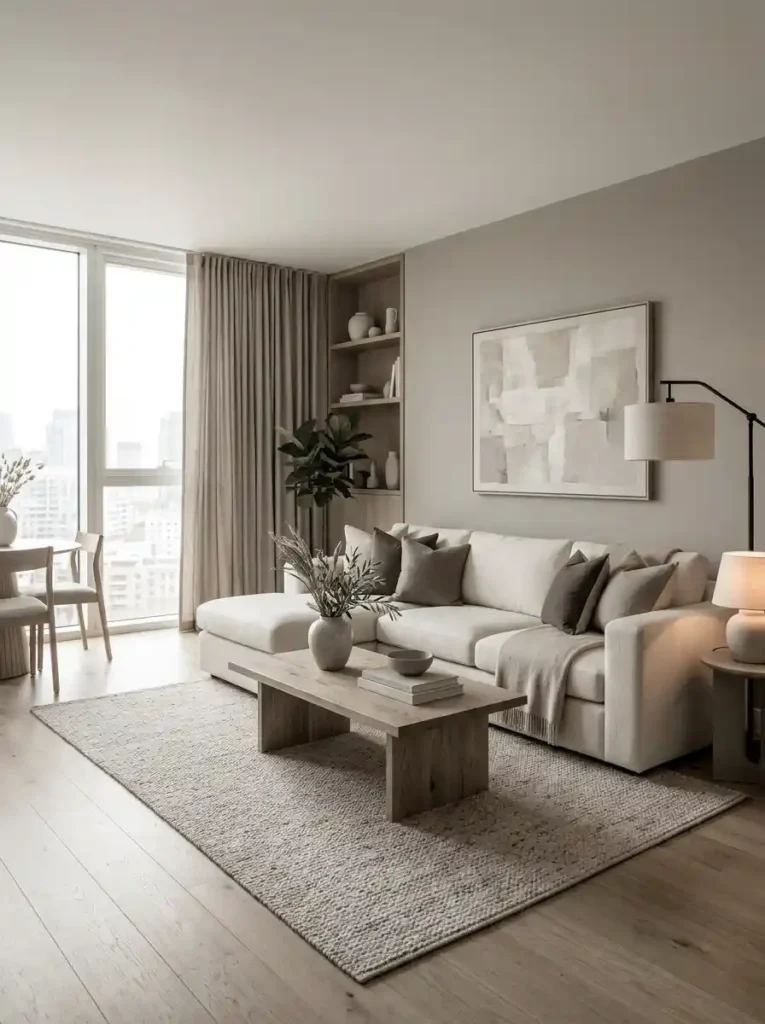
- One dominant color family creates a cohesive and sophisticated atmosphere.
- Different shades add depth without introducing visual chaos.
- Matching tones can make separate apartment zones feel connected.
- Textures become more noticeable when the color palette remains restrained.
A monochromatic living space proves that a limited color palette can still feel rich and expressive. Instead of using one exact shade throughout the room, work with several tones from the same family. A warm beige sofa can sit against creamy walls, while darker taupe cushions, natural wood, and a softly patterned rug introduce subtle contrast. This creates continuity without making the space feel repetitive. The approach is particularly effective in open-plan apartments because a consistent palette helps the living, dining, and kitchen areas feel like parts of one thoughtfully designed interior.
Texture becomes the main source of visual interest in a monochromatic room. Combine smooth ceramics with woven baskets, soft upholstery, natural timber, linen curtains, and tactile rugs to create dimension. Metallic accents can be introduced sparingly if the room needs a refined highlight. Avoid matching every object too precisely because slight tonal variation makes the design feel more natural. This style works especially well for contemporary and minimalist apartments, but it can easily be adapted with warmer colors for a cozy aesthetic. The result feels sophisticated, calm, and considerably more cohesive.
15. Compact Home Office
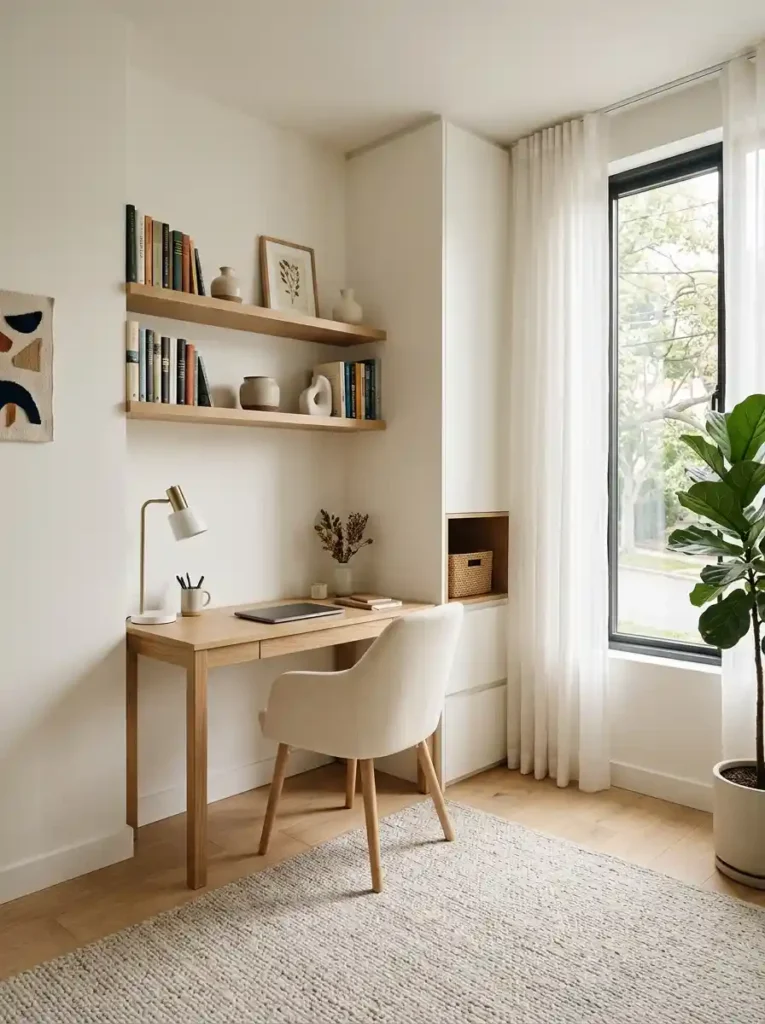
- A small desk can create a dedicated workspace without sacrificing the room’s function.
- Wall-mounted shelving uses vertical space efficiently.
- A comfortable chair makes the setup practical for longer work sessions.
- Coordinated finishes help the workspace blend naturally into the apartment.
A compact home office can fit beautifully into an apartment when the workspace is treated as part of the interior rather than an afterthought. A slim desk positioned against an unused wall can provide enough surface for a laptop, lamp, and essential stationery without consuming an entire room. Choose a chair that offers genuine support while complementing the surrounding furniture. Floating shelves above the desk can hold books and a few decorative pieces, while drawers or closed storage keep paperwork hidden. The result is a focused workspace that feels integrated rather than visually disconnected.
For smaller apartments, vertical organization makes the biggest difference. Keep the desktop relatively clear and move storage upward through shelves, pegboards, or shallow wall cabinets. Natural daylight is ideal, so positioning the desk near a window can make the workspace feel brighter and more pleasant. However, avoid placing the screen directly against strong glare. A warm desk lamp provides additional flexibility in the evening. Many interior designers recommend choosing finishes that repeat materials elsewhere in the room because this makes a small home office feel like an intentional part of the overall apartment.
16. Textured Accent Wall
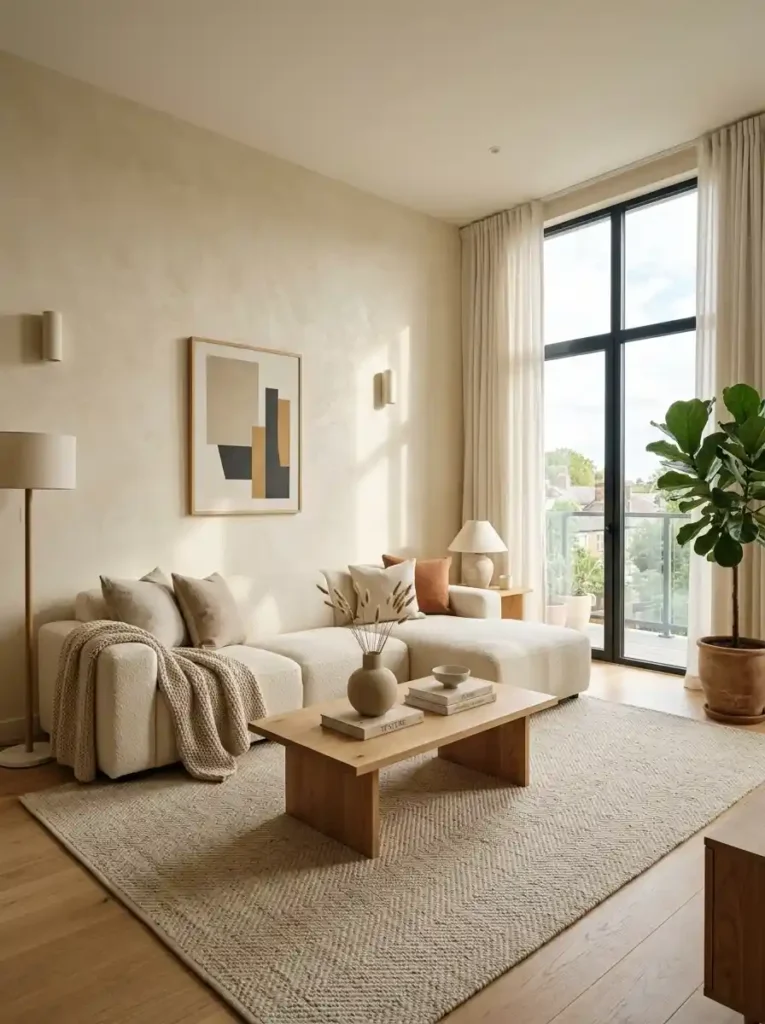
- A textured wall adds depth without requiring additional furniture.
- Limewash and plaster finishes create subtle movement under changing daylight.
- Neutral textures work well with modern furniture and natural materials.
- An accent wall can define a room without visually shrinking it.
A textured accent wall can give an apartment immediate architectural character, particularly when the existing walls are plain and builder-grade. Limewash, microcement, subtle plaster, or softly textured wallpaper can create depth while maintaining a refined appearance. Choose a finish in a muted neutral such as warm white, sand, greige, or soft taupe so the texture remains sophisticated rather than overwhelming. The wall can become a natural backdrop for a bed, sofa, console, or dining table, creating a focal point without adding bulky decorative objects.
Lighting has a major effect on how textured walls appear throughout the day. Natural daylight reveals subtle variations, while warm directional lighting can emphasize the finish after sunset. Keep nearby furniture relatively simple so the wall remains the visual feature. If the apartment is small, use texture on one carefully selected wall instead of covering every surface. I’ve noticed that restrained texture often looks more expensive than highly patterned finishes because it adds character without competing with furniture, artwork, or architectural details. The result is modern, tactile, and easy to personalize.
17. Elegant Dining Corner
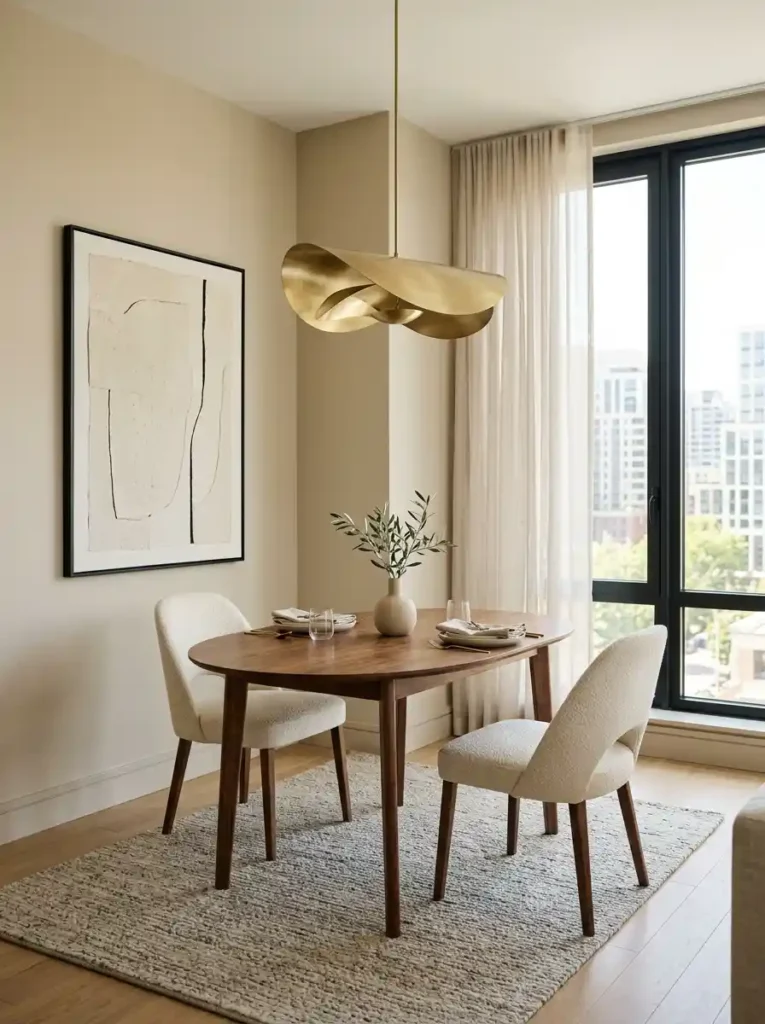
- A compact dining arrangement can feel luxurious with the right materials.
- Upholstered chairs introduce comfort and softness.
- A sculptural pendant gives the dining area a defined identity.
- Minimal tabletop styling keeps the small space visually spacious.
An elegant dining corner can make even a compact apartment feel more complete by giving meals their own dedicated setting. A small round or oval table is particularly effective because its softer shape improves movement around tight spaces. Pair it with upholstered chairs in a neutral fabric and add a sculptural pendant directly above the table. The combination creates a clear visual zone without requiring a separate dining room. Natural wood, stone, or softly veined surfaces can introduce a subtle luxury element while keeping the overall atmosphere comfortable enough for everyday meals.
Keep the surrounding decoration restrained so the dining corner does not compete with nearby living areas. A single artwork, small vase, or carefully selected centerpiece is usually enough. If storage is needed, consider a narrow sideboard against the nearest wall for tableware and household items. This can also provide a surface for a lamp or decorative object. For apartments with open-plan layouts, repeating one material or color from the kitchen helps the dining area feel connected. The result is practical, sophisticated, and much more intentional than simply placing a table wherever space happens to be available.
18. Arched Room Divider
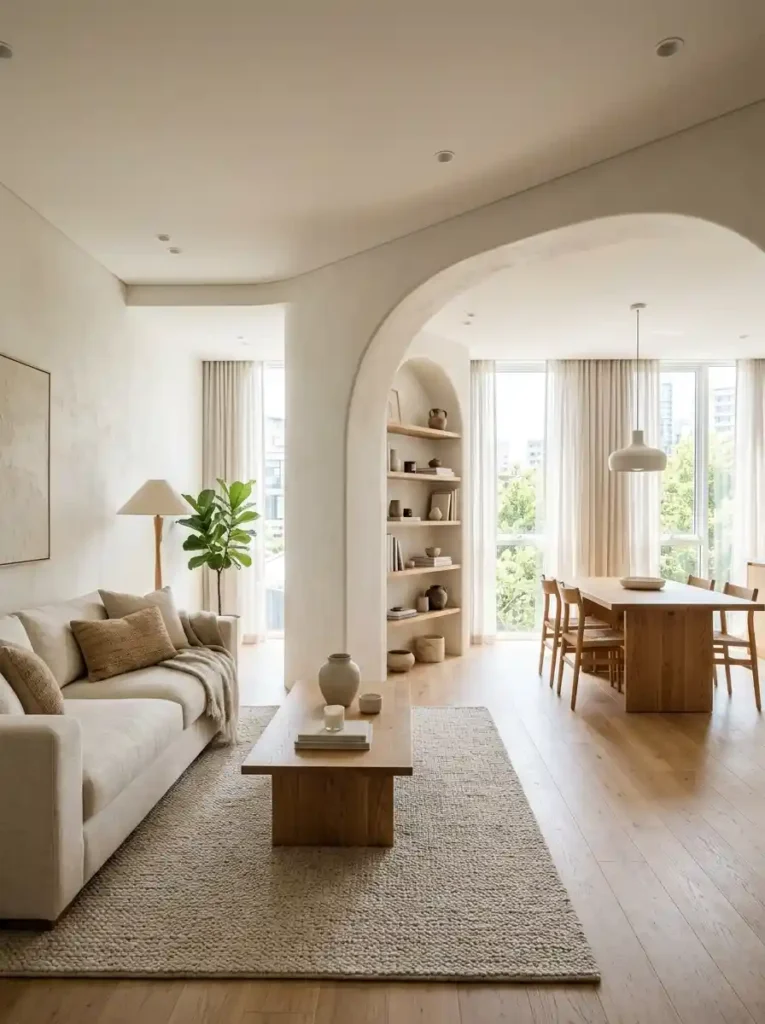
- Curved openings soften open-plan apartment layouts.
- A divider creates separation without completely closing the room.
- Arches can add architectural character to otherwise plain interiors.
- Open partitions preserve natural light and visual connection between spaces.
An arched room divider can introduce architectural personality while solving one of the most common apartment challenges: creating separate zones within an open layout. Instead of building a solid wall, use an arched opening, partial partition, or curved shelving structure to distinguish the living area from a dining space, entry, or workspace. The curved shape softens the transition and keeps the apartment visually connected. Painted plaster, warm wood, or a subtle stone finish can make the feature feel like an original architectural detail rather than a later addition.
The best dividers provide separation without blocking light or circulation. Keep the opening generous enough to preserve the sense of openness, especially in smaller apartments. A built-in shelf within the divider can provide useful space for books, plants, or artwork while reinforcing its function. If structural changes are not possible, a freestanding curved shelving unit can create a similar visual effect. This idea suits contemporary, Mediterranean, organic-modern, and modern-classic interiors. It can make a basic apartment layout feel considerably more customized while still maintaining flexibility between connected rooms.
19. Soft Neutral Kitchen
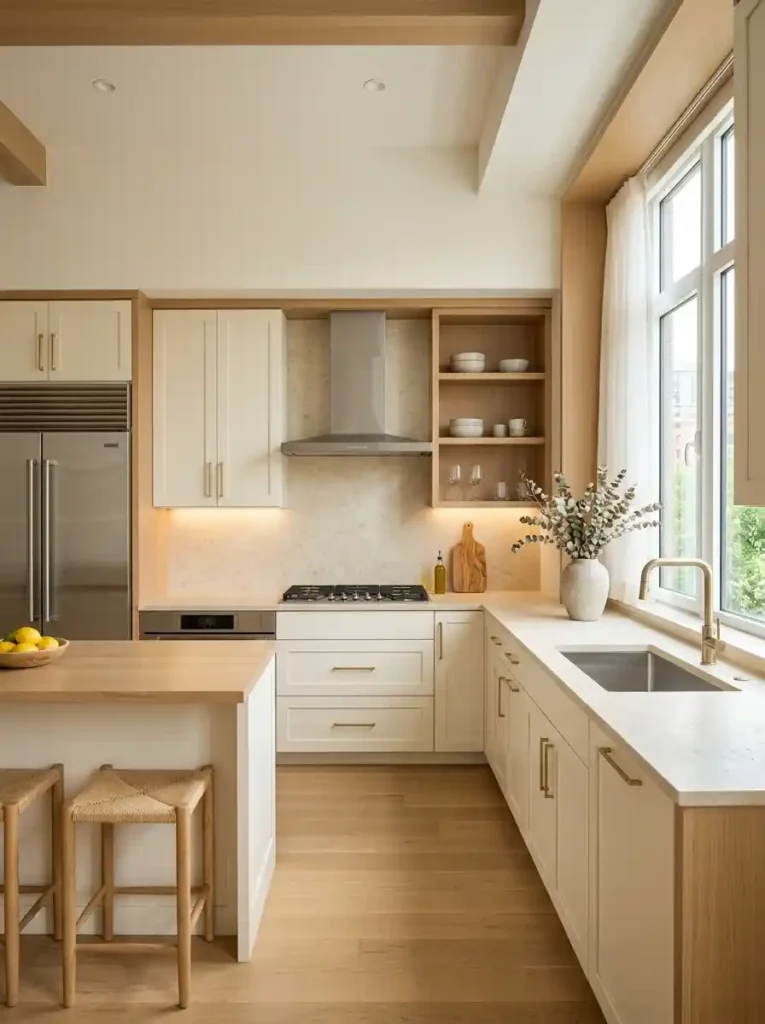
- Warm neutrals make compact kitchens feel brighter and more inviting.
- Light cabinetry visually reduces the weight of bulky storage.
- Natural wood accents add warmth to clean contemporary finishes.
- Simple hardware keeps the kitchen polished without excessive decoration.
A soft neutral kitchen creates a welcoming foundation that can make an apartment feel brighter and more cohesive. Instead of stark white cabinetry, consider warm ivory, greige, mushroom, or soft beige paired with natural wood accents. A light stone countertop and understated backsplash maintain the airy appearance while adding subtle texture. Brushed metal hardware can introduce a refined detail without becoming the focal point. This palette works particularly well in open-plan apartments because the kitchen can blend naturally with nearby living and dining areas rather than looking like a separate functional zone.
Practicality should guide every material choice in a kitchen, particularly when working with limited space. Use deep drawers for cookware, vertical storage for trays, and concealed compartments for small appliances wherever possible. Keep countertop accessories limited so the work surface remains usable. Under-cabinet lighting can brighten preparation areas while adding a warm evening atmosphere. If natural light is limited, lighter finishes become even more valuable. This approach works beautifully with modern, Scandinavian, transitional, and organic interiors, creating a kitchen that feels refined while remaining genuinely comfortable for everyday cooking.
20. Layered Bedroom Lighting

- Multiple light sources make a bedroom more flexible throughout the day.
- Bedside wall lights free valuable nightstand space.
- Soft accent lighting creates a relaxing atmosphere before sleep.
- Warm illumination enhances neutral materials and cozy textiles.
Layered bedroom lighting can completely change the mood of an apartment bedroom without changing its furniture. Start with practical overhead illumination, then add bedside lamps or wall-mounted sconces for focused evening light. A subtle floor lamp or concealed accent light can provide another layer when the main fixture feels too bright. This approach allows the bedroom to shift from bright and functional in the morning to calm and relaxing at night. Warm illumination also enhances natural wood, linen, textured bedding, and neutral wall colors, making the entire room feel more comfortable.
When space is limited, wall-mounted bedside lights are especially useful because they keep nightstands free for books, water, or personal items. Choose fixtures with adjustable heads if you regularly read in bed. Keep the finishes consistent with other hardware in the room for a cohesive appearance. Dimmers are another valuable addition because they allow the intensity to change according to the time of day. I’ve found that good bedroom lighting often makes a bigger difference than adding more decoration because it changes how every existing material and color is perceived.
21. Statement Pendant Lighting
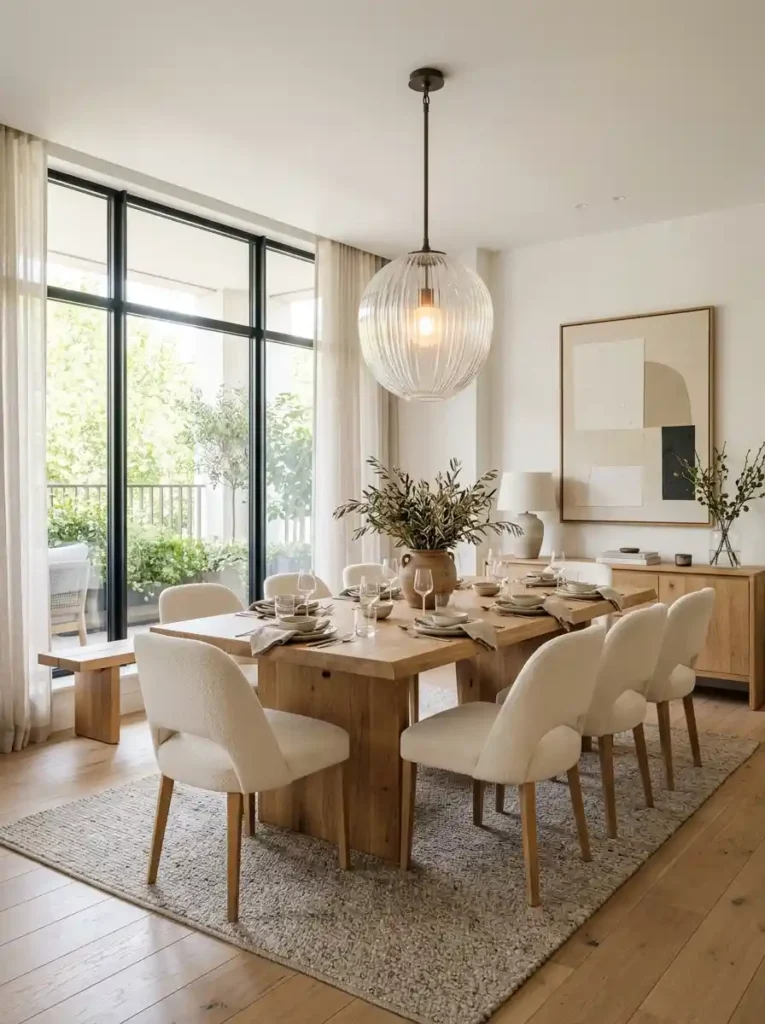
- A sculptural pendant can instantly define an apartment room.
- Oversized lighting adds personality without consuming floor space.
- Warm illumination makes surrounding furniture and finishes feel richer.
- A simple fixture works especially well against clean architectural backgrounds.
A statement pendant can become the finishing touch that gives an apartment room a strong design identity. Instead of treating lighting as purely functional, choose a sculptural fixture with an interesting silhouette, natural material, or refined metal finish. Hang it above a dining table, kitchen island, seating area, or bedroom zone where it can act as both illumination and artwork. The key is choosing a fixture that feels proportional to the room. A well-scaled pendant can make even simple furniture appear more intentional while giving the ceiling an important visual feature.
When selecting statement lighting for an apartment, consider ceiling height and surrounding circulation first. An oversized fixture can look beautiful in photographs but become impractical if it hangs too low over a walkway. Choose adjustable-height designs where possible and keep the rest of the décor relatively restrained. Warm bulbs help create a welcoming atmosphere, particularly in living and dining areas. Materials such as linen, ribbed glass, aged brass, and natural fibers can introduce subtle luxury. This approach works across contemporary, minimalist, organic-modern, and transitional apartments without overwhelming the overall interior.
22. Greenery-Filled Balcony
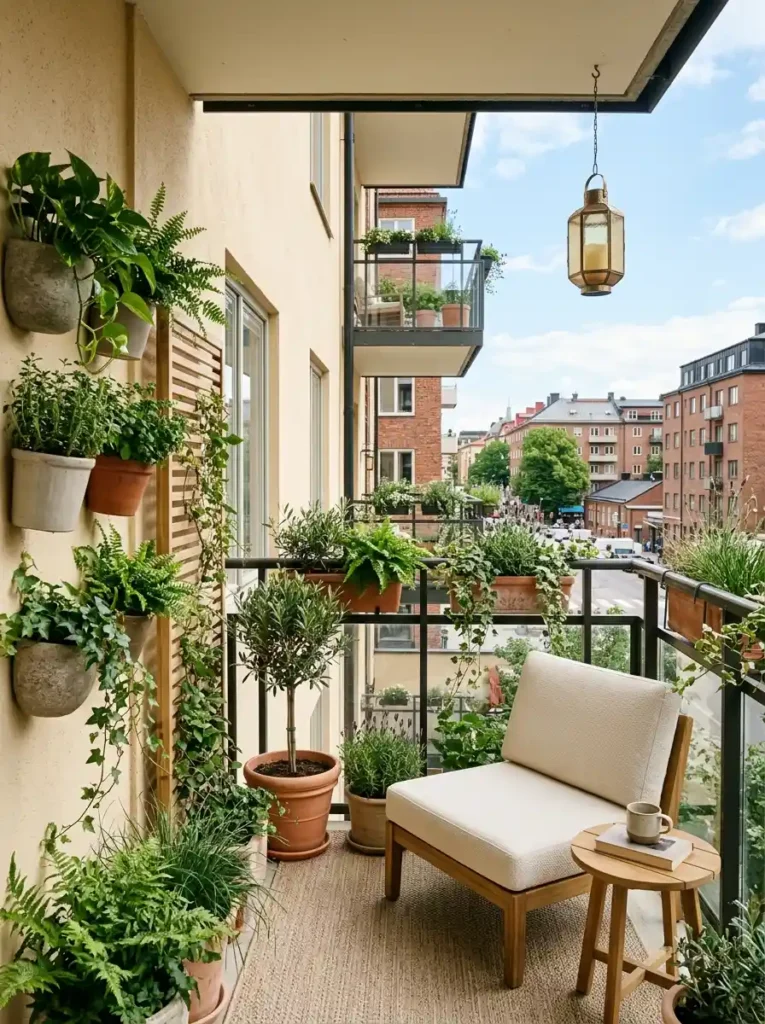
- Plants bring natural color and freshness to compact apartment balconies.
- Vertical planters maximize greenery without consuming valuable floor space.
- Outdoor textiles make the balcony feel like an extension of the interior.
- Warm lighting allows the space to remain useful after sunset.
A greenery-filled balcony can turn a small outdoor area into one of the most inviting parts of an apartment. Start with a comfortable compact chair or built-in bench, then introduce plants at different heights to create depth. Tall planters can provide privacy, while smaller pots add detail around the seating area. Choose weather-resistant materials and keep the color palette coordinated with the apartment interior so the balcony feels like a natural continuation of the home. Even a narrow balcony can become a relaxing retreat when furniture and greenery are scaled carefully.
For particularly small balconies, vertical planting is one of the most effective ways to add greenery without sacrificing usable floor area. Wall-mounted planters, railing boxes, and narrow plant stands can create a lush effect while preserving circulation. Add a small outdoor rug and warm string or lantern lighting for evening comfort. Avoid overcrowding the space because leaving some open floor makes the balcony feel larger. I’ve seen compact balconies become much more useful simply by replacing miscellaneous storage with one comfortable seat, layered greenery, and thoughtfully chosen lighting.
23. Built-In Bedroom Wardrobe
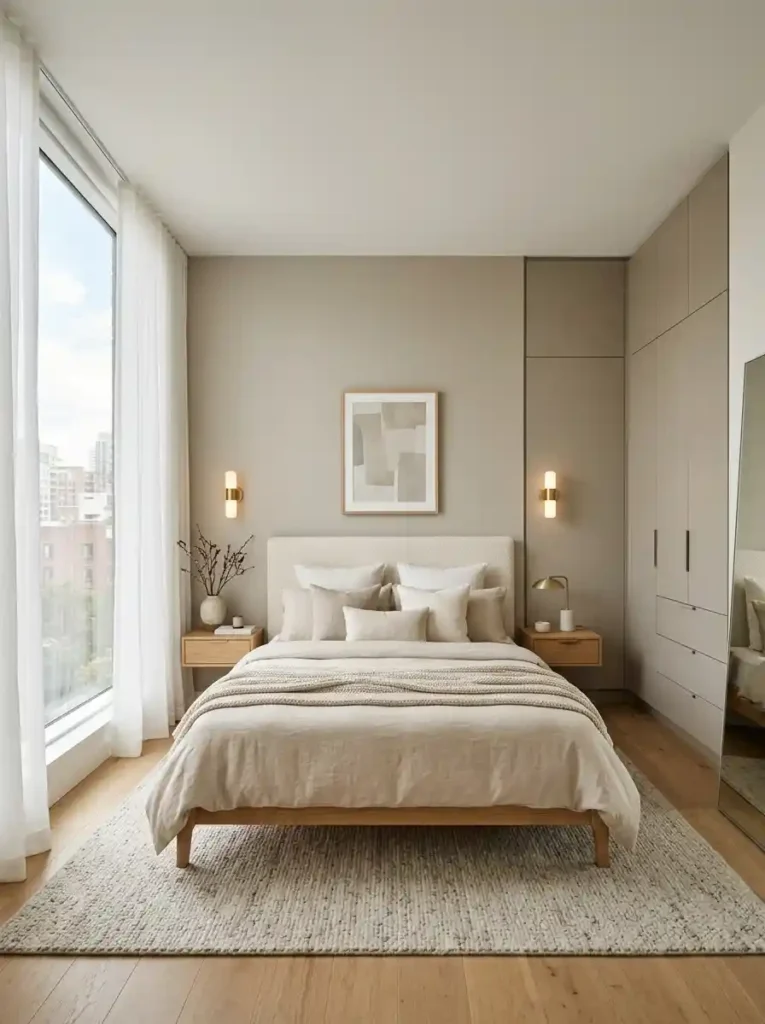
- Floor-to-ceiling wardrobes maximize storage in apartments with limited closet space.
- Matching cabinet fronts create a cleaner, more architectural appearance.
- Integrated drawers help organize smaller clothing and accessories.
- Full-height storage makes unused vertical space highly functional.
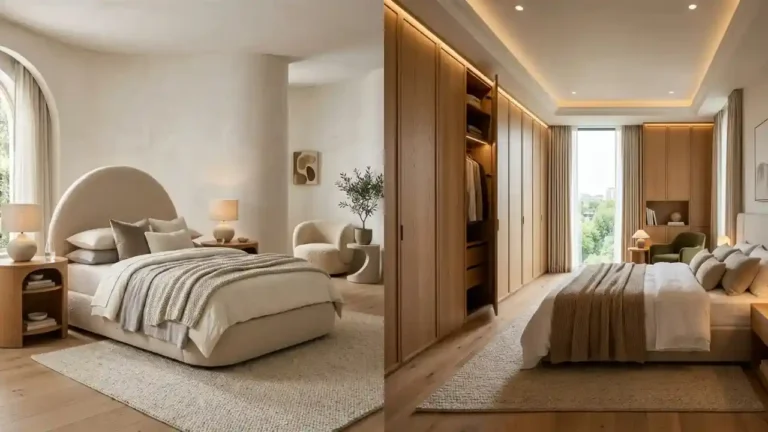
A built-in bedroom wardrobe can make an apartment bedroom feel considerably more organized while giving the room a custom-designed appearance. Floor-to-ceiling cabinetry uses vertical space that would otherwise remain unused, providing generous storage without requiring multiple freestanding pieces. Choose doors in a soft neutral, natural wood, or subtle textured finish that complements the bedroom walls. Integrated drawers can handle smaller belongings, while hanging sections and adjustable shelves allow the wardrobe to adapt to different storage needs. The continuous design also reduces visual clutter, helping the bedroom feel calmer and more spacious.
Planning the interior layout carefully is more important than simply maximizing cabinet volume. Include a mixture of hanging rails, drawers, shelves, and dedicated compartments so frequently used belongings remain easy to reach. If the bedroom is compact, matching the wardrobe doors to the wall color can make the cabinetry visually recede. Mirrored panels can also reflect light, although they should be positioned thoughtfully to avoid an overly reflective appearance. Many interior designers recommend using full-height storage in apartments because it combines efficient organization with a cleaner architectural silhouette.
24. Organic Modern Lounge
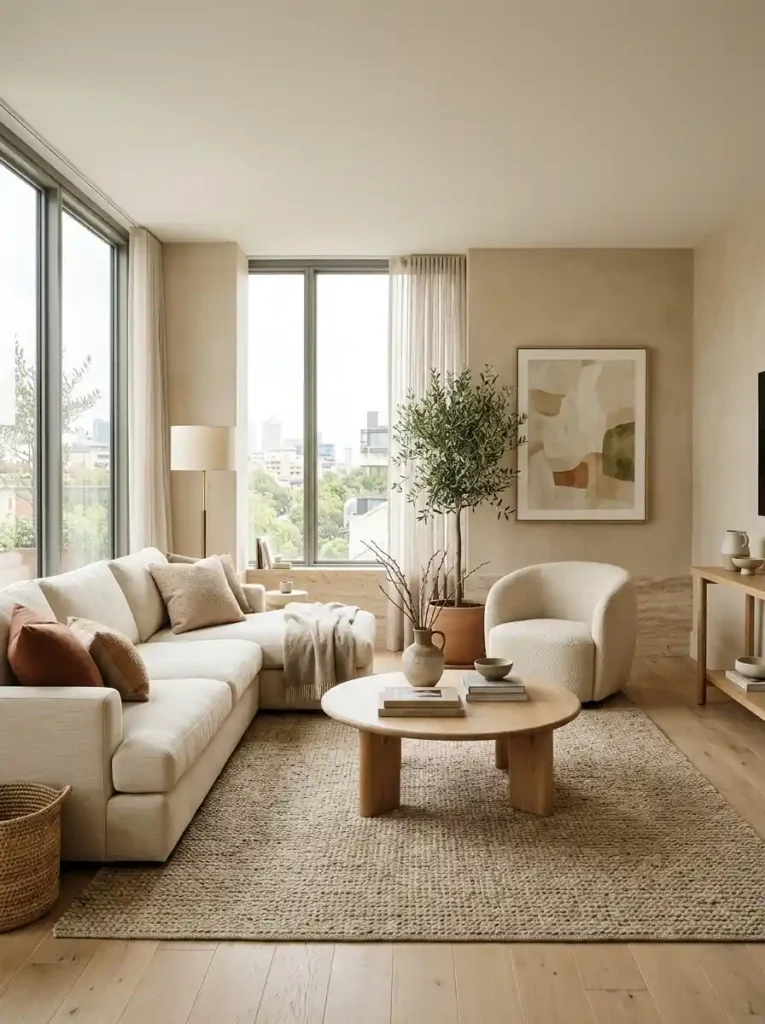
- Natural materials create warmth without making the room feel rustic.
- Soft curves balance clean contemporary architecture.
- Earthy colors create a relaxed and sophisticated atmosphere.
- Minimal decoration keeps attention on quality materials and comfortable furniture.
An organic modern lounge combines contemporary simplicity with the warmth of natural materials, creating an apartment interior that feels sophisticated but genuinely comfortable. Begin with a streamlined sofa in cream, oatmeal, or warm beige, then introduce a wooden coffee table, woven rug, and softly curved accent chair. Earthy colors such as sand, clay, olive, and warm brown can add subtle depth without overpowering the space. The result feels connected to nature while maintaining the clean proportions expected from modern apartment design. This style works especially well when the architecture is simple and needs additional warmth.
The most important element is balance. Organic modern interiors look polished when smooth contemporary surfaces are paired with tactile materials such as linen, timber, stone, ceramic, and woven fibers. Avoid filling every surface with decorative objects; instead, choose a few pieces with strong shapes or natural finishes. Large windows and daylight can enhance the connection with nature, while warm lamps create a softer atmosphere at night. I’ve noticed that this style is particularly effective in apartments because natural materials make streamlined layouts feel welcoming without requiring large amounts of furniture or decoration.
25. Minimalist Reading Corner
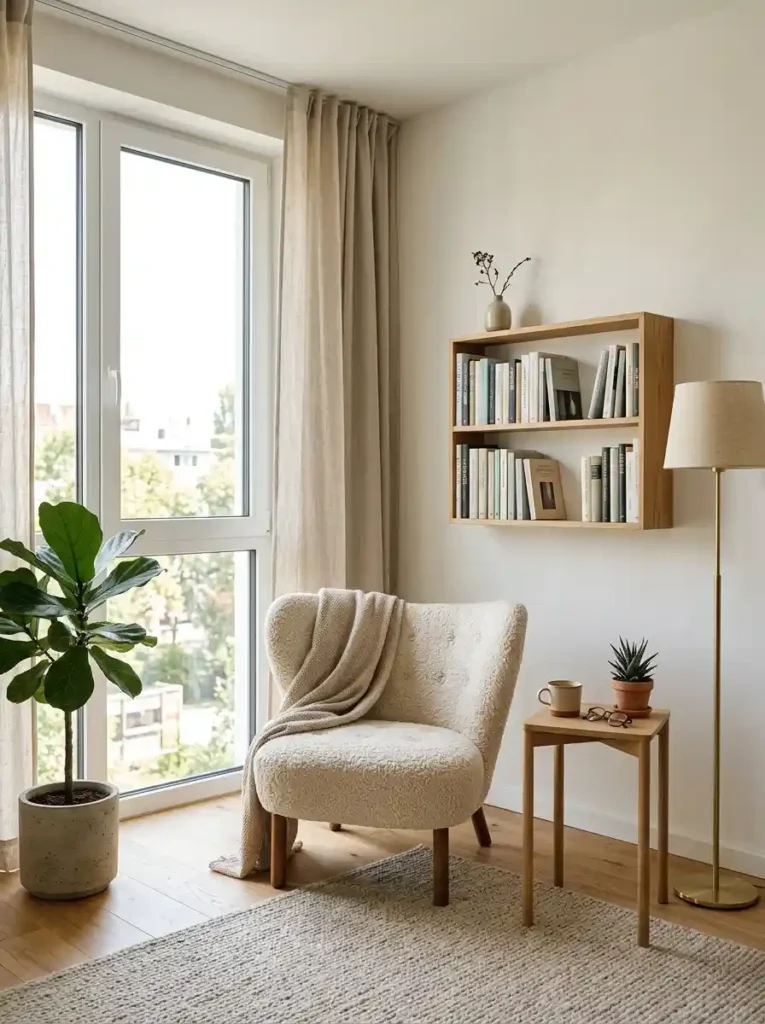
- A dedicated reading corner makes an unused apartment area purposeful.
- One comfortable chair can create a complete relaxing zone.
- Slim shelving keeps books accessible without overwhelming the space.
- Natural daylight makes the corner feel brighter and more inviting.
A minimalist reading corner can give an apartment a quiet retreat without requiring an entire room. Choose one comfortable lounge chair, position it near a window where possible, and add a slim side table for books or a cup of coffee. A narrow floor lamp provides evening illumination without occupying much space, while a small shelf can keep favorite books within easy reach. Keep the palette soft and the surrounding décor restrained so the corner feels peaceful rather than crowded. Even an unused section beside a window or hallway can become a valuable part of the home.
The best reading corners prioritize comfort, light, and easy movement. Select a chair with enough support for longer sessions and leave sufficient space around it so the area does not feel squeezed into an awkward leftover corner. A textured throw and small cushion can introduce warmth without excessive decoration. If natural daylight is strong, lightweight curtains can soften glare while maintaining brightness. This simple setup works beautifully in bedrooms, living rooms, and larger entry spaces. Sometimes the most effective apartment upgrades are not dramatic; they simply give an overlooked area a clear purpose and thoughtful design.
Final Thoughts
A beautiful apartment does not have to be oversized or completely renovated to feel stylish, comfortable, and thoughtfully designed. These Aesthetic Apartment Room Ideas show how smart furniture choices, layered lighting, natural textures, functional storage, and carefully chosen décor can transform ordinary rooms into spaces that feel polished and personal. Whether you are refreshing one corner or planning a complete modern home makeover, even small changes can create a noticeable difference. I’ve seen how the right layout and a few intentional details can completely change the way an apartment feels. Save this post on Pinterest, try your favorite ideas, and share it with someone planning their own apartment makeover.
Final Thoughts:Aesthetic Apartment Room Ideas
A beautiful apartment does not have to be oversized or completely renovated to feel stylish, comfortable, and thoughtfully designed. These Aesthetic Apartment Room Ideas show how smart furniture choices, layered lighting, natural textures, functional storage, and carefully chosen décor can transform ordinary rooms into spaces that feel polished and personal. Whether you are refreshing one corner or planning a complete modern home makeover, even small changes can create a noticeable difference. I’ve seen how the right layout and a few intentional details can completely change the way an apartment feels. Save this post on Pinterest, try your favorite ideas, and share it with someone planning their own apartment makeover.