30 Portuguese-Inspired Home Exterior Ideas with Tile Details & Soft Color Harmony
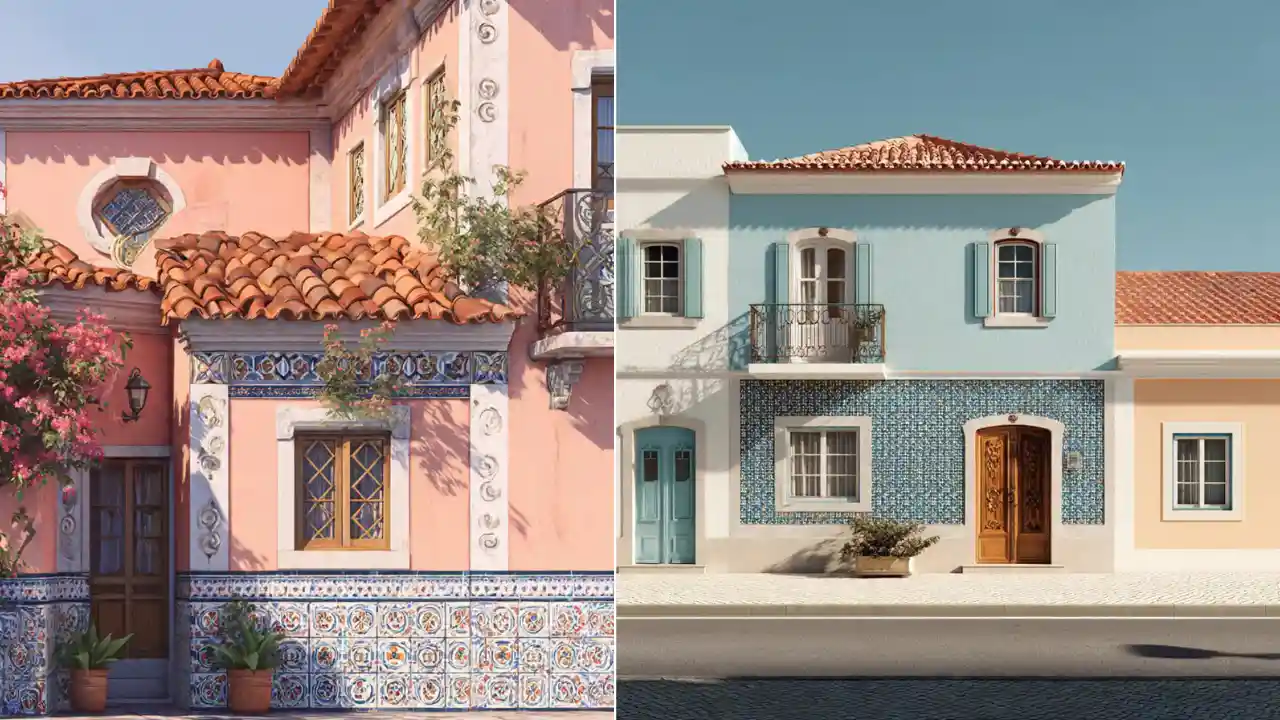
Portuguese-inspired home exteriors are admired worldwide for their calm elegance, handcrafted beauty, and timeless architectural charm. These homes blend soft color palettes with decorative tilework, creating facades that feel artistic yet welcoming. Rooted in history but adaptable to modern living, Portuguese exteriors balance tradition with simplicity.
From coastal villages to urban streets, this style emphasizes harmony, texture, and warmth. These Portuguese-Inspired Home Exterior Ideas by The Home Vista will explore how Portuguese design creates visually rich homes without feeling overwhelming.
1. Whitewashed Facades With Blue Azulejo Accents
Portuguese exteriors often begin with clean whitewashed walls that reflect sunlight beautifully. Blue azulejo tiles are introduced around doors, windows, or base walls for contrast. The tiles add artistic detail without overpowering the structure. This combination keeps the exterior light, airy, and culturally rich. The home feels fresh, elegant, and deeply rooted in tradition.

2. Soft Pastel Exterior Color Palettes
Instead of bold colors, Portuguese homes use muted pastels like pale yellow, dusty rose, and soft mint. These shades feel gentle and sun-washed rather than bright. Pastels allow tile patterns and textures to stand out naturally. The facade feels calm and welcoming. This color harmony creates timeless visual appeal.

3. Decorative Tile Panels Framing Entryways
Tile panels are often used to frame main doors or entrances. These panels act as functional artwork embedded into the architecture. Patterns are intricate but color-controlled. The entrance immediately becomes a focal point. This detail adds cultural identity and elegance.

4. Traditional Clay Roof Tiles
Terracotta roof tiles are a defining feature of Portuguese exteriors. Their warm earthy tones balance the cooler wall colors. Weathered textures add authenticity and charm. The roof visually grounds the home. This roofing style enhances the Mediterranean feel.

5. Wrought Iron Balcony Railings
Small balconies with iron railings are common in Portuguese homes. The ironwork often features delicate curves and handcrafted detailing. Dark metal contrasts beautifully with light walls. These balconies add depth and rhythm to facades. The exterior feels both romantic and structured.

6. Tiled Stair Risers for Artistic Detail
Outdoor staircases often feature tiled risers. Patterns are traditional and symmetrical. This detail transforms functional elements into design features. It adds visual interest without clutter. The exterior feels thoughtfully curated.

7. Wooden Shutters in Muted Tones
Shutters painted in faded blues, greens, or greys soften the facade. Wood texture adds warmth against plaster walls. Shutters also enhance symmetry and proportion. They feel practical yet decorative. This detail reinforces timeless charm.

8. Arched Doorways With Tile Borders
Rounded arches are common in Portuguese architecture. Tile borders highlight the curves beautifully. The arch softens the facade’s geometry. This creates a welcoming and graceful entrance. The home feels historic yet elegant.

9. Subtle Stone Base Accents
Many Portuguese homes feature stone along the lower facade. Stone protects walls while adding texture. Neutral stone tones blend seamlessly with tiles and plaster. This grounding element adds durability. The exterior feels balanced and complete.

10. Patterned Tile Window Frames
Tiles are often used to frame windows delicately. Patterns remain controlled and repetitive. This detail enhances symmetry across the facade. Windows feel decorative without being busy. The design stays refined.

11. Courtyard-Facing Exterior Walls
Portuguese homes often open toward inner courtyards. Exterior walls facing courtyards feature more tile detailing. This creates private beauty rather than street-focused display. The space feels intimate and serene. Design emphasizes inward harmony.

12. Soft Textured Plaster Walls
Walls are rarely perfectly smooth. Slight plaster texture adds depth. Light interacts gently with these surfaces. Texture prevents flatness without distraction. The exterior feels organic and warm.

13. Tiled House Numbers and Nameplates
House numbers are often embedded into tile plaques. This small detail feels personal and artistic. Fonts remain classic and readable. It adds charm at eye level. Even functional elements feel intentional.

14. Neutral Stone Walkways Leading to Entrances
Stone or tiled walkways guide visitors gently. Colors remain soft and natural. Patterns are simple and repetitive. The path enhances flow and proportion. Movement feels calm and structured.

15. Low Boundary Walls With Tile Caps
Low exterior walls often feature tiled tops. This protects surfaces while adding decoration. Tile caps repeat facade patterns subtly. The boundary feels elegant, not harsh. Visual continuity is maintained.

16. Balanced Window Placement and Rhythm
Portuguese facades follow strong symmetry. Windows align vertically and horizontally. This rhythm feels calming to the eye. Tiles enhance alignment rather than disrupt it. The facade feels composed and balanced.

17. Muted Blue Door Statements
Front doors often feature muted blue tones. Blue contrasts gently with white walls. The color feels coastal and timeless. The door becomes a soft focal point. Elegance replaces boldness.

18. Traditional Lantern-Style Exterior Lighting
Wall-mounted lanterns add warmth at night. Their metal finishes feel aged and classic. Soft lighting highlights tile textures. Shadows enhance architectural depth. The exterior feels inviting after sunset.

19. Tile-Clad Garden Walls
Garden or patio walls often feature partial tile coverage. This creates continuity from house to landscape. Tiles resist weather while adding beauty. Outdoor spaces feel curated. The design flows naturally.

20. Subtle Color Repetition Across Elements
Colors repeat across tiles, doors, and shutters. This repetition reinforces harmony. No single element dominates visually. The exterior feels unified. Design discipline keeps elegance intact.

21. Simple Rectangular Massing With Decorative Detail
Building forms remain simple and boxy. Ornamentation comes from tiles and textures. This balance prevents visual overload. Architecture stays timeless. Decoration feels controlled.

22. Tiled Window Sills and Ledges
Small tile details appear on sills and ledges. These areas catch light beautifully. Tiles protect edges from wear. The facade gains layered depth. Every detail feels purposeful.

23. Natural Greenery Against Tiled Surfaces
Plants soften tiled and plastered walls. Greenery contrasts beautifully with blue and white tiles. Vines or potted plants add life. Nature balances craftsmanship. The exterior feels alive.

24. Soft Shadow Play From Architectural Depth
Recessed windows and arches create shadows. Light shifts throughout the day. Tiles enhance this shadow play subtly. The facade feels dynamic yet calm. Visual interest remains gentle.

25. Courtyard Gates With Tile Inlays
Entrance gates sometimes include tiled panels. This continues design language beyond walls. Gates feel artistic rather than industrial. First impressions become memorable. The exterior tells a story.

26. Harmonized Roof, Wall, and Tile Tones
Roof tiles, walls, and azulejos complement each other. No clashing colors appear. Harmony defines the exterior. Visual flow feels effortless. The home appears thoughtfully designed.

27. Heritage-Inspired Tile Patterns
Patterns often reference historical motifs. Geometry stays balanced and symmetrical. Colors remain restrained. Cultural identity shines subtly. Tradition feels preserved.

28. Matte Finishes Over Glossy Surfaces
Tiles and walls avoid excessive shine. Matte finishes feel authentic and aged. Light reflects softly. The exterior avoids modern harshness. Calm elegance dominates.

29. Coastal Influence Without Excess Nautical Themes
Portuguese homes feel coastal without clichés. Blue tones hint at the sea subtly. Design avoids overt decoration. Sophistication remains intact. The style feels mature.

30. Overall Atmosphere of Calm and Cultural Elegance
Every element works together harmoniously. Tiles, colors, textures, and proportions align. Nothing feels accidental or loud. The home feels timeless and welcoming. Portuguese exterior design expresses beauty through balance.

Final Thoughts: Portuguese-Inspired Home Exterior Ideas
Portuguese-inspired home exterior ideas celebrate harmony, craftsmanship, and subtle beauty. Through soft color palettes, decorative tiles, and balanced proportions, these homes feel elegant without excess. Each detail contributes to a cohesive architectural story. The result is an exterior that feels calm, cultured, and enduring. Portuguese design proves that restraint and artistry can coexist beautifully.