25 Australian Modern Home Exterior Ideas for Climate-Smart, Open & Flowing Design
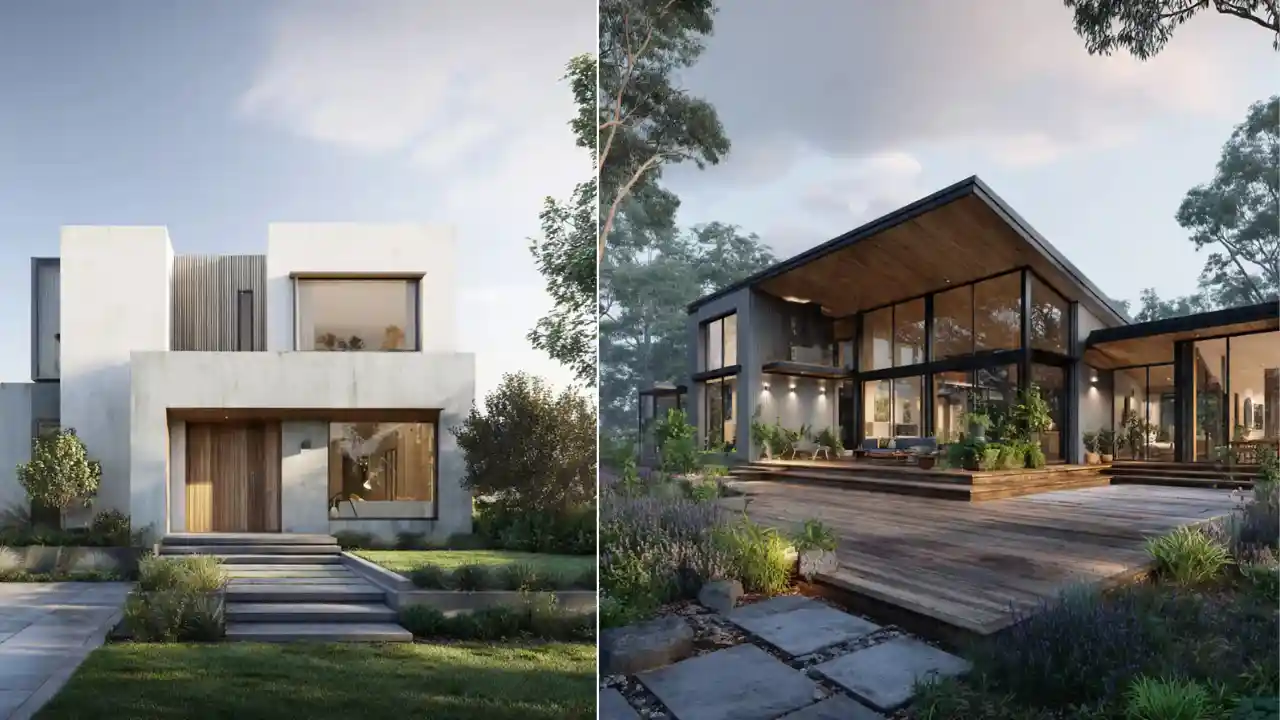
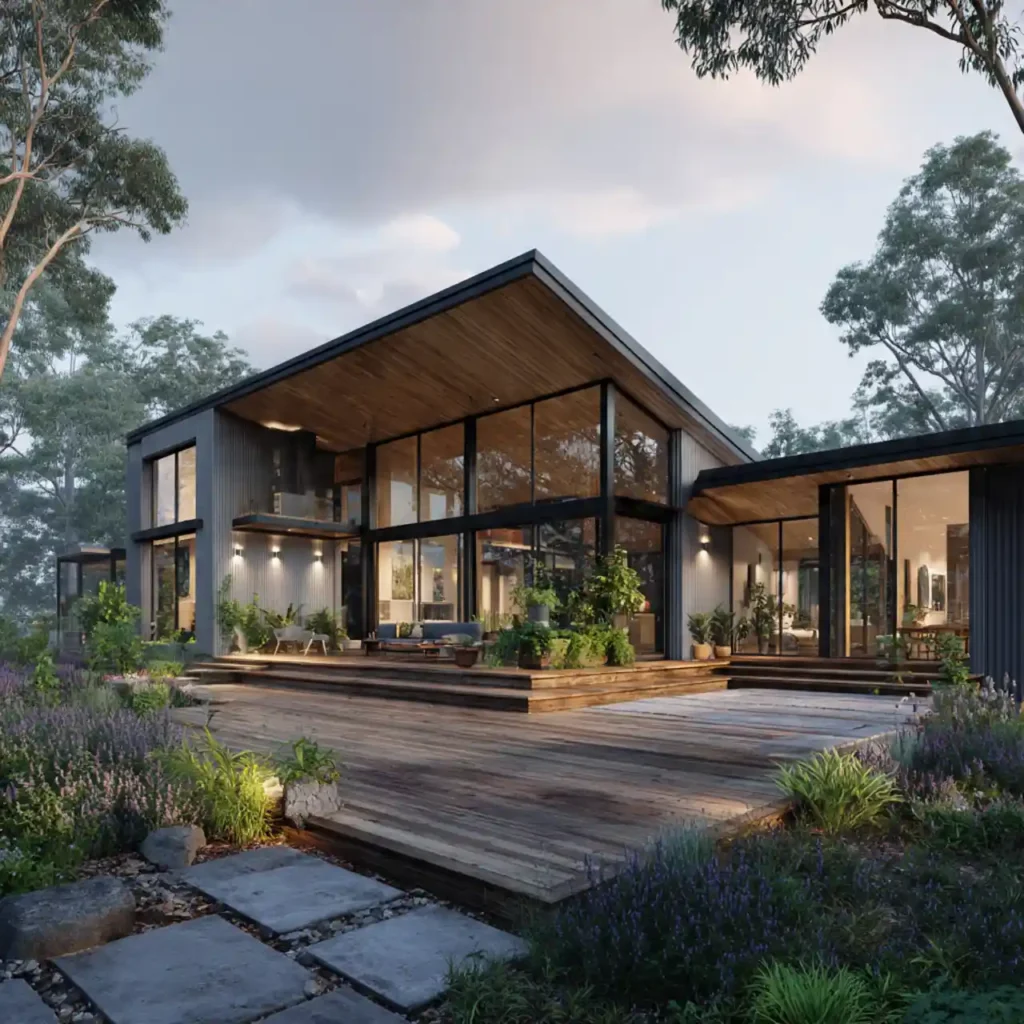
Australian modern home exterior ideas by The Home Vista are deeply shaped by climate, landscape, and lifestyle. These homes prioritize airflow, natural light, and a seamless connection between indoors and outdoors. Instead of heavy ornamentation, the focus is on smart orientation, breathable materials, and relaxed modern forms.
Shaded spaces, open facades, and climate-responsive elements define the aesthetic. The result is architecture that feels effortless, livable, and perfectly suited to its environment.
1. Wide Overhanging Roofs for Sun Control
Wide roof overhangs protect the home from harsh summer sun while allowing winter light to enter. They reduce heat gain and improve indoor comfort naturally. Visually, overhangs add strong horizontal lines that ground the structure. They also create shaded outdoor transition zones. This design supports both climate efficiency and modern aesthetics.
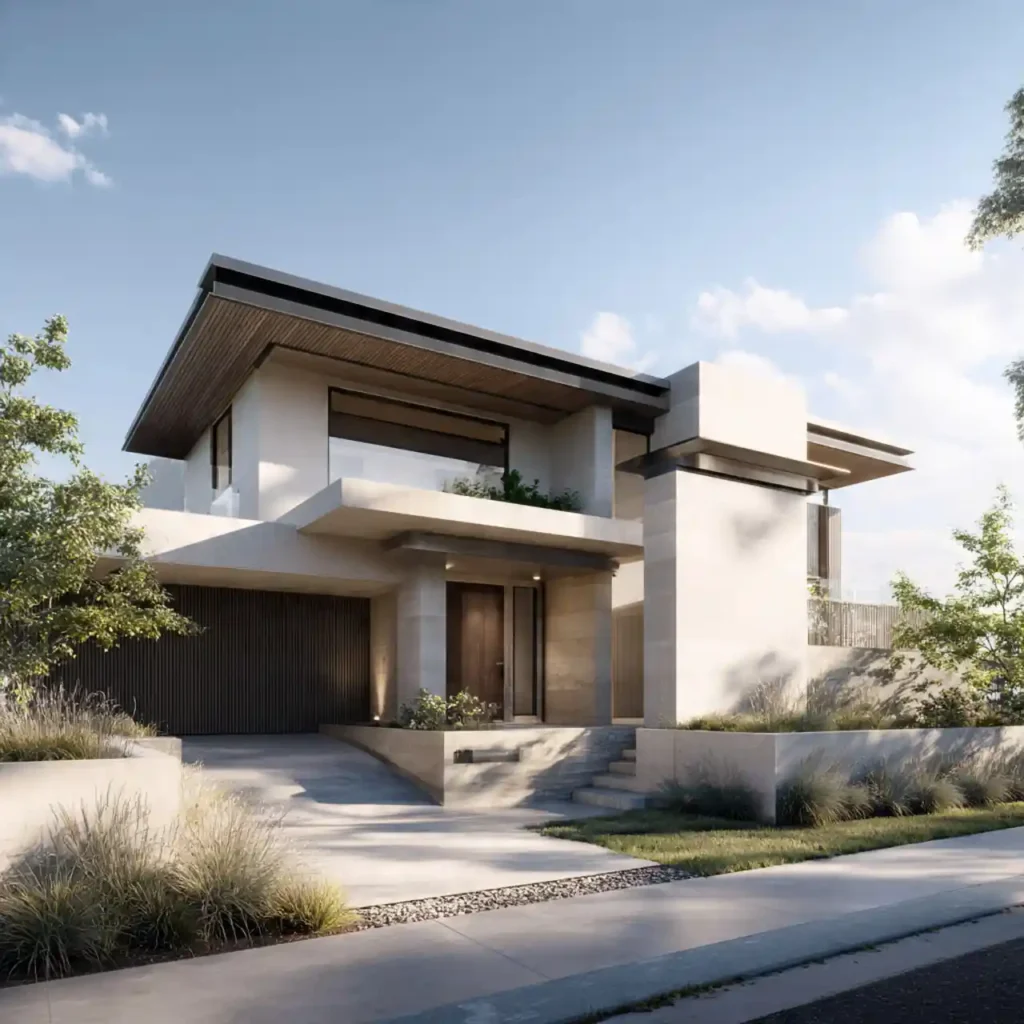
2. Large Sliding Glass Openings
Expansive sliding glass doors blur the boundary between inside and outside. They promote cross-ventilation and maximize daylight. When opened, they allow living spaces to flow directly into patios or gardens. Frames are usually minimal to maintain visual openness. This feature reflects Australia’s outdoor-centric lifestyle.
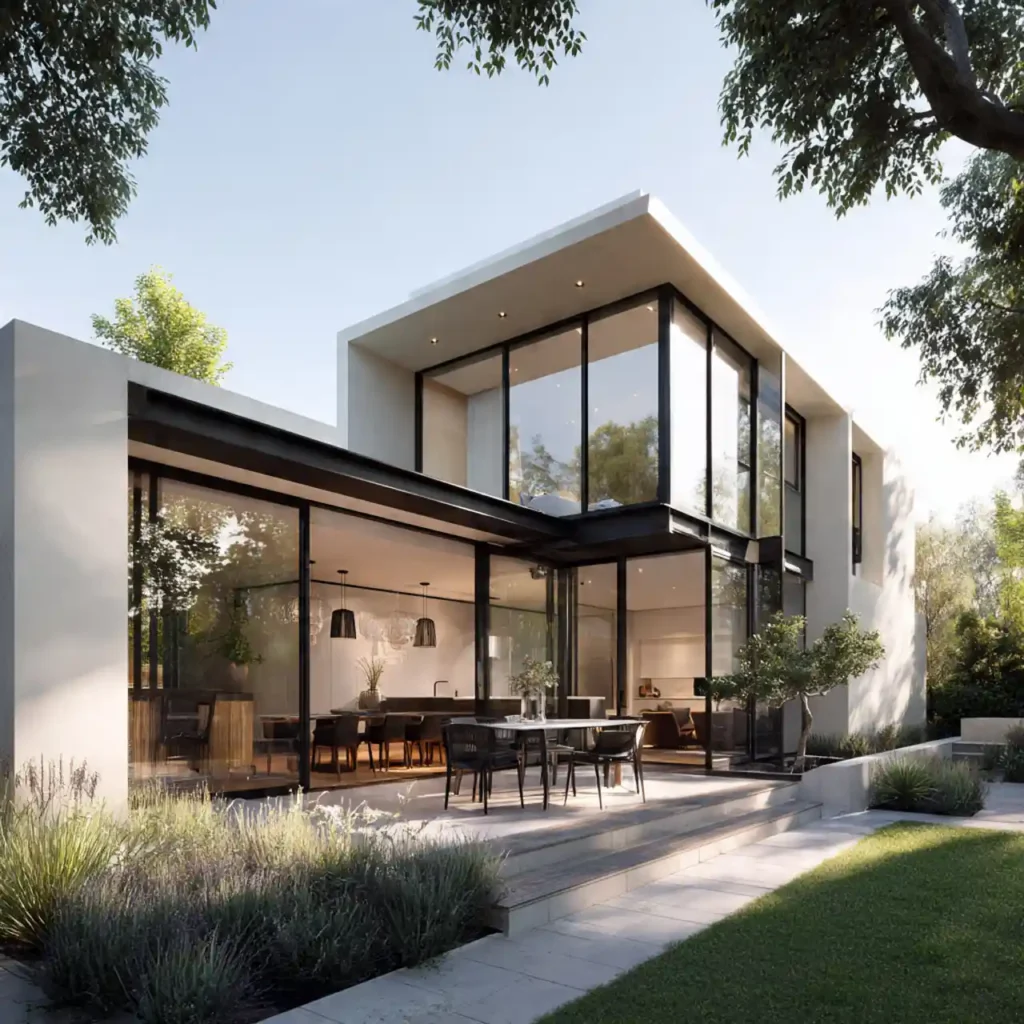
3. Climate-Responsive Building Orientation
Homes are positioned to capture breezes and avoid excessive sun exposure. North-facing facades maximize natural light without overheating. Smart orientation reduces reliance on mechanical cooling. It also enhances energy efficiency year-round. The exterior design works in harmony with nature rather than against it.
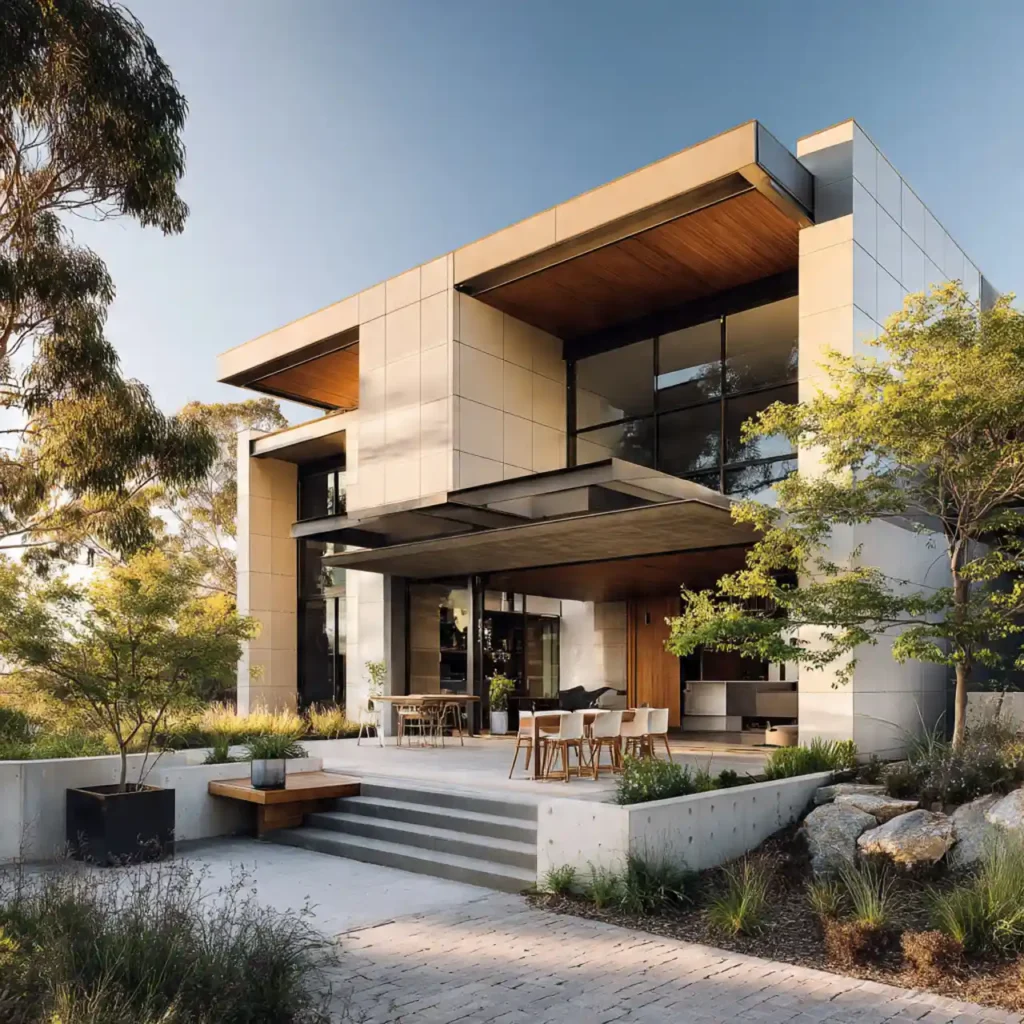
4. Lightweight Material Selection
Materials like timber, metal cladding, and fiber cement are commonly used. These materials respond well to temperature changes and coastal conditions. Visually, they keep the home feeling light and modern. Their durability suits Australia’s varied climate zones. Material choice directly supports longevity and comfort.
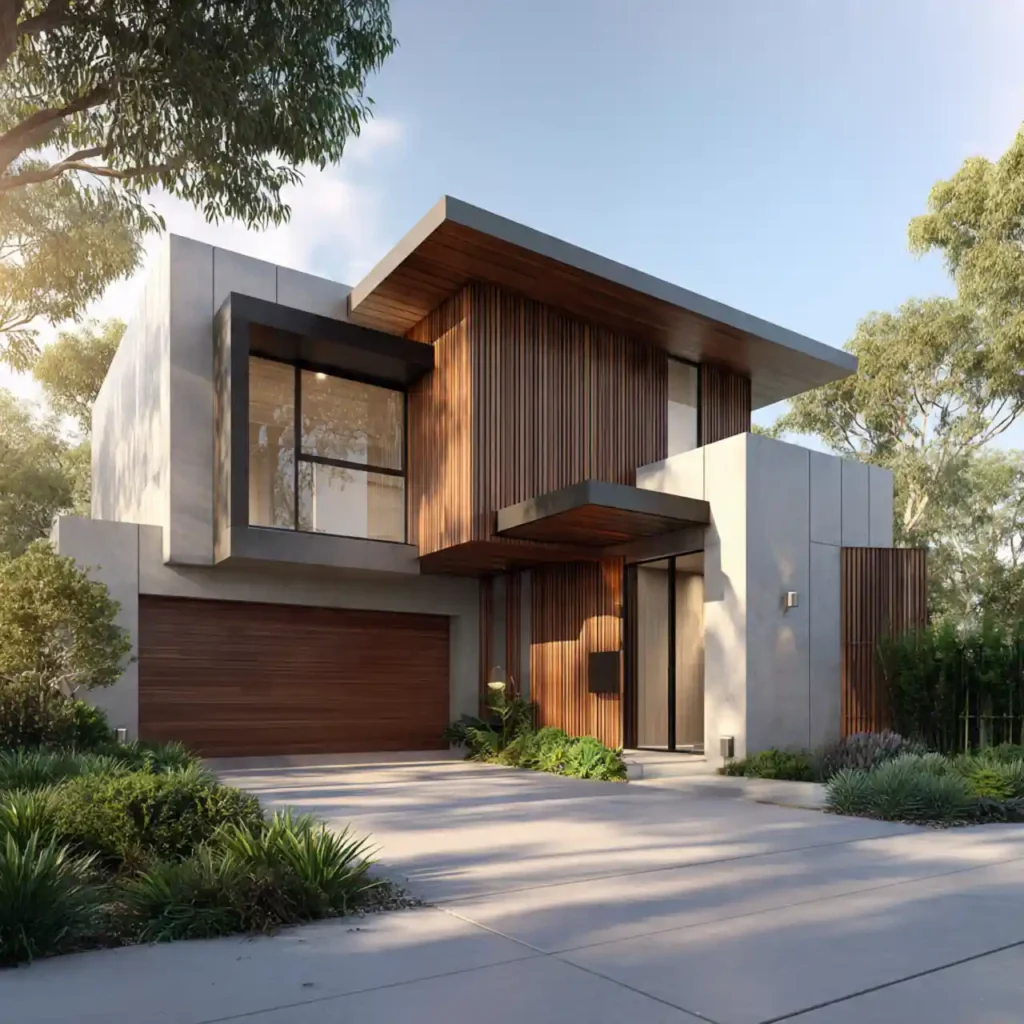
5. Seamless Indoor-Outdoor Transitions
Covered terraces and decks extend the living space outward. Exterior flooring often aligns flush with interior levels for smooth movement. This continuity enhances openness and usability. Outdoor zones feel like natural extensions of the home. Flow becomes a defining architectural feature.
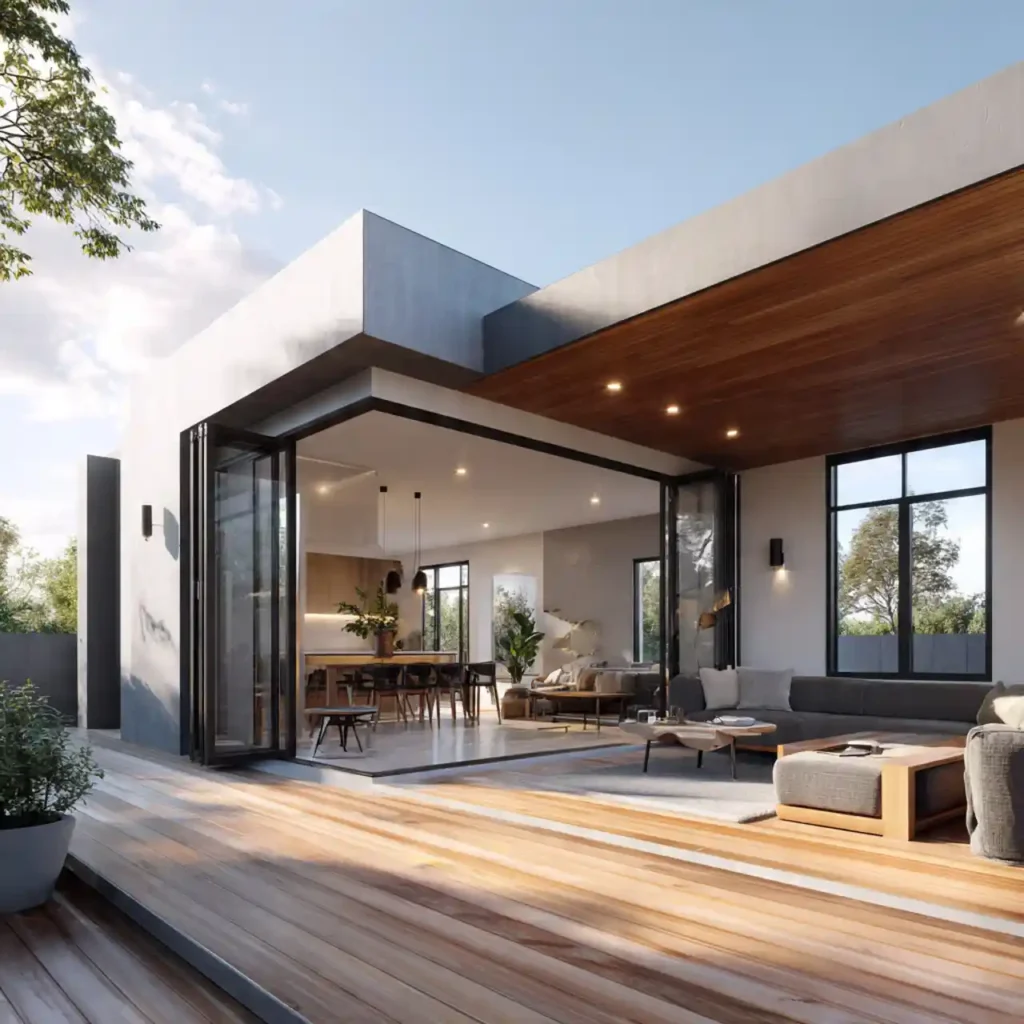
6. Vertical Timber Screening
Timber screens provide privacy while allowing airflow and filtered light. They soften modern facades and add warmth. Screens also protect interiors from direct sunlight. Their rhythmic patterns enhance visual interest. This balance of function and beauty is distinctly Australian.
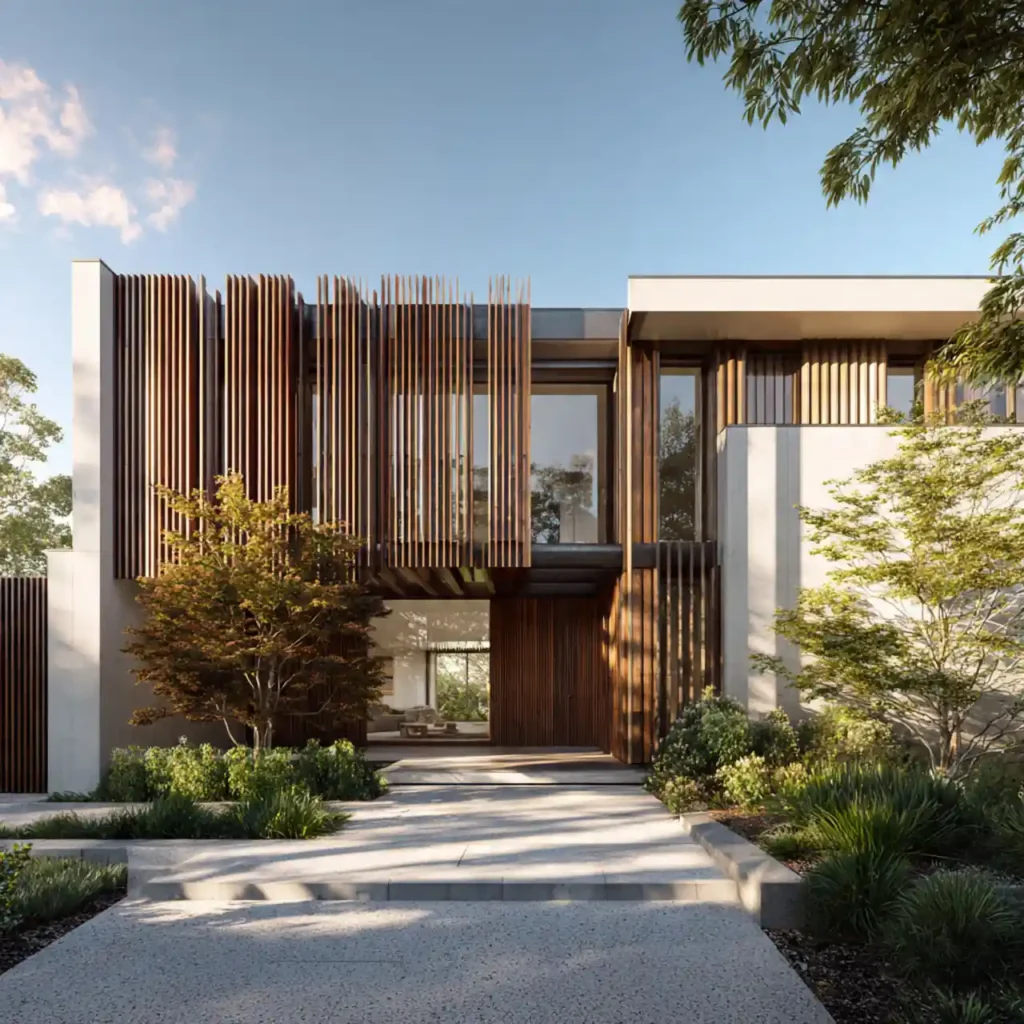
7. Flat and Low-Pitch Roof Forms
Flat or gently sloped roofs reinforce modern simplicity. These forms reduce visual bulk and suit open landscapes. They allow for solar panel integration without disruption. Rooflines remain clean and understated. The overall form feels contemporary and climate-smart.
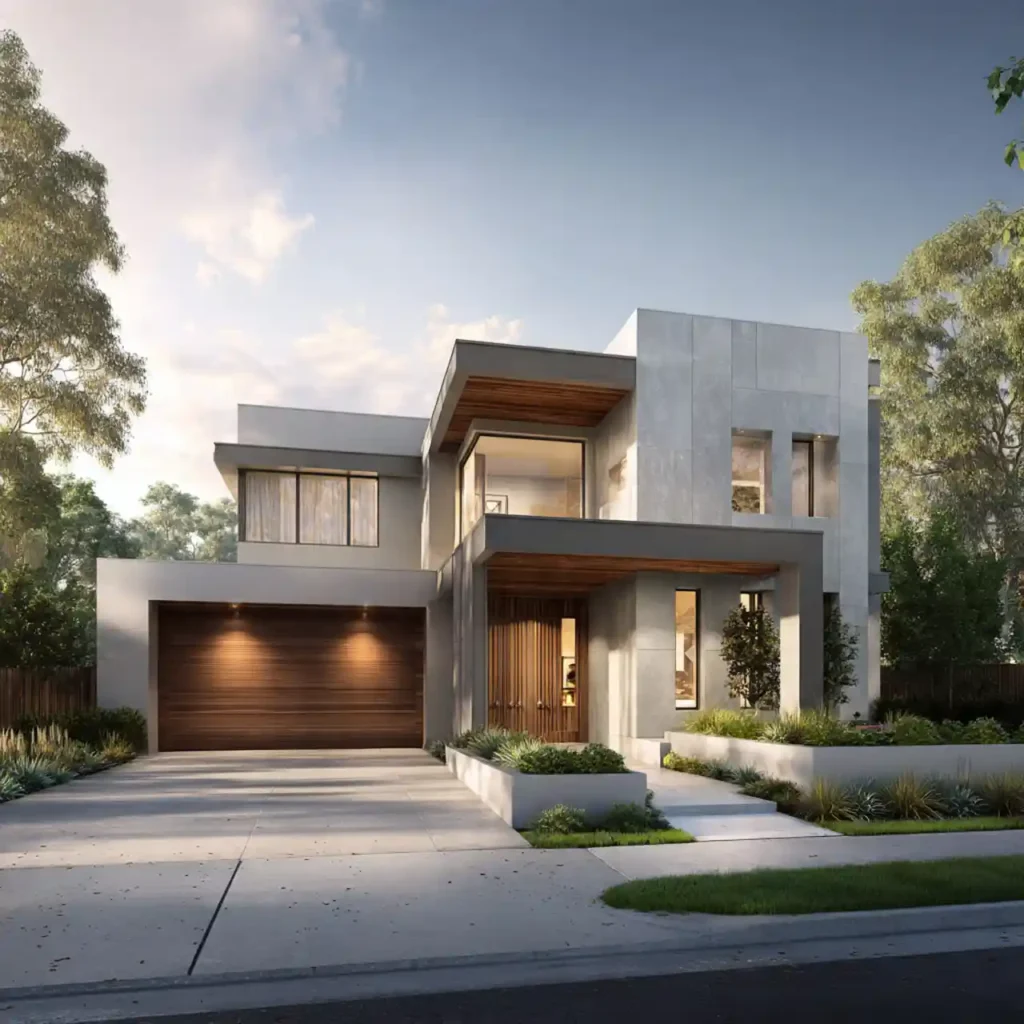
8. Natural Ventilation Pathways
Exterior layouts are designed to support breeze movement through the home. Openings are aligned to encourage airflow. This reduces heat buildup during warmer months. Passive cooling becomes a core design principle. Comfort is achieved naturally and sustainably.
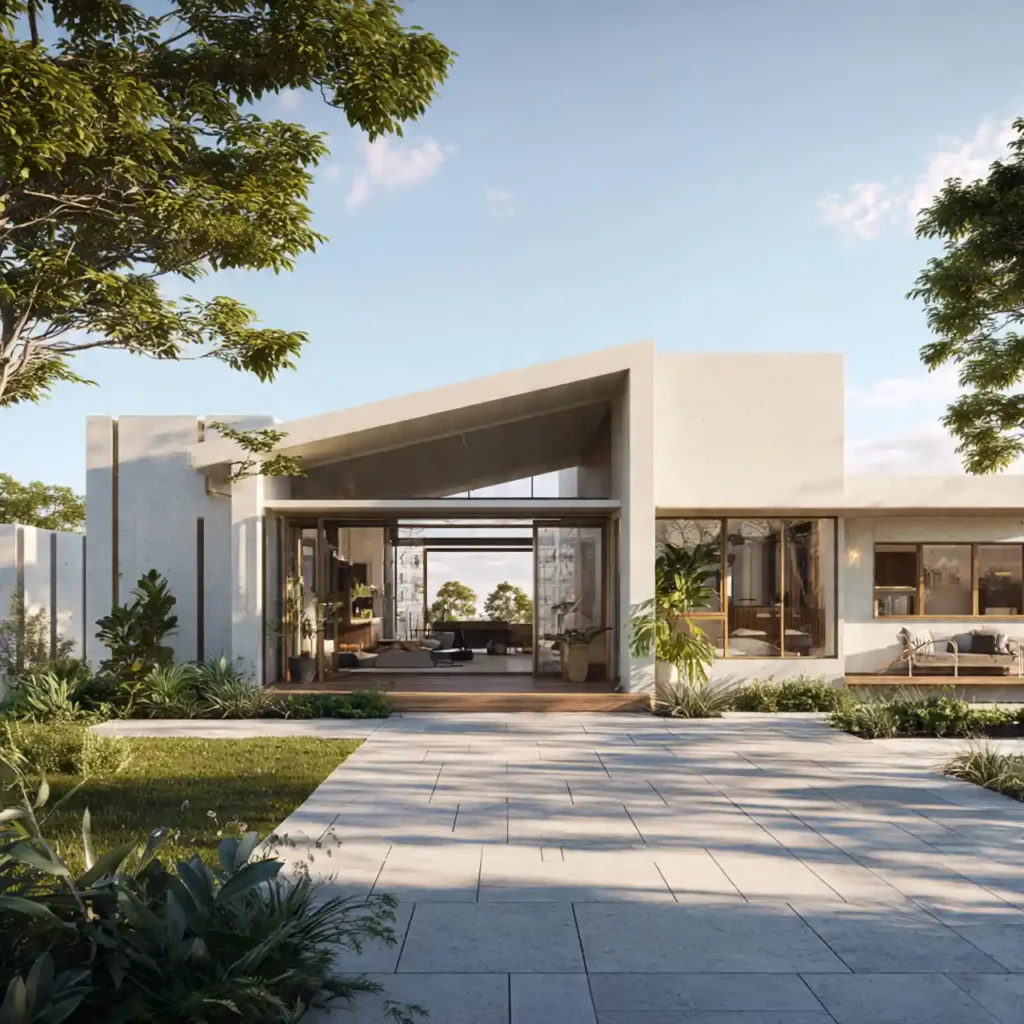
9. Shaded Courtyards and Verandas
Courtyards create protected outdoor microclimates. Verandas offer shade while maintaining openness. These elements provide usable outdoor space throughout the day. They also improve thermal performance. The exterior feels relaxed, social, and climate-aware.
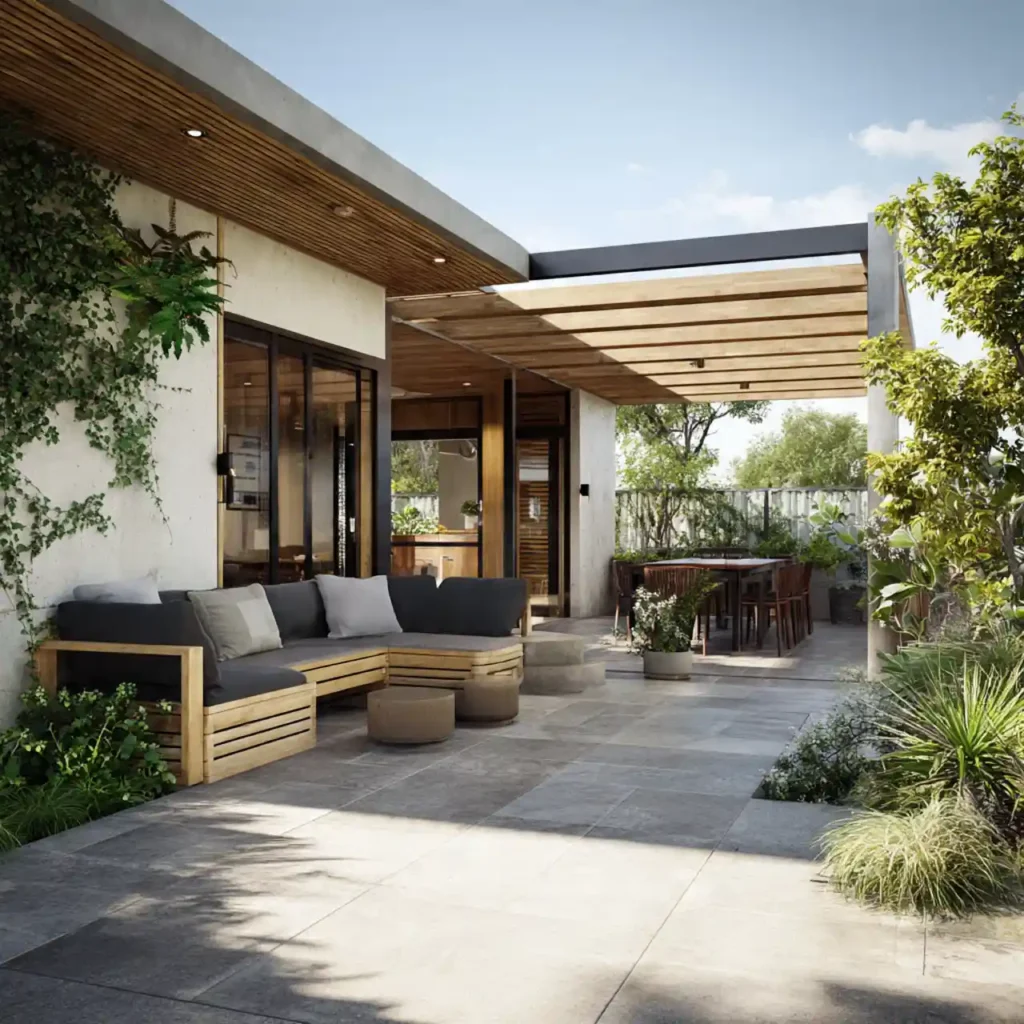
10. Neutral & Earth-Inspired Color Palettes
Colors often reflect sand, stone, and coastal tones. These hues reduce heat absorption and visual harshness. They blend the home into its surroundings. Neutral palettes enhance longevity and resale appeal. Calmness defines the exterior expression.
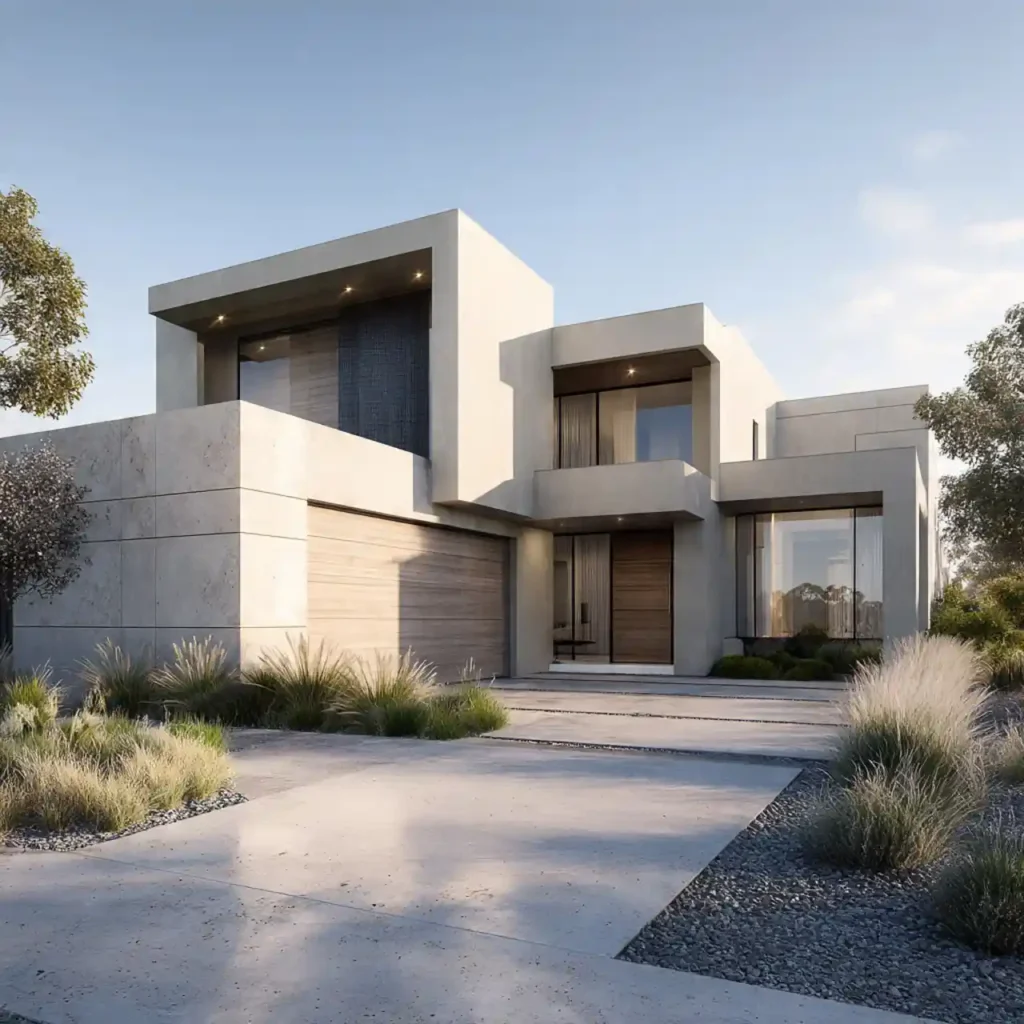
11. Minimalist Facade Composition
Clean lines and uncluttered surfaces dominate Australian modern exteriors. Decoration is minimal and purposeful. This simplicity improves airflow and reduces maintenance. The architecture feels refined and timeless. Less visual noise supports clarity and flow.
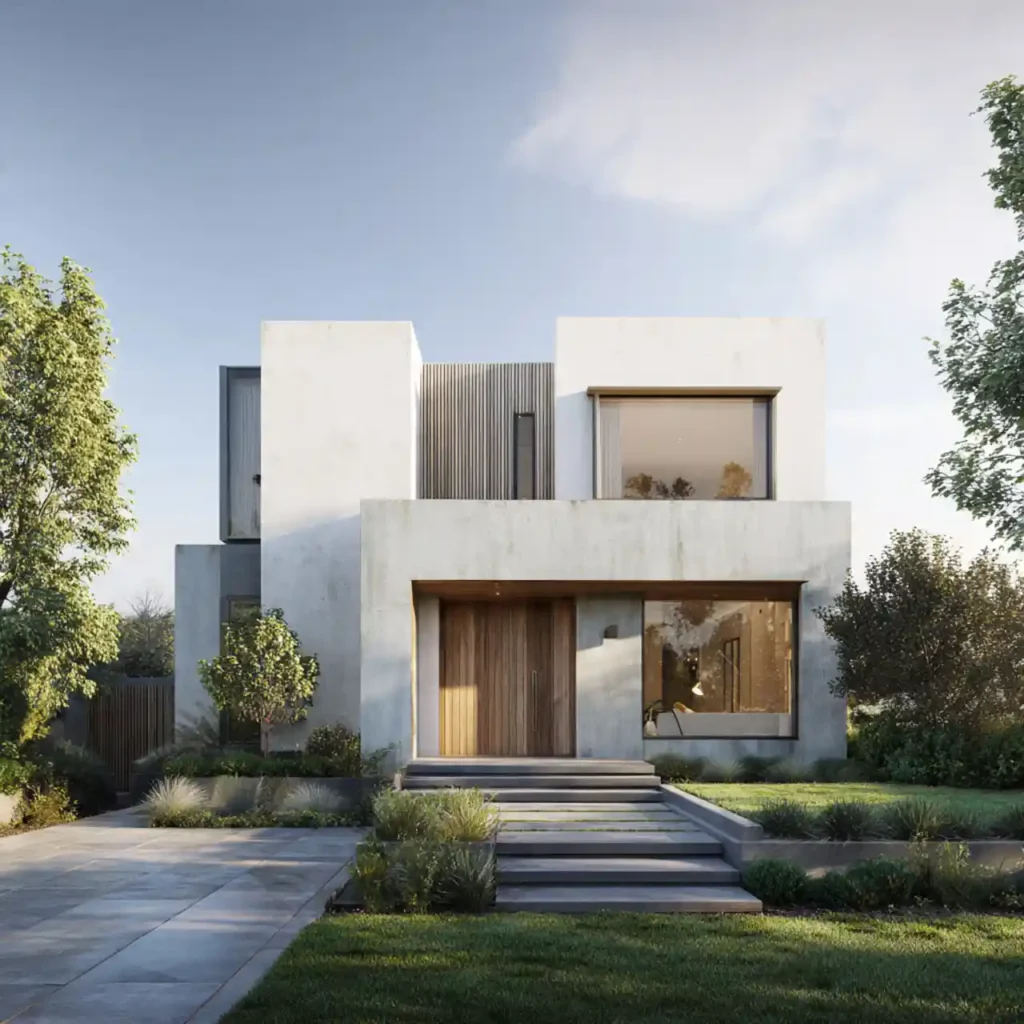
12. Elevated Structures for Heat and Drainage
Homes are sometimes slightly raised off the ground. Elevation improves ventilation underneath and protects from moisture. It also suits sloped or flood-prone sites. Visually, it adds lightness to the structure. Functional elevation enhances environmental responsiveness.
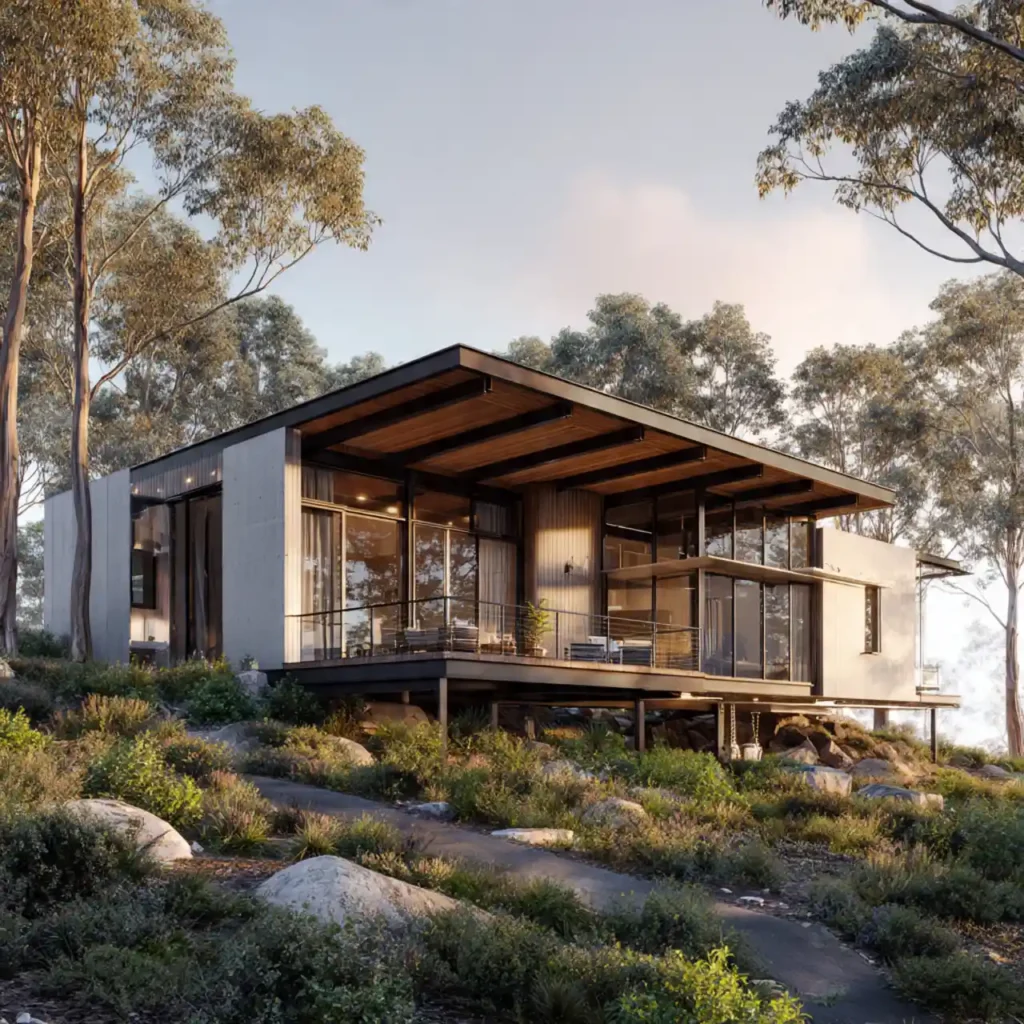
13. Integrated Outdoor Living Zones
Barbecues, seating, and dining areas are built into exterior layouts. These zones are shaded and well-ventilated. They support year-round outdoor use. The exterior becomes an active living space. Lifestyle and architecture merge seamlessly.
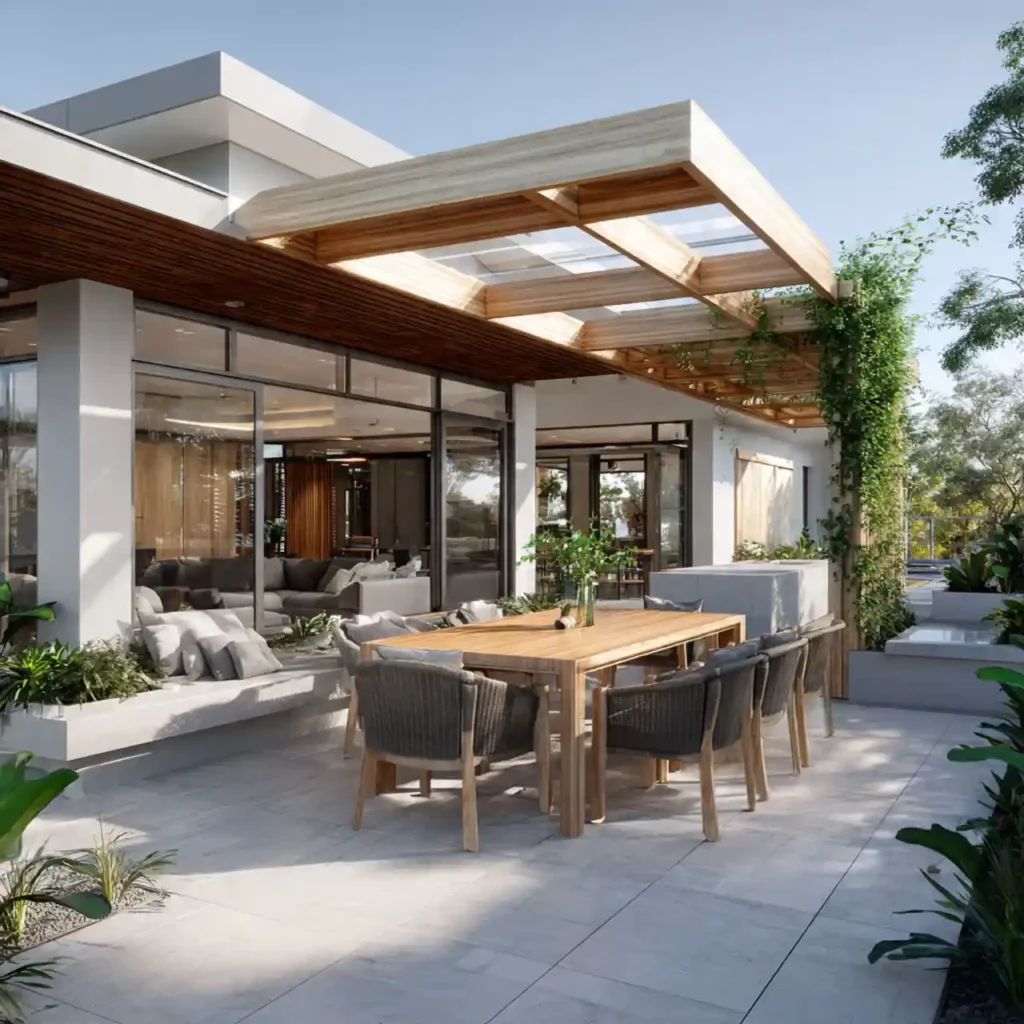
14. Metal Roofing for Climate Durability
Metal roofs reflect heat and handle extreme weather well. They are lightweight and long-lasting. Visually, they complement modern forms. Their clean lines suit minimalist facades. Practicality meets modern design efficiency.
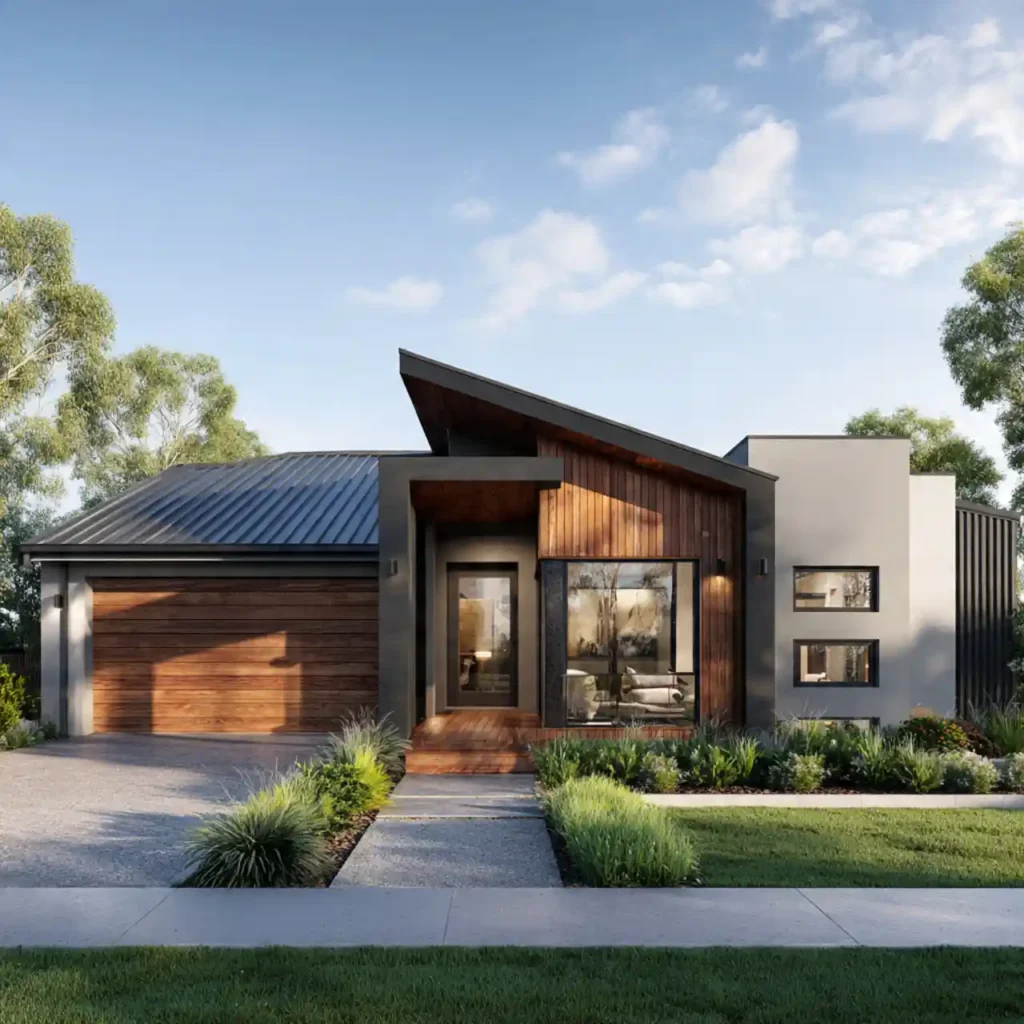
15. Landscape-Driven Exterior Design
Landscaping is planned alongside architecture, not after it. Native plants reduce water usage and thrive naturally. Greenery provides shade and cooling. The home feels grounded in its environment. Exterior flow extends into the landscape.
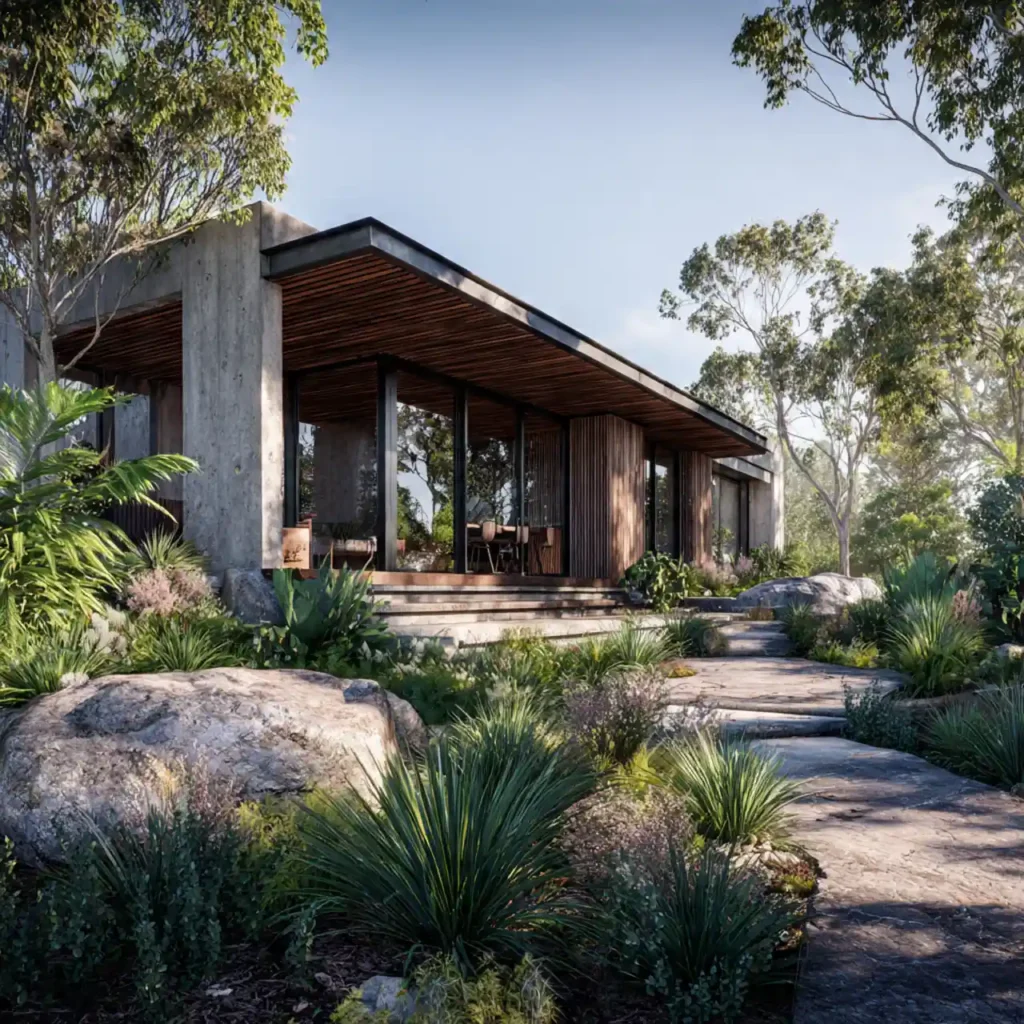
16. Deep Window Recesses
Recessed windows control sunlight and reduce glare. They add depth to flat facades. Shadows created by recesses enhance visual interest. Interiors stay cooler and more comfortable. Form and climate performance work together.
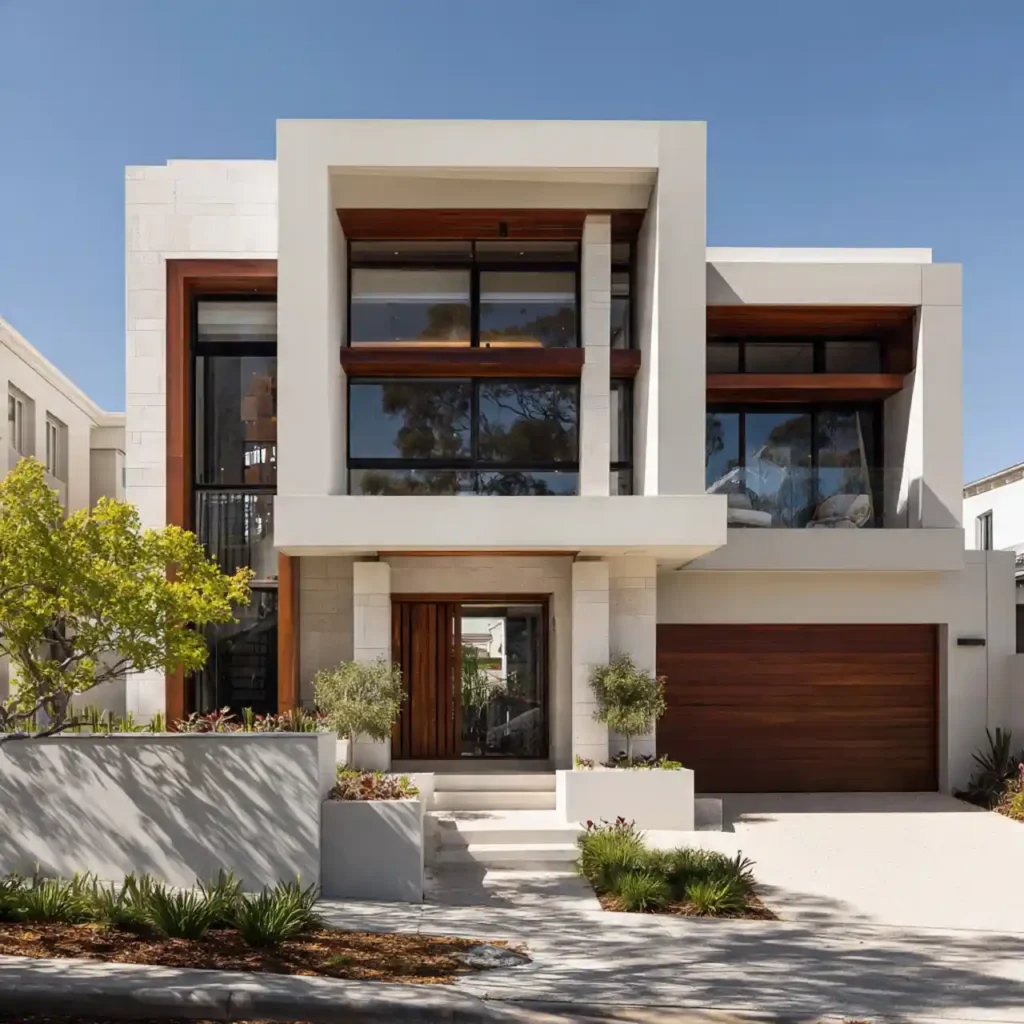
17. Open Carports Instead of Enclosed Garages
Open carports allow airflow and reduce heat buildup. They feel lighter than traditional garages. Visually, they keep facades open and breathable. This suits the relaxed Australian aesthetic. Practical openness replaces enclosure.
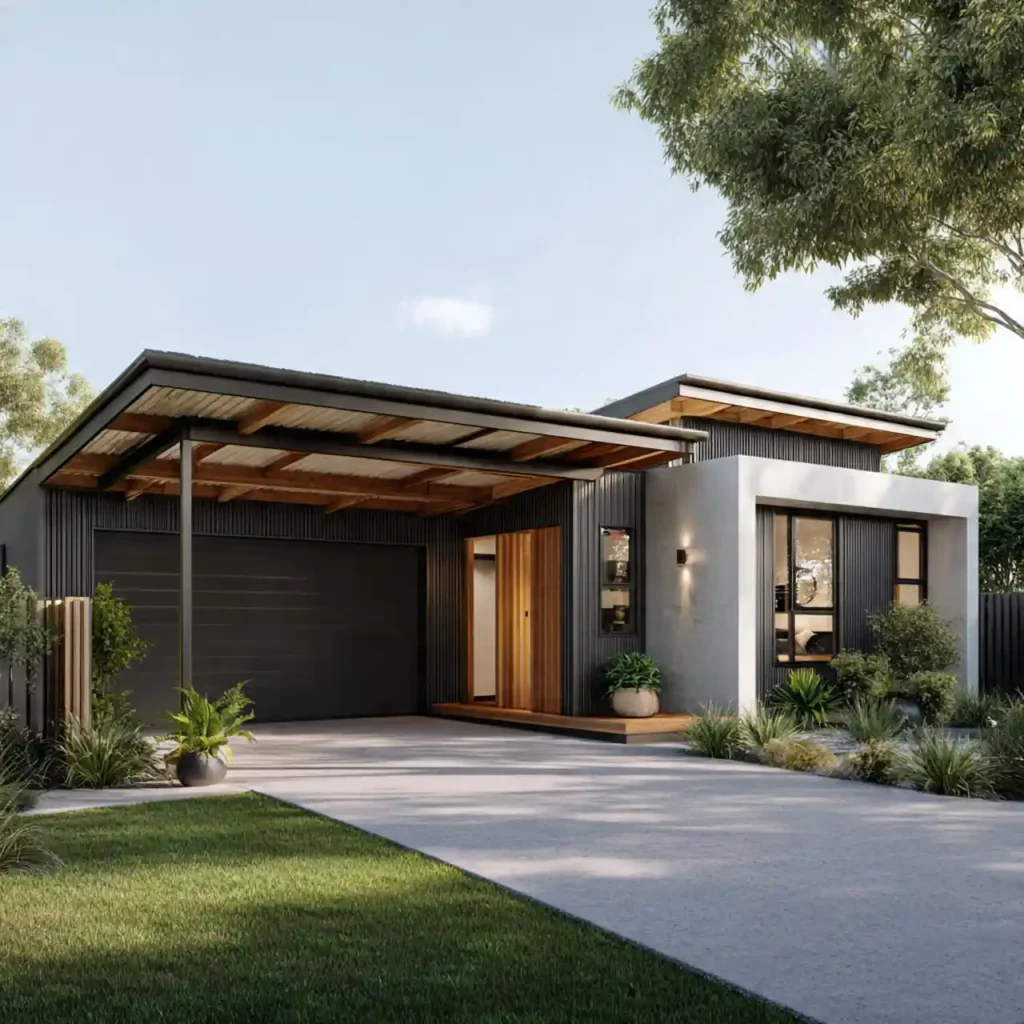
18. Sustainable Material Finishes
Recycled timber, concrete, and low-VOC finishes are commonly used. These materials reduce environmental impact. They also age gracefully over time. Sustainability becomes part of the visual identity. Responsible design enhances long-term value.
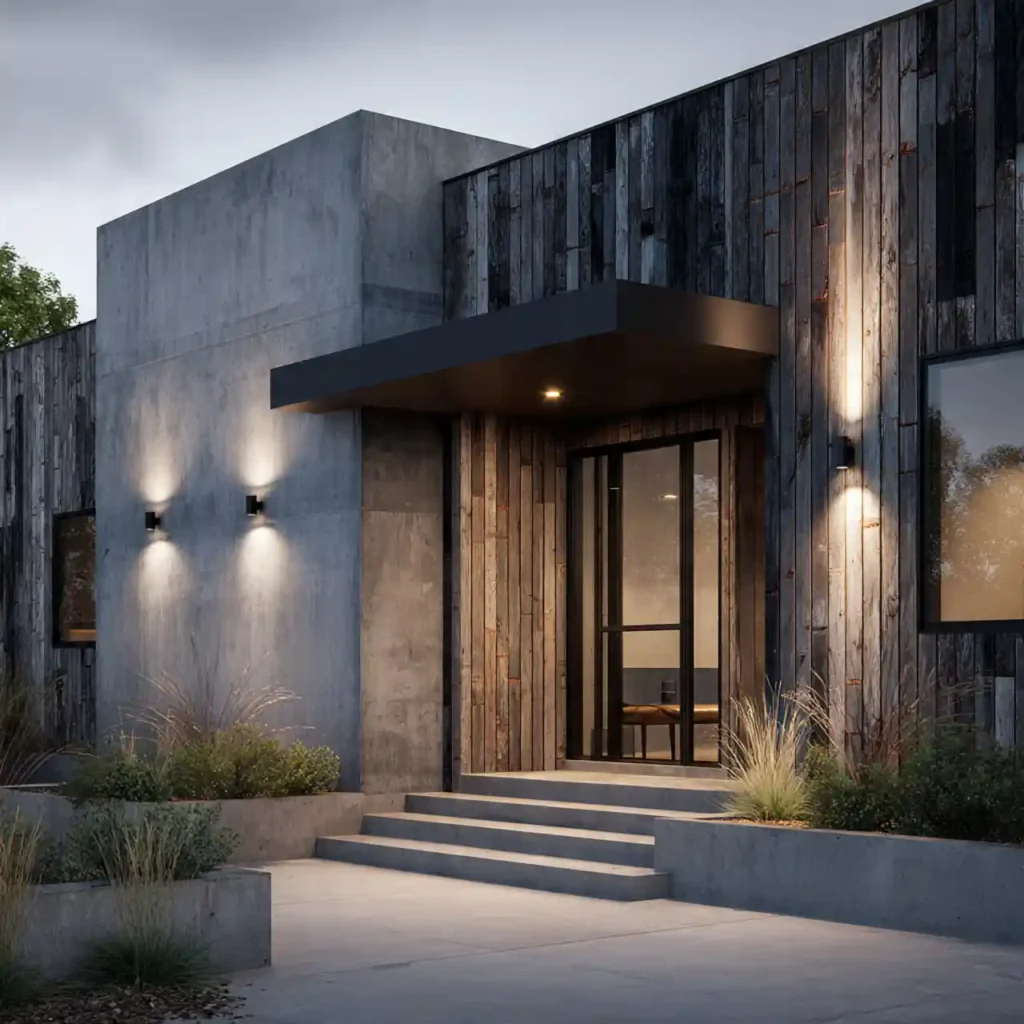
19. Horizontal Emphasis in Architecture
Strong horizontal lines echo the expansive Australian landscape. They visually widen the home and reduce perceived height. This creates a grounded, relaxed appearance. Horizontal emphasis improves visual flow. The design feels calm and expansive.
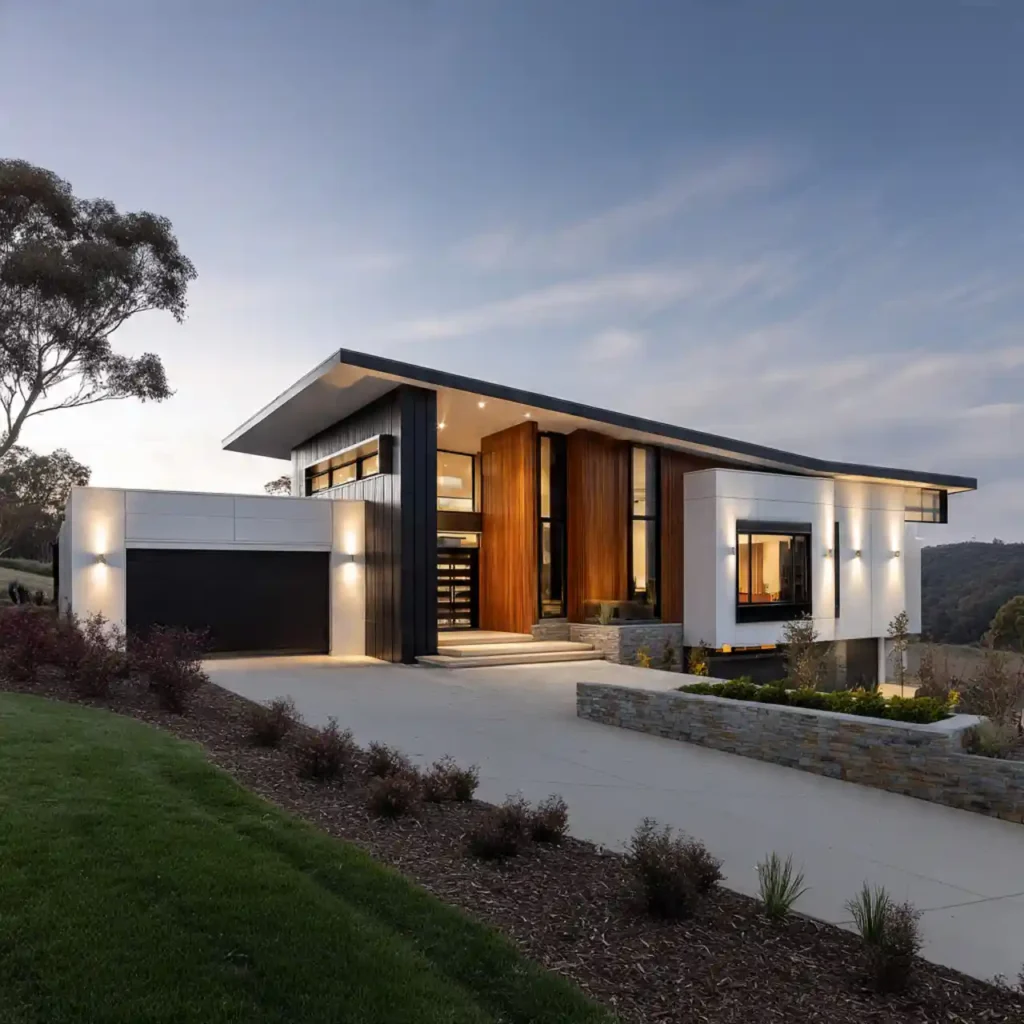
20. Connection to Coastal or Bush Context
Homes respond directly to coastal winds or bushland shade. Materials and forms adjust accordingly. This responsiveness avoids generic design. Each exterior feels site-specific. Context shapes the architectural language.
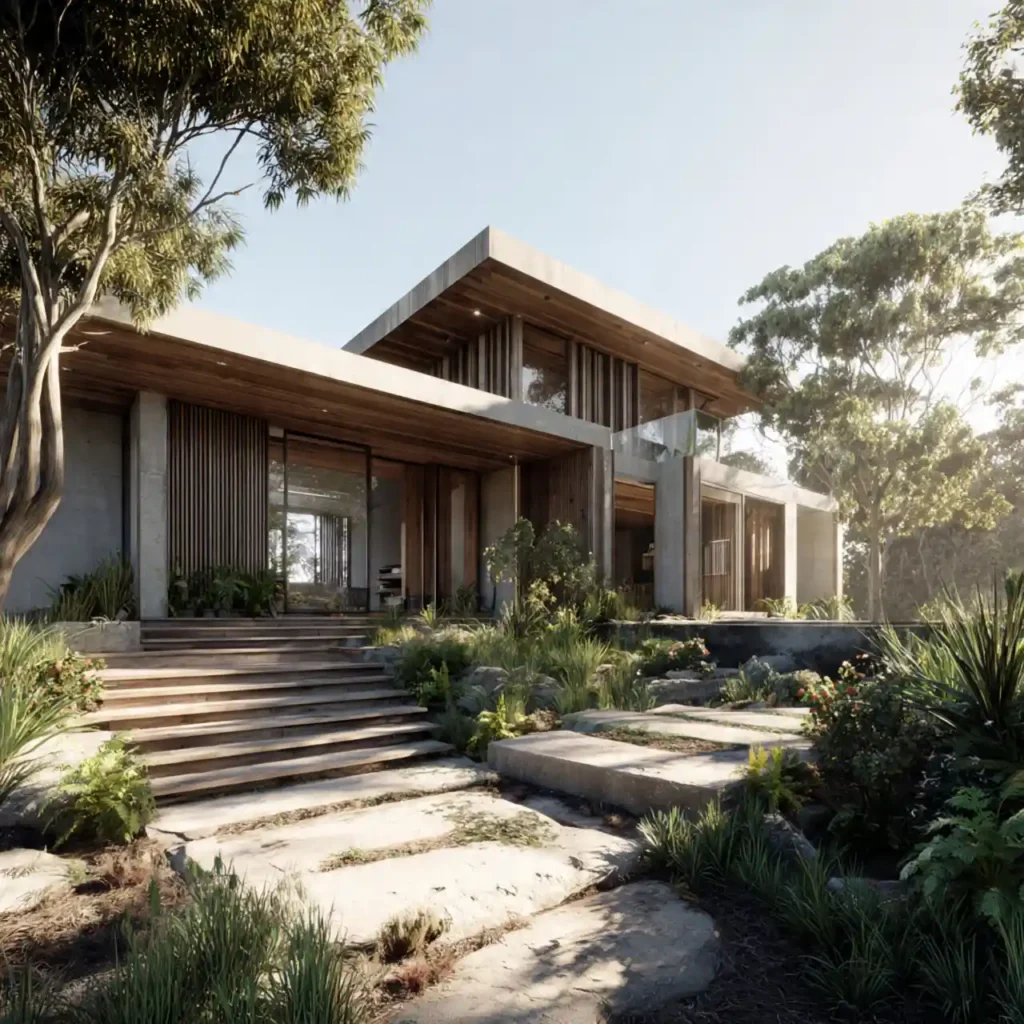
21. Minimal Boundary Definition
Low walls, open fencing, or landscaping define boundaries softly. This openness encourages airflow and visual continuity. The home feels welcoming rather than enclosed. Exterior space flows into the street or landscape. Boundaries feel intentional but relaxed.
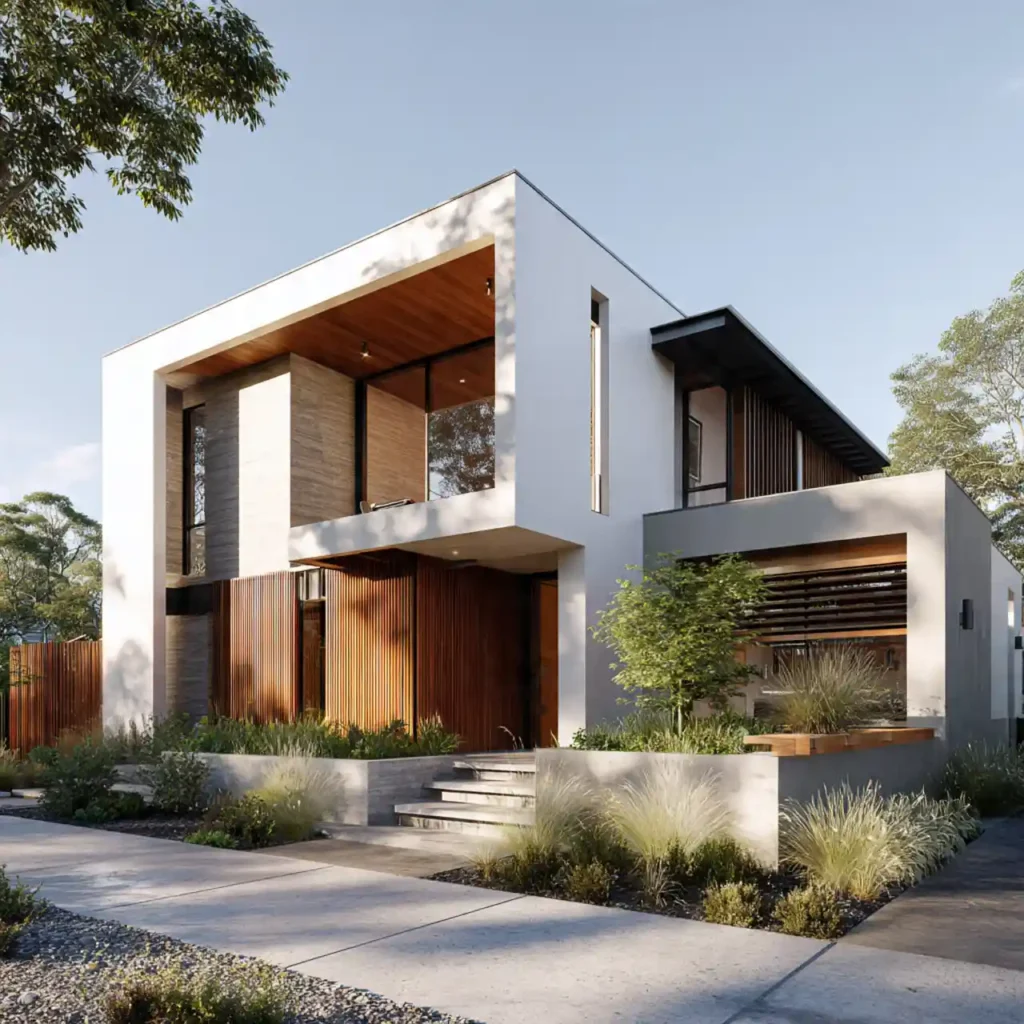
22. Solar-Ready Roof Design
Roof planes are designed to support solar panels discreetly. Orientation maximizes energy capture. Sustainability integrates without visual clutter. The exterior remains clean and modern. Climate responsibility becomes invisible yet effective.
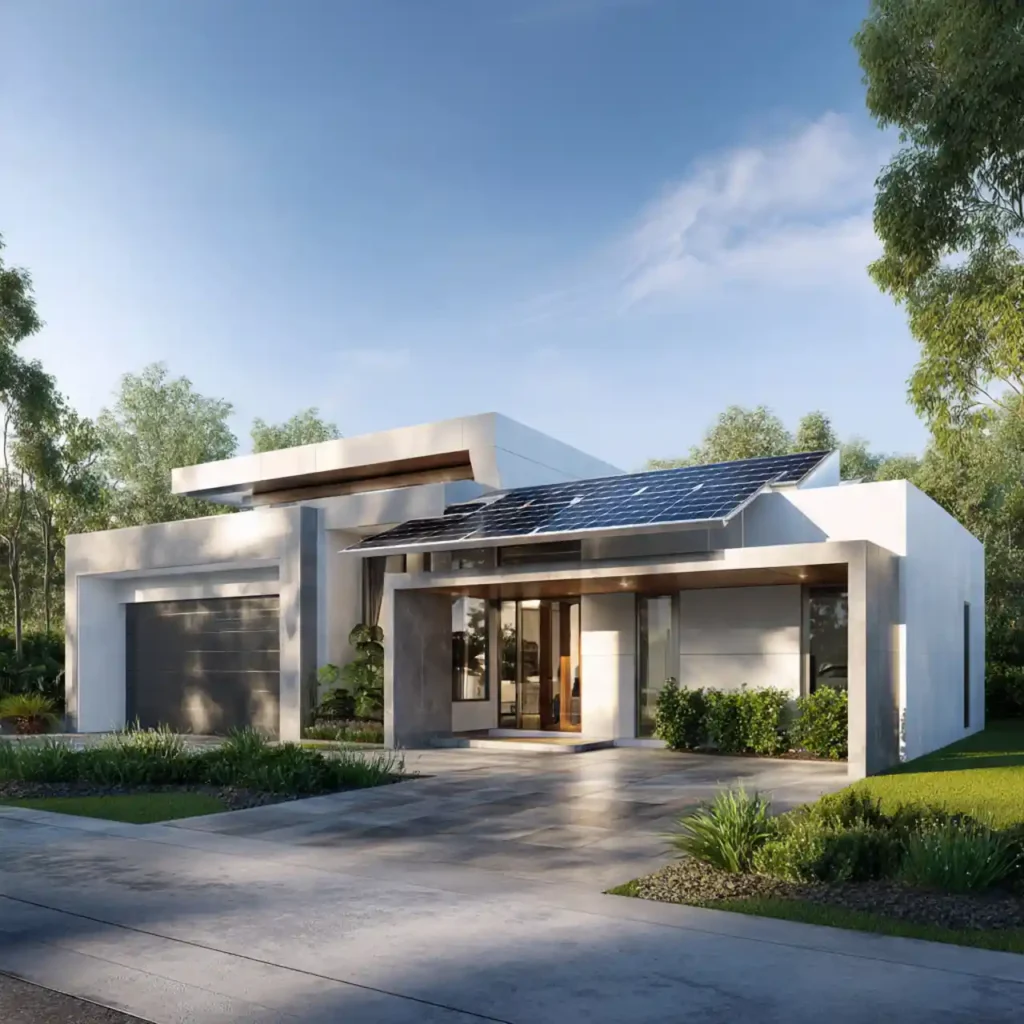
23. Durable & Low-Maintenance Exteriors
Finishes are chosen for longevity and weather resistance. This reduces upkeep in harsh conditions. Surfaces age naturally without losing appeal. Practicality supports everyday living. Beauty is sustained through smart material choice.
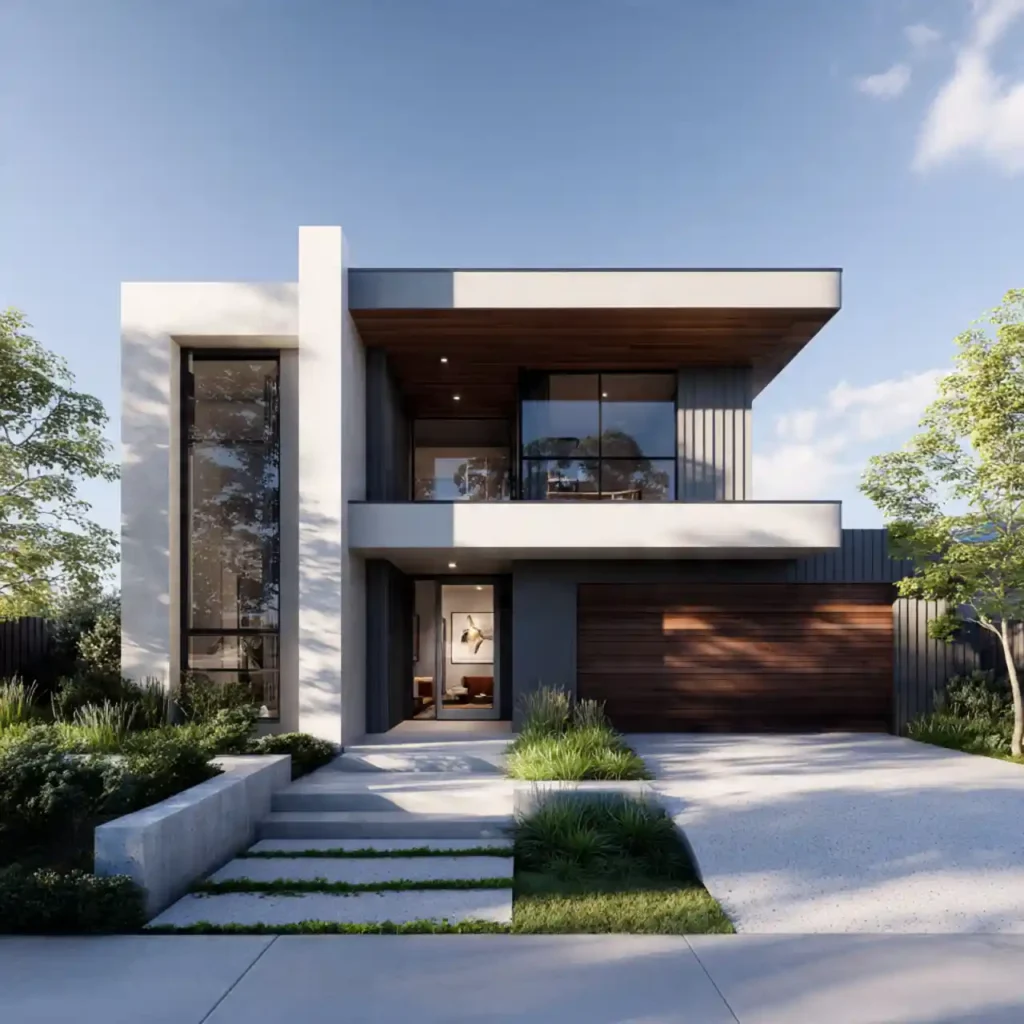
24. Soft Transition Between Public and Private Zones
Gradual transitions from street to entry enhance privacy. Screens, setbacks, and landscaping create layering. The approach feels calm and intentional. Movement into the home feels natural. Exterior flow supports emotional comfort.
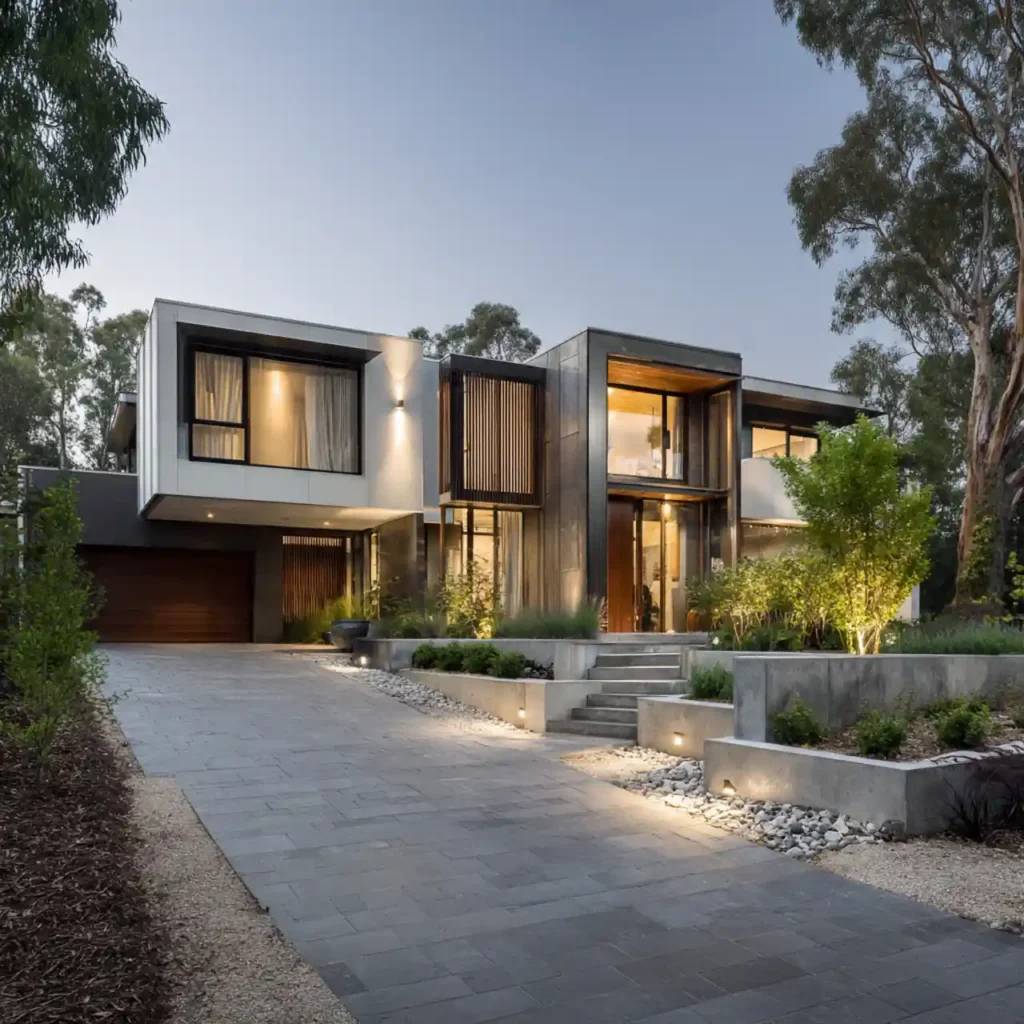
25. Overall Sense of Effortless Living
Every element supports comfort, airflow, and openness. Nothing feels forced or decorative without purpose. The exterior works quietly and efficiently. Architecture supports lifestyle rather than dominating it. Australian modern exteriors embody balance, climate awareness, and ease.
Final Thoughts: Australian Modern Home Exterior Ideas
Australian modern home exterior ideas are defined by intelligence, restraint, and environmental respect. By responding to climate, embracing openness, and prioritizing flow, these homes feel naturally comfortable and timeless. The design language is relaxed yet highly considered. Instead of following trends, it focuses on livability and long-term performance. This approach creates homes that feel truly connected to place, climate, and everyday life.