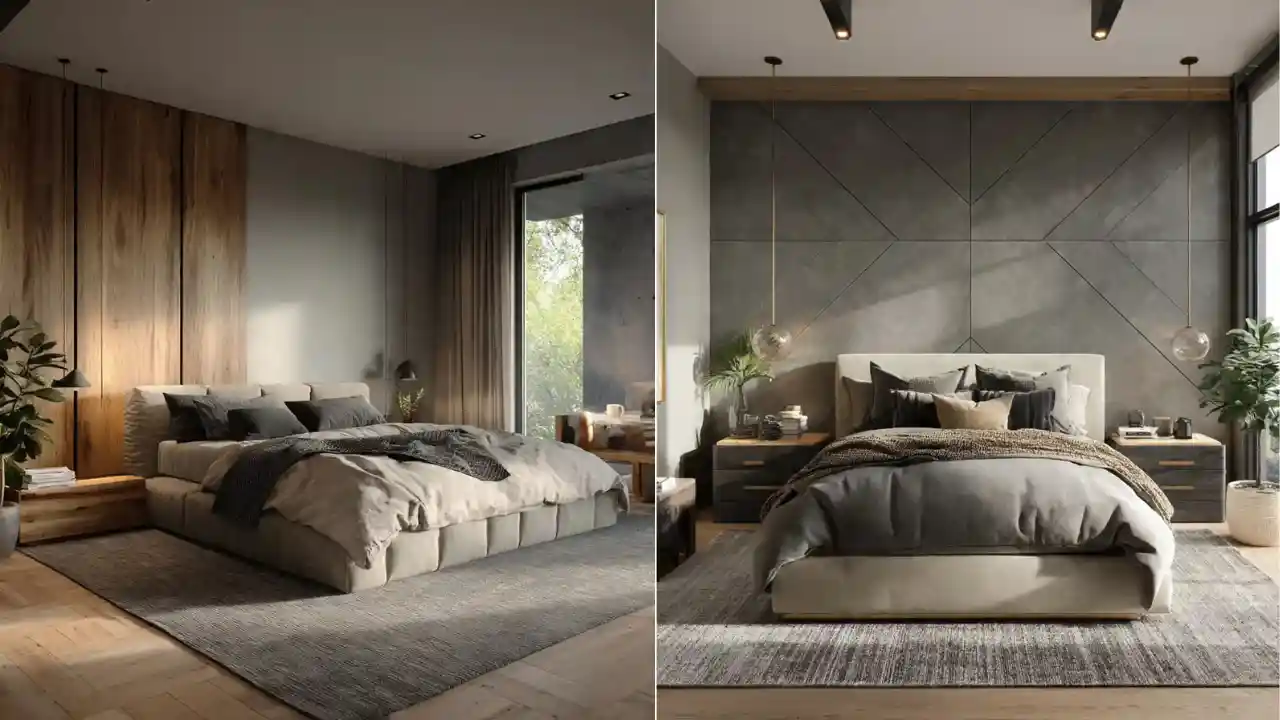
20 Calm Bedroom Design Ideas with Balanced Layouts & Visual Flow
A bedroom should guide the eye gently, allowing the mind to slow down and relax without visual interruption. Calm visual flow in bedroom interiors comes from thoughtful composition rather than decoration overload. When furniture, spacing, materials, and light are arranged with intention, the room feels emotionally balanced and effortless.
These Calm Bedroom Design Ideas by The Home Vista will focus on continuity, proportion, and subtle transitions. The result is a bedroom that feels peaceful, organized, and deeply restorative.
1. Centered Bed With Balanced Side Spacing
Placing the bed at the visual center establishes immediate calm. Equal spacing on both sides allows the eye to move symmetrically. Nightstands and lighting align naturally without crowding. This composition prevents visual tension. The room feels stable and thoughtfully arranged.

2. Linear Furniture Alignment Along One Axis
Furniture aligned along a single visual line creates clarity. The bed, rug, and lighting follow the same directional flow. This reduces visual confusion. Movement across the room feels uninterrupted. Calmness comes from consistency.

3. Clear Pathways Around the Bed
Open circulation space enhances visual and physical comfort. Nothing blocks movement near the bed. Walkways feel intentional rather than accidental. The eye flows smoothly around the layout. This composition supports relaxation and ease.

4. Low-Profile Furniture Composition
Lower furniture keeps visual weight grounded. Sightlines remain open and uncluttered. The room feels wider and calmer. Vertical noise is reduced. The space feels balanced and breathable.

5. Soft Symmetry Without Strict Formality
Balanced elements exist without rigid mirroring. Nightstands may match, but styling remains relaxed. The eye experiences harmony without stiffness. This composition feels natural and human. Calm emerges through gentle balance.

6. Minimal Wall Interruptions Behind the Bed
A clean wall behind the bed allows visual rest. No excessive art or shelving disrupts flow. The bed becomes the anchor point. The eye pauses comfortably. This creates a grounding effect.

7. Unified Color Flow Across Surfaces
Wall color, bedding, and curtains stay within one palette. Transitions feel soft and continuous. No harsh contrast breaks the visual rhythm. The bedroom feels cohesive. Calmness is reinforced through consistency.

8. Layered Lighting With Gentle Transitions
Lighting changes gradually across the room. Table lamps, wall lights, and ambient glow overlap softly. No single harsh light dominates. Shadows feel smooth. Visual comfort remains constant.

9. Furniture Grouping With Visual Breathing Room
Pieces are grouped intentionally, not scattered. Space surrounds each element. The eye can rest between objects. Nothing competes for attention. Calmness feels deliberate.

10. Natural Light-Oriented Layout
Furniture placement respects window flow. Light moves freely across the room. Curtains soften rather than block daylight. Visual warmth spreads evenly. The bedroom feels alive yet peaceful.

11. Textural Continuity Over Visual Contrast
Textures change subtly without dramatic shifts. Linen, wood, and soft upholstery blend naturally. The eye moves smoothly across surfaces. No texture feels abrupt. Calm visual rhythm is maintained.

12. Headboard as a Gentle Visual Anchor
The headboard defines the sleeping zone quietly. Its height and width feel proportional. No extreme shapes disrupt flow. The bed feels grounded. Visual stability increases.

13. Clear Visual Hierarchy
The bed is clearly the focal point. Supporting elements remain secondary. Nothing competes visually. The eye understands where to rest. This clarity supports calm.

14. Limited Decorative Zones
Decor appears only in select areas. Surfaces remain mostly clear. Visual noise is minimized. The room feels intentional. Calm is protected.

15. Soft Curtain Framing for Visual Movement
Curtains guide the eye vertically without heaviness. Fabric moves gently with light. Windows feel integrated, not dominant. Visual flow remains smooth. The room feels airy.

16. Furniture With Rounded or Soft Edges
Soft edges guide the eye naturally. Sharp visual stops are avoided. The room feels gentle and welcoming. Movement feels fluid. Calmness becomes physical.

17. Repetition of Key Forms and Lines
Shapes repeat subtly across furniture and decor. This repetition builds rhythm. The eye feels guided. Nothing feels random. Harmony strengthens visual flow.

18. Balanced Negative Space Zones
Empty space is intentional, not accidental. These pauses allow the eye to rest. The room feels uncluttered. Calm becomes noticeable. Space itself becomes a design element.

19. Consistent Material Language
Materials feel related across the room. Wood tones, fabrics, and finishes align visually. No sudden material shift interrupts flow. The room feels unified. Calmness deepens.

20. Overall Composition That Feels Effortless
Everything feels placed with purpose. No element feels forced or decorative. Visual movement feels natural. The bedroom feels emotionally settled. Calm visual flow defines the experience.

Final Thoughts: Calm Bedroom Design Ideas
Calm visual flow in bedroom interiors is achieved through clarity, balance, and thoughtful composition rather than excess design. When elements align naturally, and spacing is respected, the room becomes easier to live in and relax within. These Calm Bedroom Design Ideas show how intentional layouts reduce mental noise and visual stress. A bedroom designed this way feels timeless and grounded. Ultimately, calm visual flow transforms a bedroom into a true sanctuary.